- Home
- /
- Sundial Encyclopaedia
- /
- Sundial Design & Layout
Sundial Design & Layout
March 2023
Page 2
Page 2

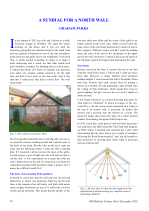
Describes the process of designing and constructing a large 90 cm square vertical declining dial for a house conservatory in Somerset. The project involved measuring the wall's 74.3° westerly declination, incorporating an Equation of Time plaque, and designing a unique lateral sliding system to avoid shadows cast by the glass roof rafters.
Construction Projects, Dials: Vertical, Equation of Time, Sundial Design & Layout
March 2023
Page 20
Page 20
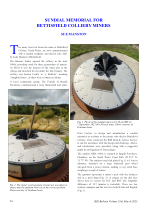
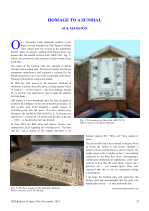
Describes the stainless-steel memorial sundial (SRN 8340) commissioned to honour miners who died at Bettisfield Colliery. The BSS Help & Advice Service assisted the artist with design and calculations. The dial features a miner’s pick gnomon mounted on a salvaged industrial gear wheel.
Construction Projects, Sundial Design & Layout, The BSS and Members
March 2023
Page 22
Page 22
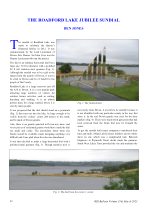
Details the construction of the large 30-foot diameter horizontal dial with a 20-foot stainless-steel gnomon, created for the Queen’s Diamond Jubilee. To ensure public utility, the hour lines were designed to allow for longitude, making the dial read close to clock time, despite the resulting asymmetry.
Construction Projects, Dials: Horizontal, Equation of Time, Sundial Design & Layout
September 2023
Page 2
Page 2

Analyzes the Erfurt rule, a medieval method for designing south-facing wall sundials, found in a 15th–16th-century codex owned by Fra Giocondo of Verona. It discusses the rule's origins (Paris/Germany, c. 1334), its non-empirical numerical angular values for temporal hours, and its later modification to suit equal equinoctial hours.
Dials: Vertical, Historical Dials, Mathematics of Dialling, Sundial Design & Layout
September 2023
Page 12
Page 12
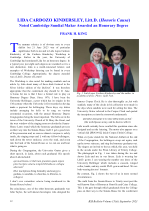
Reports on Lida Lopes Cardozo Kindersley, a renowned letterer and sundial maker, being awarded an honorary Doctor of Letters degree (Litt.D.) by the University of Cambridge on the summer solstice, 21 June 2023. The article notes her work on sundials, including those at Selwyn and Pembroke Colleges, and the inscription on the Corpus Clock.
Sundial Design & Layout, The BSS and Members
September 2023
Page 35
Page 35
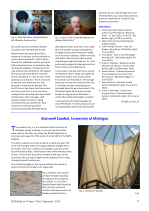
Describes a cylindrical sundial (Dial 1085 in the NASS Registry) located in a stairwell of the University of Michigan Energy Institute, seen during the NASS Conference bus tour. The nodus is formed by the centre of the eight radial arms supporting the skylight, and the markings include a toposcope.
Dials: Cylindrical, Dials: Unusual, Sundial Design & Layout
December 2023
Page 10
Page 10
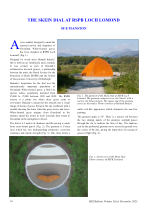
A report on a 6.3-metre diameter horizontal sundial/art installation at RSPB Loch Lomond, designed by Hannah Imlach, which marks the migration windows of Greenland White-fronted geese. The gnomon is formed by the slit between two sheets of Corten steel with piercings that give the impression of migrating geese in flight, and coloured bands mark the Autumn and Spring arrival/departure periods.
Construction Projects, Dials: Horizontal, Dials: Unusual, Sundial Design & Layout
December 2023
Page 18
Page 18
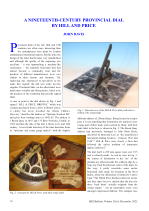
A study of a robust 10-inch square horizontal brass dial signed by Hill & Price of Bristol (working 1842–83). The dial exhibits idiosyncratic provincial features, such as delineation errors for 'back hours' and the use of brass produced by the cementation technique, despite signs of modern manufacturing.
Dials: Horizontal, Historical Dials, Sundial Design & Layout
December 2023
Page 20
Page 20
Part 1 of an analysis tracing the evolution of Italian hours (counting from sunset, ab occasu solis) from the ancient unequal hours, noting the influence of mechanical tower clocks in the mid-fourteenth century. It discusses how Italian hours contrasted with Babylonian (ab ortu solis) and Nuremberg hours, addressing historical confusion surrounding ‘Bohemian hours’.
Historical Dials, Mathematics of Dialling, Sundial Design & Layout
December 2023
Page 28
Page 28
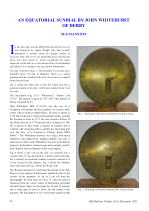
Describes an interesting and possibly unique equatorial sundial acquired by Annie Wright, signed "Whitehurst" "Derby" and "1761" (Lat: 53D: 00M). The dial features two centres of delineation, hour lines marked from 4 am to 8 pm, solstice lines on the gnomon, and some engraving errors.
Dials: Equatorial, Dials: Portable, Dials: Unusual, Historical Dials, Sundial Design & Layout
March 2022
Page 8
Page 8
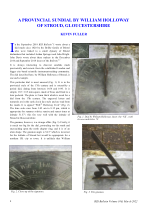
Description of a brass sundial (c. 1658–1693) made by clockmaker William Holloway of Stroud. It is provincial in style, featuring crude engraving and an incorrect replacement gnomon angle of 54.5°. Holloway's workshop location still stands in Stroud.
Dials: Horizontal, Historical Dials, Restoration projects, Sundial Design & Layout
March 2022
Page 10
Page 10
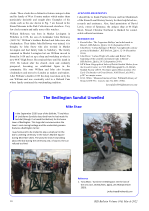
A report on the unveiling ceremony for the Bedlington sundial, made by Tony Moss, in December 2021. The large dial, located in the Market Square, commemorates the town's coal mining heritage and incorporates a Bedlington terrier motif in its undershot gnomon.
Construction Projects, Sundial Design & Layout
March 2022
Page 11
Page 11
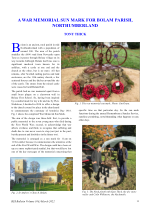
Details the design and construction of a war memorial sun mark installed in Bolam Parish churchyard. The memorial, created using rusty iron shepherd's hut wheels, is designed to precisely mark 11 am on 11 November by focusing a spot of light through an aperture onto a poppy medallion.
Construction Projects, Dials: Unusual, Sundial Design & Layout
March 2022
Page 21
Page 21
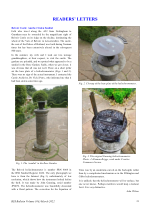
A collection of three letters: John Wilson reports on the theft of a Gunning heliochronometer from Belvoir Castle. Irene Brightmer investigates whether the maker of her 1812 slate dial, Griffith Dafydd, is the same person as Griffith Davies FRS, maker of a prize-winning 1820 dial. Kevin Karney provides a correction on the naming of his 'spider dial'.
Dials: Heliochronometer, Historical Dials, Sundial Design & Layout
March 2022
Page 24
Page 24
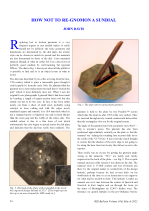
An examination of an old horizontal sundial (c. late 17th/early 18th century) highlighting mistakes made during a poor gnomon replacement. Errors included cutting the angle incorrectly (40.0° instead of the design latitude 52.5° marked on the back), using mild steel that rusted, and using modern Pozidriv screws for attachment.
Dials: Horizontal, Mathematics of Dialling, Restoration projects, Sundial Design & Layout
March 2022
Page 30
Page 30
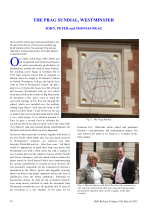
An article commemorating the creation and unveiling (2007) of the sundial at Westminster School, dedicated to former teacher Adolf Prag and his wife. Designed by Harriet James, the dial is based on Newton's ellipse, includes an Equation of Time graph, and features golden hemispherical hollows referencing scaphe dials.
Dials: Vertical, Sundial Design & Layout, Construction Projects, Equation of Time
March 2022
Page 32
Page 32
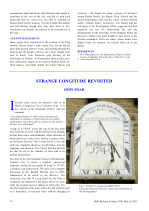
An analysis of the unusual longitude inscription found on the St Mark’s, Longwood dial. By comparison with the Hawkshead dial, it is concluded that the inscription refers to the 'Plane’s Longitude,' which defines the longitude where the dial could be used horizontally, and is numerically equal to the hour angle between the substyle and noon lines.
Dials: Vertical, Historical Dials, Mathematics of Dialling, Sundial Design & Layout
June 2022
Page 2
Page 2
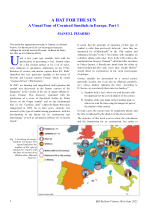
This article explores cornice or 'hat' sundials found across Europe, focusing on their unique design where time is indicated by the shadow of a curved cornice or set of styles. It details several examples, locations, construction dates, and conservation recommendations for these historically interesting and unusual dials.
Dials: Unusual, Historical Dials, Sundial Design & Layout
June 2022
Page 33
Page 33
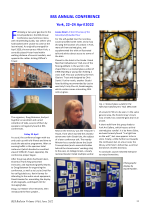
A report detailing the proceedings of the BSS Annual Conference held in York. It summarises various talks covering topics like displaying the Equation of Time, the historical San Petronio Meridiana, John Goodricke’s astronomy, sundial design using 3D point clouds, and the changing professional trades of sundial makers in the British Isles.
Equation of Time, Historical Dials, Sundial Design & Layout, The BSS and Members
September 2022
Page 11
Page 11
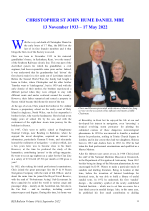
A tribute to Chris Daniel, a founder member, long-term BSS Chairman, and noted diallist. Covers his careers as a Master Mariner and at the National Maritime Museum, where he focused on sundials. Notes his contributions as a designer, author (e.g., Shire album Sundials), and his MBE award.
Sundial Design & Layout, The BSS and Members
September 2022
Page 21
Page 21
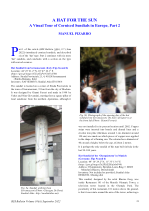
Continues a visual tour of European corniced sundials, detailing six more ‘hat’ types, such as the Serramazzoni dial (Italy) and the Marian Column (Germany). Also introduces dials with curved cornices, highlighted by the enormous Castillon Dam sundial (France), the largest dial in the world.
Construction Projects, Dials: Unusual, Historical Dials, Sundial Design & Layout
December 2022
Page 22
Page 22
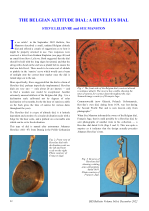
Follow-up article suggesting the previously discussed small Belgian altitude dial is a rare Hevelius dial, possibly a unique wooden example using the time of sunrise as a proxy for solar declination. Analysis shows deliberate geometric simplification in its layout.
Dials: Portable, Dials: Unusual, Historical Dials, Sundial Design & Layout
December 2022
Page 39
Page 39
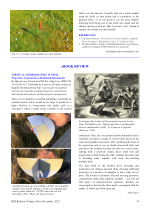
Review of Maciej Lose's free eBook, "Vertical Stereographic Sundial," which extends the concept of the double horizontal dial to various vertical and declining dials using geometric construction rather than algebraic methods.
Book Reviews, Dials: Vertical, Mathematics of Dialling, Sundial Design & Layout
March 2021
Page 8
Page 8
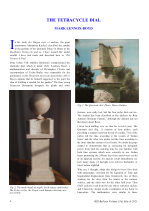
Description of a model sundial inspired by the Meridiana Tetracycla in Rome. It features four niches with analemmas, designed to read GMT throughout the year using corrections for the Equation of Time and longitudinal displacement. The model stands 62 cm high and is made of maple, birch veneer, and bronze.
Construction Projects, Dials: Unusual, Equation of Time, Sundial Design & Layout
June 2021
Page 2
Page 2
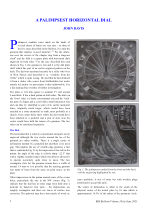
An investigation into a rare horizontal sundial made on a re-used brass plate (a palimpsest). The reverse side reveals an earlier engraving from a memorial brass, identified as a "waster" from the Southwark workshops (c.1600). Metallurgical analysis shows the plate is made of imported high-zinc brass, and the dial's delineation matches the latitude of Southwark.
Dials: Horizontal, Historical Dials, Sundial Design & Layout
June 2021
Page 13
Page 13
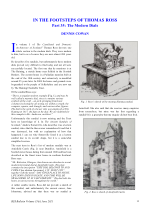
Part 35 of a series tracking dials documented by Thomas Ross, focusing on five "modern dials" (c. 19th century). The article investigates the current status of these Scottish sundials, including the missing dials at The Haining, Amisfield Castle, and Bredisholm, and detailing the surviving, unique designs at Newhall and Grange.
Dials: Multi Faced, Historical Dials, Sundial Design & Layout
June 2021
Page 20
Page 20
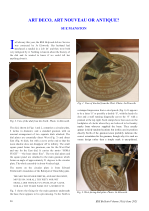
Analyzes a highly unusual circular sundial featuring separate curved direct West and East dials. The investigation, based on numerals and a foundry mark, suggests it might be a custom-made dial by Francis Barker & Son, possibly derived from their 'Antique' model (c. 1907). Concludes the dial incorporates elements of both Art Deco and Art Nouveau styles.
Dials: Vertical, Dials: Unusual, Sundial Design & Layout, Historical Dials
June 2021
Page 37
Page 37
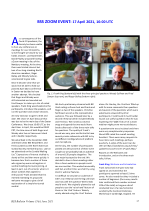
Report on the British Sundial Society's successful virtual conference held via Zoom in April 2021, featuring three noted North American speakers. Talks covered Zarbula and Potey dials in the French Alps, a highly customized ceiling reflection sundial by Woody Sullivan, and Fred Sawyer's theoretical work on Hybrid Peaucellier azimuthal dials designed to eliminate the noon gap.
Dials: Reflected, Mathematics of Dialling, Sundial Design & Layout, The BSS and Members
June 2021
Page 44
Page 44
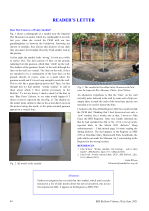
A reader discusses an unusual sundial near the Imperial War Museum, featuring hour lines on the ground that continue vertically up a wall. The author models the dial, hypothesizing that it functions like a giant diptych pocket dial or that the vertical markings are merely endpoints for the hour lines, noting its history in the Fixed Dial Register.
Dials: Portable, Dials: Unusual, How Sundials Work, Sundial Design & Layout
September 2021
Page 26
Page 26
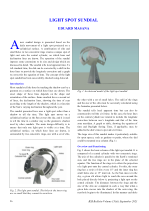
Introduces a novel equatorial sundial design that uses a moving light spot, rather than a shadow, to indicate time. The spot is projected onto a central cylinder via concentric rings with slits and holes. The design requires complex mathematical calculations for accurate sizing and component placement, ideal for large installations.
Dials: Equatorial, Mathematics of Dialling, Sundial Design & Layout
December 2021
Page 2
Page 2
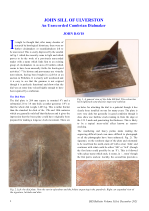
Analyses a newly discovered, unrecorded 17th-century horizontal Cumbrian dial by John Sill, dated 1737. It describes the dial plate specifications, unusual thickness, features (such as oak leaf borders), and XRF materials analysis, identifying copper sources and the controversial use of a selenium-based artificial patina during a past restoration.
Dials: Horizontal, Historical Dials, Restoration projects, Sundial Design & Layout
December 2021
Page 7
Page 7
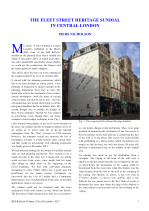
Chronicles the creation of the large Fleet Street vertical declining sundial, culminating in its 2021 opening. Key issues included City of London planning rules (e.g., banning current newspaper mastheads), securing funding during the pandemic, overcoming surveying difficulties using point cloud technology, and the logistical challenges of gnomon fabrication and installation.
Construction Projects, Dials: Vertical, Sundial Design & Layout
December 2021
Page 10
Page 10
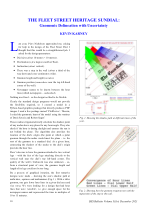
Details the gnomonic design of the large vertical declining Fleet Street dial using Python-based graphics and established trigonometric routines. The model enabled flexible design adjustments, accounting for physical realities like the wall's step and the final highly accurate laser survey data, ultimately producing the precise instruction graphics for the painter.
Construction Projects, Dials: Vertical, Mathematics of Dialling, Sundial Design & Layout
December 2021
Page 13
Page 13
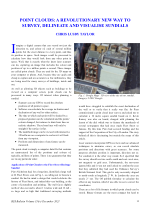
Explores the use of laser scanners and point clouds as a revolutionary method for surveying and designing sundials, accurate to a few millimetres. The technique was used on the Fleet Street dial to determine precise coordinates, declination, and inclination, allowing designers to calculate hour lines and model shadows regardless of surface irregularities.
Construction Projects, Dialling Tools, Mathematics of Dialling, Sundial Design & Layout
December 2021
Page 17
Page 17
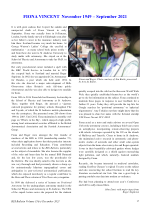
Commemorates Fiona Vincent (1949–2021), the Bulletin's regular proofreader, noting her career as Dundee City Astronomer where she designed two sundials. Highlights her foundational work in positional astronomy web notes, contributions to the BSS Datacard, and research into moondials and small solar-system objects.
Historical Dials, Sundial Design & Layout, The BSS and Members
December 2021
Page 18
Page 18
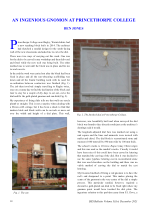
Describes the carving of a south-facing sundial at Princethorpe College, Rugby. The central design constraint was placing a decorative sun disk where the gnomon point usually rests. This was cleverly overcome by using a gnomon featuring a detachable point which was removed after securing the main gnomon.
Dials: Vertical, Sundial Design & Layout, Construction Projects
December 2021
Page 30
Page 30
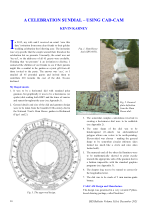
Details the design and CAD-CAM manufacture of a complex hendecagonal hectemoros horizontal sundial for a Golden Wedding anniversary gift. The process used Python graphics (Nodebox) and water-jet cutting to create a bronze plate indicating GMT, sunrise, and sunset, featuring custom algorithms for precise font skewing.
DIY Sundial Projects, Dials: Horizontal, Mathematics of Dialling, Sundial Design & Layout
March 2020
Page 10
Page 10
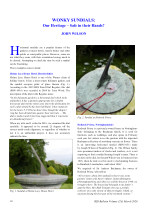
Discusses several examples of horizontal sundials found in public places (Holme Lacy House Hotel, Hodsock Priory, Canons Ashby) that are poorly aligned and useless for telling time. The author carries a compass to check sundial alignment, noting that badly set-up dials discredit those interested in them. The Hodsock Priory dial is attributed to Joseph Wilson of Stamford, circa 1818–1860.
Dials: Horizontal, Sundial Design & Layout, Historical Dials
March 2020
Page 12
Page 12
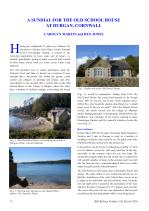
Describes the process of commissioning and constructing a diamond-shaped vertical dial on the Old School House at Durgan, Cornwall. The wall declination was measured at 17½ degrees east of south. The slate dial is adjusted for longitude to show 'Greenwich Apparent Time' and includes a small notch for local noon. It was a collaborative effort involving the National Trust and letter carver Ben Jones.
Construction Projects, Dials: Vertical, Mathematics of Dialling, Sundial Design & Layout
March 2020
Page 23
Page 23
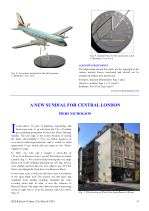
Describes the planning and design of the Fleet Street Heritage Sundial, a vertical dial facing a few degrees north of east, approved after 12 years. Located on the site of Richard Carlile's former publishing house (The Republican), the project commemorates Carlile and others who fought for the freedom of the press. The design incorporates hour lines (6 to 10 am) and newspaper mastheads, aiming to serve as a permanent heritage memorial.
Dials: Vertical, Sundial Design & Layout, Construction Projects
March 2020
Page 36
Page 36
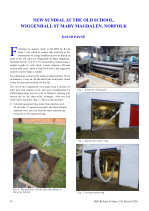
Details the construction of a large 3-metre diameter armillary dial made from surplus mild steel H-beam and stainless steel components. Constructed by TAM Engineering Services Ltd, the dial includes a central aluminum globe nodus and a stainless steel equatorial ring with laser-cut Roman numerals. It was built for the old school in Wiggenhall St Mary Magdalen.
Construction Projects, Dials: Armillary Sphere, Sundial Design & Layout
June 2020
Page 24
Page 24
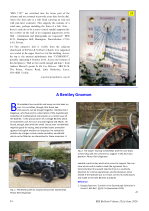
This short piece highlights a unique modification made to a vintage Bentley: a custom-made central stay for a secondary windshield, designed to function visually like a gnomon for a horizontal dial.
Dials: Horizontal, Dials: Unusual, Sundial Design & Layout
September 2020
Page 5
Page 5
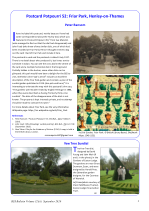
Features a photograph of the Yew Tree dial located in the Gardens of Easton Lodge, near Great Dunmow, Essex. The dial was designed by David Young and John Moir.
Sundial Design & Layout, The BSS and Members
September 2020
Page 22
Page 22
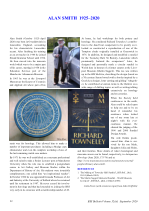
An obituary for Alan Smith (no. 49), noting his career in museum studies and horology. He designed the Towneley Hall Sundial and the Martin Suggett Memorial Sundial in Welsh slate, and contributed extensively to the Bulletin.
Sundial Design & Layout, The BSS and Members
September 2020
Page 28
Page 28
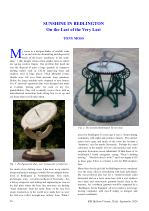
The author recounts the design and project management of his final large sundial: a horizontal mean time dial for his hometown of Bedlington. The stainless steel dial incorporates local history, featuring winding gear designs in the base and a Bedlington Terrier gnomon.
Dials: Horizontal, Sundial Design & Layout, Construction Projects
September 2020
Page 38
Page 38
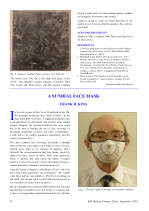
Describes the author's personal DIY project of printing a working stereographic sundial, calculated for his latitude, onto a face mask. Details the construction of a gnomon using a ball-point pen refill and a push pin, and the complexities of reading the time while wearing it.
DIY Sundial Projects, Dials: Portable, Dials: Unusual, Sundial Design & Layout
December 2020
Page 13
Page 13
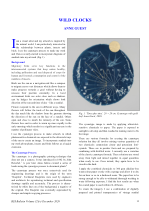
A visual artist describes her artwork inspired by the relationship between nature, the sun, and time. She uses the cyanotype process (a non-camera photographic technique creating white lines on a blue background, similar to blueprints) to incorporate diagrams of properly delineated sundials alongside plants, insects, and birds. Gold leaf is often added to represent the sun.
Dials: Unusual, Sundial Design & Layout
December 2020
Page 28
Page 28
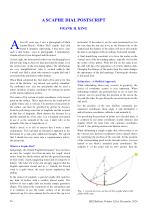
A commentary on Mark Lennox-Boyd's scaphe dial article, providing an alternative, simpler mathematical derivation for plotting points on the spherical surface using horizon coordinates (altitude and azimuth). It also explores the design geometry, showing how the appearance of the dial markings changes based on the ratio of the sphere radius to the rim radius.
Dials: Scaphe, How Sundials Work, Mathematics of Dialling, Sundial Design & Layout
December 2020
Page 41
Page 41
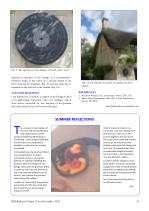
A short piece describing the author’s process of checking the delineation of a simple horizontal sundial by rotating it in the sun to confirm the shadow direction. The text is accompanied by an unusual photograph caught by a "stray click" showing a reflection in sunglasses.
Dials: Horizontal, How Sundials Work, Sundial Design & Layout
December 2020
Page 42
Page 42
A Beginner’s Guide to Delineation: deriving the Lennox-Boyd ‘y’ formula using a gnomonic tetrahedron
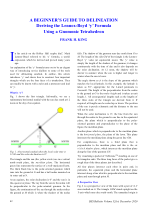
An explanation of Mark Lennox-Boyd's 'y' formula (the length of the shadow of the gnomon nodus from the gnomon root). The formula is derived using spherical trigonometry simplified into four interconnected right-angled triangles forming a 'gnomonic tetrahedron'. This methodology is presented as a helpful tool for novice diallists learning delineation.
Dialling Tools, How Sundials Work, Mathematics of Dialling, Sundial Design & Layout
March 2019
Page 2
Page 2
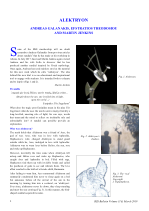
Describes a new universal stainless steel equatorial sundial called 'Alektryon', inspired by Greek mythology (the story of the sleepless cockerel). Designed by Andreas Galanakis, it serves as an educational tool with adjustments for latitude and practical uses like orientation and star gazing. Its proportions were determined using the golden ratio instrument, Eumetron.
Construction Projects, Dials: Equatorial, Sundial Design & Layout
March 2019
Page 12
Page 12
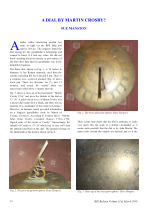
Investigates a 1766 brass horizontal sundial found via the BSS Help and Advice Service. Although signed 'Martin Crosby', the latitude (53° 30ʹ) suggests the maker was likely John Martin of Great Crosby, Liverpool, a known clockmaker. The dial is notable for its minute-interval 'vernier' transversals and pierced gnomon.
Dials: Horizontal, Historical Dials, Sundial Design & Layout
March 2019
Page 26
Page 26
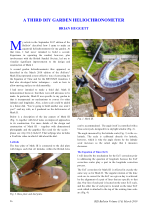
Details the creation of 'Mark III', an improved, portable equatorial heliochronometer. Key features include mechanisms for latitude adjustment (co-latitude scale), longitude correction (rotating the outer EoT scale), and a design for the date scale that minimises readability issues by allowing it to move in an arc. It uses Kevlar string for the gnomon and PTFE tape for smooth movement.
DIY Sundial Projects, Dials: Heliochronometer, Equation of Time, Sundial Design & Layout
June 2019
Page 7
Page 7
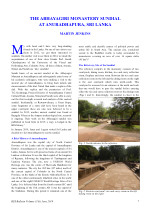
Investigates an ancient horizontal stone sundial (made of quartzofeldspathic gneiss) found at the Abhayagiri Monastery refectory (latitude 8° 24′ N). The dial, now in a museum, has 32 segments, but was likely primarily used to check time (around solar noon) for the monks' daily meal schedule according to Buddhist discipline.
Dials: Unusual, Historical Dials, Sundial Design & Layout
September 2019
Page 36
Page 36
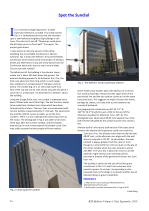
This piece describes a very large, difficult-to-spot sundial located high on the south-east face of the Alfred A. Arraj United States Courthouse in Denver, Colorado. The dial, declining 48.08° east, is estimated to be 38 feet wide by 19 feet high, uses stainless steel strips for furniture, and demonstrates the building’s green credentials.
Construction Projects, Dials: Vertical, Sundial Design & Layout
December 2019
Page 2
Page 2
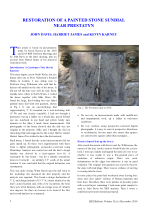
This article details the complex restoration of a large, venerable painted stone sundial near Prestatyn. After initial miscalculations, detailed analysis confirmed its 18th-century origin and correct design latitude. Scientific paint analysis suggested an original smalt blue and gilded finish. The sundial was subsequently restored, repainted, gilded, and reinstalled, canted correctly for its location.
Dials: Vertical, Historical Dials, Restoration projects, Sundial Design & Layout
December 2019
Page 12
Page 12
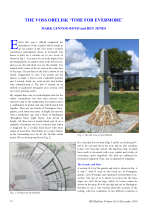
This article details the design and installation of a 3-metre tall obelisk sundial in Cornwall. The obelisk has an equilateral triangular cross-section, featuring two declining/reclining dials engraved on granite and slate, plus a simplified EoT correction table on the north face. Precise GPS alignment and a custom stainless steel turntable were used during installation to achieve high accuracy.
Construction Projects, Dials: Multi Faced, Mathematics of Dialling, Sundial Design & Layout
December 2019
Page 24
Page 24
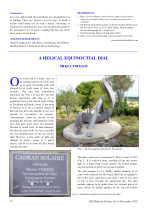
Description of a recently constructed, large helical equinoctial dial located in Fouzilhon, France. Made of Vosges granite, the dial features a gnomon with a unique helical slot that projects a strip of light onto the hour scale engraved inside the helical chapter ring. The design also incorporates zodiac signs and information on Equation of Time corrections.
Dials: Equatorial, Dials: Unusual, Sundial Design & Layout, Construction Projects
December 2019
Page 32
Page 32
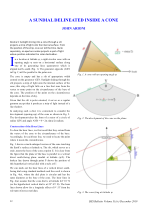
A technical article detailing the design and mathematics of a sundial delineated inside a right circular cone. Sunlight passing through a polar-oriented slit projects a time-telling strip of light onto the interior surface. An aperture nodus simultaneously projects a spot indicating the solar declination. The article includes formulae for deriving hour lines and the characteristic closed-curve calendar lines.
Dials: Unusual, How Sundials Work, Mathematics of Dialling, Sundial Design & Layout
December 2019
Page 37
Page 37
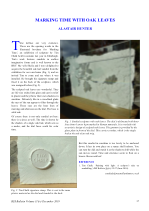
A description of an oak leaf sundial sculpture acquired from an exhibition by Tim Chalk. The piece features life-size oak leaves etched into glass and cast in plaster, creating the hour lines using their shadows. A single oak bud acts as a nodus to show solar time, making it both an artistic and scientific piece.
Construction Projects, Dials: Unusual, Sundial Design & Layout
December 2019
Page 39
Page 39
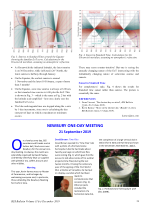
A comprehensive report detailing the presentations given at the annual BSS Newbury meeting. Topics included David Brown's project updates, Frank King's heliodrome concept, Ben Green's heliochronometer, David Burstall’s glass equatorial dial, discussions on the Fixed Dial Register, portable dials, and Martins Gills' new Latvian sundials and the Sundials Atlas website update.
Construction Projects, Historical Dials, Sundial Design & Layout, The BSS and Members
March 2018
Page 14
Page 14
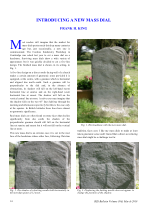
Describes the creation of a new, five-line mass dial cut into the west face of a headstone in East Anglia. The dial declines 14° south of due west. The author discusses the gnomonic challenges of such an orientation and demonstrates that using a horizontal, north-south aligned gnomon allows the shadow to align with the vertical noon line.
Dials: Mass Dials, Sundial Design & Layout
March 2018
Page 34
Page 34
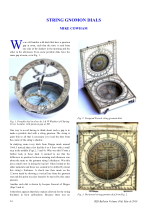
Investigates string gnomon dials, especially those from Dieppe (c. 1660), and their calibration methods. The author suggests that makers intentionally offset the hour lines by the thickness of the string so that the user could read the time from the leading edge of the shadow, circumventing the need for a gnomon gap at noon.
Dials: Portable, Historical Dials, Sundial Design & Layout
June 2018
Page 17
Page 17
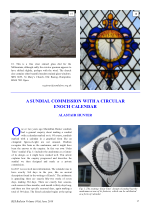
Details a commission for a vertical sundial incorporating a circular graphic of the Enoch calendar, which follows a 364-day year. The calendar graphic, divided into 52 weeks and 12 months, is superimposed but operates independently of the solar delineation due to the difference between the calendar and the true solar year.
Construction Projects, Dials: Vertical, Sundial Design & Layout
June 2018
Page 41
Page 41
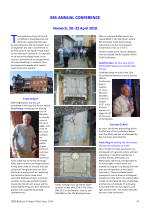
Report on the conference, including presentations on modelling the Earth's terminator, developments in double horizontal dials, Brian Huggett's heliochronometer (Mark II), and research on sundial patentee E.G. Hewitt. The conference also featured tours of local historical dials and the Andrew Somerville Memorial Lecture.
Historical Dials, How Sundials Work, Sundial Design & Layout, The BSS and Members
September 2018
Page 2
Page 2
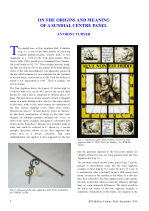
Investigates the history and iconography of the central rectangular image of a putto holding a dial, found on a c. 1670 painted-on-glass window dial by Henry Gyles (York). The source is traced back to a Venetian painting, 'The little tambourine player,' which was transformed into a *memento mori* by engraver Jacob Matham, including symbols of vanity like an hourglass and arrow.
Dials: Stained Glass, Historical Dials, Sundial Design & Layout
September 2018
Page 12
Page 12
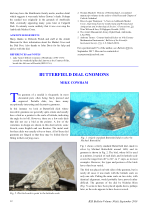
Examines the ornate, hinged gnomons of portable Butterfield dials (usually silver or brass), typically featuring a bird whose bill acts as the latitude pointer. Variations in design are illustrated, including non-bird supporters such as a lion, dolphin, leaf, or swan, spanning French, English, and one Russian example.
Dials: Portable, Historical Dials, Sundial Design & Layout
September 2018
Page 24
Page 24
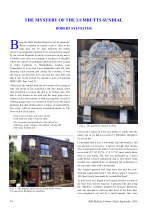
Investigates a vertical stone dial (1864) in Lumbutts, Calderdale, made by schoolmaster James Travis Whittaker MD. Despite accurately engraving the latitude, the hour lines were grossly incorrect. The author discovered Whittaker had mistakenly used the hour line spacings calculated for a *horizontal* dial at that latitude, rather than a vertical one.
Dials: Vertical, Historical Dials, Sundial Design & Layout
September 2018
Page 28
Page 28
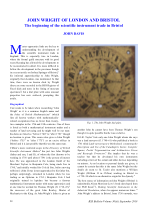
Investigates John Wright, a London-trained instrument maker who initiated Bristol’s scientific instrument trade in 1756. A rare, well-preserved horizontal dial plate signed 'Jo Wright London' is analysed, showing fine engraving and wax infill. The plate features unusual slots around the compass rose whose purpose, possibly related to magnetic variation or EoT, remains an open puzzle.
Dials: Horizontal, Historical Dials, Sundial Design & Layout
September 2018
Page 33
Page 33
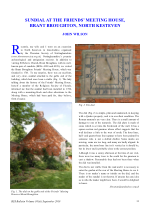
Describes a simple, unadorned stone vertical sundial installed in 1780 on the gable end of the Friends’ Meeting House in Brant Broughton, Lincolnshire. The square-section rod gnomon suggests the wall declines slightly west of south. Although the numerals are clear, the hour lines are poorly painted and the noon line is not vertical, indicating an unskilled diallist.
Dials: Vertical, Historical Dials, Sundial Design & Layout
December 2018
Page 7
Page 7
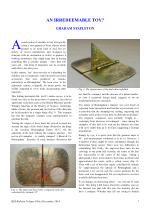
Investigates a small, folding brass horizontal dial stamped 'Birmingham Patent 1875' similar to examples found in many collections. Analysis confirms the gnomon angle is 45° but the hour lines are grossly incorrect for Birmingham’s latitude (52°), leading to the conclusion that this antique object is functionally useless and an irredeemable 'toy'.
Dials: Portable, Historical Dials, Sundial Design & Layout
December 2018
Page 11
Page 11
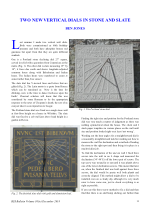
Details the commission and creation of two vertical wall dials. One is a declining Portland stone dial with a Copernicus quote. The second is a south-facing slate dial showing common, Babylonian, and Italian hours, utilising a notched rod gnomon to serve as a nodus and aid in reading the complex hour systems.
Construction Projects, Dials: Vertical, Sundial Design & Layout
December 2018
Page 14
Page 14
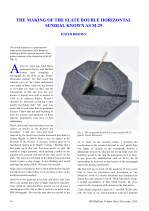
Account of crafting the M-29, a complex slate double horizontal dial delineated for Somerton. The design required extensive research, spreadsheets for data, and the extension of a beam compass to handle large radii for the stereographic projection. The article details the construction process, including V-cutting, material choice, and gnomon construction.
Construction Projects, Dials: Double Horizontal, Sundial Design & Layout
December 2018
Page 19
Page 19
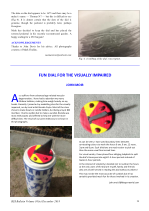
Describes a functional horizontal sundial made in a clay modelling class for the visually impaired. It uses boundary lines between contrasting colours and ladybirds marking 1.5-hour intervals, prioritizing visibility and simplicity over high accuracy for its users.
Construction Projects, Dials: Unusual, Sundial Design & Layout
December 2018
Page 20
Page 20
Detailed account of creating an outdoor reflection sundial over five years for a north-facing wall, using a mirror to project a sunspot. The final brass design is a hybrid, using virtual gnomon hour lines for GMT and analemmas marked by planets and asteroids for clock time correction, also celebrating the birth of grandchildren.
Construction Projects, Dials: Reflected, Sundial Design & Layout
December 2018
Page 27
Page 27
A reader questions the accuracy of the east-facing dial on Gouda town hall. By overlaying a correct pattern, the author concludes the hour lines are flawed and makes the tongue-in-cheek suggestion that the pattern might have been copied from local treacle waffles (stroopwafels).
Historical Dials, Sundial Design & Layout
December 2018
Page 43
Page 43
Details the creation of a large marble mosaic floor in Arsenal FC's hospitality space, Dial Square, referencing the club's birthplace and the original Dial Arch sundial (1886). The BSS was consulted regarding the original sundial's missing numeral 'VII', confirming it was likely due to space constraints.
Historical Dials, Sundial Design & Layout
June 2017
Page 2
Page 2
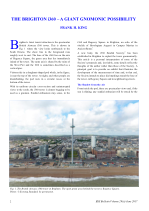
This article explores the irresistible temptation to use Brighton's vertical i360 tower as the gnomon for an azimuthal sundial. It details the i360 Sundial Society's proposals to mark time paths and date paths on the built-up, sloping ground of Regency Square using specially-made bricks.
Construction Projects, Dials: Unusual, Sundial Design & Layout
June 2017
Page 39
Page 39
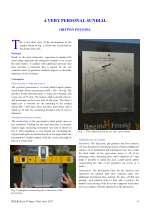
The author describes the design and laser-cut construction of a stainless steel pin gnomon gravestone sundial on black granite. The vertical dial includes solstices/equinoxes lines and additional declination lines marking the birth and passing dates of the author’s wife.
Construction Projects, Dials: Vertical, Sundial Design & Layout
September 2017
Page 16
Page 16
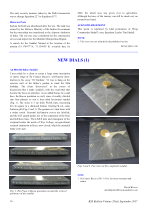
This describes a 40cm square, diamond-format horizontal sundial made of Welsh slate, featuring a brass gnomon with a nodus notch. It includes an EoT graph and declination curves. The inscription uses four phrases from Sir Francis Bacon’s essay ‘Of Gardens’ and was commissioned as an 80th birthday gift.
Dials: Horizontal, Sundial Design & Layout
September 2017
Page 22
Page 22
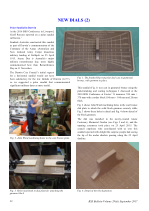
This article describes a polar sundial constructed by Sundials Australia for the Anzac Centenary Memorial Garden in Darwin (latitude 12.5° N). The gunmetal bronze dial includes a block gnomon and features a dedicated dateline for 25 April, Anzac Day.
Construction Projects, Dials: Polar, Sundial Design & Layout
September 2017
Page 23
Page 23
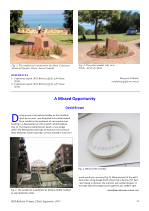
Reporting on a sundial seen on a new building in Dickens Heath, Solihull, the author notes that, despite initial delight, the dial was inaccurate upon closer inspection. The wall declines 59° East, and the author intends to contact the designer to persuade them to correct the inaccuracies.
Dials: Vertical, Sundial Design & Layout
September 2017
Page 36
Page 36
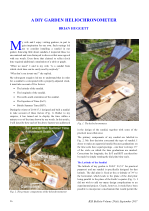
This details the design and construction of a DIY equatorial heliochronometer intended to show clock time easily. It compensates for latitude, longitude, BST, and EoT by allowing the time scale (mounted on a rotating dial plate annulus) to be physically rotated via an acrylic pointer aligned to an EoT graph. The gnomon is a thin, tensioned stainless steel wire.
DIY Sundial Projects, Dials: Equatorial, Dials: Heliochronometer, Sundial Design & Layout
September 2017
Page 46
Page 46
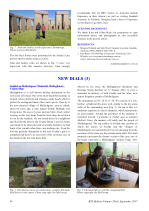
This describes a memorial in Mullaghmore, Ireland, commemorating forgotten villagers, featuring a six-foot sandstone capstone incorporating a limestone sundial. The dial, designed by Christian Meyer, indicates local sun-time and features a stainless steel gnomon with Celtic interlacery. The sundial symbolises the passing of time.
Construction Projects, Dials: Horizontal, Sundial Design & Layout
December 2017
Page 6
Page 6
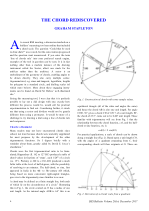
Examines how a chord scale (such as on a Sector instrument or line of chords rule) can be used for geometrically laying out a dial design. The article discusses the historical use and trigonometry of chords and compares the process to using a protractor.
Dialling Tools, Mathematics of Dialling, Sundial Design & Layout
March 2016
Page 13
Page 13
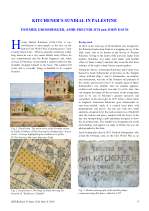
Details the sophisticated east–west sundial presented by Horatio Herbert Kitchener in Haifa in 1875 to his host, Jacob Schumacher. The dial uses a vertical brass plate with apertures to cast light spots onto a bottom plate marked with a split analemma to show local mean time.
Dials: Noon Lines, Equation of Time, Historical Dials, Sundial Design & Layout
March 2016
Page 17
Page 17
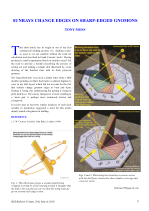
Discusses a common error made by beginners in sundial design concerning how sunrays change edges on sharp-edged gnomons at 6 am and 6 pm, in addition to the more widely known ‘noon gap’. Getting this aspect wrong results in incorrect dial layouts.
How Sundials Work, Mathematics of Dialling, Sundial Design & Layout
March 2016
Page 20
Page 20
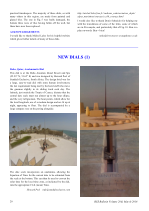
Description of a large, modern, analemmatic dial designed by Howard Peel for the Doha Anantara Island Resort and Spa. The dial's design requires the hotel staff to move the gnomon daily and incorporates an analemma scale for estimating the Equation of Time.
Dials: Analemmatic, Equation of Time, Sundial Design & Layout
September 2016
Page 11
Page 11
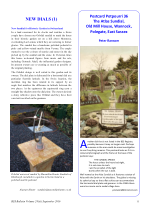
Description of the installation of an Orbdial universal sundial, made by Macmillan Hunter Sundials, in a historic garden above Montreux, Switzerland. The design features a meridian ring that was rotated to compensate for the difference in latitude between its Scottish delineation and its final Swiss location.
Construction Projects, Dials: Unusual, Sundial Design & Layout
September 2016
Page 12
Page 12
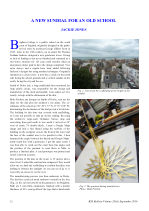
Details the successful construction and installation of a large, square, gold-leafed vertical sundial (1860 mm square) on the newly completed gatehouse tower of Brighton College. The dial was delineated 24° west of south and manufactured by Smith of Derby, utilizing modern materials and techniques.
Construction Projects, Dials: Vertical, Sundial Design & Layout
September 2016
Page 21
Page 21
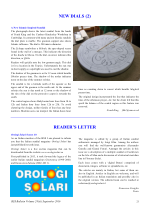
Describes a new 500 mm marble horizontal sundial designed with Islamic influences for a tropical location. Features include a low gnomon angle, a Mihrab-inspired carved Ω shape showing Qibla (direction to Mecca), and Babylonian/Italian hour lines to help Muslim users determine prayer times (Dhuhur and Maghrib).
Construction Projects, Dials: Horizontal, Dials: Unusual, Sundial Design & Layout
September 2016
Page 28
Page 28
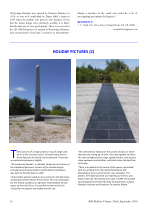
Features photographs of a large horizontal sundial/calendar built in 1995 on Parnidis Dune, Lithuania. The obelisk-style gnomon, originally 12 metres high, was knocked down by a hurricane in 1999. The steps leading up to noon signify hours, equinoxes and solstices.
Dials: Horizontal, Sundial Design & Layout
September 2016
Page 34
Page 34
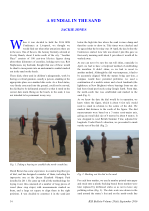
Describes the construction of a large, temporary 6x4 metre analemmatic sundial marked out in the sand at Crosby Beach, Liverpool, utilizing one of Antony Gormley’s cast-iron statues as the gnomon. The team had to use satnav and landmarks to establish the meridian due to the lack of sun.
Construction Projects, Dials: Analemmatic, Sundial Design & Layout, The BSS and Members
December 2016
Page 6
Page 6
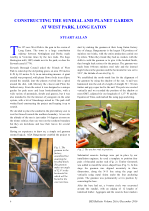
Details the construction of a giant horizontal sundial and accompanying planet garden. The stainless steel rod gnomon was set at the site's 52.9° latitude. The dial uses mosaic tesserae to mark GMT and BST hours, and incorporates solstice markers and an equinox arch.
Construction Projects, Dials: Horizontal, Sundial Design & Layout
December 2016
Page 29
Page 29
Report covering talks from the 2016 Newbury Meeting. Highlights include John Bird dial investigation, Didsbury stained glass restoration updates, discussions on Wenger and Mojoptix dials, approaches to moon dials, modern sundial challenges, and the Easton Lodge restoration project.
Historical Dials, Restoration projects, Sundial Design & Layout, The BSS and Members
March 2015
Page 5
Page 5
Details the design and construction of a new elliptical vertical dial crafted from grey Burlington slate for a private commission in Wales.
Dials: Vertical, Sundial Design & Layout, Construction Projects
March 2015
Page 28
Page 28
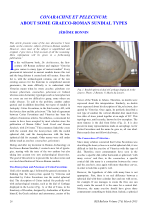
A specialized study proposing a revised classification of Graeco-Roman sundial types based on literary sources (Vitruvius, Cetius Faventinus) and archaeological evidence, including newly identified examples.
Dials: Unusual, Sundial Design & Layout, Historical Dials, Dials: Scaphe
March 2015
Page 38
Page 38
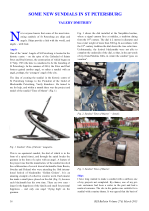
A description of three contemporary sundials installed in or around St Petersburg in 2014. These include the equatorial 'Time of Master' dial, constructed by multiple blacksmiths and featuring an angel on a spire; the 'Sailing vessel' dial based on the frigate Standart; and the 'Dandelion or nothing is forever' dial, designed by a 12-year-old following a children's competition.
Construction Projects, Dials: Equatorial, Dials: Unusual, Sundial Design & Layout
June 2015
Page 6
Page 6
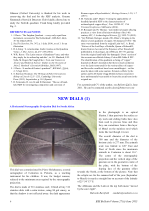
This details the commissioning and construction of a horizontal stereographic projection dial made of stainless steel for Pierre Holtzhausen in Centurion, Pretoria, South Africa, intended as a teaching instrument.
Construction Projects, Dials: Horizontal, Sundial Design & Layout
June 2015
Page 15
Page 15
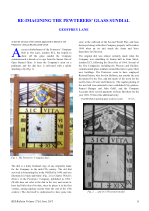
An examination of the new glass sundial commissioned for the Pewterers’ Company Hall, which is a copy of a mid-17th century original by Richard Dutton. It suggests a possible full reconstruction of the original dial and its architectural surround based on historical descriptions.
Dials: Vertical, Historical Dials, Sundial Design & Layout
June 2015
Page 28
Page 28
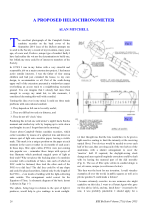
The author details his invention proposal from 1978/79 for a unique heliochronometer, which uses a spherical lens (like a Campbell–Stokes recorder) to focus sunlight onto a grid of Fibre Optic Cables (FOCs) that relay the light to a display. The proposed dial was never built.
DIY Sundial Projects, Dials: Heliochronometer, Sundial Design & Layout
September 2015
Page 2
Page 2
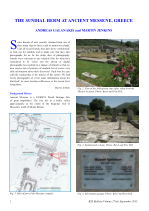
Describes the conceptualisation, design, and installation (2011) of a modern equatorial sundial named 'Sundial Herm' at the ancient UNESCO site of Messene, Greece. It details its unique numbering system, artistic philosophy, orientation challenges, and connection to ancient monumental orientations.
Dials: Equatorial, Sundial Design & Layout, Construction Projects
September 2015
Page 13
Page 13
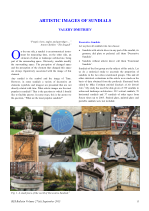
A statistical study analysing the popularity of artistic images (Earth, Sun, Man, God, Water, Air, Fire) used as decorative elements on 339 British sundials. It categorises sundials into 'Decorative' and 'Functional', and discusses trends between 'old' (pre-1900) and 'modern' designs.
Dials: Unusual, Historical Dials, Sundial Design & Layout
September 2015
Page 20
Page 20
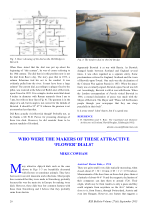
Investigates small ivory diptych dials decorated with flowers or animals, dating to around 1720, possibly originating from Austria (latitude 46.6° N). Details common features, such as the style of the numeral '2', and suggests they were made for ladies due to their size and decoration.
Dials: Portable, Historical Dials, Sundial Design & Layout
September 2015
Page 30
Page 30
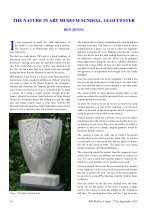
Details the complex design and construction process of a large, conical, declining and reclining sundial made from local Forest of Dean stone for Wallsworth Hall, Gloucester. Describes the challenges of working on an uneven surface and using horizontal dials to establish alignment.
Construction Projects, Dials: Unusual, Sundial Design & Layout
September 2015
Page 40
Page 40
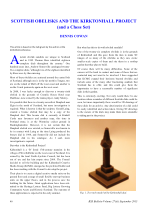
Discusses the Kirktonhall Creative Media Group project to create 3D images and small-scale copies of unique Scottish obelisk sundials for a rooftop garden archive. The author also playfully suggests a sundial-themed chess set using various famous Scottish dials.
Construction Projects, Dials: Multi Faced, Historical Dials, Sundial Design & Layout
December 2015
Page 2
Page 2
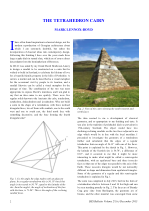
Describes the design and construction of a 9–10 foot high tetrahedron-shaped cairn in Perthshire, Scotland, commissioned by David Heathcoat-Amory. It incorporates two declining reclining sundials and aligns its north edge and gnomons with the Earth's axis.
Construction Projects, Dials: Multi Faced, Dials: Unusual, Sundial Design & Layout
December 2015
Page 28
Page 28
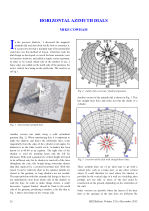
Discusses the construction and layout of horizontal azimuth dials, which use a vertical cylindrical gnomon instead of a polar-aligned one. Various decorative shapes and layouts are explored, noting the complexity of reading the time compared to normal horizontal dials.
Dials: Horizontal, How Sundials Work, Sundial Design & Layout, DIY Sundial Projects
December 2015
Page 42
Page 42
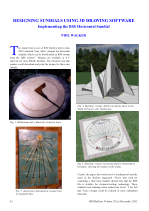
Explains how 3D drawing software (Trimble's Sketchup Make) can be used for sundial design and virtual shadowing. Details the process of creating a physical BSS horizontal dial using a laser-etched plastic plate and a 3D printed gnomon from Shapeways.
DIY Sundial Projects, Dials: Horizontal, Sundial Design & Layout
March 2014
Page 14
Page 14
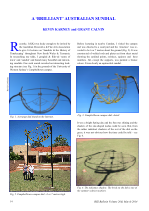
This article describes the Solar Chronograph II, a large equinoctial dial sculpture by Grant Calvin at the University of Western Sydney. The user tells time by lining up so their head shadow eclipses the star-shaped nodus, then turns to look at the nodus which brilliantly eclipses the sun. The design is intended as an educational tool promoting passive solar energy management and sustainable building design.
Construction Projects, Dials: Equatorial, How Sundials Work, Sundial Design & Layout
March 2014
Page 18
Page 18
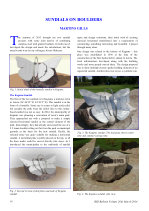
This piece details two stainless steel and granite sundial projects in Latvia. The Kegums Sundial (56°44' N) is a nodus-based butterfly design, inclined at 40 degrees, which displays winter time and summer savings time. The Marsneni Sundial (57°25' N) is an equatorial dial supported by three stones, using dots for hour notation and incorporating Latvian ethnographic signs.
Construction Projects, Dials: Equatorial, Dials: Unusual, Sundial Design & Layout
March 2014
Page 21
Page 21
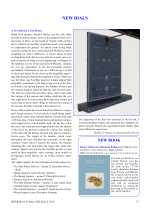
The author designed a vertical, direct south-facing sundial made of unpolished black marble for his new home in Northern Ireland. The dial uses a horizontal gnomon rod, and the length of the shadow cast at noon indicates the eight traditional calendric events that divide the year, such as the solstices and equinoxes, marked by Neolithic spiral motifs.
Construction Projects, Dials: Vertical, Sundial Design & Layout
March 2014
Page 35
Page 35
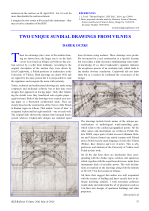
This article analyses two architectural drawings from 1942, likely academic work from the University of Vilnius. Although based on the octagonal Tower of the Winds in Athens, the designs delineate modern equal hours using noduses. They show detailed declining sundials for the location's latitude of 54°41′13ʺ, including declination lines for Zodiac signs.
Historical Dials, Sundial Design & Layout
June 2014
Page 2
Page 2
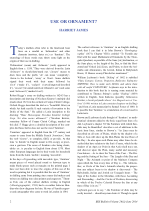
Discusses the evolution of terminology in dialling, particularly 'delineation' (functional hour lines) and 'furniture' (other elements like mottoes or mathematical additions). It traces the use of 'furniture' back to 17th-century dialling books by Brown and Leybourn, who viewed these additions as secondary to the basic hours.
Historical Dials, Mathematics of Dialling, Mottoes, Sundial Design & Layout
June 2014
Page 7
Page 7
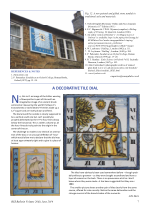
Describes a 12-inch square decorative tile dial featuring an imaginative image of an ancient Greek astronomer (possibly Eratosthenes or Archimedes). Although intended as a vertical south dial, the delineation appears incorrect due to hour lines drooping below the horizontal, leading to a challenge for readers to find a valid orientation.
Dials: Unusual, Dials: Vertical, Historical Dials, Sundial Design & Layout
June 2014
Page 8
Page 8
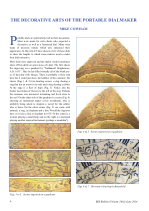
Explores the rich decoration found on portable dials, often made of precious metals or ivory for wealthy clients. Examples include engraved hunting scenes, decorative lettering, book-form dials, and symbolic imagery like 'Old Father Time' and 'The Green Man'. Decoration frequently featured coloured waxes and detailed engraving.
Dials: Portable, Historical Dials, Mottoes, Sundial Design & Layout
June 2014
Page 16
Page 16
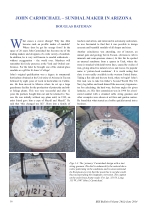
Profiles John Carmichael, detailing his career shift from horticulture to becoming a leading sundial maker in Tucson. It describes his primary design using a stranded cable gnomon, his use of modern software for complex dials (like heliochronometers), and his artistic stained glass dials and durable vitreous enamel finishes.
Construction Projects, Dials: Heliochronometer, Dials: Vertical, Sundial Design & Layout
June 2014
Page 21
Page 21
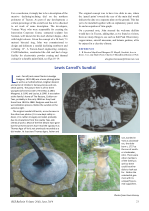
Describes the sundial located at The Rectory, Croft-on-Tees, the home of Lewis Carroll (Charles Lutwidge Dodgson). The extant dial, although corroded, is believed to be signed by Thomas Agar of York and features a substantial gnomon supported by unique pyramid supporters.
Historical Dials, Sundial Design & Layout
June 2014
Page 22
Page 22
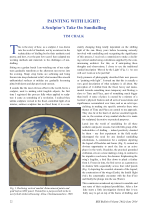
A sculptor reflects on the aesthetic and poetic aspects of sundials, seeing his work as ‘painting with light’. He details several sculptural commissions, including a combined horizontal and equatorial dial with a glass centre, the Scottish Enlightenment lectern dial, and the Robert Burns sculptural sundial.
Construction Projects, Dials: Equatorial, Dials: Vertical, Sundial Design & Layout
June 2014
Page 28
Page 28
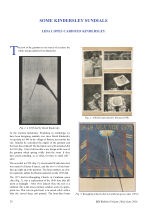
Showcases sundials produced by the Cardozo Kindersley Workshop, focusing on decorative elements like sunbursts at the gnomon root and specialized lettering techniques. Examples include a dial in blue frosted glass and a pair of SE/SW dials using platinum leaf for the furniture.
Construction Projects, Mottoes, Sundial Design & Layout
June 2014
Page 35
Page 35
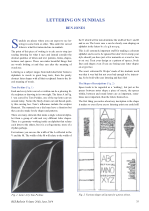
Discusses lettering as a crucial abstract and sculptural element on sundials, emphasizing the importance of space, pattern, and texture over purely literal meaning. The article explores techniques like V-incising, raised letters, anagrams, and double texts to enhance the visual and conceptual structure of the inscriptions.
Mottoes, Sundial Design & Layout
June 2014
Page 39
Page 39
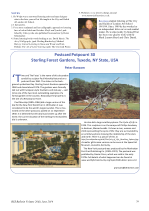
Features postcards illustrating Paul Manship’s decorative sundial, ‘Time and The Fates’, located at Sterling Forest Gardens in Tuxedo, NY. It also references a larger version exhibited at the 1939 New York World Fair, believed to be the world's largest sundial at the time.
Historical Dials, Sundial Design & Layout
June 2014
Page 40
Page 40
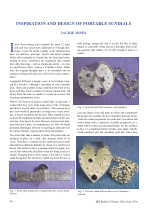
Details the process of creating contemporary silver portable sundials, combining jewellery techniques with accurate gnomonics. The article describes various forms—polar, necklace, and box dials—and unique methods used to achieve decorative surface finishes, such as using sandpaper or wire wool in rolling mills.
Construction Projects, DIY Sundial Projects, Dials: Portable, Sundial Design & Layout
June 2014
Page 47
Page 47
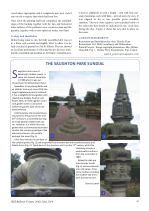
Describes the tall, ornately decorated multi-faced sundial located in the rose garden of Saughton Park, Edinburgh. The upper parts, including four vertical circular dials and a decorative finial, date from the 17th century, while the lower supporting structure resulted from an 1899 restoration.
Dials: Multi Faced, Historical Dials, Sundial Design & Layout
June 2014
Page 48
Page 48
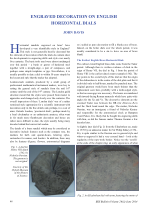
Traces the evolution of decorative styles on English horizontal brass dials from the Tudor era through to the 19th century, contrasting the restrained 'London pattern' with provincial styles. It details decorative elements such as pierced gnomons, the use of oakleaf borders, and the introduction of the Equation of Time scales.
Dials: Horizontal, Equation of Time, Historical Dials, Sundial Design & Layout
September 2014
Page 2
Page 2
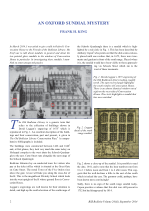
An investigation into two painted glass sundials in the windows of Convocation House at the Old Bodleian Library in Oxford, focusing on their history, appearance, dating, and the discovery that the south dial is incorrectly installed, facing the wrong way.
Dials: Vertical, Historical Dials, Restoration projects, Sundial Design & Layout
September 2014
Page 30
Page 30
An intellectual exercise detailing the design considerations for a fixed calendar dial installed on the Moon. Due to the slow solar motion (180° in 15 days), the dial would calibrate the scale in terrestrial days (15–0) remaining until solar culmination or sunset, best constructed from readily available lightweight materials like cardboard.
Construction Projects, Dials: Unusual, Sundial Design & Layout
December 2014
Page 20
Page 20
A detailed report on the restoration of a badly worn carved wooden vertical dial, dated 1765, found on Nazeing Church tower. Due to the dial's poor condition, a new chestnut wood replacement was crafted by Barrie Winter. The design analysis confirmed the motto “Meridies Solarium” and the inclusion of solar azimuth lines.
Dials: Vertical, Historical Dials, Restoration projects, Sundial Design & Layout
December 2014
Page 26
Page 26
This is a story of a sundial commission which started out full of promise, but has ended up as a sundial which has never had a chance to tell the time, and which now never sees the sun.
Dials: Horizontal, Sundial Design & Layout, Construction Projects
December 2014
Page 27
Page 27
A summary of the Newbury BSS meeting, covering diverse topics including David Brown's talk on commission pitfalls and Kevin Karney's push for mean time dials incorporating the Equation of Time. Frank King reported on historical dials at the Bodleian Library. Attendees viewed the Druid helical mean-time dial at Bayford House Care Home.
Equation of Time, Historical Dials, Sundial Design & Layout, The BSS and Members
March 2013
Page 2
Page 2
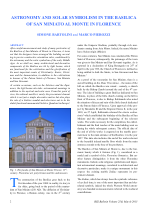
An in-depth study of how the Basilica of San Miniato al Monte was aligned to capture sunlight on key Christian feast days. The article explores the relationship between architecture, astronomy, and religious symbolism in medieval Florence.
Historical Dials, How Sundials Work, Mathematics of Dialling, Sundial Design & Layout
March 2013
Page 23
Page 23
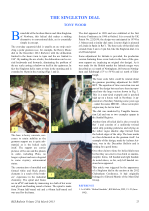
A technical and historical description of the patented ‘Singleton’ helical sundial. The article explains its geometry, manufacture, and later examples exhibited and sold in Britain.
Dials: Heliochronometer, Dials: Unusual, Mathematics of Dialling, Sundial Design & Layout
March 2013
Page 48
Page 48
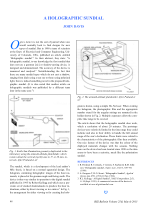
A discussion of an experimental holographic sundial design first described in 1990. The article explains how holography can replace the traditional gnomon and analyses its optical accuracy.
Dials: Unusual, How Sundials Work, Mathematics of Dialling, Sundial Design & Layout
June 2013
Page 12
Page 12
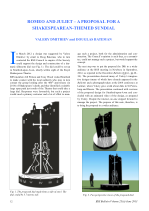
An artistic proposal for a monumental sundial inspired by *Romeo and Juliet*, designed for Stratford-upon-Avon. The article describes its symbolism, geometry, and design for public installation.
Dials: Horizontal, Dials: Vertical, Sundial Design & Layout, The BSS and Members
June 2013
Page 14
Page 14
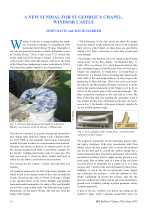
An illustrated account of designing and installing a new bronze vertical sundial at St George’s Chapel, Windsor Castle, featuring the Garter motto and a gnomon based on the Bray family’s heraldic ‘hemp press’.
Dials: Vertical, Historical Dials, Restoration projects, Sundial Design & Layout
June 2013
Page 42
Page 42
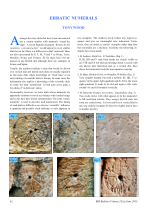
A discussion of inconsistencies in Roman numeral use on historical sundials, examining the mix of IIII and IV and what it reveals about dial-maker conventions.
Historical Dials, Mottoes, Sundial Design & Layout
September 2013
Page 2
Page 2
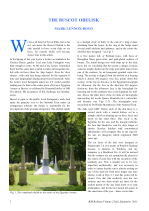
Detailed account of designing and constructing a five-metre tall hexagonal obelisk for Buscot Park to celebrate Queen Elizabeth's Diamond Jubilee. It features seven dials on six slate faces, adjusted for the equation of time and longitudinal displacement, reading GMT, and incorporating Egyptian hieroglyphs.
Construction Projects, Dials: Multi Faced, Sundial Design & Layout
September 2013
Page 16
Page 16
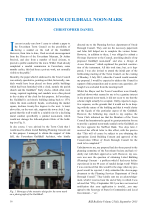
Account of securing Listed Building Consent for a painted noon-mark on the historic Faversham Guildhall, celebrating the Queen's Diamond Jubilee. The design features a gilded meridian line and a nodus on a gilded sun image, which projects a light spot to indicate the instant of Local Apparent Noon.
Construction Projects, Dials: Noon Lines, Dials: Vertical, Sundial Design & Layout
September 2013
Page 24
Page 24
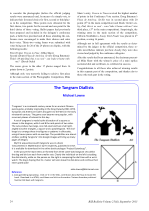
Introduction to Tangrams, an ancient Chinese puzzle game originating in the Song Dynasty (960-1279), involving seven geometric pieces derived from a square dissection. The article relates this puzzle to dialling illustrations, depicting figures formed from Tangram sets observing a sundial.
Dials: Unusual, Sundial Design & Layout
September 2013
Page 40
Page 40
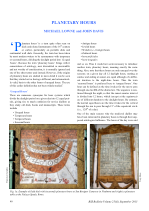
Detailed study differentiating ‘planetary hours’ from seasonal hours. Historically, planetary hours were defined by the time taken for 15-degree intervals of the ecliptic to rise (Sacrobosco’s definition), resulting in hours of unequal duration throughout the day, which are complex to delineate on sundials compared to the simpler seasonal definition.
Historical Dials, How Sundials Work, Mathematics of Dialling, Sundial Design & Layout
December 2013
Page 14
Page 14
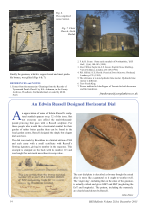
Describes a simple, elegant horizontal sundial designed by Edwin Russell, produced by Brookbrae in a limited edition of 500. The cast dial-plate is gunmetal, with etched 'engraving' for GMT and BST, neglecting the EoT and longitude.
Dials: Horizontal, Sundial Design & Layout
December 2013
Page 22
Page 22
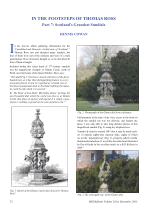
Explores four magnificent 17th-century Scottish sundials documented by Thomas Ross: the complex multi-faced dials at Glamis Castle (stellar rhombicuboctahedron), Drummond Castle (obelisk, 1630), Holyroodhouse Palace (polyhedral, 1633), and the fountain/dial at Dundas Castle (lectern type, 1623).
Dials: Multi Faced, Dials: Scaphe, Historical Dials, Sundial Design & Layout
December 2013
Page 32
Page 32
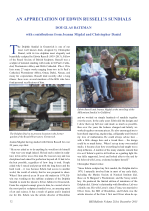
An appreciation of the late sculptor Edwin Russell (1939–2013), Fellow of the Royal Society of British Sculptors and Artistic Director of Brookbrae Ltd. It highlights his collaborations, notably the Dolphin Sundial in Greenwich (1978), and his dedication to perfection, inspiring his student Joanna Migdal.
Sundial Design & Layout, The BSS and Members, Dials: Armillary Sphere
December 2013
Page 44
Page 44
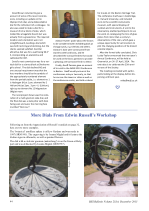
Presents two additional examples of Edwin Russell’s work: the ‘botanical’ armillary sphere at Kew Gardens (engraving by Joanna Migdal), and a horizontal dial featuring a cricketer gnomon on the Green at Holyport (delineated by Joanna Migdal).
Dials: Armillary Sphere, Dials: Horizontal, Sundial Design & Layout
December 2013
Page 45
Page 45
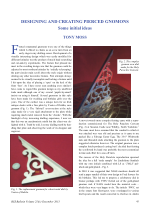
Details the author's development of ornamental, fretted, and pierced gnomons, noting his unofficial trade mark—a spur on the heel of the front 'foot'. He describes techniques using a clockmaker's fretsaw, Thiel filing machine, and flexible-shaft machine, often featuring interlaced initials.
Construction Projects, DIY Sundial Projects, Dialling Tools, Sundial Design & Layout
December 2013
Page 50
Page 50
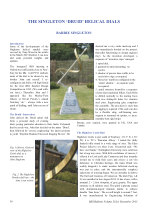
Provides personal insights and updates on the Singleton helical sundial, nicknamed ‘Druid’ (Daytime Readout Universal Imaging Device). It details the patented innovations, including the spiral dial structure and 'three bar' numerals, culminating in the fully funded installation at Highclere Castle in 2013.
Construction Projects, Dials: Unusual, Equation of Time, Sundial Design & Layout
March 2012
Page 13
Page 13
The author tests A.P. Herbert's idea of using a sundial "in reverse" for navigation during a flight to Australia in 1975. He describes making his own "sun clock" and recounts an encounter with a pilot familiar with Francis Chichester's navigation methods, highlighting the practical challenges of such a device.
Dials: Portable, Dials: Unusual, Sundial Design & Layout, DIY Sundial Projects, Historical Dials
March 2012
Page 23
Page 23
The author describes "La Meridiana," a house in Italy designed with a sundial as its stair tower. This indoor sundial uses projections and reflections onto north, west, and east walls, and the ceiling, to show time and date. The article highlights the mathematics, design, and extensive calibration process.
Construction Projects, How Sundials Work, Mathematics of Dialling, Sundial Design & Layout
March 2012
Page 30
Page 30
This article discusses two 18th-century French artworks depicting ball sundials: Claude Gillot’s etching for a fable and Jean-Honoré Fragonard’s painting "Rêverie." It argues that while artistically unrealistic, these dials serve a narrative purpose by precisely indicating time to convey moral or emotional messages within their respective contexts.
Dials: Hemispherical, Historical Dials, Sundial Design & Layout
June 2012
Page 12
Page 12
This article presents and translates a c.1440 manuscript from Aberdeen University Library, which contains what may be the earliest known description of how to make a horizontal sundial in English. It details a simple geometric construction method, discusses the design's unique features, and explores the type of gnomon described, providing insight into early scientific dials in England.
Dials: Horizontal, Historical Dials, Mathematics of Dialling, Sundial Design & Layout
June 2012
Page 34
Page 34
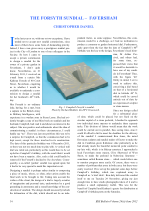
This article describes a custom-designed 'garden' sundial commissioned as a 40th birthday gift for Campbell Forsyth of Faversham. It is an inclining horizontal dial for latitude 40°N, tilted 11.5° southwards, with a unique gilded 'box' feature that indicates the exact date and time (8 December, 12 noon) on his birthday. The dial is a work of scientific art by Ben Jones, with a pedestal by Clive Sherwood.
Construction Projects, Dials: Horizontal, Dials: Unusual, Sundial Design & Layout
June 2012
Page 36
Page 36
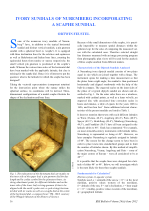
This article analyses the scaphe sundial component found in Nuremberg ivory diptych sundials. It uses vectorial representation and measured photographic distances to determine the intended latitude for three examples, concluding that Reinmann and Miller's scaphes were likely designed for 49° latitude, and Lesel's for 48°, primarily for Nuremberg.
Dials: Scaphe, Historical Dials, Mathematics of Dialling, Sundial Design & Layout
June 2012
Page 48
Page 48
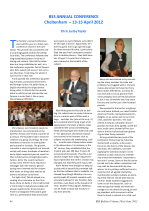
This report summarises the British Sundial Society's annual conference in Cheltenham. It covers various talks including Allan Mills on the Gaocheng Observatory, Kevin Karney on sundial software, Johan Wikander on Norwegian horizontal dials, and presentations by David Brown and Tony Moss on their dial designs. The conference also featured a discussion forum on the Society's future and a tour of local dials.
DIY Sundial Projects, Historical Dials, Sundial Design & Layout, The BSS and Members
June 2012
Page 52
Page 52
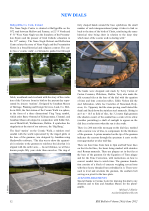
This article describes a stainless steel sundial at the Nano Nagle Centre in Ballygriffin, Ireland, which is the final 'station' of a 'cosmic walk'. Designed by Jonathan Mason, it features a 3.2-meter high gnomon with a central slit, a 200mm noon gap, and a prism for season indication. It also includes the world represented by a ringed globe and forty clasped hands symbolising intergenerational links.
Construction Projects, Dials: Equatorial, Dials: Unusual, Sundial Design & Layout
September 2012
Page 2
Page 2
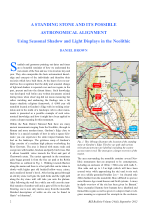
This article examines a 2-metre tall triangular monolith at Gardom’s Edge, Peak District, suggesting it was intentionally erected and astronomically aligned in the late Neolithic/early Bronze Age. It highlights how the stone's north-facing side would be illuminated during the summer, serving as a seasonal marker for ancient communities.
Dials: Unusual, Historical Dials, How Sundials Work, Sundial Design & Layout
September 2012
Page 6
Page 6
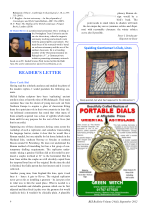
A letter speculating on the origins of the Hever Castle Dial, proposing it was a Sicilian-modelled Roman sundial made for a Northern European patron.
Sundial Design & Layout, Historical Dials
September 2012
Page 7
Page 7
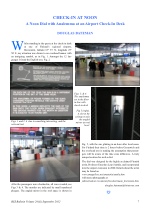
This article describes a unique noon dial with an analemma at Rovaniemi Airport, Finland, designed by Professor Emeritus Lauri Anttila in 2000. An angled mirror in the roof casts sunlight onto the floor to indicate months, with the design assuming passengers are aware of time zone differences.
Construction Projects, Dials: Analemmatic, Dials: Noon Lines, Sundial Design & Layout
September 2012
Page 23
Page 23
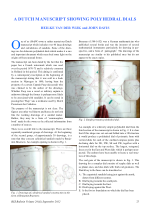
This article describes a mysterious Dutch manuscript from 1670-75 containing over 40 drawings and calculations for sundials, including elaborate polyhedral designs. It features designs attributed to Benjamin Braemers and a complex lectern polyhedral dial similar to Scottish examples, challenging readers to construct a 3D model.
Dials: Multi Faced, Historical Dials, Mathematics of Dialling, Sundial Design & Layout
September 2012
Page 26
Page 26
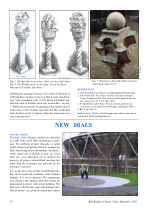
This section introduces several recent sundial projects, including an Olympic sundial by David Brown (an analemmatic dial), a vertical school science centre dial featuring periodic table elements, and the Angel with Sundial at Talaton church by Harriet James, inspired by Chartres Cathedral.
Dials: Vertical, Dials: Analemmatic, Sundial Design & Layout, Construction Projects
September 2012
Page 33
Page 33
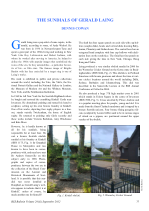
This article highlights the sundial works of pop artist Gerald Laing, known for at least four large sculptural pieces. These include two Scottish obelisk sundials, a 37ft market cross in Inverness, and "Axis Mundi" in Edinburgh, often featuring complex gnomonics and graphical representations of the Equation of Time.
Dials: Multi Faced, Sundial Design & Layout, Equation of Time, Dials: Scaphe
September 2012
Page 40
Page 40
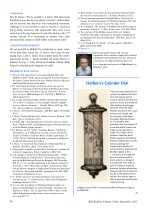
This entry describes a drawing of a cylinder (or shepherd's) dial by Hans Holbein the Younger, dating from 1532-1543. It is speculated that the image depicts a real dial either made by or planned by Nicholas Kratzer, Holbein's contemporary and Henry VIII's horologist. The drawing's cut-out nature and right-to-left month inscription are notable features.
Dials: Portable, Historical Dials, Sundial Design & Layout
September 2012
Page 41
Page 41
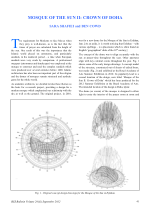
This article presents an architectural study for a solar dome, "Mosque of the Sun II: Crown of Doha" designed to align with the sun for prayer times and celestial events. It uses digital modeling and 3D printing, with the dome's solar orientation differing from the Mecca-aligned prayer room, allowing light to create a clock/calendar on the floor.
Dials: Unusual, How Sundials Work, Sundial Design & Layout, Construction Projects
December 2012
Page 2
Page 2
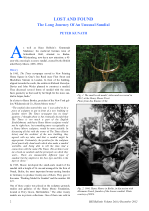
This article details the history and journey of a Henry Moore sundial, from its 1965 commission for The Times in London to its re-alignment in Schwäbisch Hall, Germany. It covers the creation of models, its sale, damage, recovery after theft in 2012, and precise re-installation, highlighting its remarkable travels and survival.
Dials: Unusual, Historical Dials, Restoration projects, Sundial Design & Layout
December 2012
Page 6
Page 6
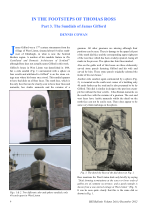
This third part traces sundials attributed to 17th-century Scottish stonemason James Gifford, following Thomas Ross's research. It examines various cube-and-sphere dials in West Linton and Newhall House, as well as the intricate multi-faceted dial at Lennoxlove, detailing their designs, numerals, and historical context within the Scottish Borders region.
Dials: Cube, Dials: Multi Faced, Historical Dials, Sundial Design & Layout
December 2012
Page 12
Page 12
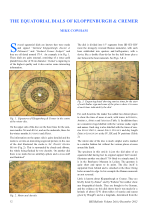
The article examines unusual 18th-century equatorial dials by Gerhard Kloppenburgh and Gerhard Cremer, made of gold-plated brass. It details their summer and winter sides, including hour lines, zodiac signs, and global noon times. The author discusses peculiar reversed Roman numerals, possible origins in northern Germany, and an anomaly in numeral thickness.
Dials: Equatorial, Historical Dials, Sundial Design & Layout
December 2012
Page 15
Page 15
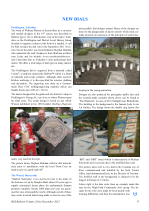
This section showcases several contemporary sundials, including a Corian® vertical dial in Pocklington by Stephen Holehan, based on an 1854 design. It also highlights analemmatic dials by Douglas Hunt's Modern Sunclocks for public sites and playgrounds, and a tile-based dial from High Peak Community Arts in Ston, Croatia.
Construction Projects, Dials: Analemmatic, Dials: Vertical, Sundial Design & Layout
December 2012
Page 16
Page 16
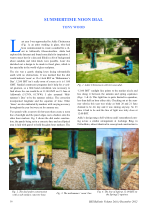
This article describes a fused glass noon dial by Adele Christensen for a Gloucestershire client, indicating 12:00 BST on Midsummer's Day via a narrow slit of sunlight. The author also notes a similar Millennium design, the Lockinge Ring by David Harber in Oxfordshire, which uses a mirror for true noon.
Construction Projects, Dials: Noon Lines, Dials: Reflected, Sundial Design & Layout
December 2012
Page 18
Page 18
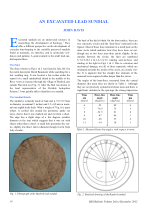
This article details a small, robust lead sundial, 51.5mm in diameter, found in the River Avon at Barford. Dated between the late 16th and late 17th centuries, its equi-angular, anticlockwise numbered hour-lines suggest a vertical dial, possibly an attempt at an equal-hour dial by a provincial artisan lacking scientific knowledge, with possible initials C W.
Dials: Vertical, Historical Dials, Sundial Design & Layout
December 2012
Page 23
Page 23
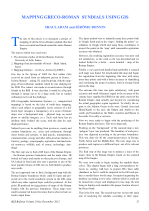
This article details a project to map over 500 excavated Greco-Roman sundials across the Roman Empire using GIS. It describes georeferencing historical maps, digitising province boundaries, and creating a database to display sundials by location, type, shape, and period, thereby analysing them in their geographic context.
Sundial Design & Layout, Historical Dials
December 2012
Page 28
Page 28
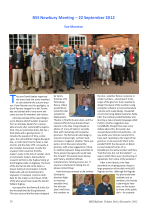
This report summarises the BSS Newbury Meeting, covering presentations on John Davis's "Mystery Welsh Sundial," Doug Bateman's "Romeo & Juliet Sundial," Kevin Karney's "Getting the Numbers Right" on dial layouts, and John Foad's project to put BSS Register dials online.
How Sundials Work, Mathematics of Dialling, Sundial Design & Layout, The BSS and Members
December 2012
Page 30
Page 30
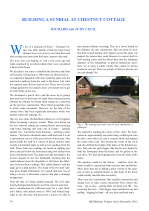
This article details the construction of a large garden sundial at Chestnut Cottage, Essex, by Richard and Judy Cecil. It covers civil engineering aspects, from site surveys and drainage to concrete work, and the precise setting out of hour lines and the stainless steel gnomon, incorporating a polar version of the equation of time.
Sundial Design & Layout, Construction Projects, Equation of Time, DIY Sundial Projects
December 2012
Page 34
Page 34
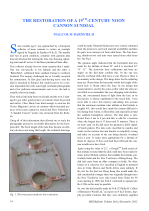
This article describes the restoration of a 19th-century Negretti & Zambra noon cannon sundial. The author recreated missing brass parts, noting design anomalies like incorrect latitude calibration and an inappropriate date scale. The true maker and date remain uncertain, highlighting the common practice of firms selling goods made by others.
Dials: Noon Lines, Historical Dials, Restoration projects, Sundial Design & Layout
December 2012
Page 41
Page 41
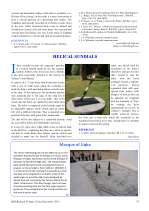
The article discusses helical sundials, particularly one made by Aylmer Astbury. These are a form of equatorial dial, with a brass strip helix marking hours via small holes or a terminator shadow. They can be adjusted for longitude and Equation of Time by rotating the helix on its axis, as explained in a 1992 Bulletin article.
Dials: Equatorial, Dials: Unusual, How Sundials Work, Sundial Design & Layout
December 2012
Page 42
Page 42
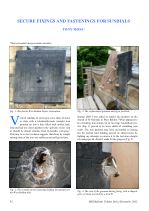
This article addresses methods for securely fixing sundials, focusing on preventing theft and damage. It discusses replacing rusted iron gnomons with stainless steel, using shaped stone blocks with acrylic paste, and cross-bolting for heavy gnomons. For dial plates, methods include recessing them into plinths and using threaded holes with retaining bolts.
Construction Projects, Restoration projects, Sundial Design & Layout
March 2011
Page 2
Page 2
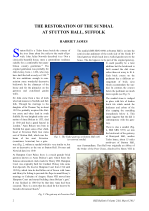
This article details the restoration of a Tudor sundial at Stutton Hall in Suffolk. It covers the history of the house and dial, archaeological findings suggesting its originality, and the methods used for cleaning, realigning the gnomon, and repainting based on known Tudor designs.
Dials: Vertical, Historical Dials, Restoration projects, Sundial Design & Layout
March 2011
Page 5
Page 5
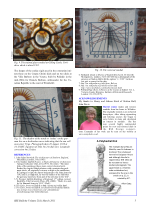
This entry briefly describes the multiple dial at Mount Melville, Scotland, identifying it as a rhombic cubo-octahedron rotated by 45 degrees, based on information from Gatty.
Dials: Multi Faced, Historical Dials, Sundial Design & Layout
March 2011
Page 11
Page 11
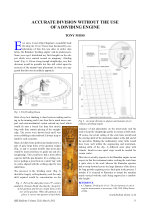
The author explores methods for accurately dividing sundial scales without modern dividing engines. He proposes a compact, semi-mechanical system using pivot pins and a straightedge, designed to fit on a bench, and notes its superiority over Ramsden's engine in terms of user comfort.
Construction Projects, Dialling Tools, Sundial Design & Layout
March 2011
Page 16
Page 16
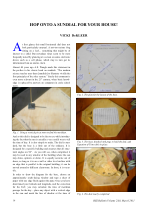
This article provides instructions for making a simple, fun, and versatile horizontal sundial for educational purposes, particularly for young people. It explains how to determine the meridian line, layout the base, and incorporate an Equation of Time table for accurate civil time.
DIY Sundial Projects, Dials: Horizontal, Equation of Time, Sundial Design & Layout
March 2011
Page 22
Page 22
This article describes the reconstruction of Ludwig Hohenfeld’s 1596 polyhedral sundial, a 26-sided rhombic cubo-octahedron, using distorted photographs and image editing software. It details the process of rectifying the faces and analyzing the sundials inscribed on them to estimate the design latitude.
Dials: Multi Faced, Sundial Design & Layout, Construction Projects, DIY Sundial Projects, Historical Dials
March 2011
Page 43
Page 43
This article explores how artistic objectives and geographical latitude impose limits on sundial design. It provides examples like an 'Arrow of Time' dial and an 'Apple Tree' dial, illustrating how proportions and realism are affected by latitude, and introduces a 'geographically modified' armillary octahedron.
How Sundials Work, Sundial Design & Layout
March 2011
Page 46
Page 46
The author discusses the calculation of angles for polyhedral dials, drawing on historical texts like William Leybourn’s 'Dialling'. It covers Platonic and Archimedean solids, methods for finding dihedral angles, and illustrates how these concepts can be applied to sundial construction.
Dials: Multi Faced, Historical Dials, Mathematics of Dialling, Sundial Design & Layout
June 2011
Page 2
Page 2
This article explores the rainbow as an alternative solar timekeeping phenomenon, discussing its complex optical properties, formation of primary and secondary bows, and the dispersion of light into colours. It also describes a rainbow dial instrument for time determination.
Dials: Unusual, How Sundials Work, Mathematics of Dialling, Sundial Design & Layout
June 2011
Page 14
Page 14
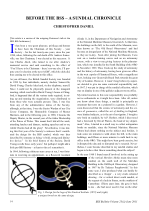
This chronicle by a founding member of the BSS details his career at the National Maritime Museum, his early involvement with sundials, and his experiences designing notable dials like the 'Dolphin' sundial for the Queen's Silver Jubilee, leading up to the formation of the BSS.
Sundial Design & Layout, Construction Projects, Historical Dials, The BSS and Members
June 2011
Page 44
Page 44
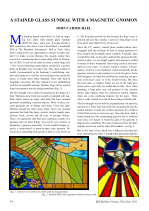
This article details the design and construction of a stained glass sundial featuring a novel magnetic gnomon, shaped like a frog, which attaches without drilling, soldering, or gluing. It explains the experimental process of developing this damage-resistant magnetic attachment.
Dials: Vertical, Sundial Design & Layout, Construction Projects, Dials: Stained Glass
September 2011
Page 28
Page 28
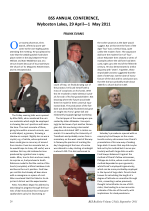
This report summarises the British Sundial Society's highly successful 2011 annual conference at Wyboston Lakes, attended by nearly 20% of its members. It covers various presentations, including Allan Mills on sun's position, Tony Moss on dial manufacture, Johan Wikander on a Norwegian soapstone dial, Fred Sawyer on Jean Picard's large dial layouts, and John Davis on the diffusion of scientific dials.
Historical Dials, Mathematics of Dialling, Sundial Design & Layout, The BSS and Members
September 2011
Page 35
Page 35
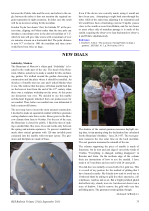
Aleksandr Boldyrev describes the creation of an equatorial sundial for the Rosarium of Sokolniky Park in Moscow. Utilizing an antique piece of Italian marble, the dial features three brass gnomons: one for daylight saving time, one for true solar time, and one for solar azimuth. The dial is designed to operate from spring to autumn equinoxes.
Construction Projects, Dials: Equatorial, Sundial Design & Layout
September 2011
Page 38
Page 38
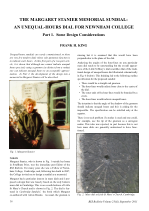
This article details the initial design considerations for a memorial sundial for Margaret Stanier at Newnham College, Cambridge. Frank King proposes an unequal-hours dial with a straight-rod gnomon, loosely based on a historic mass dial. He explores the challenges of accurately indicating unequal hours with a gnomon, discussing celestial sphere projections and a 'critical angle of dip' to improve precision.
Construction Projects, Dials: Mass Dials, Mathematics of Dialling, Sundial Design & Layout
September 2011
Page 48
Page 48
This short entry presents a photo of a declining, reclining sundial from Cavtat, Croatia, seen during a holiday. It suggests the dial likely uses the tip of the gnomon as a nodus and that the lines might have been drawn empirically, as the shadow of the gnomon does not align with the hour lines. The motto translates to 'Do not touch'.
Dials: Unusual, Sundial Design & Layout
December 2011
Page 8
Page 8
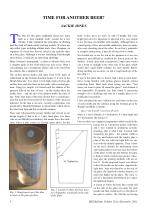
This article details the design and creation of a transparent chalice dial on a 1-pint beer glass, to be read from the outside like a shepherd's dial. The challenge was to make it simple to use, casting a beam of sunlight through a dark circle to indicate time on equal-width month columns. Calculations for sun's altitude were performed for different months and hours, leading to a functional beer-glass sundial.
Dials: Unusual, Sundial Design & Layout, Construction Projects
December 2011
Page 14
Page 14
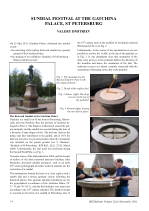
This article reports on a sundial festival at Gatchina Palace, St Petersburg, which included the unveiling of a replica historical sundial and an exhibition. The replica dial indicates true solar time according to 18th-century standards, based on historical photos and other archival material for restoration. The event celebrated the return of the sundial to its historical place after almost 80 years.
Sundial Design & Layout, Restoration projects, Historical Dials, The BSS and Members
December 2011
Page 24
Page 24
This article discusses Robert Stikford, a 14th-century monk from St Albans, credited in Whethamstede’s Granarium (c.1430) with inventing the equal-hour sundial. His rediscovered extensive Latin treatise, 'De Umbris Versis et Extensis', describes geometric constructions for projecting shadow positions and includes tables for Oxford’s latitude. It showcases detailed designs for various vertical dials, revealing sophisticated early European scientific dialling.
Dials: Vertical, Historical Dials, Mathematics of Dialling, Sundial Design & Layout
December 2011
Page 29
Page 29
This article explores the original appearance and symbolic meaning of medieval Catholic mass dials, arguing they were vibrantly coloured and rich in symbolism, unlike their current monochrome remnants. It suggests symbolism, such as the sun representing God's light or 360-degree dials signifying day and night, was often more important than time indication, reflecting the deep religious context of the era.
Sundial Design & Layout, Historical Dials, Dials: Mass Dials
December 2011
Page 32
Page 32
This is Part 2 of an article describing the design evolution of the Margaret Stanier Memorial Sundial, an unequal-hours dial for Newnham College, Cambridge. It details the aesthetic and gnomonic challenges, including discussions with planners, the development of hour-line alignments, and the artistic elements like sun rays and lettering. The article also covers the intricate cutting and gilding process.
Construction Projects, Dials: Vertical, Mathematics of Dialling, Sundial Design & Layout
December 2011
Page 42
Page 42
This article addresses the difficulties of accommodating leap years on sundial calendars, particularly when showing the equation of time or solar declination. It explains how to design scales for precise readings despite the difference between tropical and civil years, and discusses the historical debate around which day (24th or 29th February) is the "extra" leap day. Practical design solutions are proposed.
Equation of Time, How Sundials Work, Mathematics of Dialling, Sundial Design & Layout
December 2011
Page 49
Page 49
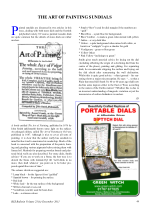
This article, drawing on John Smith's 1676 book 'The Art of Painting', discusses the techniques and colours used for painting sundials, particularly stone dials. It provides practical advice on preparing surfaces, mixing pigments, and laying out dials, including recommendations for repainting and a note on a misconception about earth's motion affecting dial orientation.
Construction Projects, Historical Dials, Restoration projects, Sundial Design & Layout
March 2010
Page 2
Page 2
Describes the history and function of Egnazio Danti's 1572 astronomical quadrant in Florence. It details the five systems of time measurement it displayed and outlines the methodology used to re-compute the missing gnomons for a modern restoration and the creation of a working copy.
Dials: Vertical, Historical Dials, Restoration projects, Sundial Design & Layout
March 2010
Page 18
Page 18
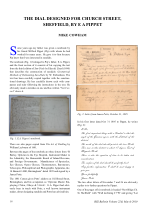
Explores the notebook of E.A. Pippet, detailing his original 1895 design for a west-declining vitreous enamel sundial for Cairns Chambers, Sheffield. It compares the design to the more modern stone dial currently on the building, which has a different declination.
Dials: Vertical, Historical Dials, Sundial Design & Layout
March 2010
Page 38
Page 38
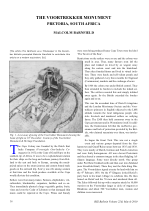
Describes how the Voortrekker Monument in Pretoria functions as a timekeeper. An aperture in the dome allows a ray of sunlight to illuminate a cenotaph at Local Solar Noon on 16th December each year, commemorating the 1838 Battle of Blood River.
Dials: Unusual, Sundial Design & Layout, Historical Dials, Dials: Noon Lines
March 2010
Page 44
Page 44
A personal account of making accurate horizontal brass sundials. The process began with a practical, non-mathematical method of marking hour lines and evolved into a small business creating personalised dials, including the most southerly dial in South Africa at Cape Agulhas.
Dials: Horizontal, Sundial Design & Layout, DIY Sundial Projects
March 2010
Page 48
Page 48
An extension of a previous article on a photographer's sundial. This part adds a scale to indicate the sun's altitude and provides a new design for use at 54° N, which, together with the original 51.5° N dial, covers all of England.
DIY Sundial Projects, How Sundials Work, Sundial Design & Layout
June 2010
Page 2
Page 2
This article explores the concept of integrating an aeolian harp into a sundial's support structure to complement the visual time-telling with ethereal wind-generated music. It details the history and theory of aeolian harps, including the physics of 'aeolian tones' and string resonance. The author describes the construction of a prototype venturi-type aeolian sundial using inexpensive materials, highlighting design considerations for soundboxes, strings, and the integration of a horizontal dial.
Construction Projects, DIY Sundial Projects, Dials: Unusual, Sundial Design & Layout
June 2010
Page 36
Page 36
This article introduces the Chime Dial, an equatorial sundial inspired by historic noon cannons, designed to read solar time and provide an acoustic reminder of the sun's journey. It consists of two brass hemispheres and a dial face with five-minute intervals. A Light Dependent Resistor (LDR) inside the sphere triggers a chime when a sunray passes through a narrow gap, marking a pre-set time.
Construction Projects, DIY Sundial Projects, Dials: Equatorial, Sundial Design & Layout
June 2010
Page 37
Page 37
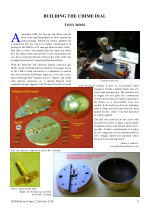
This article details the practical construction challenges and solutions for the Chime Dial. The author describes the difficulties in achieving a sharp sunray cutoff for the Light Dependent Resistor (LDR) due to internal reflections and the need for blackened brass shims.
Sundial Design & Layout, Construction Projects
June 2010
Page 41
Page 41
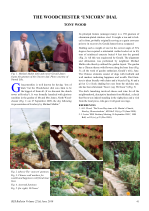
This article describes the formal launch of the 'Unicorn dial' at North Woodchester, Gloucestershire. It features a massive 17ft helical gnomon made of chromium-plated stainless steel, weighing a ton, and held at a 51¾-degree angle. The gnomon was aligned by Michael Maltin, outlining the garden layout which incorporates Chinese themes and floral hour lines.
Construction Projects, Dials: Horizontal, Dials: Unusual, Sundial Design & Layout
June 2010
Page 42
Page 42
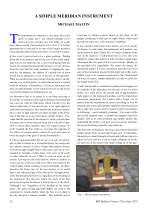
This article describes a DIY instrument for establishing a meridian line, developed for aligning large sundials. It uses two mirrors set at right angles to each other to project a spot of sunlight that remains directly beneath the sun horizontally, regardless of the instrument's heading. The device, a variant of a corner reflector, allows for precise tracking of the sun's path along the horizon.
DIY Sundial Projects, Dialling Tools, Sundial Design & Layout
June 2010
Page 43
Page 43
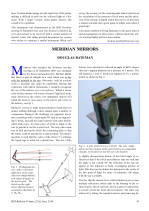
This article presents an alternative construction for Michael Maltin's meridian instrument, which uses two orthogonal mirrors to establish a meridian line. The author describes using an engineering V-block as a ready-made 90-degree angle, adding small mirrors and a spirit level for accurate setup. It discusses refinements like front-silvered mirrors and a hinge for precise spot overlap, highlighting its simplicity and accuracy for determining the sun's azimuth.
DIY Sundial Projects, Dialling Tools, Sundial Design & Layout
June 2010
Page 46
Page 46
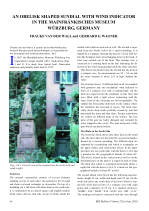
This article describes a unique obelisk-shaped sundial from 1742 in the Mainfränkisches Museum Würzburg. Made of Franconian sandstone, it features 10 sundials and a mechanical wind indicator with a rotating hand connected to a vane by internal gearing. The construction, with dials on inclined surfaces and a Turk's head sculpture, is highly unusual and suggests a learned, wealthy commissioner for an impressive park.
Dials: Multi Faced, Dials: Unusual, Historical Dials, Sundial Design & Layout
June 2010
Page 51
Page 51
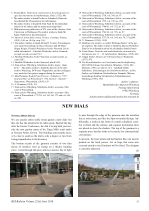
This short note describes a new sundial under construction at Trago Mills retail outlet in Newton Abbot, Devon. The dial, facing close to south, features a gnomon with a slot for a narrow line of light at solar noon and a cylindrical cross-bar nodus to show solstice and equinox declination lines. The hour points and lines are currently painted, with hopes for more durable stainless steel fittings.
Construction Projects, Dials: Vertical, Sundial Design & Layout
September 2010
Page 2
Page 2
This article details the design and construction of a new elliptical slate sundial for Selwyn College, Cambridge, indicating both Babylonian and Italian hours. It discusses the selection of the site, the unique nodus design, precise surveying for wall parameters, and the process of setting out and cutting the dial with inscriptions.
Construction Projects, Dials: Vertical, Mathematics of Dialling, Sundial Design & Layout
September 2010
Page 8
Page 8
This section describes two new sundials: a 50 cm diameter slate horizontal dial by David Brown for a client in Derbyshire, resembling the Hampton Court sundial and featuring a nodus and coat of arms; and a Carrera marble house sign sundial by Harriet James for the BSS Editorial Office.
Construction Projects, Dials: Horizontal, Sundial Design & Layout
September 2010
Page 24
Page 24
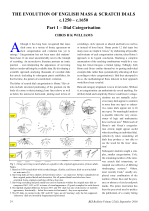
This article addresses the problematic categorisation of English mass and scratch dials from c.1250-c.1650, proposing a new threefold classification (360°, 180°, and 90° dials) based on surviving evidence of scratching and pock marks, intended to reflect genuine differences in original appearance and facilitate statistical analysis.
Dials: Mass Dials, Historical Dials, Sundial Design & Layout
September 2010
Page 26
Page 26
This note describes a horizontal sundial in the Netherlands with a pole-style gnomon shaped as a farm labourer holding a hoe, designed and constructed in Cor-Ten steel as a community project.
Construction Projects, Dials: Horizontal, Dials: Unusual, Sundial Design & Layout
September 2010
Page 27
Page 27
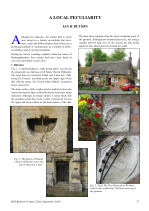
This article describes three scaphe dials found in close proximity in Buckinghamshire: one at All Saints Church, Hillesden (1601); one at The Five Elms pub in Weedon; and another at The Manor House, Creslow. It discusses their designs, orientations, and potential local influence.
Dials: Scaphe, Historical Dials, Sundial Design & Layout
September 2010
Page 40
Page 40
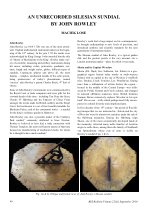
This article describes an unrecorded octagonal brass horizontal sundial by John Rowley (early 18th century), commissioned for the Neidhardt von Spattenbrunn family in Silesia. It details the dial's features, engraving styles, geographical rings, and discusses the possibility of it being a royal gift, while also comparing its gnomon to one by Thomas Tompion.
Dials: Horizontal, Historical Dials, Sundial Design & Layout
December 2010
Page 9
Page 9
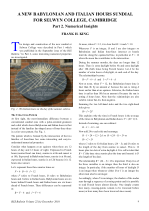
This article is the second part of a series detailing the Selwyn College sundial, focusing on its numerical properties. It explains the criss-cross pattern of Babylonian and Italian hour-lines, their relationship with French hours, and the concept of 'extra daylight.' It also provides methods for setting out these hour-lines.
Dials: Unusual, How Sundials Work, Mathematics of Dialling, Sundial Design & Layout
December 2010
Page 20
Page 20
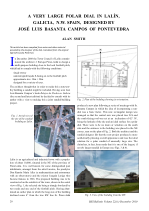
This article describes a very large polar sundial designed by José Luis Basanta Campos for a multi-purpose building in Lalín, Spain. The dial is 20m x 10m on a south-facing roof inclined at the site's latitude, with a 3m gnomon. It shows hour lines from 7:00 am to 5:00 pm and lines of declination for the 20th of each month, applied using weather-resistant adhesive plastic.
Construction Projects, Dials: Polar, Sundial Design & Layout
December 2010
Page 22
Page 22
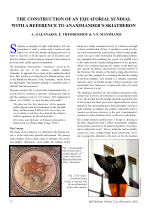
This article describes the design and construction of an equatorial sundial inspired by Anaximander's 'skiatheron,' aiming to be an operational work of art. Made from matted stainless steel, the dial uses dots instead of Arabic or Roman numerals for a timeless aesthetic. It also details the construction process, including computer design, prototyping, and addressing issues like rust and plate bending.
Dials: Equatorial, Sundial Design & Layout, Construction Projects, Historical Dials
December 2010
Page 41
Page 41
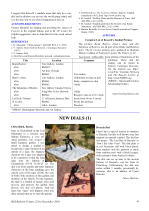
This article presents two new sundial designs. The first is a white marble sundial for a Japanese garden near Chelyabinsk, Russia, featuring a gnomon adapted from the Japanese character for 'tiger' and Japanese characters for hour markings. The second is a Dracula Dial with a gnomon of stainless steel and black lacquer, set near Korporie fortress, which was unfortunately stolen.
Construction Projects, Dials: Unusual, Sundial Design & Layout
December 2010
Page 44
Page 44
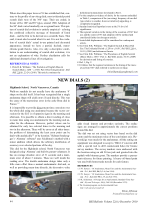
This article describes a walk-on analemmatic sundial designed for Highlands School in North Vancouver, Canada, using 'Alemma' software. It features a double analemma design to provide direct mean time with minimal error, accommodating the equation of time correction. Parent volunteers built the dial, using plywood jigs and bronze survey markers for permanent reference.
Construction Projects, Dials: Analemmatic, Equation of Time, Sundial Design & Layout
December 2010
Page 45
Page 45
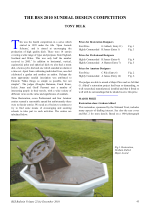
This report covers the fourth BSS Sundial Design Competition, which received 14 entries across restoration, professional, and amateur classes, though no junior entries. Graham Aldred won the Major Prize for his restoration of the Lyme Park dial. Other prizes were awarded for a south-facing vertical dial and highly commended entries for a sun/moon dial, a prototype noon mark dial, and a vertical dial using a 'super ellipse.'
Dials: Unusual, Restoration projects, Sundial Design & Layout, The BSS and Members
March 2009
Page 10
Page 10
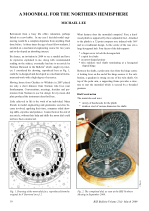
This article details the design and construction of a mechanical moondial for the Northern Hemisphere. It explains the components, materials used and the intricate etching process for the dial plate. The article also provides instructions for setting up the instrument, determining the moon's phase using Golden Numbers, and calculating time by the moon's apparent direction.
Sundial Design & Layout, Construction Projects, DIY Sundial Projects
March 2009
Page 18
Page 18
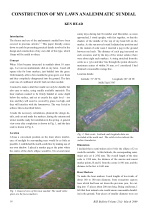
This article provides practical details for designing and constructing a durable lawn analemmatic sundial using readily available materials. It covers establishing the north-south line, calculating dimensions, making hour markers from tree-trunk lengths, crafting a date scale from timber, and ensuring precise installation for accurate solar timekeeping.
Dials: Analemmatic, Sundial Design & Layout, Construction Projects, DIY Sundial Projects
March 2009
Page 28
Page 28
This article details the design and robust construction of an analemmatic sundial installed in the paving of an embankment in Shelkovo, Russia. It covers the use of AutoCAD for design, creating plaster-of-Paris and beeswax models, the ceramic mould casting process for bronze elements, and building substantial concrete foundations to ensure durability against vandalism and weathering.
Dials: Analemmatic, Sundial Design & Layout, Construction Projects
March 2009
Page 37
Page 37
This review covers "A Study of Altitude Dials" by Mike Cowham (BSS Monograph No 4). It praises the monograph's comprehensive overview of altitude dials, including their construction, accuracy, and various types like pillar, chalice, and quadrant dials. The book also provides detailed construction guides, diagrams, and a CD-Rom with templates for readers to make their own dials.
How Sundials Work, Book Reviews, Sundial Design & Layout, DIY Sundial Projects
March 2009
Page 38
Page 38
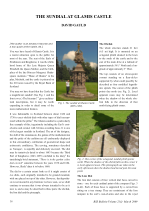
This article describes the magnificent 21-foot high Glamis Castle sundial in Scotland, tentatively dated around 1683. It is an elaborate obelisk dial featuring 84 time-recording faces, lion dials for cardinal points, and a complex \pineapple\ (stellar rhombicuboctahedron) with numerous declining and reclining faces. The article also discusses its Equation of Time inscription and possible mathematical contributions by James Gregory.
Dials: Multi Faced, Mathematics of Dialling, Sundial Design & Layout, Equation of Time, Historical Dials
June 2009
Page 14
Page 14
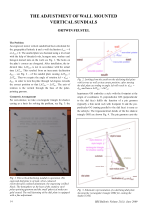
A technical article presenting a detailed mathematical method for correcting the alignment of a wall-mounted vertical sundial that has been installed with an inaccurate declination. It provides the necessary formulae and a worked example to calculate the required angle of rotation for adjustment.
Dials: Vertical, Mathematics of Dialling, Sundial Design & Layout
June 2009
Page 24
Page 24
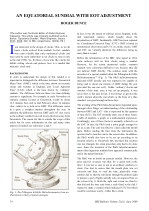
Details the design and construction of an equatorial sundial that directly indicates clock time (UTC). It incorporates a mechanical cam to automatically apply the Equation of Time correction, and includes adjustments for latitude and longitude. An appendix explains how to design the cam.
Construction Projects, Dials: Equatorial, Equation of Time, Sundial Design & Layout
June 2009
Page 41
Page 41
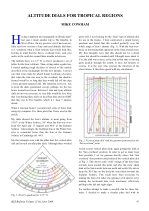
Explores the design of fixed-latitude altitude dials for use in tropical regions, specifically The Gambia (13.5° N). The article presents computer-generated plots for various types, including the horary quadrant and vertical plate dial, highlighting the unique behaviour of the hour lines as the sun passes overhead.
Dials: Portable, How Sundials Work, Sundial Design & Layout
June 2009
Page 44
Page 44
Describes two new dials. The first is a vertical declining dial with symbolic hour marks created using incised plasterwork (pargeting) in Wanstead. The second is a new globe moondial in stainless steel which shows time by the moon for nine days around the full moon.
Dials: Unusual, Dials: Vertical, Sundial Design & Layout
June 2009
Page 47
Page 47
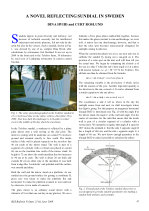
Describes a unique reflecting sundial where a flat mirror reflects a sunbeam onto a curved wall that serves as the dial plate. The article explains the geometry, calculations, and calibration process for this artistic and scientific instrument located at Tolefors Farm, Sweden.
Dials: Reflected, Dials: Unusual, Sundial Design & Layout
September 2009
Page 20
Page 20
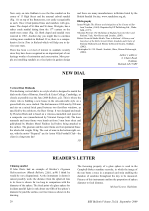
Describes a new declining vertical dial recently installed in the Midlands. The design is based on the dials at Gonville & Caius College, Cambridge. The article details its large size, construction materials including vitreous-enamelled steel and brass, and a unique feature: the coat of arms of Aston Villa Football Club.
Construction Projects, Dials: Vertical, Sundial Design & Layout
September 2009
Page 25
Page 25
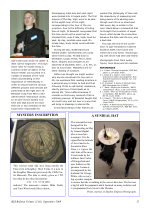
Features a unique sundial hat designed by Joanna Migdal for the Ascot races. The hat is a functional sundial designed for the latitude of Ascot, with its gnomon made of feathers. It is delineated to show "Race Time," indicating the start times of the races.
Dials: Unusual, Sundial Design & Layout
September 2009
Page 26
Page 26
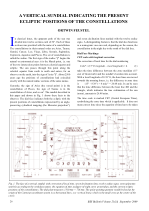
Describes the design and markings of a complex vertical sundial. In addition to time, the dial indicates the current ecliptic positions of the constellations using a Mercator projection. It also features longitude correction, an Equation of Time curve, declination lines, and functions as a nomogram for identifying constellations visible at night.
Dials: Vertical, Equation of Time, Mathematics of Dialling, Sundial Design & Layout
December 2009
Page 10
Page 10
This article celebrates the genius of Robert Hooke, highlighting his key scientific contributions. It covers Hooke's Law and its application to timekeeping, his work on a universal joint for delineating sundials, and his pioneering (though unpublished) insights into the catenary arch. It proposes a sculptural memorial to Hooke.
How Sundials Work, Sundial Design & Layout, Historical Dials
December 2009
Page 26
Page 26
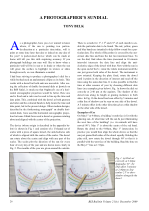
Describes the design and use of a pocket-sized device for photographers to predict the sun's direction at any time of day or year. Based on a horizontal stereographic projection, the instrument uses a rotating dowel aligned with date and time scales to help plan for specific lighting conditions.
DIY Sundial Projects, Dials: Unusual, Sundial Design & Layout
December 2009
Page 34
Page 34
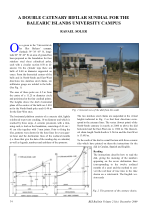
This article describes a large and innovative bifilar sundial. It uses the intersecting shadows cast by two suspended chains hanging in catenary curves to indicate both the time and the date on a large tiled pavement. The article provides a summary of the complex mathematical calculations involved in its design.
Dials: Bifilar, Dials: Unusual, Mathematics of Dialling, Sundial Design & Layout
December 2009
Page 40
Page 40
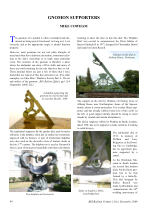
A survey of the artistic and decorative supports used for gnomons on different types of sundials. The article presents numerous photographs of historical and modern examples, including dolphins, snakes, butterflies, skeletons, and intricate scrollwork, and invites readers to share pictures of other interesting designs.
Sundial Design & Layout, Historical Dials
March 2008
Page 18
Page 18
Describes the design, creation, and dedication of a large horizontal sundial by Tony Moss, commemorating the 400th anniversary of the Jamestown settlement. The unique 'navette' shaped dial incorporates Anglo-American symbolism, funded by the Sawyer Dialling Prize and sponsors, and was installed at Turner Farm Park.
Dials: Horizontal, Sundial Design & Layout, Construction Projects, The BSS and Members
March 2008
Page 26
Page 26
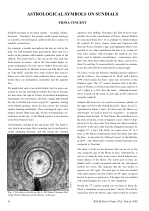
Discusses the historical use and modern relevance of astrological symbols on sundials to indicate dates like solstices and equinoxes, despite astronomical shifts like precession. It examines symbols for Zodiacal signs and those used on lunar volvelles, such as sextile, square, and trine, explaining their relation to moon phases and elongation.
Historical Dials, How Sundials Work, Sundial Design & Layout
June 2008
Page 50
Page 50
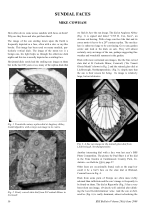
This article explores the depiction of faces on sundials, primarily smiling suns on vertical dials and replica horizontal dials, as well as moon faces and other figures like angels. It showcases various examples from Britain and Europe, discussing their symbolism and design variations.
Dials: Portable, Dials: Vertical, Historical Dials, Sundial Design & Layout
June 2008
Page 54
Page 54
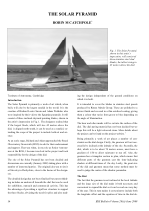
This article describes the design and astronomical calculations for the Solar Pyramid, a proposed large-scale art installation that will also function as the world's largest sundial. It details the design constraints, methods for reading time, and the accuracy of incorporating the Equation of Time over centuries.
Construction Projects, Equation of Time, Mathematics of Dialling, Sundial Design & Layout
June 2008
Page 60
Page 60
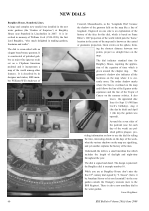
This section introduces new sundials, including the 'Longitude Dial' at Burghley House, designed by William Andrewes, which incorporates a world map and indicates standard time and noon locations. It also describes a brass sundial made by Valery Dmitriev in Russia, designed in a traditional English style using CNC milling.
Dials: Horizontal, Sundial Design & Layout
June 2008
Page 68
Page 68
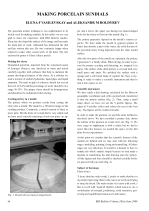
This article describes the sophisticated porcelain artistic technique used to create sundials, from preparing the slurry and casting the pottery to delineating the dial, modelling decorative elements like a 'grapevine river of life', painting with glazes, and multiple firings and enamelling processes.
Sundial Design & Layout, Construction Projects
June 2008
Page 77
Page 77

This report summarises the 2008 BSS Annual Conference at Latimer, highlighting various talks including Piers Nicholson on Jantar Mantar, Chris Williams on scratch dial statistics, Fred Sawyer on Michnik's bifilar sundial, Celia James on James Richard's dial, Julian Lush on Armenian scallop dials, and John Davis on John Rowley's work.
Dials: Bifilar, Historical Dials, Sundial Design & Layout, The BSS and Members
June 2008
Page 84
Page 84
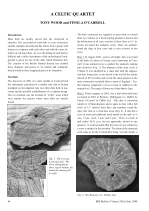
This article investigates five slate mass dials found in 'Celtic' areas (Cornwall, Ireland, Scotland, Wales), which share common features like 15° interval hour lines. It discusses their unusual horizontal forms, 'secretary hand' numerals, and archaeological backgrounds, exploring a potential 'Celtic' connection despite dating challenges.
Sundial Design & Layout, Historical Dials, Dials: Mass Dials
June 2008
Page 88
Page 88
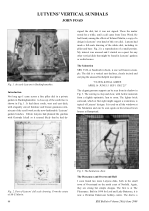
This article explores vertical sundials designed by architect Edwin Lutyens for his gardens and houses, including examples at The Salutation, The Pleasaunce, Overstrand Hall, Tigbourne Court, Hampstead Garden Suburb, Greywalls, and Mothecombe. It highlights his meticulous design, integration with architecture, and use of specific mottoes and materials.
Dials: Vertical, Historical Dials, Mottoes, Sundial Design & Layout
June 2008
Page 91
Page 91
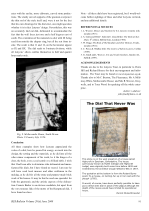
This brief entry describes a stone plaque on a house in Eynsham, Oxfordshire, which, though not a dial itself, occupies a recess where a direct west dial could have been placed. The house was extended by architect Clough Williams-Ellis, and the plaque features a quotation from Robert Burns.
Historical Dials, Sundial Design & Layout
June 2008
Page 92
Page 92
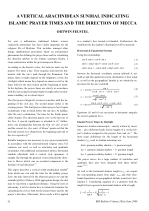
This paper describes the design of a vertical south arachnidean sundial to indicate Islamic prayer times (Zuhr, Asr) and the Qibla (direction to Mecca). It explains the astronomical principles and mathematical formulae used to calculate the specific prayer curves and Qibla curve, making it readable from a significant distance.
Dials: Vertical, Historical Dials, Mathematics of Dialling, Sundial Design & Layout
June 2008
Page 95
Page 95
This short piece discusses the common misconception that the pedestal is the sundial, highlighting the importance of the support's beauty. It mentions architect Lutyens' appreciation for pedestals and features a P&G heliochronometer at Marshcourt, posing a question about its current status.
Dials: Heliochronometer, Historical Dials, Sundial Design & Layout
June 2008
Page 99
Page 99
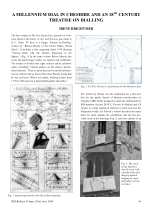
This article links a new millennium sundial at Marbury-cum-Quoisley church in Cheshire, designed by Dr W.E. Flewett and adjusted for longitude and British Summer Time, to an 18th-century treatise by Robert Moody. It also discusses William Emerson, a mathematician and diallist whose work influenced Moody and the millennium dial.
Construction Projects, Historical Dials, Mathematics of Dialling, Sundial Design & Layout
September 2008
Page 108
Page 108
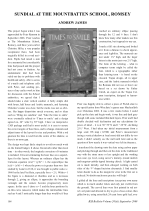
This article describes the creation of a slate vertical sundial as a memorial at The Mountbatten School. Designed for Greenwich time and features a superellipse for hour line termination. The piece details the carving, gilding, and stainless steel gnomon construction, culminating in its successful unveiling in 2007.
Dials: Vertical, Sundial Design & Layout, Construction Projects
September 2008
Page 112
Page 112
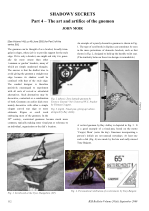
This article explores the artistic and innovative designs of gnomons, moving beyond simple functional brackets to decorative, contextual, or 'shadow-play' designs. It provides examples of gnomons incorporating visual puns, personal initials, and a novel method for designing a gnomon to cast a true profile shadow on a specific date and time.
DIY Sundial Projects, How Sundials Work, Sundial Design & Layout
September 2008
Page 123
Page 123
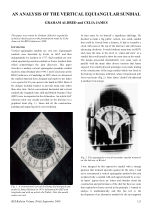
This paper provides a mathematical analysis of James Richard's rare vertical equiangular meantime sundial, designed to resemble a clock with equally spaced hours. It explains the gnomon's upward inclination and daily displacement, allowing for mean time and BST adjustments. The analysis, an alternative to Foster-Lambert theory, aims to stimulate interest in this unusual dial type.
Dials: Foster-Lambert, Dials: Vertical, Mathematics of Dialling, Sundial Design & Layout
September 2008
Page 129
Page 129
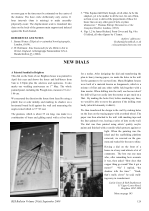
Jackie Jones and Rob Stephenson describe painting a new vertical sundial on their Brighton house in April 2008. The dial shows hours, half-hours, solstices, equinoxes, and their wedding anniversary. The article details the process from transferring the design to the wall, the painting and installation, along with amusing public reactions to the new dial.
Dials: Vertical, Sundial Design & Layout, Construction Projects, DIY Sundial Projects
September 2008
Page 143
Page 143
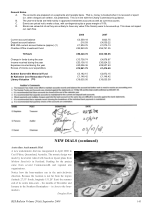
Douglas Hunt reports on a new analemmatic mosaic sundial inaugurated in April 2008 in Cecil Plains, Queensland, Australia. Designed by local artist Alain Colfs with layout plans from Modern Sunclocks, the dial features anti-clockwise hour markers and a date-scale, located near the tropics in the Southern Hemisphere.
Construction Projects, Dials: Analemmatic, Sundial Design & Layout
December 2008
Page 154
Page 154
This article describes a portable universal East and West polar dial that is self-aligning and does not require a compass. It details its design, operation, and identifies limitations such as a two-hour gap around noon. It also explores improvements through hinged flaps and cylindrical designs, and relates it to other dial types like the double crescent dial.
Dials: Polar, Dials: Portable, How Sundials Work, Sundial Design & Layout
December 2008
Page 157
Page 157
A report on the BSS Newbury meeting on 27 September 2008, detailing talks on stainless steel sundials, polar dials, dynamic sundial design using calculators, and 3-D modelling for overshadowing. It also covers a survey of early horizontal dials in Flintshire, exhibits, and presentations on paper sundials and dials in Mexico and the southern hemisphere.
Dials: Horizontal, Dials: Polar, Sundial Design & Layout, The BSS and Members
December 2008
Page 159
Page 159
This piece describes a new multiple dial created by Alex Boldyrev for Shevelkovo Village. Carved from Crimean limestone, it features an equatorial dial's upper half and a south-facing scaphe dial in Greek style. It incorporates owls symbolizing Athena and a reconstructed historical mistake in its design, with gnomons made from cold-hammered copper rods.
Dials: Multi Faced, Dials: Equatorial, Sundial Design & Layout, Dials: Scaphe
December 2008
Page 160
Page 160
This article provides a summary of data and equations needed to delineate and set out analemmatic sundials. It discusses the projection of an equatorial dial onto a horizontal surface, using a vertical gnomon whose position varies with the sun's declination, and the calculation of sunrise and sunset markers using Lambert circles and Bailey Points.
Dials: Analemmatic, How Sundials Work, Mathematics of Dialling, Sundial Design & Layout
December 2008
Page 170
Page 170
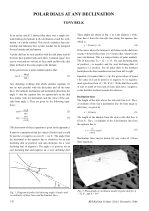
This article presents a method for designing polar sundials for any latitude and declination using four simple formulae. It explains that polar dials have a style parallel with the dial plane and parallel hour lines, and describes how to determine the angle of the equinox line and the sub-style hour angle.
Dials: Polar, How Sundials Work, Mathematics of Dialling, Sundial Design & Layout
December 2008
Page 178
Page 178
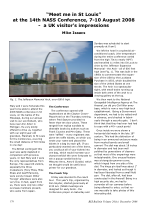
A UK visitor's account of the 14th NASS Conference in St Louis, covering the coach tour to various sundial sites like the Jefferson Barracks and Missouri Botanical Gardens, presentations on topics such as digital wall dials and the equation of time, and the distribution of dialling software. It notes the smaller attendance compared to BSS meetings but high standard of events.
Historical Dials, Sundial Design & Layout, The BSS and Members
December 2008
Page 184
Page 184
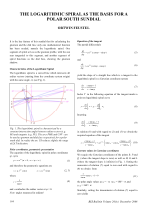
This article proposes the logarithmic spiral as the sole mathematical function needed for designing a polar south sundial, where one spiral segment forms the gnomon profile and another acts as the dial face. It details the spiral's characteristics, equations for tangents and arc lengths, and presents a calculation example for a model, illustrating its construction and operation.
Construction Projects, Dials: Polar, Mathematics of Dialling, Sundial Design & Layout
March 2007
Page 12
Page 12
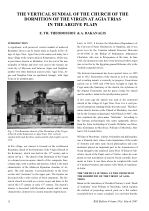
This paper describes a significant, well-preserved medieval Byzantine vertical sundial found at the Church of the Dormition of the Virgin in Agia Trias, Greece. It explores the dial's historical context, its connection to William of Moerbeke's translation of Ptolemy, and its design featuring Greek capital letters for hour lines. The authors also discuss its construction and possible dating.
Dials: Vertical, Historical Dials, Sundial Design & Layout
March 2007
Page 19
Page 19
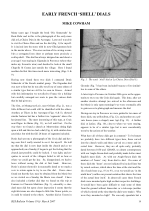
Mike Cowham describes a survey of early French 'shell' dials, often found carved into church walls, dating between 1050 and 1200 AD. He details 11 examples, noting their varying numbers of divisions, high mounting positions, and possible connection to pilgrimage routes. The article speculates on their purpose, mainly to record solar noon and indicate church services.
Dials: Mass Dials, Dials: Vertical, Historical Dials, Sundial Design & Layout
March 2007
Page 31
Page 31
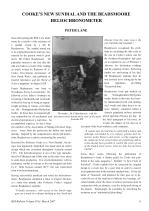
This article discusses Ernest Beadsmoore's construction of a heliochronometer, inspired by Professor W. E. Cooke's 'New Sundial' design published in 1924. It details Beadsmoore's background as an engineer, his process of building and testing the dial, and its impact on local timekeeping precision. Cooke's later 'Sunclock' patent, connecting the dial to a clock for standard time, is also mentioned.
DIY Sundial Projects, Dials: Heliochronometer, Historical Dials, Sundial Design & Layout
June 2007
Page 66
Page 66
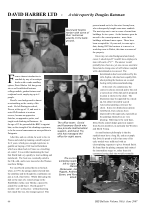
This report details a visit to David Harber Ltd., a successful business specialising in sundials, garden features, and sculpture. It traces David Harber's unconventional career path, his company's business philosophy, preference for polished stainless steel, and notable commissions including several for Oxbridge colleges.
Sundial Design & Layout
June 2007
Page 69
Page 69
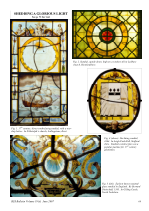
This article, a re-publication, discusses the history and art of painted or stained-glass window sundials in Britain. It covers their construction, fragility, the challenges of preservation, and highlights notable examples and makers like Bernard Dininckoff and Henry Gyles.
Dials: Vertical, Sundial Design & Layout, Restoration projects, Historical Dials, Dials: Stained Glass
June 2007
Page 75
Page 75
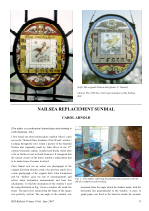
This article describes the process of creating a replica stained-glass sundial for Nailsea Court after the original was stolen. The author explains how window declination was measured and new hour lines calculated, detailing the multi-stage artistic and technical process to recreate the dial, with gnomon fixed to leadwork to prevent glass damage.
Sundial Design & Layout, Construction Projects, Restoration projects
June 2007
Page 78
Page 78
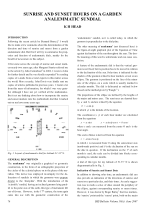
This article discusses the determination of sunrise and sunset directions and times using garden analemmatic sundials. It explains the dial's principles, the Bailey points for seasonal markers, and evaluates the accuracy of these markers, noting discrepancies and suggesting practical applications for garden dials despite minor errors.
Dials: Analemmatic, How Sundials Work, Mathematics of Dialling, Sundial Design & Layout
September 2007
Page 114
Page 114
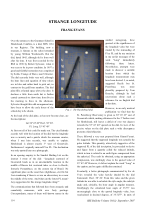
This article investigates a peculiar Pl. Long. inscription on the 1845 Hawkshead Grammar School sundial. Through extensive correspondence, Pl Long was identified as The Plane's Longitude referring to the hour angle in angular measure when the sun is directly over the style, rather than a geographical longitude.
Dials: Vertical, How Sundials Work, Sundial Design & Layout
September 2007
Page 122
Page 122
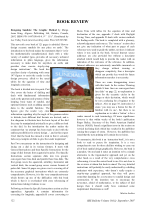
This review covers Designing Sundials: The Graphic Method by Margo Anne King, aimed at mathematically unsophisticated readers. It praises the comprehensive graphical instructions but criticises the lack of inspirational examples and tedious cross-referencing. A significant error in the vertical declining dials section required an errata sheet, impacting its utility for beginners.
Book Reviews, Sundial Design & Layout
September 2007
Page 128
Page 128
This article explores declination lines on sundials as conic sections and details methods for their delineation. It examines two 17th-century horizontal dials by Isaac Symmes (Science Museum, Oxford), noting errors in their declination lines and the presence of seasonal hours and lunar volvelles. A new graphical method for drawing declination lines is also presented.
Historical Dials, How Sundials Work, Mathematics of Dialling, Sundial Design & Layout
September 2007
Page 137
Page 137
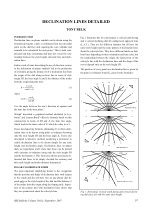
This article offers detailed methods for drawing declination lines on planar sundials using polar and Cartesian coordinates, or a graphical protractor, all based on the dial's style height and nodus distance. It also provides formulas for calculating hour line angles for various dial types and a simple method to check existing dials for accuracy.
Construction Projects, Dialling Tools, Mathematics of Dialling, Sundial Design & Layout
December 2007
Page 151
Page 151
This report summarises the British Sundial Society's Newbury meeting, which began with a tribute to the late Dr. Margaret Stanier. Presentations included stained-glass sundials, mounting a vertical sundial with a TV bracket, mathematical proofs for hour lines, a schools programme for dialling, universal equinoctial ring dials, dipleidoscopes, dials with vertical gnomons, and hemispherical dials.
Dialling Tools, How Sundials Work, Sundial Design & Layout, The BSS and Members
December 2007
Page 153
Page 153
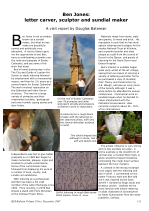
This report profiles Ben Jones, a letter carver and sculptor based in Devon, who has also become a skilled sundial maker. His work, which comprises 25-30% of his commissions, is noted for its artistic and unique designs, ranging from shield-shaped vertical dials to analemmatic dials and multi-faceted columns. He integrates his lettering skills and sculptural form into his creations.
Dials: Vertical, Dials: Polar, Sundial Design & Layout
December 2007
Page 164
Page 164
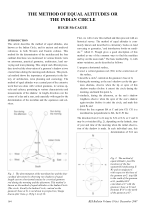
This article describes and historically surveys the method of equal altitudes, also known as the Indian Circle, used for determining the meridian and cardinal directions by observing a gnomon's shadow. It covers the practical steps, potential errors, mathematical analysis of shadow curves (conic sections), and its widespread use in ancient and medieval Eastern (India, China) and Western (Roman, early medieval Europe) cultures for architecture, town planning, and sacred rituals.
Historical Dials, How Sundials Work, Mathematics of Dialling, Sundial Design & Layout
December 2007
Page 173
Page 173
This section contains various letters from readers. Frans W. Maes discusses Lambert circles and seasonal markers on analemmatic sundials. Roger Bailey provides corrections and recommendations for seasonal markers. Frank King confirms a relationship for seasonal marker distance. Ken Head replies to Maes and Bailey. John Lester solves the mystery of a partial sundial motto. Malcolm Barnfield describes the making of a noon cannon sundial.
Dials: Analemmatic, Sundial Design & Layout, DIY Sundial Projects, The BSS and Members
December 2007
Page 176
Page 176
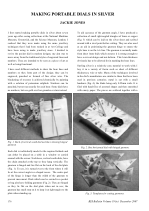
Jackie Jones describes her process of making portable sundials in silver, applying jewellery techniques learned at Art College. Her aim is to create modern, artistic, yet functional pocket dials. She details methods for showing hour lines, blackening recesses, and designing folding gnomons. The article also covers working with sterling silver, hallmarking, achieving different surface textures, and future plans for transparent enamel panels.
Construction Projects, DIY Sundial Projects, Dials: Portable, Sundial Design & Layout
December 2007
Page 179
Page 179
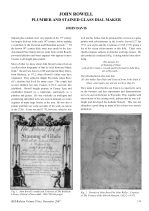
This biography details John Rowell (1689-1756), a provincial plumber and self-taught glass painter who became known for stained glass sundials in the 18th century. It covers his life, business, the influence of his clockmaker father-in-law, and two notable dials: the 'IR 1733' dial at Arbury Hall and the 1734 Purley Hall dial. The latter has undergone restoration, with analysis showing engraving errors and the design of a replacement gnomon.
Dials: Vertical, Sundial Design & Layout, Restoration projects, Historical Dials, Dials: Stained Glass
December 2007
Page 184
Page 184
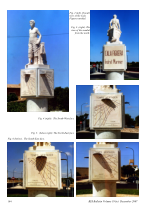
This article describes a monument in Cala Figuera, Majorca, featuring three vertical declining bifilar sundials on the pedestal of a fisherman statue. Two dials face south, one east and one west, and the third faces north, declining east. The article details their bifilar gnomon design (semi-ellipse and straight line), delineation for hours and half-hours, and declination lines, along with the mathematical methods used for their design and calculation.
Construction Projects, Dials: Bifilar, Dials: Multi Faced, Mathematics of Dialling, Sundial Design & Layout
December 2007
Page 187
Page 187
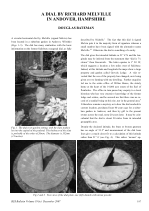
This article describes a rare circular horizontal sundial by Richard Melville (signed Melvin) found in Andover, Hampshire. The dial, dated to around 1860, is unusual for Melville's work due to its circular shape and its mention of a son. It discusses the discrepancy between the declared latitude and the gnomon angle, suggesting mass production, and notes an engraving error and weathering on the dial plate.
Dials: Horizontal, Historical Dials, Sundial Design & Layout
February 2006
Page 16
Page 16
This article investigates the east-west orientation of UK churches and its implications for vertical sundials. It discusses historical reasons, such as facing Jerusalem or equinox sunrise, alongside practical influences like site topography that cause deviations. The author advises checking a church's orientation carefully before installing new sundials.
Dials: Vertical, Sundial Design & Layout, Historical Dials
February 2006
Page 23
Page 23
This article documents the restoration and analysis of an octagonal slate sundial plate from 1843, made by D. O’Connell for Revd John Pratt of Enniskean. It details the dial's engraved features, including an equation of time ring, gnomon restoration, and a geometric analysis confirming the remarkable accuracy of its construction for the specified latitude.
Dials: Horizontal, Sundial Design & Layout, Restoration projects, Historical Dials
February 2006
Page 26
Page 26
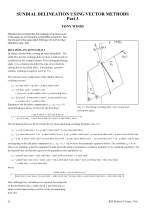
This instalment, the third in a series, presents the complex mathematical methods for delineating declining-inclining sundials using vector analysis. It provides detailed equations for calculating the shadow plane components, hour and declination lines, sub-style angles, and gnomon angles, building upon two previous articles.
Dials: Vertical, Mathematics of Dialling, Sundial Design & Layout
February 2006
Page 32
Page 32
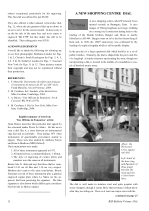
This article describes a new large stainless steel equatorial sundial, shaped like a Viking longship, installed at the Westwood Cross shopping centre in Ramsgate. The dial also serves as public seating and features large Roman numerals and an Equation of Time graph, although the author notes some elementary numbering and calibration errors.
Dials: Equatorial, Sundial Design & Layout, Equation of Time
February 2006
Page 35
Page 35
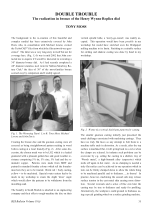
This article details the intricate process of creating a 30-inch bronze replica of the Henry Wynne dial. It covers pattern making, casting, and challenging precision machining operations, including overcoming issues with a gnomon that was initially too short and perfecting a complex knife-edge. The project required meticulous effort and problem-solving.
Construction Projects, Dials: Double Horizontal, Restoration projects, Sundial Design & Layout
June 2006
Page 50
Page 50
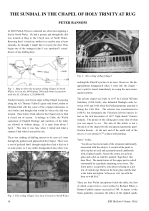
This article investigates an unusual 17th-century wall painting in Rug Chapel, North Wales, which features a dial. It details the analysis of the dial's geometry and hour lines using digital tools, comparing measured angles to calculated values for a 53° North latitude, and discusses the unexpected accuracy for a painting, suggesting sophisticated planning.
Dials: Vertical, Historical Dials, Mathematics of Dialling, Sundial Design & Layout
June 2006
Page 63
Page 63
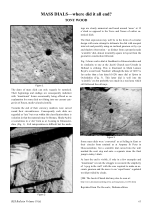
This article explores the indistinct end of mass dials, discussing "transitional" forms that bridge medieval and scientific dials. It notes the appearance of numerals (Roman, Hindu-Arabic, or dot form) around the circumference of later mass dials, indicating a shift towards 12 o'clock noon, and touches on conversions to scientific dials.
Dials: Mass Dials, Dials: Scaphe, Historical Dials, Sundial Design & Layout
June 2006
Page 68
Page 68
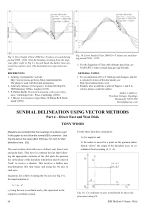
This fourth part of a series focuses on the delineation of direct east and west vertical dials using vector methods. It details the coordinate transformations, equations for hour lines, declination lines, sub-style angles, and gnomon characteristics for these specific dial types, also covering their illumination times.
Mathematics of Dialling, Sundial Design & Layout
June 2006
Page 75
Page 75
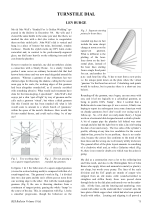
This article describes the design and construction of a horizontal sundial with a cylindrical gnomon, which the author calls a "Turnstile Dial." It explains how the shadow is cast from a continuum of tangent points on the rounded gnomon, the practical aspects of its construction using copper, and the plotting of hour lines tangential to a central ellipse.
Construction Projects, DIY Sundial Projects, Dials: Horizontal, Sundial Design & Layout
June 2006
Page 91
Page 91
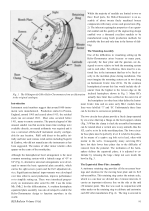
This first part of a review examines the design and accuracy of the Pilkington & Gibbs Helio-Chronometer, an equatorial sundial known for its mean time accuracy. It details the instrument's components, mounting assembly, sight screen system, and the mechanism for integrating the Equation of Time using a cam, and discusses factors affecting its long-term accuracy, such as wear and calibration.
Dials: Heliochronometer, Equation of Time, How Sundials Work, Sundial Design & Layout
September 2006
Page 110
Page 110
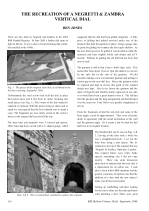
This article describes the challenging recreation of a slate vertical declining dial by Negretti & Zambra after the original was severely damaged. The process involved meticulous replication of the design, adapting features for better readability (without gilding), and installing the new dial with modern, durable fixings while preserving the original gnomon.
Dials: Vertical, Restoration projects, Sundial Design & Layout
September 2006
Page 112
Page 112
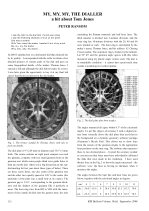
This article delves into a high-quality horizontal sundial by the renowned optical, mathematical, and philosophical instrument maker Thomas Jones (1775-1852). It details the dial's precise engraving, hour divisions, and accurate delineation, alongside biographical information about Jones's career, other notable instruments, and his significant contributions to science.
Dials: Horizontal, Sundial Design & Layout, Historical Dials
September 2006
Page 118
Page 118
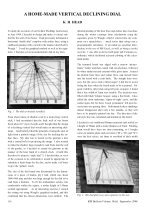
This article recounts the personal project of designing and constructing a vertical declining sundial for a golden wedding anniversary. It details the use of both graphical and computational methods for accurate delineation, the choice of materials, the incorporation of a brass heart-shaped nodus, and discusses the dial's performance and an inscribed motto.
DIY Sundial Projects, Dials: Vertical, Mottoes, Sundial Design & Layout
September 2006
Page 128
Page 128
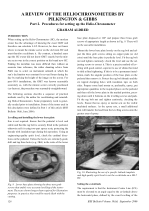
This article provides comprehensive, practical procedures for calibrating and reinstalling Pilkington & Gibbs Helio-Chronometers. It covers essential steps such as precise levelling, accurate co-latitude setting, meridian alignment, and adjustments for the equation of time and longitude, offering detailed guidance for both Northern and Southern Hemisphere models, aimed at owners and restorers.
Dials: Heliochronometer, Equation of Time, Restoration projects, Sundial Design & Layout
September 2006
Page 138
Page 138
The fifth instalment in a series, this article applies vector methods to the specific challenge of delineating polar sundials. It presents the vector components for the shadow plane and declination lines, mathematically deriving the straight hour lines and hyperbolic declination lines.
Dials: Polar, Mathematics of Dialling, Sundial Design & Layout
September 2006
Page 142
Page 142
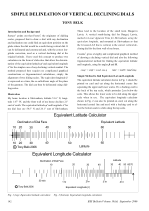
This article introduces a user-friendly method for delineating vertical declining sundials using bespoke slide rule-like calculators. These tools determine equivalent latitude and longitude, simplifying the process by eliminating complex trigonometry. The article explains how to use these calculators with standard dialling scales to accurately plot hour and sub-style lines.
Dialling Tools, Dials: Vertical, Mathematics of Dialling, Sundial Design & Layout
December 2006
Page 159
Page 159
The article reveals that sundial were often produced in batches or using templates to save time and cost. Evidence of this includes manufacturers reusing delineation designs, employing techniques like tilting dial plates to correct for different latitudes, and the presence of matching marks and "prick marks" on components of portable and ivory dials. This suggests a more standardised manufacturing process for many dials, especially from places like Augsburg, Nuremberg, and France.
Dials: Portable, Sundial Design & Layout
December 2006
Page 164
Page 164
Jill Wilson reports on a successful weekend course on 'Understanding Sundials' at Farncombe Estate. The curriculum covered the history of dialling, fundamental theory, design principles, practical delineation using various tools, and the practicalities of installing dials, with a focus on wall declinations. Attendees, from beginners to experienced diallists, gained new insights and appreciation for sundials.
How Sundials Work, Mathematics of Dialling, Sundial Design & Layout, The BSS and Members
December 2006
Page 167
Page 167
Allan Mills explores Robert Hooke's "Sundial Delineator," an instrument using a cross-shaped interior member (similar to a Hooke's joint) to simulate gnomon shadow motion for sundial delineation. The article details how Hooke's joint can be applied to delineate sundials and, when driven by a clock, create a "sundial-clock," explaining the underlying mathematical principles.
Sundial Design & Layout, Dialling Tools, Historical Dials
December 2006
Page 172
Page 172
Peter Baxandall details the restoration of the 18th-century triangular sundial on St Peter and St Paul's church in Blandford Forum. The prominent dial, designed by William Bastard, features a unique numerical layout along the base and Aries symbols suggesting an equinoctial line. The restoration, led by Harriet James, preserved its original paintwork and clarified its seasonal indications despite pediment shadows.
Dials: Vertical, Sundial Design & Layout, Restoration projects, Historical Dials
December 2006
Page 186
Page 186
Graham Aldred reviews the Sol Horometer, William Pilkington's 1912 heliochronometer, developed to bypass George Gibbs's patent. It details Pilkington’s unique EoT adjustment mechanism, contrasting it with Gibbs's system, and discusses manufacturing, sighting, and pointer design. The article also compares its performance and rarity to the original Helio-Chronometer, noting the limited sales.
Sundial Design & Layout, Equation of Time, Historical Dials, Dials: Heliochronometer
March 2005
Page 36
Page 36
Introduces a novel ecliptic-aligned sundial for direct solar date indication on a linear scale. Describes aligning the dial plane with the ecliptic, date scale calibration, equation of date application, and improved prism-based design. Demonstrates lunar path visualization and usage for sun compass orientation.
Dials: Unusual, Mathematics of Dialling, Sundial Design & Layout
June 2005
Page 47
Page 47
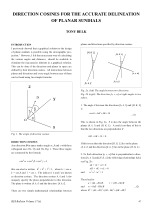
Explains how direction cosines can be used to precisely design planar sundials. The method eliminates inaccuracies of graphical construction by calculating hour lines, declination lines, and style parameters mathematically, with examples for horizontal, vertical, and declining dials, and comparison with conventional calculation methods.
Mathematics of Dialling, Sundial Design & Layout
June 2005
Page 60
Page 60
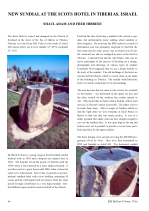
Accounts the design and installation of twin sundials—horizontal and vertical—on a basalt boulder at the Scots Hotel in Tiberias. Includes design features, analemmas, inscriptions, and collaborative process between designer and hotel staff.
Construction Projects, Dials: Horizontal, Dials: Vertical, Sundial Design & Layout
September 2005
Page 121
Page 121
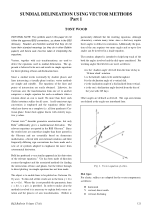
The author presents a new method for sundial delineation using vector methods and axis transformations to derive simple equations for plotting hour and declination lines. The article explains how shadow planes intersect a dial surface and provides examples of using this method for a horizontal sundial.
Mathematics of Dialling, Sundial Design & Layout
December 2005
Page 134
Page 134
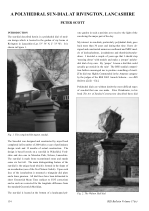
Describes the design and construction of a modern polyhedral sundial located in the author's garden in Rivington, Lancashire. The six-foot-tall dial is made from reconstituted stone and features a unique icosahedron-shaped head with twenty triangular dial plates, each with a brass gnomon. The design was inspired by dials in Wakefield and Marsden Park.
Construction Projects, DIY Sundial Projects, Dials: Multi Faced, Sundial Design & Layout
December 2005
Page 158
Page 158
This technical article, "Part 2" of "Vector Delineation," presents mathematical equations for delineating vertical declining sundials. It focuses on deriving shadow plane vector components, hour lines, declination lines, sub-style angle, and gnomon angle using trigonometric functions. The article demonstrates how these calculations can be implemented for computer-aided design of sundials.
Mathematics of Dialling, Sundial Design & Layout
December 2005
Page 159
Page 159
This review covers Tony Moss's PowerPoint CD-ROM "Sundial Presentations," which includes "Concepts for Students of Sundialling" and "Using and Understanding Sundials." It praises the CD for its clear, animated slides explaining basic sundial concepts, theory, alignment of gnomons, differences between clock and sun time, and the analemma, making it useful for beginners and lecturers.
Book Reviews, How Sundials Work, Mathematics of Dialling, Sundial Design & Layout
December 2005
Page 160
Page 160
This article details the discovery and reconstruction of a unique 1683 combined horizontal equinoctial sundial at Lyme Hall. The author describes deciphering the inscription "R Legh 1683," examining its robust bronze construction and innovative two-hole sight/screen system. The article also explores the dial's historical context, its owner Richard Legh, and a possible link to George Gibbs's Helio-Chronometer.
Dials: Equatorial, Dials: Horizontal, Dials: Unusual, Historical Dials, Restoration projects, Sundial Design & Layout
December 2005
Page 170
Page 170
This article details the design and construction of a sundial for the Elias Fries School in Hyltebruk, Sweden. The sundial, made from a large stone cut in half, features a polar-axis aligned shadow pin and a dial plate raised 20 degrees from the ground. It is designed to be an artistic and educational tool demonstrating the sun's daily and seasonal movements without indicating precise clock time.
Construction Projects, Dials: Horizontal, Sundial Design & Layout
December 2005
Page 172
Page 172
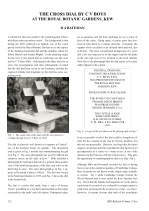
This article investigates the bronze cross dial by C.V. Boys at Kew Gardens, noting its unusual design and puzzling errors in the engraved latitude and longitude. It traces the dial's history, including its temporary display and previous locations within the gardens, and highlights the scientific reputation of its designer, Sir Charles Vernon Boys FRS.
Dials: Polar, Dials: Unusual, Historical Dials, Sundial Design & Layout
March 2004
Page 4
Page 4
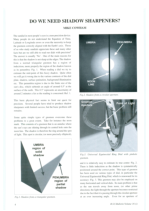
Explores methods to improve the precision of reading sundials, addressing the problem of the penumbra (fuzzy shadow) caused by the sun's finite disc. It discusses various gnomon designs, such as annular gnomons for noon marks, thin rod gnomons, and pinhole or taut wire gnomons, which create sharper shadows for more accurate time-telling.
Dials: Noon Lines, Dials: Portable, How Sundials Work, Sundial Design & Layout
March 2004
Page 6
Page 6
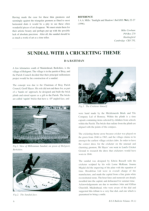
This article describes a millennium sundial project in Holyport, Berkshire, featuring a unique cricketing theme due to the village's history with the sport. Designed by Edwin Russell with cricketer sculptures by Lorne McKean, the dial includes hand-made 'quint' bricks, a time capsule, and hour lines delineated for summer time.
Construction Projects, Dials: Unusual, Sundial Design & Layout
March 2004
Page 14
Page 14
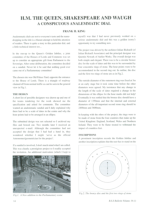
This article details the design and construction of an analemmatic sundial for the Queen's Golden Jubilee, located in Old Palace Yard, opposite the House of Lords. It covers the challenges of designing for a cambered surface, the selection of stone from UK countries, the prominent Shakespearean inscription, and the intricate process of determining the scale of dates for the dial.
Construction Projects, Dials: Analemmatic, Sundial Design & Layout
June 2004
Page 53
Page 53
Step-by-step account of designing and building a cylindrical azimuthal mean time dial with mechanical correction application, including prototype testing and accuracy assessment.
DIY Sundial Projects, Dials: Unusual, Sundial Design & Layout
June 2004
Page 69
Page 69
Discussion on the challenges of aligning large sundials to true north, focussing on accuracy and discrepancies in tools to calculate solar azimuth
Dialling Tools, Sundial Design & Layout
September 2004
Page 91
Page 91
Description and design of an equatorial ‘vial’ ring dial that combines a planisphere with a sundial. Uses a spirit-level alidade and a rotating outer ring to read local apparent time for any longitude, and to estimate sunrise, sunset and the locus of solar midnight across longitudes.
Dials: Equatorial, How Sundials Work, Sundial Design & Layout
December 2004
Page 146
Page 146
Practical method using a 24-hour equatorial template to transfer hour lines to arbitrary surfaces. Demonstrates template folding for latitude, a Cambridge horizontal example, spherical and heart-shaped scaphe dials, marking equinox/solstice lines and gives practical tips on template rigidity and common pitfalls.
DIY Sundial Projects, Dials: Scaphe, How Sundials Work, Sundial Design & Layout
December 2004
Page 160
Page 160
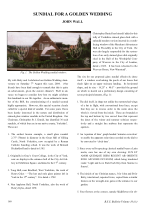
Account of a commissioned engraved glass sundial created for a golden wedding anniversary. The gnomon is replaced with an aperture on the outer window, illuminating the dial on the engraved inner pane of glass. Covers design choices, layout and the inclusion of equation-of-time/longitude correction features, installation notes and the personal significance of the dedication.
Dials: Unusual, Sundial Design & Layout
March 2003
Page 6
Page 6
A historical study of mathematical instrument makers affiliated with the Grocers' Company, focusing on 18th-century horizontal and geographical dials and their design traditions.
Dials: Horizontal, Historical Dials, Sundial Design & Layout
March 2003
Page 20
Page 20
Correction and image for a previously published article on the Akeler Sundial at Marlow, showing its garden setting.
Dials: Equatorial, Sundial Design & Layout
June 2003
Page 58
Page 58
This article explores the concept of creating a sundial for the visually impaired. It reviews historical attempts, such as one by the 17th-century Jesuit priest Francis Hall, and discusses modern approaches that use the heat of the sun rather than visible light.
Construction Projects, DIY Sundial Projects, Dials: Unusual, Sundial Design & Layout
June 2003
Page 63
Page 63
A description of a portable celestial ring dial design. The article discusses the dial's functionality, its use of celestial bodies, and the construction details including the gnomon and other features.
Construction Projects, Sundial Design & Layout
September 2003
Page 104
Page 104
This article re-examines the Morvah church sundial in Cornwall. The author finds that the dial was incorrectly laid out, possibly because the latitude was used where the co-latitude was needed in the design. He expresses alarm that this might be a common issue with Cornish church sundials.
Dials: Vertical, Mathematics of Dialling, Sundial Design & Layout
December 2003
Page 144
Page 144
An account of the conception and development of a helical sundial known as 'The Druid', highlighting the innovation of the 'Smart Shadow' and construction techniques.
Dials: Unusual, Sundial Design & Layout, DIY Sundial Projects
March 2002
Page 4
Page 4
Describes the design and creation of a unique sundial featuring a statue of Newton holding a prism, inspired by his optical work and historic dials at Woolsthorpe.
Construction Projects, Dials: Polar, Dials: Unusual, Sundial Design & Layout
March 2002
Page 14
Page 14
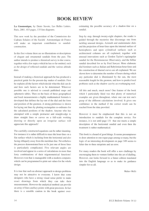
Review of 'La Gnomonique' by Denis Savoie, a detailed and technical guide to sundial construction methods.
Mathematics of Dialling, Sundial Design & Layout
March 2002
Page 41
Page 41
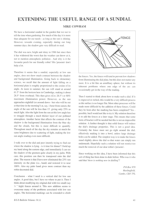
Suggests addition of vertical 'fences' to a horizontal dial to increase the legibility of the shadow for early and late hours.
How Sundials Work, Sundial Design & Layout
March 2002
Page 44
Page 44
Describes a noon mark dial with a lens at the aperture, projecting a bright spot on an analemma inscribed on a semicircular scale.
Sundial Design & Layout, Construction Projects, Equation of Time, Dials: Noon Lines
June 2002
Page 45
Page 45
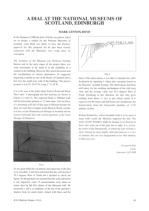
Describes the design and construction of a modern wall-mounted sundial using traditional techniques for the National Museums of Scotland.
Dials: Vertical, Sundial Design & Layout
June 2002
Page 85
Page 85
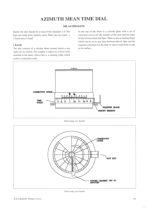
Technical description of a dial type that uses azimuth angle to determine mean time, with design suggestions.
Dials: Heliochronometer, Dials: Horizontal, Sundial Design & Layout
December 2002
Page 161
Page 161
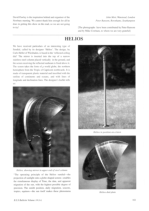
Brief note on a modern artistic reflective sundial design named 'Helios'
Dials: Reflected, Dials: Unusual, Sundial Design & Layout
March 2001
Page 15
Page 15
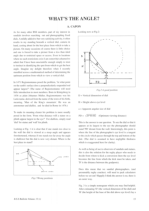
Derives a mathematical method of determining the optimum distance from which to view or photograph a vertical dial, and provides a nomogram to help calculate this distance based on the dial's dimensions and height.
Mathematics of Dialling, Sundial Design & Layout
March 2001
Page 42
Page 42
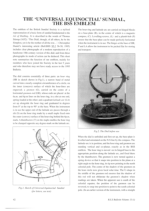
This article explores the "Universal Equinoctial" sundial, highlighting its significance as the emblem of the British Sundial Society. It discusses the historical context and design principles of this type of sundial, explaining its functionality and why it was chosen to represent the BSS.
Dials: Equatorial, Sundial Design & Layout, The BSS and Members
June 2001
Page 47
Page 47
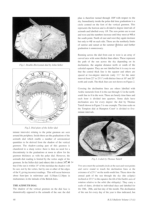
This comprehensive article details the double-horizontal sundial, distinguishing it from William Oughtred's earlier portable instrument. It explains its design, historical prevalence from 1630-1713, and methods for reading its complex graduations. The author also discusses modern examples and the use of stereographic projection in its delineation, providing a list of existing historical and contemporary dials.
Dials: Double Horizontal, Historical Dials, Mathematics of Dialling, Sundial Design & Layout
June 2001
Page 77
Page 77
Michael Hickman introduces a non-mathematical method for designing analemmatic sundials using Weir's Azimuth Diagram. He explains how this navigational tool can be adapted to plot hour points and declination scales for dial design without complex trigonometry, making the process accessible to a broader audience.
DIY Sundial Projects, Dials: Analemmatic, Mathematics of Dialling, Sundial Design & Layout
June 2001
Page 82
Page 82
John Foad proposes new categories for sundials designed to prevent rain accumulation: the "Laid Dial," a reclining dial with an "Angle of Lie," and the "Rain Dial", featuring a conical raised centre. He discusses the practical advantages of these forms in preserving dial plates and enhancing readability, and the pleasing play on words.
Dials: Horizontal, Dials: Unusual, Sundial Design & Layout
June 2001
Page 83
Page 83
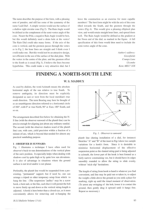
W.S. Maddux describes precise techniques for accurately establishing a true north-south line, essential for sundial installation. He outlines two methods using a plumb line and its shadow: one for general alignment and another for achieving high precision, detailing practical steps for observing and marking the meridian.
Dialling Tools, Sundial Design & Layout
September 2001
Page 123
Page 123
This second part details using stereographic projection for graphical design of declining and reclining vertical, and double horizontal sundials. It explains how to determine sub-style angles and style heights, and how the projection can cover full 24-hour periods. The article also covers William Oughtred"s "Horizontal Instrument" and Blagrave"s "Mathematical Jewel" as related applications.
Dials: Double Horizontal, Dials: Vertical, Mathematics of Dialling, Sundial Design & Layout
September 2001
Page 130
Page 130
This article presents the design for a horizontal sundial usable anywhere in the UK to show GMT, requiring only a slight tilt adjustment for specific latitudes. It employs a gnomon rod mounted at a 53-degree angle and concentric circles on the dial plate represent different longitudes. A formula for calculating hour lines is provided.
DIY Sundial Projects, Dials: Horizontal, Mathematics of Dialling, Sundial Design & Layout
December 2001
Page 135
Page 135
This article details ancient timekeeping systems, including Babylonian hours from sunrise, Italian hours from sunset, and the Arabs' midnight-start 24-hour day. It also explores Japanese unequal hours, divided into 12 'tokis', noting their abandonment in 1873 for international time. The evolution of numerals on sundials, from early European to Arabic and stylised forms, is also discussed.
Dials: Portable, Historical Dials, Sundial Design & Layout
December 2001
Page 138
Page 138
This article examines the double-horizontal sundial, a 17th-century invention by William Oughtred. It features two sets of graduations: one for an inclined polar gnomon and another for a central vertical gnomon, operating from altitude and azimuth. The article details its design, use for time, date, and solar altitude, and discusses its self-setting property and limitations due to orientation error.
Dials: Double Horizontal, Historical Dials, Mathematics of Dialling, Sundial Design & Layout
December 2001
Page 156
Page 156
This report covers the well-attended BSS meeting at Newbury. Presentations included astronomy software, 'Spot-on-Sundial' development, and a 'Sundial Seekers Companion' kit. Updates were given on dial restoration. Exhibitions showcased diverse designs, including a rainbow dial, a hemispherical dial made from a bird feeder, and an electronic biscuit box sundial. Various other dials, a nocturnal, and calendars were also displayed.
Dials: Unusual, Restoration projects, Sundial Design & Layout, The BSS and Members
February 2000
Page 12
Page 12
Compares aesthetics and function of deep hemispherical vs shallow bowl sundials, including gnomonic differences and delineation methods.
Dials: Hemispherical, Dials: Scaphe, Sundial Design & Layout
June 2000
Page 55
Page 55
Describes the design and installation of a new multi-faced sundial at Christ Church, Oxford, inspired by a historical dial by Kratzer.
Dials: Multi Faced, Sundial Design & Layout
October 2000
Page 107
Page 107
Detailed account of the design process and construction of the Tylers' and Bricklayers' polar sundial in London, including technical and logistical challenges.
Construction Projects, Dials: Polar, Sundial Design & Layout
October 2000
Page 137
Page 137
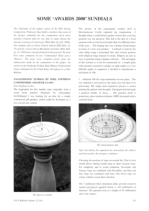
Photos and summaries of sundials submitted to or winning BSS awards in 2000.
Sundial Design & Layout, The BSS and Members
February 1999
Page 14
Page 14
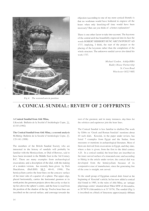
This review discusses two papers on conical sundials, a less familiar type compared to the hemicyclium. It focuses on a conical dial found at Abu Mina, Egypt, dating from the 1st to 3rd century A.D., analyzing its construction, accuracy, and challenging previous interpretations of its markings.
Book Reviews, Sundial Design & Layout, Historical Dials, Dials: Scaphe
February 1999
Page 18
Page 18
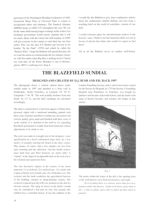
This article describes a vertical, almost direct south, sundial made in 1997 for a barn wall in Nidderdale. Constructed from plywood with a wrought iron style, it features decorative figures symbolizing agricultural life and an equation-of-time correction system via an adjustable disk.
Dials: Vertical, Sundial Design & Layout, Construction Projects
February 1999
Page 19
Page 19
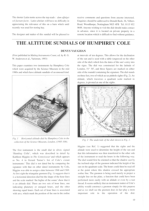
This paper examines two unusual altitude sundials by Humphrey Cole from the Science Museum, one from 1568-1569 and another from 1574. It analyzes their unique gnomon operation for measuring sun height and reading hours, suggesting a new sub-section in sundial classification for Cole's distinctive horizontal plate altitude dials.
Dials: Portable, Sundial Design & Layout, Historical Dials
February 1999
Page 25
Page 25
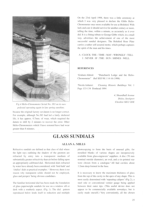
This article introduces refractive sundials made from transparent solids like glass, specifically glass paperweight sundials for window sills. The nodus is an 'aperture' on the top of the paperweight, casting a spot on a dial card on the bottom, with a more compact pattern than in air.
Dials: Horizontal, Dials: Portable, Dials: Unusual, Sundial Design & Layout, DIY Sundial Projects
February 1999
Page 40
Page 40
John Moir continues his exploration of hidden meanings and symbolism in sundials, presenting examples of 'false identity' dials like a bowl dial and a cat-shaped memorial. He delves into using logos, Morse code, and snooker ball colour codes, as well as analogies like railway lines and hair-lines, to enrich sundial design.
Dials: Unusual, Sundial Design & Layout, Equation of Time, Mottoes
February 1999
Page 47
Page 47
This review covers two issues of *Compendium*, the NASS journal. It highlights articles on a 'Witch's Sundial', various sundial designs (conical gnomon, Ptolemaic coordinates, cycloid gnomon, split analemma), and 'Sightings' features on notable dials, concluding with a report on the NASS Fourth Annual Conference.
Dials: Equatorial, Book Reviews, Sundial Design & Layout, Equation of Time
February 1999
Page 49
Page 49
This article describes a fixed pillar dial, a variant of the Shepherd's Dial, which indicates time without requiring cylinder rotation. It features a radial gnomon whose tip's vertical shadow length and position on the cylinder's wrapped surface (calibrated by specific formulas) distinguish morning from afternoon.
Sundial Design & Layout, Dials: Cylindrical
June 1999
Page 62
Page 62
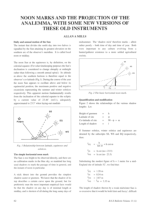
This article explores noon marks and the analemma, detailing how the sun's daily and annual motion is used to determine local noon and time of year. It discusses simple horizontal and vertical noon marks, the use of aperture gnomons, and the historical and modern application of the analemma for time correction. New designs for polar and vertical analemmatic noon marks, including sculptural forms, are also presented.
Dialling Tools, Dials: Noon Lines, Equation of Time, Sundial Design & Layout
June 1999
Page 77
Page 77
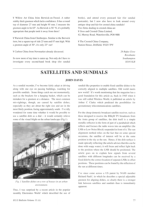
This article explores the unexpected link between satellite dishes and sundials, including the use of knowledge of the sun's movement to align satellite dishes to satellites. It delves into the geometry of satellite dishes as a basis for sundial design and discusses practical details for using a satellite dish into a sundial, including gnomon options and microwave-transparent planar dial face materials.
DIY Sundial Projects, Mathematics of Dialling, Sundial Design & Layout
June 1999
Page 98
Page 98
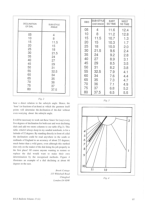
Details the restoration of the author's first vertical east declining sundial, originally made in 1986. It describes the process of stripping old paint, repainting, and redrawing the dial face with hour, equinox, and solstice lines. Challenges in transferring designs and painting fine lines are discussed, along with the decision to use black numerals for better contrast and adding a computer-drawn Equation of Time graph.
DIY Sundial Projects, Dials: Vertical, Restoration projects, Sundial Design & Layout
October 1999
Page 115
Page 115
This article presents a design for a horizontal sundial adjustable for the Equation of Time and longitude by rotation around an axis parallel to the gnomon's style-edge. The design features a dial-face and gnomon-spine on a head, connected to a base with scales for longitude and a twelve-month Equation of Time adjustment. The offset bearing configuration and a Vernier-like scale simplify operations, allowing users to set the dial for different longitudes and regular Equation of Time corrections.
Dials: Horizontal, Equation of Time, Mathematics of Dialling, Sundial Design & Layout
October 1999
Page 122
Page 122
This article examines Anglo-Saxon sundials from England's middle period (10th century revival), focusing on Darlington and Pittington. It traces their derivation from the Graeco-Roman hemicycle, adapted for early Christian communities, incorporating four-part day divisions. The Darlington dial, carved on both sides, shows evolution in design and symbolic meanings. The Pittington dial is noted as England's earliest six-division example, influenced by Italian and Byzantine styles, potentially reflecting a rearrangement of canonical hours.
Sundial Design & Layout, Historical Dials, Dials: Mass Dials
October 1999
Page 136
Page 136
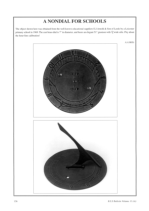
This entry briefly describes a 7-inch diameter cast brass dial, with an elegant 51° gnomon, obtained by a Leicester primary school in 1969 from educational suppliers. The author notes that it is a 'nondial' due to its inaccurate hour-line calibration, implying it fails in its instructional purpose.
Sundial Design & Layout
October 1999
Page 146
Page 146
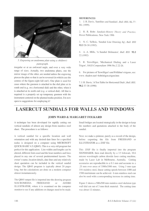
This article describes a technique for rapidly producing vertical skeleton sundials from stainless steel using a 3.5-kilowatt laser cutter. Designs are created on a computer with specific location, wall orientation, and date lines. The method allows for intricate details, including owner's names and quotations. The technique can also create silhouette window sundials with sandblasted glass, and accurate analemma plates in stainless steel and brass, suitable for human-involvement analemmatic dials.
Construction Projects, DIY Sundial Projects, Dials: Vertical, Sundial Design & Layout
October 1999
Page 148
Page 148
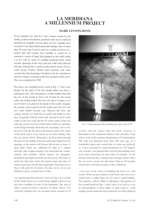
This article describes a millennium project involving the construction of a tower, 'La Meridiana', near Rome, to house a series of internal sundials. The author designed 10 dials for the walls and ceiling, read by sunlight projected through openings or reflected by a mirror. An experimental dial at his family house achieved accuracy within 10 seconds. The project aims to demonstrate precise time and date measurement, zodiac, altitude, and azimuth, using novel methods for declination, horizon, and meridian establishment.
Construction Projects, Dials: Reflected, Dials: Unusual, Sundial Design & Layout
February 1998
Page 26
Page 26
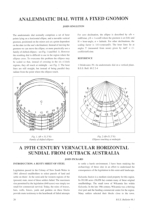
Proposes an analemmatic dial that retains a fixed upright gnomon by drawing a series of ellipses, scaling and shifting them to avoid crossing lines and confusion when reading it.
Dials: Analemmatic, Mathematics of Dialling, Sundial Design & Layout
June 1998
Page 11
Page 11
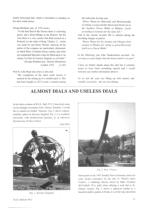
Showcases several examples of sundials deemed either 'almost' functional or 'useless.' It features a quasi-armillary sphere, a horizontal dial with a dysfunctional gnomon, a spherical sundial with perplexing projections, and a cathedral dial whose black face renders the shadow invisible, highlighting design flaws.
Dials: Unusual, Sundial Design & Layout
June 1998
Page 12
Page 12
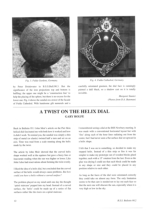
The article describes how to make a sundial by setting a series of faces on a solid object to indicate time. The faces are parallel to the earth's axis and turn to show specific times. The design, which can be cast from a mould, allows for time to be judged to within five minutes by observing the changing shadow on the face. The novel design has been patented
Dials: Unusual, Sundial Design & Layout
June 1998
Page 16
Page 16
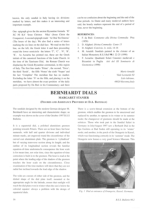
This article describes the distinctive equatorial sundials designed by modern German artist M. Bernhardt. These feature a polished aluminium gnomon pointing towards Polaris, and an hour scale calibrated for mean time, incorporating the equation-of-time correction within the gnomon's outline. Interchangeable gnomons allow for seasonal adjustments.
Dials: Equatorial, Dials: Heliochronometer, Dials: Unusual, Equation of Time, Sundial Design & Layout
June 1998
Page 21
Page 21
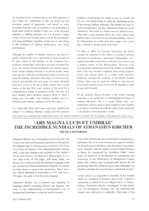
This article explores the extraordinary sundials documented in Athanasius Kircher's 17th-century masterpiece, Ars Magna Lucis et Umbrae. It highlights Kircher's unique integration of gnomonics with esoteric disciplines like astrology and alchemy, showcasing innovative dials that provided astronomical data, medical advice, and even produced sound and fire.
Dials: Unusual, Mathematics of Dialling, Sundial Design & Layout
June 1998
Page 33
Page 33
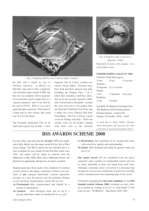
This announcement outlines the new categories for the BSS awards for sundials. It details the classes for professional, amateur, restoration, and junior dials, with an emphasis on the honour of the award itself.
Restoration projects, Sundial Design & Layout, The BSS and Members
June 1998
Page 38
Page 38
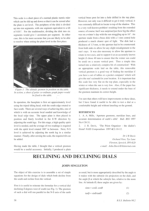
This article provides a straightforward set of equations for the design of sundials that simultaneously recline from the vertical and decline from the south. It revisits the formulas for vertical declining dials and demonstrates how these two types of tilts combine to derive effective values for both angle and declination.
Dials: Vertical, Mathematics of Dialling, Sundial Design & Layout
June 1998
Page 40
Page 40
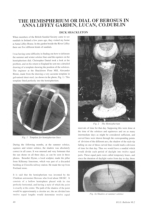
This article describes a hemispherical sundial, or 'hemispherium,' located in the author's garden, reputedly invented by Berosus around 300 BC. It details the successful process of delineating the solstice and equinox lines using a custom-made template and explains the dial's function in dividing daylight into 'temporary hours'.
Construction Projects, Dials: Hemispherical, Dials: Scaphe, Sundial Design & Layout
October 1998
Page 3
Page 3
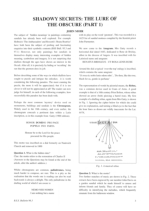
This article explores hidden meanings, symbolism, and imagery in sundials. It delves into devices like chronograms, palindromes, anagrams, rebuses, and "false identity" dials, presenting examples and puzzles (with solutions) related to cryptic inscriptions and designs.
Dials: Unusual, Historical Dials, Mottoes, Sundial Design & Layout
October 1998
Page 8
Page 8
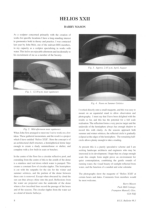
This article introduces an innovative 'Helios XXII' sundial concept, designed as an architectural shell structure or summerhouse. It features a hemispherical dome with a reflective pool at its centre and a stainless steel rod circulating water creating ripples. Reflections from the water, with shadows from the concentric ripples, are projected onto the dome's underside, marking hours and seasons, aiming for a tranquil contemplative environment.
Construction Projects, Dials: Hemispherical, Dials: Unusual, Sundial Design & Layout
October 1998
Page 12
Page 12
Analysis of the Sundials on the Tower of the Winds, Athens: Possible Parameters Used in Construction
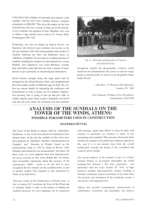
This article presents a detailed analysis of the ancient sundials on the Tower of the Winds in Athens using high-precision geodetic data. The study aims to identify the cardinal design parameters, such as geographic latitude, ecliptic angle, and gnomon length, used in their construction. It explores historical measurements and proposes a plausible interpretation for the cylindrical dial.
Dials: Cylindrical, Historical Dials, Mathematics of Dialling, Sundial Design & Layout
October 1998
Page 16
Page 16
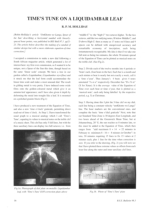
This article describes a unique sundial commission, featuring a gilded metal liquidambar leaf design. It incorporates an innovative equation-of-time correction system called 'Time's Tune,' which uses musical analogy to plot values on a treble clef. The dial provides a direct read-out of clock time with specific adjustments for longitude.
Construction Projects, Dials: Unusual, Equation of Time, Sundial Design & Layout
October 1998
Page 27
Page 27
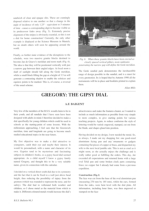
This article describes the creation of "Gregory," a vertical direct south sundial designed specifically for young children and school use. Made from recycled metals, the dial features a gypsy face, with hair and eyebrows shaped to represent the equation of time. Its design aims to attract youngsters and serve as a teaching aid for time and longitude.
DIY Sundial Projects, Dials: Vertical, Equation of Time, Sundial Design & Layout
October 1998
Page 40
Page 40
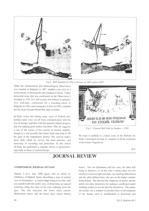
This article reviews *Compendium*, the journal of NASS, featuring J.M. Bores' new conical sundial design, measuring Babylonian and Italian hours, and an article by Robert L. Kellogg on Bede's cosmological and geographical works, including his observations on day-length variations. It also mentions a regular "Sightings" feature on notable dials.
Book Reviews, Dials: Unusual, Sundial Design & Layout
October 1998
Page 44
Page 44
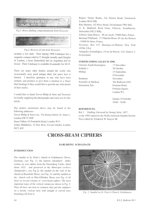
This article investigates the history and interpretation of cross-beam ciphers found on medieval sundials and calendars across Northern and Central Europe. It challenges previous terminologies like 'carpenter's numerals' and 'Styrian ciphers', proposing a new theory that these ciphers originated from condensed counting frames (abaci) used for financial calculations.
Historical Dials, Sundial Design & Layout
April 1997
Page 24
Page 24
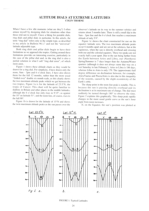
An exploration of altitude dials designed for high-latitude locations, discussing their construction, adaptations, and challenges in time-telling under extreme solar conditions.
Dials: Portable, How Sundials Work, Sundial Design & Layout
July 1997
Page 9
Page 9
This article describes three QBASIC computer programs for designing sundials. The programs can be used for plotting horizontal garden dials and various types of vertical wall dials.
Dialling Tools, Sundial Design & Layout
July 1997
Page 12
Page 12
This article details the construction of a pair of analemmic sundials mounted on the south corner of a building in Istanbul, Turkey. It describes the design of the dials, which are made of white marble with bronze gnomons, the shadows of whose points fall on analemmas of hours and half-hours.
Construction Projects, Sundial Design & Layout
July 1997
Page 38
Page 38
Report on a commemorative sundial project dedicated to James Taylor, a former BSS member, including design and symbolism.
Construction Projects, Sundial Design & Layout, The BSS and Members
July 1997
Page 43
Page 43
This article details the design and construction of the Guernsey Liberation Monument, which includes a sundial as a central feature. The shadow falls on a curved bench with markers at times of significant events calibrated for the annual Liberation Day, 19 May. It discusses the challenges and the methods used to ensure the dial's accuracy and the shadow's visibility.
Construction Projects, Dials: Unusual, Sundial Design & Layout
July 1997
Page 53
Page 53
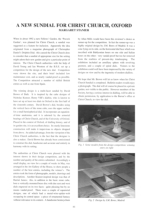
This article describes a new sundial being commissioned for the Fellow's Garden at Christ Church, Oxford. It discusses the design competition and the winning entry.
Dials: Cube, Dials: Multi Faced, Sundial Design & Layout
October 1997
Page 3
Page 3
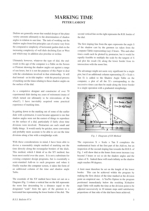
This article describes the "XY method", a practical process for marking time divisions on sundials. It details how to calculate shadow angles from first principles for various dial types and then plot them directly along rectangular borders using a graduated straightedge, acting as an "Add-on" to computer design programs. The method was adapted for complex declining/proclining dials and can also be applied to circular or octagonal dials.
Dialling Tools, Mathematics of Dialling, Sundial Design & Layout
October 1997
Page 21
Page 21
This article describes a large sundial on a school building in St. Johann im Pongau, Austria, made of glazed ceramic tiles. The author questions its usability due to the absence of hour numerals, requiring prior knowledge to interpret the times, and humorously nominates it as "The World's Most Useless Sundial".
Dials: Unusual, Sundial Design & Layout
October 1997
Page 31
Page 31
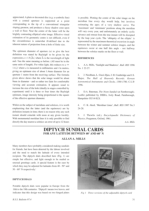
This article describes how to make adjustable diptych sundials from card, acting as a modern, lightweight version of antique portable diptych dials. It explains the principle of two hinged plates with a taut string gnomon, a built-in compass, and the "theorem of the sundial" for adjusting to various latitudes (40-50° N and 50-60° N) by tilting the entire instrument.
DIY Sundial Projects, Dials: Portable, Sundial Design & Layout
October 1997
Page 41
Page 41
This article explains three sources of misreadings on sundials: annual recurring errors (adjustment and fabrication errors), annual accumulating misreadings (due to unequal year lengths and celestial body motion), and errors in defining shadow transit. It details the mathematical treatment of these errors, including geographic coordinates, refraction, and parallax, and provides numerical examples.
Mathematics of Dialling, Sundial Design & Layout
February 1996
Page 9
Page 9
An exploration of innovative sundial designs such as the Open Book and Conical types, combining mathematical precision with aesthetic appeal.
DIY Sundial Projects, How Sundials Work, Sundial Design & Layout
February 1996
Page 28
Page 28
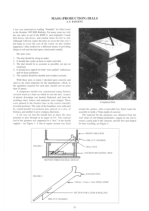
A discussion on industrially manufactured sundials and their place in contemporary and historical contexts.
DIY Sundial Projects, Dials: Horizontal, Sundial Design & Layout
June 1996
Page 26
Page 26
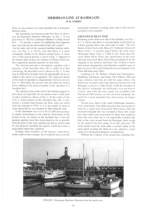
A description of a meridian line installed in Ramsgate, covering its construction, timekeeping function, and local educational significance.
Dials: Noon Lines, Sundial Design & Layout
October 1996
Page 13
Page 13
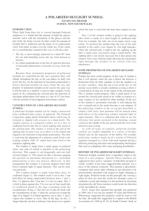
A description of constructing a sundial that uses the polarisation of skylight rather than shadows to tell time, explaining the optical principles, historical references, and potential applications.
Dials: Unusual, Sundial Design & Layout, DIY Sundial Projects
October 1996
Page 21
Page 21
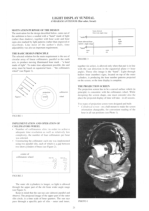
An innovative sundial design that projects light patterns as time indicators, demonstrating a creative approach to dialling aesthetics and function, with principles of optics.
Dials: Unusual, Sundial Design & Layout
October 1996
Page 52
Page 52
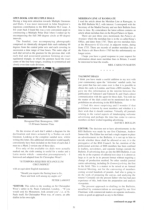
Describes a set of dialling scales produced by Lindisfarne Sundials (a version of the Serle Ruler) to allow the easy laying out of sundials without calculations or measurements of angles.
Sundial Design & Layout, Dialling Tools, DIY Sundial Projects
February 1995
Page 49
Page 49
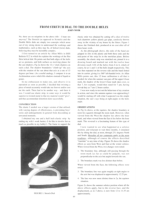
An innovative exploration of dial design evolution, tracing conceptual shifts from traditional layouts to experimental double helix arrangements.
Dials: Unusual, Sundial Design & Layout
June 1995
Page 45
Page 45
A discussion on simple and understated sundials, their form and function, with commentary on their aesthetic and scientific purity.
How Sundials Work, Sundial Design & Layout
June 1994
Page 46
Page 46
Describes a sundial-inspired brick and stone footpath laid out on the grounds of Winslow Hall. The design aligns with the sun’s path across the year and uses architectural shadows from the building to mark seasonal transitions, functioning as a large-scale calendar.
Sundial Design & Layout
October 1994
Page 32
Page 32
This article explores the concept of using shadows cast by window sills, jambs, and parapets on floors and walls as simple sundials. It explains the gnomonic principles involved, detailing how the moving "shadow straight line" can indicate the hour. The author provides formulas and diagrams for calculating the shadow's position based on latitude, window sill height and orientation (declination), solar altitude, and azimuth. It outlines the process of drawing date and hour lines, noting practical considerations like difficult-to-read periods for certain sill orientations, and suggests applications for terraces and balconies, or even for single hour lines with time-zone and Equation of Time corrections.
DIY Sundial Projects, Dials: Unusual, Mathematics of Dialling, Sundial Design & Layout
October 1994
Page 41
Page 41
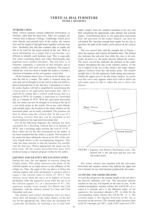
This article focuses on the additional informational elements, or "furniture," found on vertical sundials beyond just hour lines. It uses the Queens' College dial as an example of a dial rich in such information (altitude, azimuth, zodiac, sunrise time, day length). The author explains how to calculate and display various furniture types, including equinox and solstice declination lines, altitude and azimuth lines, and monthly declination lines, all based on the shadow cast by a "nodus" on the dial. The methodology involves transforming the vertical dial to an equivalent horizontal dial for simplified calculations and discusses the practical aspects of displaying such data.
Dials: Vertical, Mathematics of Dialling, Sundial Design & Layout
October 1994
Page 47
Page 47
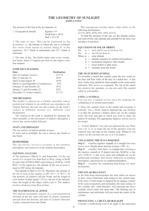
This article, originally prepared for architecture students, explains the principles governing the sun's position in the sky and its application to architectural sunlighting studies. It details how factors like geographical latitude, time of year (solar declination), and time of day influence sunlight. The article provides key solar orbit equations, introduces practical tools like the matchbox sundial and heliodon for simulating sun movement, and describes methods for visualizing sunpaths. It also discusses architectural applications such as checking sunlight penetration around buildings and through windows, and designing fins and canopies for solar protection, emphasizing the importance of understanding sunlight geometry in building design.
Mathematics of Dialling, Sundial Design & Layout
February 1993
Page 9
Page 9
This article describes the Kentucky Vietnam Veterans Memorial, a unique sundial monument designed by Helm Roberts. It details how the gnomon's shadow marks the names of fallen Kentuckians on their death dates, covering computer calculations and verification processes for this symbolic memorial.
Historical Dials, Sundial Design & Layout
February 1993
Page 18
Page 18
This article describes two meridians in St Sulpice Church, Paris, by Henry Sully (1727) and Charles Le Monnier (1743). It discusses their purpose for time measurement and astronomical observations, detailing the historical context of time standardization and their architectural integration within the church.
Dials: Noon Lines, Equation of Time, Historical Dials, Sundial Design & Layout
February 1993
Page 28
Page 28
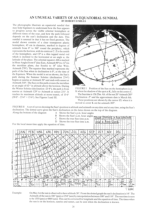
This article describes an unusual equatorial sundial without a fixed gnomon, featuring a transparent plastic hemisphere. It illustrates the Sun's apparent path and declination throughout the year, explaining how to determine sun time, altitude, azimuth, and declination on any given date using this instrument.
Dials: Equatorial, Dials: Scaphe, Sundial Design & Layout
February 1993
Page 36
Page 36
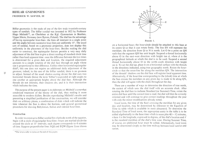
This paper elaborates on the theory and construction of bifilar sundials, a twentieth-century type invented by Hugo Michnik. It highlights their equiangular hour-lines, allowing direct reading of standard clock time by simple daily adjustment, and explains how time is indicated by the intersection of shadows from two horizontal threads.
Dials: Bifilar, Dials: Unusual, How Sundials Work, Mathematics of Dialling, Sundial Design & Layout
June 1993
Page 8
Page 8
This article critically examines polyhedral sundials designed by Nicholaus Kratzer, Henry VIII's diallist, comparing his work with that of Oronce Fine (Francis I of France's diallist). It describes surviving and recorded dials, including those in Holbein's paintings, and questions the practical functionality of Kratzer's polyhedral design due to apparent geometric inconsistencies and the use of the Ecliptic's obliquity angle in extraneous constructions.
Dials: Multi Faced, Sundial Design & Layout, Historical Dials
June 1993
Page 18
Page 18
This article explores Vitruvius's Analemma, a vital geometric construction from Roman architecture used for sundial design. It describes the step-by-step process of constructing the Analemma using only a ruler and compasses, explaining how it projects old Temporal Hours and can be adapted for modern hours. The text provides insights into ancient dialling techniques, their historical continuity, and potential links to medieval astrological traditions and later drawing methods.
Historical Dials, Mathematics of Dialling, Sundial Design & Layout
June 1993
Page 25
Page 25
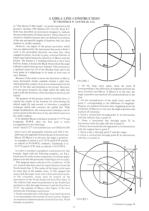
This article provides a graphical technique for constructing a qibla line on horizontal Arabic sundials, which indicates the prescribed direction of Mecca for Islamic prayer. It details the mathematical formula for determining the inhiraf angle and outlines a step-by-step construction procedure using a specific template. The article also notes the adaptability of this construction method for finding the azimuth of any other location.
DIY Sundial Projects, Mathematics of Dialling, Sundial Design & Layout
June 1993
Page 28
Page 28
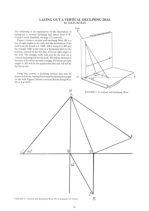
This article explains the geometric method for laying out a vertical declining sundial, drawing from F.W. Cousin's book Sundials. It details how to determine the style base, style height, equinoctial line, and noon line using a series of right angles and specific angles for latitude and wall declination. The process is illustrated with an example of a vertical dial declining West 30° at Latitude 50°N.
DIY Sundial Projects, Dials: Vertical, Mathematics of Dialling, Sundial Design & Layout
June 1993
Page 40
Page 40
This article describes the unusual sundial on the north wall of Merton College Chapel, Oxford, discussing its restoration and historical attribution to Henry Briggs or John Bainbridge. It analyses the confusing sets of lines, including declination and azimuth lines, and explains the dial's limited functionality (5.30 to 10.00 am in summer) due to its orientation and surrounding buildings, suggesting it was an academic exercise rather than a practical time indicator.
Dials: Unusual, Dials: Vertical, Historical Dials, Sundial Design & Layout
October 1993
Page 2
Page 2
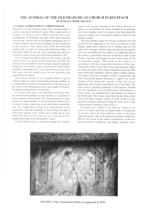
This article details the restoration of a unique astronomical chronogram sundial in Rouffach, France, dating from the early 17th century. It describes the fresco's depiction of planetary orbits based on Ptolemy and Tycho Brahe, highlighting challenges in deciphering faded inscriptions and the astrological significance of a lunar eclipse on the original dial's date in 1617.
Dials: Unusual, Dials: Vertical, Historical Dials, Restoration projects, Sundial Design & Layout
October 1993
Page 12
Page 12
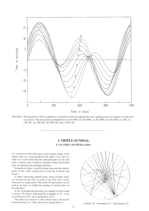
This article describes a unique sundial designed with three styles intersecting at a single point, allowing for the reading of various lines on the dial plane, including azimuth and astrological houses. An example dial is illustrated, delineated for latitude 52° with inclination and declination of 45°, demonstrating how different styles can indicate solar time or other phenomena.
Dials: Unusual, Sundial Design & Layout
October 1993
Page 26
Page 26
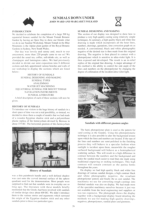
This article details an Open Day showcasing a large equatorial bronze sundial for Mount Tomah Botanic Garden in Australia. It describes various sundial types displayed, including analemmatic dials, and techniques for high-quality sundial design and casting using photopolymer. The article covers historical sundials, navigation instruments, and methods for making accurate hour lines and gnomons, celebrating the spread of gnomonic knowledge.
Construction Projects, Sundial Design & Layout
October 1993
Page 31
Page 31
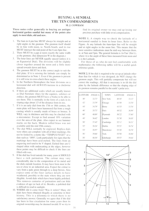
This article provides ten commandments for buying antique horizontal garden sundials, with points also applicable to other dials. It advises on checking gnomon alignment, hour line spacing, and the correct gnomon angle for latitude. The article also discusses material characteristics, identifying replica dials, and ethical considerations regarding origin, including reference tables for latitude and hour line angles.
Historical Dials, Mathematics of Dialling, Sundial Design & Layout
October 1993
Page 39
Page 39
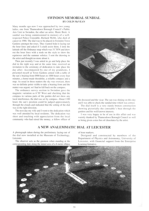
This article describes the design of a horizontal dial commissioned in memory of a police constable and placed in Swindon Town Gardens. The author details the process of laying out hour lines and setting up in the absence of sunshine. It also describes the installation of an analemmatic sundial at Leicester, a photograph shows the preliminary layout, with the observer acting as the gnomon, demonstrating the dial's function in determining time.
Dials: Analemmatic, Dials: Horizontal, Sundial Design & Layout
October 1993
Page 40
Page 40
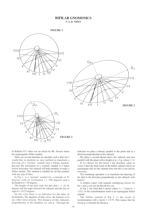
This article presents a general method to transform a 'normal' sundial layout into a bifilar sundial, suitable for all flat dials, not limited to equiangular hour lines. It explains how to calculate thread heights for the resulting sundial drawing.
Dials: Bifilar, Mathematics of Dialling, Sundial Design & Layout
February 1992
Page 11
Page 11
This article reviews historical techniques for telling time by the moon, noting their limited accuracy due to the moon's irregular movements and the need to convert lunar time to solar time. It describes methods like using correction tables (e.g., Queen's College, Cambridge, or Rene Rohr's diagram) and specific moondial instruments (Oronce Fine, Bion). The author also proposes a new model of lunar dial, adapting a horizontal sundial with "lunar hour lines" as spiral curves.
Dials: Unusual, Dials: Nocturnals, Sundial Design & Layout
February 1992
Page 16
Page 16
This article describes Samuel Foster's diametral sundial, a horizontal dial with a movable stile where hour-points lie on a straight line. Its unique feature is that the shadow becomes retrograde daily at a selected hour, allowing for the recreation of the Biblical miracle of Ahaz's dial. The article provides construction details and mathematical justifications for this special form of elliptical dial, also attributing the original discovery of the circular hour-arc dial to Foster.
Dials: Unusual, Mathematics of Dialling, Sundial Design & Layout
February 1992
Page 22
Page 22
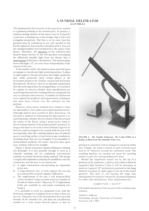
This article introduces a portable sundial delineator that simulates the sun's movement using a point-source lamp to project shadows. It allows for plotting hour lines on any surface, including irregular ones, by setting the gnomon at the correct latitude and revolving the lamp at 15-degree intervals. The device, suitable as a teaching aid, can also simulate declination for "dial furniture" like equinoxes and solstices by adjusting the lamp's height.
Dialling Tools, Sundial Design & Layout
February 1992
Page 33
Page 33
Fer de Vries presents a mathematical method for calculating sundial lines and for determining the inclination and declination of a dial plane. He defines various coordinate transformations needed to convert the sun's position into shadow-point coordinates on any surface, applicable globally. The procedure can also be reversed to find time and date from a shadow, or to determine the dial's orientation from observed shadow points, and is useful for designing mirror or submersible dials.
Mathematics of Dialling, Sundial Design & Layout
June 1992
Page 21
Page 21
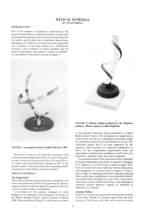
This article introduces helical sundials as a variation of the equatorial dial, where the receiving surface extends axially along the gnomon in a helix. It describes a prototype by John Singleton, a monumental example in Lerida by J. Masuet, and Piet Hein's design at Egeskov Castle. There are two types: the first has a gnomon casting its shadow, the second uses the shadow cast by the other part of the helical strip. The article explains their operation, with the light/dark boundary marking time and hour markings set by the pitch.
Dials: Equatorial, Dials: Unusual, Sundial Design & Layout
October 1992
Page 18
Page 18
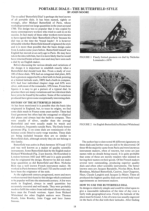
This article describes the popular "Butterfield Dial," named after Michael Butterfield of Paris (c. 1700), though the design's origin might be English. Typically octagonal, silver or brass, with a bird-supported gnomon and built-in compass, it was a decorative status symbol for international travellers. Despite criticism for its small compass and cluttered face, it remained popular, inspiring many copies and variations.
Dials: Portable, Historical Dials, Sundial Design & Layout
October 1992
Page 28
Page 28
This article describes a Meccano jig designed by Noel Ta'Bois for drawing hour and declination lines on sundial plates of any shape, including curved surfaces. The instrument features a telescopic arm, set by calibrated dials for latitude, declination, and hour angle, which is extended to mark the shadow position of the nodus. It eliminates the need for complex calculations, making it useful for irregular surfaces.
Dialling Tools, Mathematics of Dialling, Sundial Design & Layout
October 1992
Page 37
Page 37
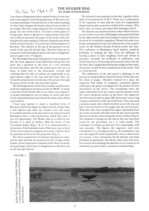
This article describes the Holker Dial, a large shallow bowl sundial made of Burlington slate, sited at Holker Hall. Designed by Mark Lennox-Boyd, it is a projection of Berossos' hemispherium onto a shallow bowl, marked with 15-minute divisions, zodiacal signs, and a combined table for correcting for longitude offset and Equation of Time. The article details the challenging production process by Burlington Slate, involving computer-calculated polar coordinates for engraving and the moving of massive stone objects.
Construction Projects, Dials: Hemispherical, Dials: Scaphe, Mathematics of Dialling, Sundial Design & Layout
July 1991
Page 3
Page 3
This article, written in 1631, details using John Marr’s Hampton Court Dial. It explains determining celestial metrics like ascensionall difference, azimuth, amplitude, sun's altitude and declination, and Judaical hours. It also covers comparing unequal to equal hours, finding the day of the month, and predicting London Bridge tides via the dial's shadows, showcasing its comprehensive historical applications.
Historical Dials, How Sundials Work, Mathematics of Dialling, Sundial Design & Layout
July 1991
Page 5
Page 5
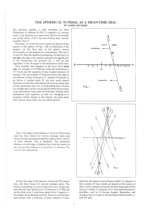
Building on Peter Drinkwater's work, this article explores adapting a spherical sundial to indicate mean time for six months of the year, by offsetting the hour marks away from the equator. This is possible because the slanting terminator at different solar declinations, adjusted for corresponding equation of time, happen to fall very close to one of two circles (within 1.5 minutes). The author also discusses using surface texture, like paint brush marks, to significantly improve the dial's readability and precision.
DIY Sundial Projects, Dials: Unusual, Equation of Time, Sundial Design & Layout
July 1991
Page 8
Page 8
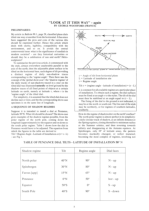
This article re-examines plane dials tilted from the horizontal, focusing on clarity, legibility, and environmental compatibility. It explains 'shadow regimes,' how tilt relates to equivalent latitude, and the impact on sun-shadow patterns. Key considerations include local horizons and the 'night factor'—periods where the dial cannot register time. It highlights the clarity of polar regime dials, despite seasonal limitations, for educational and aesthetic purposes.
Dials: Polar, How Sundials Work, Mathematics of Dialling, Sundial Design & Layout
July 1991
Page 14
Page 14
This article presents a novel DIY sundial for a window sill, featuring a stationary reading point. The author explains the construction process: delineating a vertical sundial as if for exterior mounting, then rotating it 180 degrees about the horizontal axis perpendicular to the window. Read the time by watching the shadows of the hour lines pass a stationary reading point 'nodus' on a horizontal surface. Mirroring the hour figures allows them to be read legibly.
DIY Sundial Projects, Dials: Unusual, Dials: Vertical, Sundial Design & Layout
July 1991
Page 15
Page 15
This essay details Egnazio Danti's large astronomical quadrant on Florence’s Santa Maria Novella facade (1572). It describes the instrument's design, inscriptions, and multiple hour systems including Italian, Bohemian, Astronomical, and French hours. It particularly focuses on a unique double tracing for Planetary and Canonical hours, clarifying their historical distinction and practical differences resulting from their construction methods.
Historical Dials, Mathematics of Dialling, Sundial Design & Layout
July 1991
Page 22
Page 22
This note introduces F.J. de Vries' new computer program for designing a three-dimensional dodecahedron multi-faced sundial, imagined as made of glass to display various dial lines. The ZONWPLT program interfaces with ACAD to convert dial designs and generate complex geometric models. The article details the computational process, noting the time and files required for the example dodecahedron, and mentions de Vries' subsequent astrolabe program project.
Construction Projects, Dialling Tools, Dials: Multi Faced, Sundial Design & Layout
July 1991
Page 34
Page 34
This article introduces the equant dial, a horizontal sundial design inspired by Ptolemaic astronomy, addressing uneven hour spacing in classical dials. It describes how a specific curve is drawn on the dial face, against which an equi-spaced hour-line circle is rotated. This mechanism enables manual adjustments for the equation of time and other corrections, simplifying time reading on such a dial.
Dials: Horizontal, Equation of Time, Mathematics of Dialling, Sundial Design & Layout
July 1991
Page 35
Page 35
This article examines a horizontal sundial described in Manuscript Rivipullensi 225, a 10th-century compilation from Ripoll monastery. The manuscript provides didactic instructions for laying out the dial with concentric circles for months and temporary hour divisions. The author reconstructs two versions, discussing its function, orientation, and unique characteristics, suggesting Latin or Ripollan origins distinct from Arabic sundials of the period.
Historical Dials, Mathematics of Dialling, Sundial Design & Layout
July 1991
Page 38
Page 38
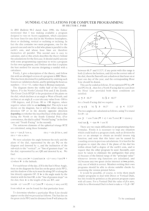
This article presents the theoretical basis for a computer program designed to calculate hour lines for various northern hemisphere sundials (direct, declining, vertical, reclining, inclining). It outlines using spherical trigonometry formulas to determine dial plane elements and hour line angles. The author emphasizes robust programming to handle issues like division by zero and inverse trigonometric ambiguities, providing simplified BBC Basic and design guidance.
Dialling Tools, Mathematics of Dialling, Sundial Design & Layout
October 1991
Page 24
Page 24
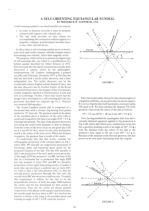
Fred Sawyer presents a self-orienting equiangular sundial, a modification of the Foster-Lambert hybrid dial, capable of correct orientation without external devices. It functions as both a solar clock and a solar compass, determining true celestial north. The design involves a V-shaped gnomon and two sets of hour-markings, allowing for simultaneous readings of Standard and Apparent time and a straightforward orientation process.
Dials: Foster-Lambert, How Sundials Work, Sundial Design & Layout
October 1991
Page 28
Page 28
Gerard Sonius developed a sundial for the blind, located at the Bartimeus blind institution in Zeist, Netherlands. This equatorial rotating dial features figures in relief and an electronic device that emits a sound when pointing to the sun. Marks for summer and winter time allow blind users to determine the time in 5-minute intervals, with explanations provided in Braille and print.
Dials: Equatorial, Dials: Unusual, Sundial Design & Layout
October 1991
Page 33
Page 33
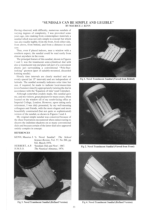
Maurice Kern describes his simple, legible sundial made from commonplace materials, featuring a translucent semi-cylindrical dial and a conventional gnomon. Designed for readability from multiple angles, it indicates solar time and can be adjusted for local mean time or summer time using the Equation of Time, highlighting a frustration with complex and indistinct conventional dials.
Dials: Equatorial, Dials: Unusual, Sundial Design & Layout, DIY Sundial Projects
October 1991
Page 37
Page 37
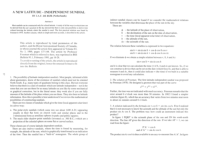
J.A.F. de Rijk describes a new, simple, and more accurate latitude-independent sundial, building upon Freeman's 1978 solution. This type of sundial can indicate local apparent solar time without requiring knowledge of the observer's latitude. The article explains the mathematical principles, focusing on how the product sin(Az)cos(h) and sin(T)cos(δ) are obtained and combined to determine the time (T).
Dials: Unusual, How Sundials Work, Mathematics of Dialling, Sundial Design & Layout
February 1990
Page 15
Page 15
This article examines Leonard Digges' work, A Prognostication, first published in 1553, which details methods for telling time by the sun and stars using instruments and tables. The accompanying comments describe Digges' instrument as basically a form of equatorial dial with a polar gnomon, which indicates time using a "peculiar Kalendar" for calculations
Book Reviews, Sundial Design & Layout
June 1990
Page 29
Page 29
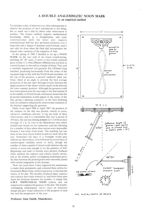
This article describes the empirical method used to construct a double analemmatic noon mark on a south-facing, east-declining wall. Over a year, the author meticulously plotted sunspot positions at noon to permanently engrave the overlapping analemmas, illustrating the dedication required for direct solar observation.
Construction Projects, DIY Sundial Projects, Dials: Analemmatic, Sundial Design & Layout
October 1990
Page 3
Page 3
This is the first instalment reproducing John Marr's 1631 description (held in the British Library) of his elaborate dial at Hampton Court, considered one of the most intricate ever made. It details the dial's physical form, its various lines and circles including tropics, equinoctial, parallels, altitude circles, azimuths, and seasonal (Judaicall) and hour lines, and the ecliptic with Zodiac signs.
Historical Dials, Sundial Design & Layout
October 1990
Page 5
Page 5
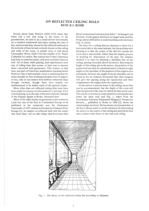
This article explores the history and theory of reflected ceiling sundials, referencing figures like Isaac Newton and Christopher Wren. It discusses examples such as the Palazzo Spada in Rome, the Lycee Stendhal in Grenoble, and a unique staircase dial in Saint-Antoine-en-Vienne, along with their design principles and historical context.
Dials: Reflected, Historical Dials, Sundial Design & Layout
October 1990
Page 14
Page 14
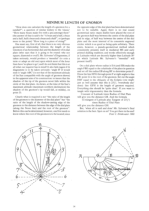
This article addresses the calculation of a gnomon's length for a sundial, clarifying that it's about the ratio of the shadow-casting edge to the distance from the root of the shadow casting edge to the dial plate's edge. It critiques Mr. Sylvester's diagram, presents a pseudo-geometrical medieval method, and provides trigonometric formulas for calculation.
Mathematics of Dialling, Sundial Design & Layout
October 1990
Page 15
Page 15
This article explains seasonal hours, a duodecimal system of dividing daylight used before mechanical clocks. It provides accurate patterns for horizontal and vertical seasonal-hour sundials suitable for latitudes 50-60° in the British Isles, noting that hour lines are shallow curves rather than straight.
Dials: Horizontal, Dials: Vertical, Sundial Design & Layout
October 1990
Page 28
Page 28
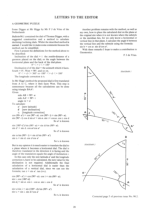
This guide provides step-by-step instructions for beginners to construct a south-facing vertical sundial using basic geometry. It covers drawing hour lines at 15° intervals and determining gnomon placement, encouraging readers to transfer their design to a permanent plate and understand the difference between local solar time and clock time.
DIY Sundial Projects, Dials: Vertical, Sundial Design & Layout
November 1989
Page 5
Page 5
The construction of sundials is discussed, with references to available books on the subject. Several books on sundial construction are mentioned including works by Winthrop W. Dolan, Christopher St. J. H. Daniel, and Peter I. Drinkwater. Delves into practical considerations such as selecting dial types based on site orientation and potential obstructions, which can significantly limit the hours indicated. It describes methods for finding the true meridian and determining latitude, as well as calculating local solar time differences and applying the Equation of Time for accuracy. Tips on personalising dials with mottoes are given, alongside advice on design elements like borders and additional indications, with a caution that too many details can make a dial confusing. The importance of using durable materials that can withstand the climate is emphasised, contrasting permanent materials like bronze with less resilient ones
Book Reviews, Sundial Design & Layout