- Home
- /
- Sundial Encyclopaedia
- /
- February 1993
February 1993
The articles link to the specific page in a PDF optimised for speed. If you want the whole issue, you can download it here, but the files from earlier years can be quite large.
February 1993
Page 1
Page 1
This section summarises activities of various sundial societies including De Zonnewijzerkring, Analemma, and Commission of Sundials, Paris. It covers excursions, exhibitions, historical time differences, mathematical articles, moon dials, sundial designs, and construction details. It also reports on society meetings and record-keeping efforts.
The BSS and Members
February 1993
Page 2
Page 2
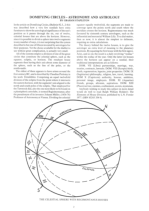
This article discusses the astrological significance of the sun's position in celestial houses as shown on sundials. It details various systems for dividing the celestial sphere into twelve segments, including Regiomontanus. The theory gives additional meaning to planetary positions, mentioning historical texts and further reading on house division.
Dials: Astrolabe, Historical Dials
February 1993
Page 3
Page 3
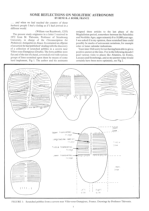
This study reflects on prehistoric astronomic notations found on scratched pebbles from a cavern, dating back 8-10,000 years. It discusses observations of the sun and moon to mark seasons and years, including lunar cycles like the 18.62-year cycle of extreme moon sets and the 19-year Meton cycle, possibly recorded in megalithic monuments like Stonehenge.
February 1993
Page 8
Page 8
This editorial welcomes articles and letters from BSS members, acknowledging their contributions. It discusses publication standards, including UK English spelling, and highlights the ongoing need for more material and potential future editors. The editor expresses gratitude for members' appreciation and support.
The BSS and Members
February 1993
Page 9
Page 9
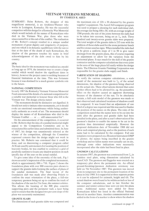
This article describes the Kentucky Vietnam Veterans Memorial, a unique sundial monument designed by Helm Roberts. It details how the gnomon's shadow marks the names of fallen Kentuckians on their death dates, covering computer calculations and verification processes for this symbolic memorial.
Historical Dials, Sundial Design & Layout
February 1993
Page 17
Page 17
This report details the ongoing development of the British Sundial Society's computer database for recording sundials in the British Isles. It covers the evolution of data input forms, transcription, verification processes, and future plans to expand the register, noting uneven coverage across different counties.
The BSS and Members
February 1993
Page 18
Page 18
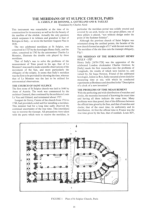
This article describes two meridians in St Sulpice Church, Paris, by Henry Sully (1727) and Charles Le Monnier (1743). It discusses their purpose for time measurement and astronomical observations, detailing the historical context of time standardization and their architectural integration within the church.
Dials: Noon Lines, Equation of Time, Historical Dials, Sundial Design & Layout
February 1993
Page 26
Page 26
This report summarises the British Sundial Society's Bath Conference, detailing various talks and activities. Topics included drawing dials, human elements in sundial safaris, computer spreadsheet approaches, celestial sphere models, domifying circles, scratch dials, and the proposed Sundial Award Scheme, fostering companionship and enthusiasm.
The BSS and Members
February 1993
Page 28
Page 28
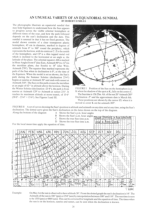
This article describes an unusual equatorial sundial without a fixed gnomon, featuring a transparent plastic hemisphere. It illustrates the Sun's apparent path and declination throughout the year, explaining how to determine sun time, altitude, azimuth, and declination on any given date using this instrument.
Dials: Equatorial, Dials: Scaphe, Sundial Design & Layout
February 1993
Page 30
Page 30
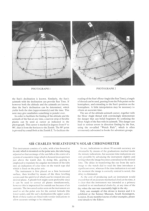
This article describes Sir Charles Wheatstone's Solar Chronometer, pictured on the front cover, an instrument designed to indicate solar time with high accuracy. It explains its construction, featuring a lens-fitted tube on a polar axis with scales for latitude and sun's declination, intended as a primary standard for setting mechanical clocks.
Dials: Unusual
February 1993
Page 31
Page 31
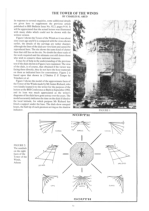
This addendum provides further details on the Tower of the Winds in Athens, supplementing a previous article. It discusses the condition of its carvings and dials, challenges in conservation, and references for understanding its sundials and their orientation, including allegorical figures of the eight winds.
Dials: Multi Faced, Historical Dials
February 1993
Page 32
Page 32
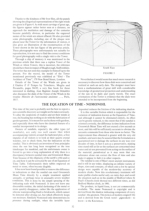
This tongue-in-cheek article introduces 'Nonomoil,' a new product designed to simplify sundial readings by reducing the friction of the shadow on the sundial surface, thus avoiding the discrepancies between sundial time and Greenwich Mean Time. It explains how this annual treatment enhances accuracy and avoids sarcastic comments from onlookers unfamiliar with the Equation of Time.
Dialling Tools, Equation of Time, How Sundials Work
February 1993
Page 34
Page 34
This section presents various letters to the editor. Topics include discussions on movable gnomon dials, moon dials, the term 'aplustre' related to the Tower of the Winds, a found Thomas Grice sundial, and scratch dials. Letters also express appreciation for the BSS journal.
The BSS and Members
February 1993
Page 36
Page 36
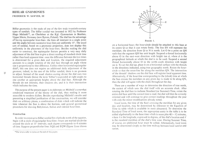
This paper elaborates on the theory and construction of bifilar sundials, a twentieth-century type invented by Hugo Michnik. It highlights their equiangular hour-lines, allowing direct reading of standard clock time by simple daily adjustment, and explains how time is indicated by the intersection of shadows from two horizontal threads.
Dials: Bifilar, Dials: Unusual, How Sundials Work, Mathematics of Dialling, Sundial Design & Layout