- Home
- /
- Sundial Encyclopaedia
- /
- October 1998
October 1998
The articles link to the specific page in a PDF optimised for speed. If you want the whole issue, you can download it here, but the files from earlier years can be quite large.
October 1998
Page 2
Page 2
This editorial discusses the variety of sundials in this issue for different age groups and periods, from ancient to ultra-modern. It encourages submissions for the BSS Awards Scheme 2000 and highlights Sarah Symons' lecture on Egyptian Shadow Clocks and an obituary for founding member Charles Aked.
The BSS and Members
October 1998
Page 3
Page 3
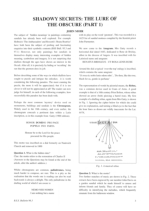
This article explores hidden meanings, symbolism, and imagery in sundials. It delves into devices like chronograms, palindromes, anagrams, rebuses, and "false identity" dials, presenting examples and puzzles (with solutions) related to cryptic inscriptions and designs.
Dials: Unusual, Historical Dials, Mottoes, Sundial Design & Layout
October 1998
Page 6
Page 6
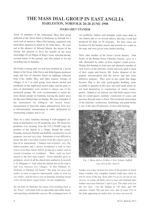
Reports on the Mass Dial group's weekend hunt in East Anglia, organised by Dr. John Davis. Members explored churches in Norfolk and Suffolk, locating 155 dials on 109 churches, despite challenges like rain and overgrown churchyards. The report also touches upon local architecture, like round towers, and the gradual disappearance of older dials.
Dials: Mass Dials, Historical Dials, The BSS and Members
October 1998
Page 8
Page 8
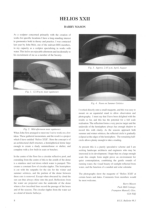
This article introduces an innovative 'Helios XXII' sundial concept, designed as an architectural shell structure or summerhouse. It features a hemispherical dome with a reflective pool at its centre and a stainless steel rod circulating water creating ripples. Reflections from the water, with shadows from the concentric ripples, are projected onto the dome's underside, marking hours and seasons, aiming for a tranquil contemplative environment.
Construction Projects, Dials: Hemispherical, Dials: Unusual, Sundial Design & Layout
October 1998
Page 9
Page 9
This article outlines the British Sundial Society's policy on restoration and conservation of sundials. It defines terms like restoration, conservation, and replacement, and specifies BSS involvement, advising on accurate restoration while avoiding legal liability. The policy discourages restoration of Saxon or Mass Dials, prioritising their conservation and detailed recording.
Restoration projects, The BSS and Members
October 1998
Page 10
Page 10
This report summarises the BSS Newbury meeting on the eve of the Summer Solstice. It covers talks on Hampshire sundials, raised horizontal dials, astro-compass conversions, and a sun compass. The event also featured an exhibition of various sundials and computer programs, highlighting members' ingenuity and the collaborative spirit of the society.
DIY Sundial Projects, Dialling Tools, Historical Dials, The BSS and Members
October 1998
Page 12
Page 12
Analysis of the Sundials on the Tower of the Winds, Athens: Possible Parameters Used in Construction
This article presents a detailed analysis of the ancient sundials on the Tower of the Winds in Athens using high-precision geodetic data. The study aims to identify the cardinal design parameters, such as geographic latitude, ecliptic angle, and gnomon length, used in their construction. It explores historical measurements and proposes a plausible interpretation for the cylindrical dial.
Dials: Cylindrical, Historical Dials, Mathematics of Dialling, Sundial Design & Layout
October 1998
Page 16
Page 16
This article describes a unique sundial commission, featuring a gilded metal liquidambar leaf design. It incorporates an innovative equation-of-time correction system called 'Time's Tune,' which uses musical analogy to plot values on a treble clef. The dial provides a direct read-out of clock time with specific adjustments for longitude.
Construction Projects, Dials: Unusual, Equation of Time, Sundial Design & Layout
October 1998
Page 18
Page 18
This obituary pays tribute to Charles Kenneth Aked, a principal 'founding father' and first editor of the British Sundial Society's Bulletin, who passed away on 22 April 1998. It details his diverse career in engineering and horology, his extensive gnomonic bibliographies, and his significant contributions to the BSS, highlighting his dedication and personality.
The BSS and Members
October 1998
Page 20
Page 20
This article explores the scarcity of early Christian mass dials in Ireland, contrasting it with their prevalence in England and France. It discusses the potential fate of portable dials, the discovery of a 'Sundial' stone at Boyle Abbey with curious markings, and poses questions about its purpose to readers.
Dials: Mass Dials, Historical Dials
October 1998
Page 21
Page 21
This section invites Italian-speaking members to review a new journal, discusses the terminology of 'Italian' and 'Italic' hours, mentions the publication of Allan Mills' lecture on Altitude Dials, and announces a planned group tour to the UK for the BSS 10th Anniversary in 1999.
The BSS and Members
October 1998
Page 24
Page 24
This section features a collection of correspondence from readers covering diverse topics. These include the origin of Bernhardt Dials, methods for finding the meridian, updates on Newbury BSS meetings, a problematic sundial in Lluc, Mallorca, discussions on the 'Eureka' credit card compass, and inquiries about spherical and 'problematic' Italian dials.
Dialling Tools, Dials: Unusual, Historical Dials, The BSS and Members
October 1998
Page 27
Page 27
This article reports on the International Sundial Symposium in Genk, Belgium, which showcased designs from an international competition. It describes several winning sundials, including polyhedral, polar, catenary, and an innovative digital sundial by Hans Scharstein, highlighting the diversity and ingenuity in contemporary gnomonic design.
Construction Projects, Dials: Unusual
October 1998
Page 27
Page 27
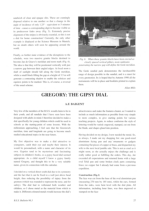
This article describes the creation of "Gregory," a vertical direct south sundial designed specifically for young children and school use. Made from recycled metals, the dial features a gypsy face, with hair and eyebrows shaped to represent the equation of time. Its design aims to attract youngsters and serve as a teaching aid for time and longitude.
DIY Sundial Projects, Dials: Vertical, Equation of Time, Sundial Design & Layout
October 1998
Page 30
Page 30
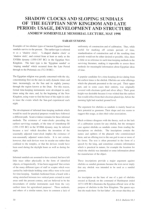
This article explores two types of ancient Egyptian sundials: L-shaped shadow clocks and sloping sundials. It discusses their religious and practical contexts, refutes the 'crossbar hypothesis' for shadow clocks, and traces the evolution of these instruments through hieroglyphs. The article concludes that these devices served as symbolic representations rather than accurate time-keepers.
Dials: Portable, Historical Dials
October 1998
Page 37
Page 37
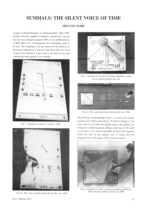
This article documents the impact of the civil war in former Yugoslavia on some sundials in Sarajevo, illustrating their destruction and disappearance. Through before-and-after photographs, it shows a marble sundial damaged by a shell fragment, a faculty building dial hit by artillery, and a west-facing wall dial that vanished, highlighting how even these silent timekeepers suffer during conflict.
Dials: Vertical, Historical Dials
October 1998
Page 38
Page 38
This section reviews three offprints: Dr. Wall's study of Anglo-Saxon sundials in Ryedale, detailing octaval day divisions; Finn Magnusen's monograph on ancient Scandinavian time divisions and 'daymarks'; and Dr. Milutin Tadic's paper on old sundials in Serbian lands, covering Roman, medieval, and 19th-century examples, noting their scarcity due to Turkish rule.
Book Reviews, Historical Dials
October 1998
Page 40
Page 40
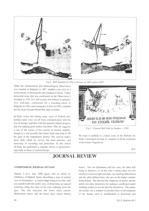
This article reviews *Compendium*, the journal of NASS, featuring J.M. Bores' new conical sundial design, measuring Babylonian and Italian hours, and an article by Robert L. Kellogg on Bede's cosmological and geographical works, including his observations on day-length variations. It also mentions a regular "Sightings" feature on notable dials.
Book Reviews, Dials: Unusual, Sundial Design & Layout
October 1998
Page 41
Page 41
Examines Stephen Jay Gould's "Questioning the Millennium," which humorously discusses the historical and logical inconsistencies of millennium transitions. It delves into Dennis the Short's chronology, the concept of zero, and calendrics, making it relevant for diallists and those interested in the measurement of time; and "A Dozen Dials" by Peter Ransom
Book Reviews
October 1998
Page 42
Page 42
This article provides an overview of international dealers in scientific instruments who stock sundials, including Trevor Philip & Sons (London), Stuart Talbot (Portobello Market), Librarie Alain Brieux (Paris), and Tesseract (New York). It highlights specific rare and interesting dials, like a Serle's Universal Rule compendium, and advises on attending scientific instrument fairs and auctions.
October 1998
Page 44
Page 44
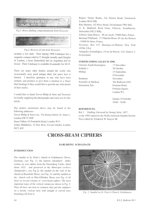
This article investigates the history and interpretation of cross-beam ciphers found on medieval sundials and calendars across Northern and Central Europe. It challenges previous terminologies like 'carpenter's numerals' and 'Styrian ciphers', proposing a new theory that these ciphers originated from condensed counting frames (abaci) used for financial calculations.
Historical Dials, Sundial Design & Layout