- Home
- /
- Sundial Encyclopaedia
- /
- Mottoes
Mottoes
December 2023
Page 12
Page 12
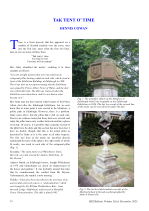
A survey of various Scottish sundials featuring the Scots proverb motto “Tak tent o’ time Ere time be tint For time will no remain,” translating to “Make the most of our time as we don’t know how long we have.” Examples include armillary spheres, multi-faced dials, and vertical dials.
Dials: Armillary Sphere, Dials: Horizontal, Dials: Multi Faced, Historical Dials, Mottoes
December 2023
Page 44
Page 44
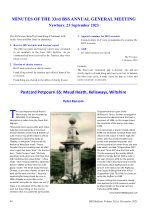
A discussion of a postcard, dated no later than 1906, showing Maud Heath’s Monument (SRN 0401), a stone square pillar from 1698 featuring a three-faced cube dial and multiple mottoes, which was repaired after being damaged in 1996.
Dials: Cube, Dials: Multi Faced, Historical Dials, Mottoes
September 2022
Page 29
Page 29
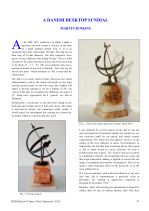
Examines a small, mass-produced equatorial desktop sundial made of brass and onyx alabaster, inscribed with a Danish motto. Concludes the dial was likely a commercial giftware product from the 1950s to 1970s, possibly manufactured in India.
Dials: Equatorial, Dials: Portable, Mottoes
March 2021
Page 23
Page 23
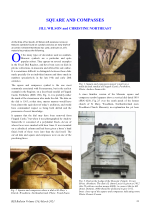
An analysis of various Masonic symbols found decorating sundials, building upon material left by the late Jill Wilson. It describes the use of the square and compasses, the Eye of Providence, pillars, and other emblems on dials, ranging from ancient mason's marks to later 'antique' and custom-made pieces.
Dials: Unusual, Historical Dials, Mottoes, The BSS and Members
March 2021
Page 31
Page 31
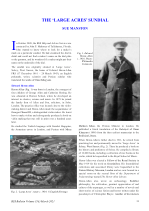
An investigation into the maker of a horizontal brass dial (1907) from 'Large Acres', the home of Edward Heron-Allen. Based on the decorative features, gnomon shape, Equation of Time ring layout, and specific wording, the evidence suggests the dial was custom-made by Francis Barker & Son.
Dials: Horizontal, Historical Dials, Mottoes
March 2021
Page 42
Page 42
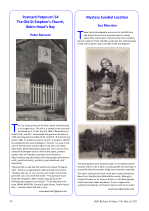
A description of a postcard showing a vertical south dial that was once located at The Old St Stephen’s Church. The dial, featuring two dates (1864 and 1736) and multiple sets of initials, is no longer in place. The postcard itself carried a reflective motto concerning shadow and sun.
Dials: Vertical, Historical Dials, Mottoes
September 2021
Page 10
Page 10
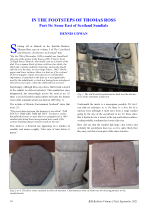
A continuation of the series following Thomas Ross, examining various sundials in the East of Scotland. Discusses the history, disappearance, and condition of dials in Hawick, Jedburgh, Ruchlaw House, Monkton House, Pitreavie (now Inveresk), Torryburn, and Cromarty.
Dials: Multi Faced, Dials: Vertical, Historical Dials, Mottoes
September 2021
Page 32
Page 32
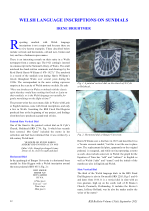
Examines the scarcity of Welsh language inscriptions on sundials, listing and describing nine known examples. Examples include historical vertical and horizontal dials, detailing their locations (Holyhead, Penmorfa, Whitford) and mottoes, such as "Man’s life, though prolonged it may / Draws to its close by night and day".
Historical Dials, Mottoes
December 2021
Page 29
Page 29
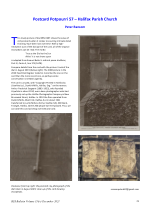
Examines an old postcard (circa 1910-1921) of the sundial at Halifax Parish Church (SRN 0287). The high-resolution image helps decipher inscriptions, notably the motto "True as the Dial to the Sun / Altho’ it is not shone upon." Compares the historical view with recent photographs, suggesting the dial requires urgent conservation work.
Historical Dials, Mottoes
March 2020
Page 14
Page 14
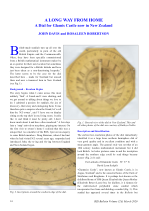
Investigates a brass northern hemisphere dial found in New Zealand, identified by its inscription as made for Glamis Castle, Scotland (Latitude 56° 37′ N) and signed 'David Lyon Sculpsit'. Detailed analysis of the Coat of Arms and Equation of Time scale dates the dial to between 1710 and 1752, likely commissioned around the 1725 marriage of the 6th Earl of Strathmore, Charles Lyon, to Susan Cochrane. The dial was never installed at Glamis.
Dials: Horizontal, Equation of Time, Historical Dials, Mottoes
June 2020
Page 30
Page 30
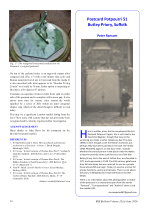
This segment describes a temporary-looking sundial dated 1905, painted on a wall at Butley Priory, Suffolk. The dial, which is not in the Fixed-Dial Register, has the motto 'TIME PASSETH' inscribed on the door lintel beneath it.
Dials: Vertical, Historical Dials, Mottoes
September 2020
Page 6
Page 6
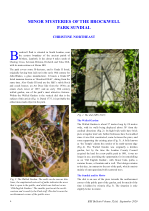
Examines a canted vertical limestone dial in Brockwell Park, dated 1775. The article focuses on translating the cryptic motto, “So Doct Ho In D,” suggesting the elegant interpretation “Sol Ducit Horas in Die” (the sun draws the hours in the day). The dial’s original location is questioned as it was designed for a wall declining approximately 38° west of south.
Dials: Vertical, How Sundials Work, Historical Dials, Mottoes
September 2020
Page 19
Page 19
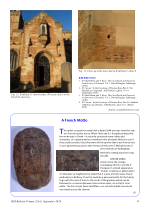
Concerns a horizontal dial dated 1644 seen at a French auction. The motto was deciphered as “CHEVER NOBLE,” possibly a personal motto associated with the family name Chever from Brittany.
Dials: Horizontal, Historical Dials, Mottoes
September 2020
Page 36
Page 36
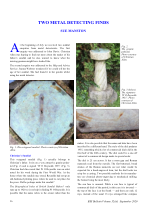
Reports on two sundial finds by metal detectorists. The first is an octagonal horizontal dial signed ‘W O Reynolds 1935’ with the motto 'Sole orto spes; decedente pax'. The second is a square dial inscribed 'Raymond Surrey', possibly made by a clockmaker.
Dials: Horizontal, Historical Dials, Mottoes
March 2019
Page 13
Page 13
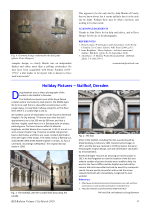
Features photographs of the sundial in the Stallhof courtyard, Dresden, a restored Baroque declining vertical dial destroyed in 1945. It was restored in 1976 and includes a ball nodus, constant-declination lines, Zodiac signs, and the motto *MORS CERTA HORA INCERTA*.
Dials: Vertical, Historical Dials, Mottoes
March 2019
Page 22
Page 22
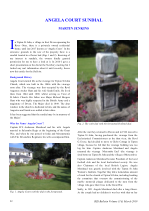
Investigation into the sundial at Angela Court (now Sundial House), East Devon. The assembly consists of an older cube dial topped by a brass Dollond horizontal dial plate engraved with an incorrect latitude (51° 15ʹ). The base has mysterious Latin inscriptions (SOLE, QUARE, SPLENDIDIUS, NECASTI) which are speculated to mean, "Why did you kill the sunshine?" suggesting the dial is a memorial.
Dials: Cube, Dials: Horizontal, Historical Dials, Mottoes
September 2019
Page 7
Page 7
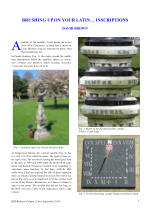
This piece examines Latin mottoes found on sundials visited during the 2019 BSS Conference in Bath. It provides translations for inscriptions on the Parade Gardens armillary sphere, Kingswood School’s vertical and analemmatic dials, and the Pilkington & Gibbs heliochronometer, ending with a challenge regarding the Royal Victoria Park cross dial inscription.
Dials: Analemmatic, Dials: Heliochronometer, Dials: Vertical, Mottoes
September 2019
Page 19
Page 19
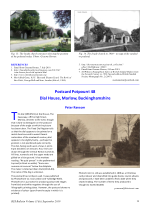
This entry describes a nineteenth-century vertical dial (SRN 0501) by Edwin Clark at Dial House, Marlow. The dial declines to the west, showing 1 pm to 8 pm, with gilded lines on a blue ground, and features the mottoes “Ne quid pereat” and “Horas non numero nisi serenas”.
Dials: Vertical, Historical Dials, Mottoes
September 2019
Page 27
Page 27
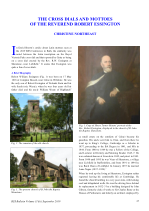
A detailed analysis of the Reverend R.W. Essington (1818–1907) and his enthusiasm for cross dials. It documents the three cross dials he erected at Shenstone and Newquay, discussing their mottoes and inscriptions, and provides strong evidence linking him to the design or erection of the cross dial in the Royal Victoria Park Botanical Gardens in Bath.
Dials: Unusual, Historical Dials, Mottoes
December 2019
Page 10
Page 10
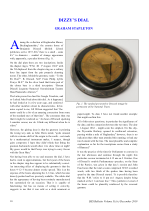
Analysis of a small, peculiar sundial presented to Benjamin Disraeli in 1862 by Philip Lybbe Powys. The article discusses its Latin motto and strange configuration (reversed gnomon). It concludes the dial was likely a customised desk ornament rather than a functional timepiece, relating its creation to Powys's attempts to curry favour during his troubled years.
Dials: Portable, Dials: Unusual, Historical Dials, Mottoes
March 2018
Page 2
Page 2
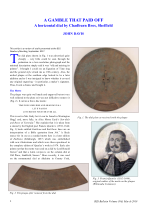
Describes the acquisition and scholarly investigation of a 19th-century horizontal dial plate. Removing a later plaque revealed the signature of previously unrecorded sundial makers, Chadburn Bros, Sheffield. The dial features an Equation of Time ring, and its composition (naval brass) and craftsmanship are analyzed, filling a gap in the history of regional makers.
Dials: Horizontal, Historical Dials, Mottoes
June 2018
Page 2
Page 2
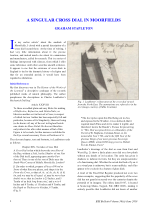
Investigates a rare 1706 cross dial in Moorfields, London, made by Robert Trevitt, a painter, as a parish boundary marker and memorial to the Battle of Ramillies. The article explores why cross dials were uncommon in England, suggesting their imagery was historically considered idolatrous due to religious connotations.
Dials: Polar, Dials: Unusual, Historical Dials, Mottoes
December 2018
Page 32
Page 32
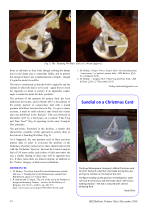
A short note pointing out that a bronze sundial made by the author, featuring a figure of Shakespeare and the motto “Life’s but a walking shadow”, was used on the Royal Shakespeare Company’s 2017 Christmas card.
Construction Projects, Mottoes, The BSS and Members
March 2017
Page 2
Page 2
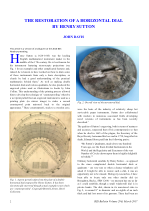
This article details the restoration of a rare, 1652 circular horizontal dial by Henry Sutton, a leading 17th-century instrument maker. Analysis revealed its accuracy but also a beginner’s delineation mistake (wrong centres used for back-hours). The brass plate showed remarkably uniform thickness and bore a unique motto: “As shade doth pass from line to line...”. A replacement gnomon was manufactured.
Dials: Horizontal, Historical Dials, Mathematics of Dialling, Mottoes, Restoration projects
March 2017
Page 41
Page 41
Includes translation and historical context for the Greek motto ‘Zoe Atme skie’ ('Life is smoke, shadow'), previously found on a dial in the Isle of Man and now noted in Edinburgh. Also features a letter discussing a member's return to simple sundial construction using reclaimed materials.
DIY Sundial Projects, Dials: Vertical, Mottoes, The BSS and Members
December 2017
Page 30
Page 30
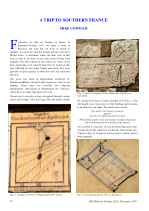
A report detailing a trip to Provence where the author found and photographed over 82 sundials, including a large one at Noyers, an almost direct east-facing dial from 1735 at Eyguières, and various painted dials featuring local mottoes.
Dials: Vertical, Historical Dials, Mottoes
September 2016
Page 11
Page 11
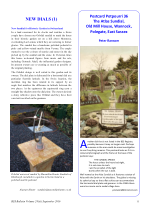
Examines a postcard image of the ‘Atlas Sundial’, unlisted in the BSS Register. It features a statue of Atlas supporting a horizontal dial plate on his shoulders. The pedestal carries the motto: “The hours unless the hours be bright, It is not mine to mark”.
Dials: Horizontal, Historical Dials, Mottoes
December 2016
Page 34
Page 34
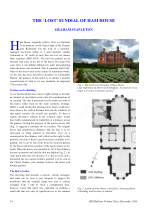
Proposes a reconstruction of the 'lost' great decliner mural sundial at Ham House, dated 162- (likely 1622) and rediscovered in 1965. The dial, positioned 16° north of east, was hidden when the house was extended in 1674. It carries the motto VIGILATE.
Dials: Vertical, Historical Dials, Mottoes
March 2015
Page 25
Page 25
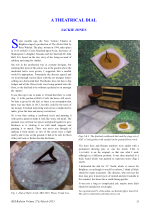
Description of the process of designing and constructing a horizontal sundial to be used as a prop in a theatrical production of "The Herbal Bed", set in the garden of Hall’s Croft in 1613. The dial, based on the Hall’s Croft original, was crafted from painted cardboard for the stage set and accurately delineated for the latitude of Brighton.
Dials: Horizontal, DIY Sundial Projects, Mottoes
March 2015
Page 41
Page 41
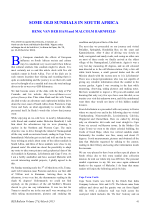
Report detailing a long research trip (4250 km) to record five historical sundials in South Africa. The dials documented include the two vertical dials at Cape Town Castle (1787); the 1828 octagonal horizontal dial at Leliefontein, notable for its Etruscan numbering; and the 1831 horizontal slate dial at the Kuruman Mission station.
Dials: Horizontal, Dials: Vertical, Historical Dials, Mottoes
September 2015
Page 41
Page 41
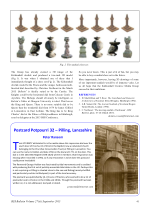
Describes a postcard of the vertical sundial (SRN 1625) above the south door of St John the Baptist Church, Pilling, Lancashire, dated 1766. Notes the motto, "Thus Eternity approacheth" and the historical note that the gnomon was missing when recorded in 1992.
Dials: Vertical, Mottoes
December 2015
Page 20
Page 20
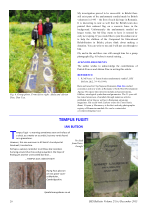
A short conversational piece reflecting on the motto "Tempus Fugit" (Time Flies), which is seen on clocks and sundials. It notes its rare appearance on a gravestone in Greetwell, Lincolnshire, serving as a reminder to dial recorders.
Mottoes
June 2014
Page 2
Page 2
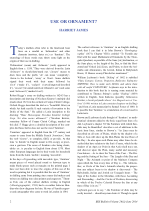
Discusses the evolution of terminology in dialling, particularly 'delineation' (functional hour lines) and 'furniture' (other elements like mottoes or mathematical additions). It traces the use of 'furniture' back to 17th-century dialling books by Brown and Leybourn, who viewed these additions as secondary to the basic hours.
Historical Dials, Mathematics of Dialling, Mottoes, Sundial Design & Layout
June 2014
Page 8
Page 8
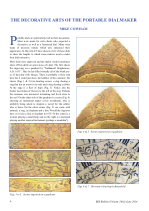
Explores the rich decoration found on portable dials, often made of precious metals or ivory for wealthy clients. Examples include engraved hunting scenes, decorative lettering, book-form dials, and symbolic imagery like 'Old Father Time' and 'The Green Man'. Decoration frequently featured coloured waxes and detailed engraving.
Dials: Portable, Historical Dials, Mottoes, Sundial Design & Layout
June 2014
Page 28
Page 28
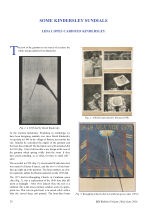
Showcases sundials produced by the Cardozo Kindersley Workshop, focusing on decorative elements like sunbursts at the gnomon root and specialized lettering techniques. Examples include a dial in blue frosted glass and a pair of SE/SW dials using platinum leaf for the furniture.
Construction Projects, Mottoes, Sundial Design & Layout
June 2014
Page 35
Page 35
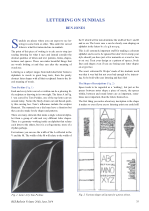
Discusses lettering as a crucial abstract and sculptural element on sundials, emphasizing the importance of space, pattern, and texture over purely literal meaning. The article explores techniques like V-incising, raised letters, anagrams, and double texts to enhance the visual and conceptual structure of the inscriptions.
Mottoes, Sundial Design & Layout
March 2013
Page 18
Page 18
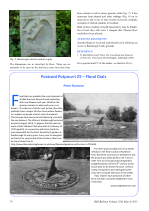
A light-hearted illustrated collection of sundials decorated with floral motifs. The article shares examples and stories from various gardens and public places where plants and flowers form part of the dial design.
Dials: Horizontal, Dials: Unusual, Mottoes
March 2013
Page 34
Page 34
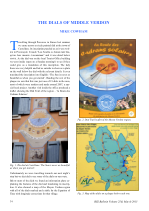
A travelogue describing a route through southern France known as ‘La Route des Cadrans Solaires’. The author records and photographs numerous historic and modern painted dials with local inscriptions.
Dials: Unusual, Dials: Vertical, Historical Dials, Mottoes
June 2013
Page 23
Page 23
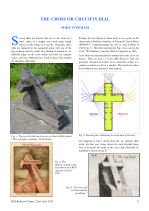
An exploration of dials incorporating the cruciform shape, tracing their symbolism, geometry, and examples across Europe, with commentary on their religious and artistic significance.
Dials: Unusual, Dials: Vertical, Historical Dials, Mottoes
June 2013
Page 41
Page 41
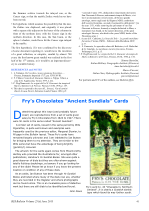
An exploration of collectible Fry’s Chocolate trading cards depicting historical sundials. The author traces their origins, artwork, and educational intent.
Historical Dials, Mottoes, The BSS and Members
June 2013
Page 42
Page 42
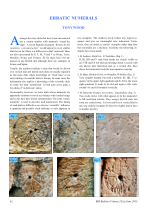
A discussion of inconsistencies in Roman numeral use on historical sundials, examining the mix of IIII and IV and what it reveals about dial-maker conventions.
Historical Dials, Mottoes, Sundial Design & Layout
September 2013
Page 19
Page 19
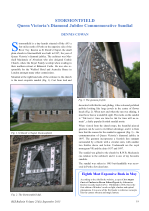
A description of the exquisite lead sundial installed on St David’s Chapel, Stormontfield, built in 1897 to commemorate Queen Victoria’s Diamond Jubilee. It is decorated with gilding and polished pebbles, featuring a pierced gnomon showing the royal monogram VR and the dates 1837/1897, alongside a Scottish motto.
Dials: Vertical, Historical Dials, Mottoes
September 2013
Page 27
Page 27
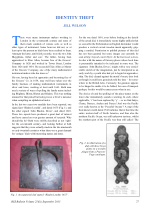
Investigates two pseudo-antique sundials recently reported, falsely signed with variations of the 17th-century maker name Bladon and dated 1610 and 1655. Examination of features, mottoes (one invented in 1860), and catalogue evidence strongly suggests they were manufactured much later, possibly by Pearson Page, as fake antique pieces.
Dials: Equatorial, Dials: Portable, Historical Dials, Mottoes
September 2013
Page 38
Page 38
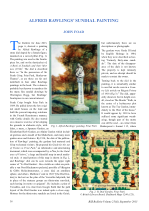
Investigation into a sundial featured in an Alfred Rawlings painting (1914), originally cited as being at Friar Park. The identical-looking dial was photographed at Reigate Priory in 1918, prompting inquiry into whether two versions existed or if the monument was transported between the two sites around the time of the First World War.
Historical Dials, Mottoes
December 2013
Page 27
Page 27
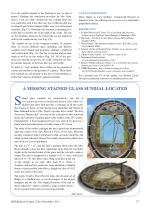
Reports the location of the "Roy Grosvenor Thomas" stained glass sundial, previously considered lost. Designed for latitude 51.5° and declination 16° W, it is tentatively dated to 1652 and carries the motto *Tempus Edax Rerum*.
Dials: Vertical, Historical Dials, Mottoes
March 2012
Page 7
Page 7
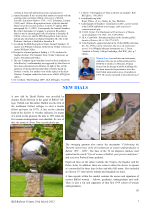
This article describes a new 70 cm diameter stainless steel spherical dial by David Harber, unveiled at Balliol College, Oxford. It celebrates the thirtieth anniversary of women's admission to Balliol and includes features like calendar bands, tropic lines, and moon-dial scales.
Dials: Unusual, Construction Projects, Mottoes
March 2012
Page 14
Page 14
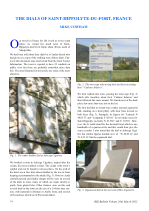
This article describes a walking tour of the 23 (or more) sundials in Saint-Hippolyte-du-Fort, France. It highlights attractive examples, including an equatorial dial, a church dial, and several made by local ceramic artist C. TINGAUD, noting features like 24-hour systems and Provençal mottoes.
Dials: Equatorial, Dials: Vertical, Historical Dials, Mottoes
March 2012
Page 17
Page 17
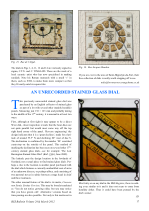
This article details a previously unrecorded 17th-century stained glass sundial. It's unusual for being a "great decliner" made for a latitude in the Scottish lowlands and for its unique motto, which suggests personal authorship rather than a known source.
Dials: Unusual, Historical Dials, Mottoes, Dials: Stained Glass
June 2012
Page 30
Page 30
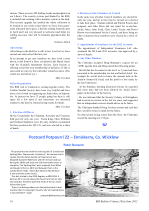
This entry discusses a postcard depicting a sundial at Powerscourt's Italian Garden in Enniskerry, Co. Wicklow. The sundial, declining 50° E, bears the motto 'Horas Non Numero Nisi Serenas' (I only mark the sunny hours) and is listed in the Register as SRN 3933, showing hours only from 5am to 1pm.
Dials: Vertical, Historical Dials, Mottoes
September 2012
Page 29
Page 29
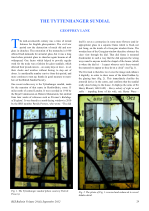
This article details the rediscovery of a mid-17th century glass sundial at Tyttenhanger mansion, Hertfordshire, designed for Sir Henry Blount's arms and a 13-14 degree declination. It bears the motto "Lumen Umbra Dei" and is compared to similar dials by John Oliver, suggesting Oliver as its likely maker despite earlier attributions to Henry Gyles.
Dials: Vertical, Historical Dials, Mottoes
December 2012
Page 46
Page 46
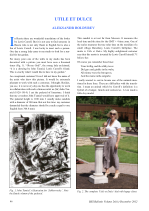
The author recounts creating a limestone sundial for a customer near Moscow, inspired by John Tenniel's illustration for Lewis Carroll's Jabberwocky. The dial, one English foot in diameter, measures local time and GMT + 4, and includes a scale for true solar time on the meridian of Lewis Carroll’s birthplace.
Construction Projects, Dials: Horizontal, Mottoes
March 2011
Page 27
Page 27
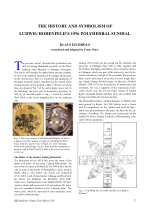
This article delves into the history of Ludwig Hohenfeld’s 1596 polyhedral sundial, identifying the maker and recipient (Prince Johann Friedrich of Württemberg). It also explores the rich symbolism of the images and maxims on the dial's faces, which convey themes of time and education.
Dials: Multi Faced, Historical Dials, Mottoes
December 2011
Page 47
Page 47
This section contains letters from readers discussing various sundial topics. These include formulae for horizontal shadow length, a query about the oldest scientific sundial in the British Isles, sundials in family crests, proposed organisational changes within the BSS, and the historical transmission of scratch dials and water-clock functionality. It highlights ongoing member engagement and research interests.
Mathematics of Dialling, Historical Dials, The BSS and Members, Mottoes
March 2009
Page 43
Page 43
This article explores sundials used as memorials, discussing their historical significance from Roman times. It details numerous examples, including tombstone dials, pillar-mounted dials in churchyards (e.g., St Mawnan's, Dryburgh Abbey), and war memorials. The article highlights epitaphs, theft incidents, and the symbolic connection between sundials and the passage of time.
Dials: Unusual, Historical Dials, Mottoes
June 2009
Page 8
Page 8
A letter identifying the poet Anna Laetitia Barbauld as the source of an inscription, ‘Say not Good-night, but in some brighter clime Bid me Good-morning’, on a memorial sundial at Mawnan Smith, previously mentioned in the March 2009 Bulletin.
Mottoes, The BSS and Members
September 2009
Page 15
Page 15
Features an early 20th-century postcard showing a sundial in Rémalard, Normandy, France. The postcard was used to guide a modern restoration of the dial. The article briefly describes the dial, its motto, and the author's visit to the Perche region, which is rich in sundials.
Dials: Vertical, Historical Dials, Mottoes, The BSS and Members
September 2009
Page 16
Page 16
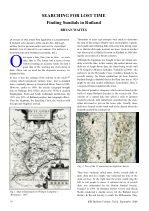
Provides a historical survey of sundials in the county of Rutland, from early scratch dials on churches to more scientific vertical and horizontal dials on mansions and public buildings. The article highlights significant local examples, discusses common mottoes, and suggests a route for a sundial tour of the area.
Dials: Mass Dials, Dials: Vertical, Historical Dials, Mottoes
December 2009
Page 19
Page 19
A short poem reflecting on time as shown by a sundial's shadow, which divides the past from the future, leaving only the present 'NOW' in one's hands. An editorial note identifies the dial's location and mentions the poem's frequent use on modern sundials.
Mottoes
June 2008
Page 61
Page 61
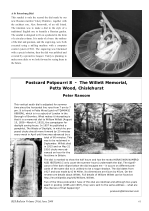
This entry features a vertical sundial in Petts Wood, Chislehurst, dedicated as a memorial to William Willett, the campaigner for daylight saving hours. The dial, dated 1927, is adjusted for summer time and carries the motto 'HORAS NON NUMERO NISI ÆSTIVAS'.
Dials: Vertical, Historical Dials, Mottoes
June 2008
Page 88
Page 88
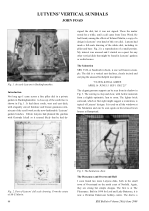
This article explores vertical sundials designed by architect Edwin Lutyens for his gardens and houses, including examples at The Salutation, The Pleasaunce, Overstrand Hall, Tigbourne Court, Hampstead Garden Suburb, Greywalls, and Mothecombe. It highlights his meticulous design, integration with architecture, and use of specific mottoes and materials.
Dials: Vertical, Historical Dials, Mottoes, Sundial Design & Layout
March 2007
Page 39
Page 39
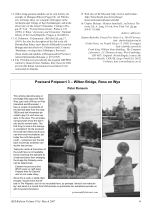
Peter Ransom describes a sundial on Wilton Bridge near Ross on Wye, using postcards from the early 1900s to note a change in its orientation, where the north face now points south. He also deciphers a motto from an old postcard that is no longer readable on the dial itself.
Dials: Multi Faced, Historical Dials, Mottoes
June 2007
Page 81
Page 81
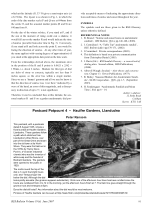
This entry presents a postcard from 1935 showing a floral sundial in Haulfre Gardens, Llandudno. It describes the dial's mottoes (I count the bright hours only and Tempus fugit) and notes a potential omission in the afternoon hour lines, inviting further information on the dial's current existence.
Historical Dials, Mottoes
September 2007
Page 112
Page 112
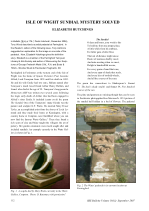
This article solves the mystery of a sundial pedestal at Farringford, Alfred, Lord Tennyson's home. It was designed by Mary Seton Watts, wife of the painter G.F. Watts, likely as a memorial for Tennyson and his wife Emily. The pedestal features carvings related to Tennyson's poem The Sundial and a motto.
Historical Dials, Mottoes, Dials: Scaphe
September 2007
Page 123
Page 123
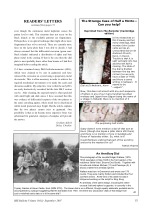
This article describes an unrecorded, vertically split sundial on St Andrew's Church, Kenn, Devon, with its left half missing. Only a partial date (??83) and motto fragment (...eagum) are visible, which doesn't match known mottoes. The author seeks help from members to solve this mystery and complete the record.
Historical Dials, Mottoes
December 2007
Page 178
Page 178
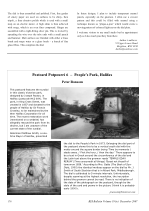
This article describes a sundial featured on a postcard from People’s Park, Halifax. The vertical south dial, presented in 1873, includes mottoes in English, Greek, and Latin. The author notes its similarities to another dial by J. Smith in Albert Park, Middlesbrough, and dates the postcard image to the early 1900s based on its style.
Dials: Vertical, Historical Dials, Mottoes
September 2006
Page 99
Page 99
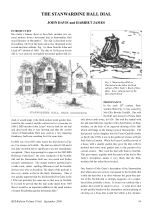
This article details the rediscovery of a rare 1560 English horizontal garden sundial, previously mentioned in Mrs Gatty's book and thought lost. It describes the dial's physical characteristics, unique mottoes, heraldic engravings, and the historical context of its ownership by the Corbet family, discussing its provenance, repairs, and original location.
Dials: Horizontal, Historical Dials, Mottoes
September 2006
Page 118
Page 118
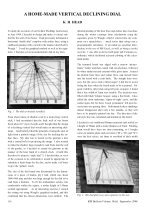
This article recounts the personal project of designing and constructing a vertical declining sundial for a golden wedding anniversary. It details the use of both graphical and computational methods for accurate delineation, the choice of materials, the incorporation of a brass heart-shaped nodus, and discusses the dial's performance and an inscribed motto.
DIY Sundial Projects, Dials: Vertical, Mottoes, Sundial Design & Layout
December 2006
Page 149
Page 149
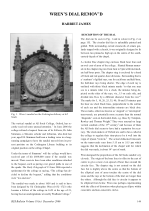
Harriet James recounts the history of Sir Christopher Wren's vertical sundial at All Souls College, Oxford, designed around 1658 with 'stepped transversals' for accuracy. The article details its relocation in 1877 and Dr. John Simmons's long-standing, unfulfilled campaign to restore it to its original position on the chapel, also touching on Wren's early interest in dialling.
Dials: Vertical, Historical Dials, Mottoes
December 2006
Page 176
Page 176
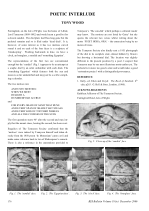
Farringford, on the Isle of Wight, was the home of Alfred, Lord Tennyson (1809-1892) and used to have a sundial. The dial plate itself has long gone but the pedestal remains and has two mottoes carved round it and on each of the four faces is a sculpture of ‘timekeeping’.
Historical Dials, Mottoes
December 2006
Page 184
Page 184
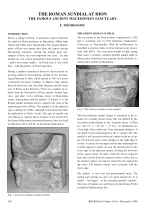
E. Theodossiou describes a unique spherical Greco-Roman sundial discovered at Dion, Macedonia, dating to the 1st century AD. This well-preserved white marble artifact, found in a 'luxurious house', features eleven hour lines and inscriptions dedicating it from I. Granius Felix, a market inspector. It is a significant find for ancient Macedonian archaeology.
Dials: Hemispherical, Historical Dials, Mottoes
June 2005
Page 61
Page 61
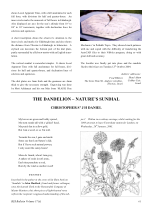
A short, light-hearted poem likening the dandelion flower and seed head to a natural sundial, marking sunny hours by its bloom and dispersal of seeds.
Mottoes
March 2004
Page 21
Page 21
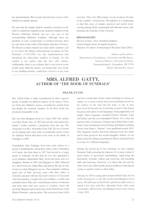
This article profiles Margaret Gatty (Mrs. Alfred Gatty), highlighting her diverse legacy in children's stories, seaweed studies, and her seminal work, 'The Book of Sundials'. It covers her early life, artistic talents, marriage, motherhood, and scientific interests, emphasising her dedication to collecting sundial mottoes which culminated in her famous book.
Historical Dials, Mottoes
March 2004
Page 26
Page 26
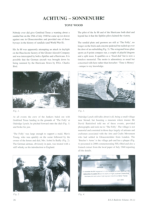
This article recounts an unusual incident from World War II where a German airman, Gottfried Treue, crash-landed at 'The Folly' in Gloucestershire in 1940 and broke his jaw on a sundial. The article describes the octagonal brass dial's features and its unique motto, "Time is Money," noting its current status as a "timeless memorial."
Historical Dials, Mottoes
December 2003
Page 169
Page 169
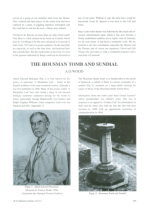
A short study of the tomb sundial of poet A. E. Housman, reflecting on its layout, symbolism, and poetic associations.
Dials: Horizontal, Historical Dials, Mottoes
September 2001
Page 114
Page 114
The third part of a series on the Gatty family, focusing on the children of Mrs. Gatty, author of "Book of Sun-dials." It highlights their literary talents, particularly Juliana Horatia Ewing, an eminent children's writer. The article also discusses other authors influenced by Mrs. Gatty's seminal work, detailing various historical sundial books and mottoes.
Book Reviews, Historical Dials, Mottoes
February 1999
Page 3
Page 3
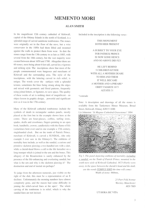
This article describes 17th-century carved sandstone tombstones in Kirkwall Cathedral, Orkney, which feature various symbols of death. One unique tombstone, that of Patrick Prince (1673), depicts a sundial among these emblems of mortality, which the author notes is the only sundial he saw in the Orkneys.
Mottoes
February 1999
Page 38
Page 38
This article describes three wall sundials in Serbia: one in Strpce with historical day lines and a Cyrillic motto; one in Valjevo showing various international noons and birthdays of famous Serbians; and a rhyming motto dial in Lesak.
Dials: Vertical, Mottoes
February 1999
Page 40
Page 40
John Moir continues his exploration of hidden meanings and symbolism in sundials, presenting examples of 'false identity' dials like a bowl dial and a cat-shaped memorial. He delves into using logos, Morse code, and snooker ball colour codes, as well as analogies like railway lines and hair-lines, to enrich sundial design.
Dials: Unusual, Sundial Design & Layout, Equation of Time, Mottoes
June 1999
Page 76
Page 76
This article describes collecting crested china sundials, small porcelain souvenirs popular in Victorian and Edwardian times, which feature coats of arms. The author details his collection, including pieces from Carlton China and Willow Art, noting their dimensions, gnomon angles, and inaccuracies for specific locations. He also shares a motto found on one piece and resources for other collectors.
Historical Dials, Mottoes
October 1999
Page 108
Page 108
This article describes two sundials in Andover, Hampshire, both linked to William Hawkins Heath (1787-1861), a brewer and banker. One, dated 1846, is on London Street with the motto 'Respice Finem' and an equation of time table bears just the initials W.H.H. The second, dated 1833, is in poor condition on the Savoy Cinema (formerly Heath House) and bears his full name, solving the initials riddle. The article details Heath's family business and civic roles.
Dials: Vertical, Equation of Time, Historical Dials, Mottoes
February 1998
Page 21
Page 21
A commemorative dial marking a golden wedding, covering layout, materials and the celebratory inscription, with remarks on siting and legibility.
Construction Projects, Dials: Vertical, Mottoes
October 1998
Page 3
Page 3
This article explores hidden meanings, symbolism, and imagery in sundials. It delves into devices like chronograms, palindromes, anagrams, rebuses, and "false identity" dials, presenting examples and puzzles (with solutions) related to cryptic inscriptions and designs.
Dials: Unusual, Historical Dials, Mottoes, Sundial Design & Layout
October 1997
Page 11
Page 11
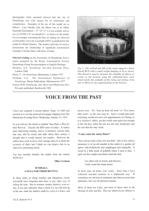
This piece reproduces a 1914 newspaper clipping titled "Sun-Dials, a Plea for their Revival" which advocates for the return of sundials. It discusses the general use of sundials in ancient times (Babylon, Egypt, Hezekiah's dial), their construction (Byzantium eagle dial), the principle of the gnomon, common objections (blurred shadow, refraction, sunshine reliance), and various mottoes and famous public and private dials in London and England.
Mottoes
February 1996
Page 50
Page 50
A curated selection of mottoes found on sundials, with commentary on their meanings and origins.
Mottoes
October 1996
Page 44
Page 44
An exploration of sundials featured on vintage postcards, considering their role as both functional objects and decorative motifs in popular culture.
Historical Dials, Mottoes
October 1995
Page 41
Page 41
An account of the life and writings of Margaret Gatty, a 19th-century author and sundial enthusiast. It covers her influence on mottoes and moral reflections expressed in dial inscriptions.
Mottoes
October 1994
Page 23
Page 23
This article offers a collection of contemporary mottos suitable for sundials, aiming to add to existing literature which often focuses on mortality or religious themes. The author presents various thought-provoking quotations from diverse sources, including Pierre Kohler, Heraclitus, Ralph Waldo Emerson, Emily Dickinson, Carl Jung, Omar Khayyam, Robert Boyle, and others. The purpose is to provide fresh, insightful inscriptions that capture different facets of time, nature, and human experience, encouraging readers to appreciate the philosophical depth that a motto can bring to a sundial's design and message.
Mottoes
February 1992
Page 40
Page 40
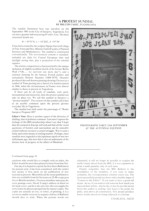
This article describes a "protest sundial" unveiled in Sarajevo, Yugoslavia, on September 6, 1991. Carved into a granite slab, it features standard astronomical content but incorporates a modified sketch of the former Berlin Wall and a satirical drawing by Honoré Daumier depicting Chronos with a cannon. The creators named it a "protest sundial" as an acerbic comment on the gloomy everyday life in Yugoslavia, reflecting political commentary through gnomonics.
Dials: Vertical, Mottoes
October 1992
Page 17
Page 17
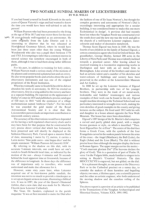
This article profiles two Leicestershire sundial makers: William Pearson and Thomas Scott Elgood. Pearson, a rector and astronomer, constructed a precise direct vertical dial in 1834 for his observatory. Elgood, an engineer, crafted a decorative slate dial in 1897 for St. Martin's Church, featuring biblical mottoes and Evangelist symbols, focusing on elegance rather than scientific precision.
Dials: Vertical, Historical Dials, Mottoes
February 1990
Page 5
Page 5
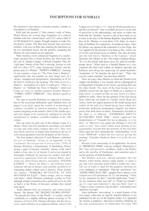
This article delves into the history and interpretation of mottoes (inscriptions) found on sundials, noting that their extensive use became popular with the advent of "modern" scientific sundials in the 15th century. It explores various Latin and Greek phrases, often derived from scriptures or classical texts, such as "TEMPVS VMBRA" and "SIC TRANSIT GLORIA MVNDI". The article also discusses how sundials often provide the "Emblem" for common mottoes and the inherent ambiguities in translating Latin inscriptions.
Mottoes
October 1990
Page 30
Page 30
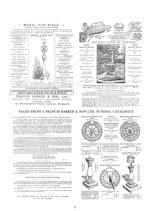
This entry presents excerpts from a Francis Barker & Son Ltd. sundial catalogue, showcasing various dial types, prices, and services. It includes illustrations of horizontal dials, advice on placement, suitable mottoes, and other meteorological instruments, reflecting historical sundial offerings and sentiments.
Historical Dials, Mottoes
November 1989
Page 7
Page 7
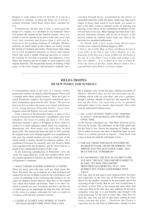
This article examines sundial inscriptions, or "posies," from a manuscript by John Parmenter, a priest from the 17th century. The article examines thirty-three sundial mottoes and provides interpretations of their meanings
Mottoes