- Home
- /
- Sundial Encyclopaedia
- /
- Peter Ransom
Peter Ransom
March 2023
Page 9
Page 9
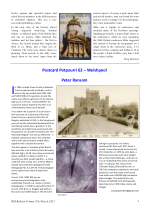
Focuses on a multiple cube/prism dial (SRN 3416) at Powis Castle, identified via a c.1955 Frith’s postcard. The structure is composed of a stone cube dial mated with a Henry Wynne double horizontal dial. It lists south, east, and west vertical dials alongside the double horizontal component.
Dials: Cube, Dials: Double Horizontal, Dials: Multi Faced, Historical Dials
June 2023
Page 9
Page 9
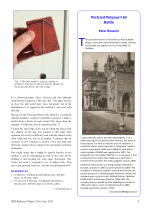
Discusses a postcard featuring a horizontal sundial at Battle Abbey, East Sussex, the historic site of the Battle of Hastings. The postcard, identified as a Valentine’s “Sepiatype” Series with number 95078, is estimated to date from the mid to late 1920s, likely January 1928, and the dial is unrecorded in the Fixed Dial Register.
Dials: Horizontal, Historical Dials
September 2023
Page 11
Page 11
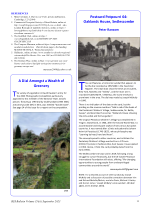
Discusses a postcard, likely dating from the early 1960s, featuring a horizontal sundial (likely SRN 5883) at Oaklands House, Sedlescombe. The dial, made by Joseph McNally in 1840, is notable for having small dials showing times for Jerusalem, New York, Natchez and “Sidney”.
Dials: Horizontal, Dials: Multi Faced, Historical Dials
December 2023
Page 44
Page 44
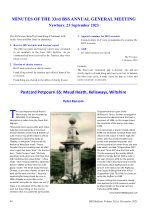
A discussion of a postcard, dated no later than 1906, showing Maud Heath’s Monument (SRN 0401), a stone square pillar from 1698 featuring a three-faced cube dial and multiple mottoes, which was repaired after being damaged in 1996.
Dials: Cube, Dials: Multi Faced, Historical Dials, Mottoes
March 2022
Page 20
Page 20
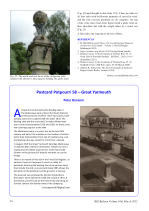
Analysis of a postcard featuring a simple horizontal sundial located next to the Boating Lake in the Great Yarmouth Venetian Waterways. Although the waterways were restored recently, the sundial appears to have vanished or was not repaired, as suggested by earlier photos showing a missing gnomon.
Dials: Horizontal, Historical Dials, Restoration projects
June 2022
Page 18
Page 18
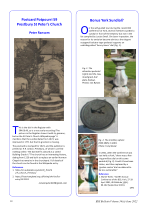
A discussion of the Prestbury St Peter’s Church sundial (SRN 0149), based on a 1923 postcard. The dial, a Grade II Listed Building, originated in 1672 and was improved in 1771, though its gnomon is noted as missing.
Dials: Horizontal, Restoration projects, Historical Dials
September 2022
Page 15
Page 15
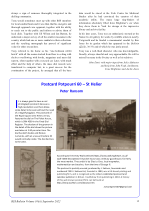
Examines a postcard featuring the dial on The Picket House in Royal Square, St Helier, Jersey (SRN 4509). The dial was made by local mapmaker Elias Le Gros, declines to the west and features both Arabic and Roman numerals.
Dials: Vertical, Historical Dials
December 2022
Page 28
Page 28
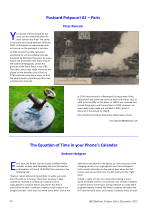
Discusses a postcard featuring the smoke from Le Petit Canon in the Palais Royal, Paris. This noon cannon, produced by M. Rousseau, was placed on the Meridian Line of Paris in 1796 to help people check their watches.
Historical Dials, Dials: Noon Lines
March 2021
Page 42
Page 42
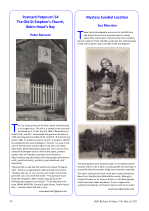
A description of a postcard showing a vertical south dial that was once located at The Old St Stephen’s Church. The dial, featuring two dates (1864 and 1736) and multiple sets of initials, is no longer in place. The postcard itself carried a reflective motto concerning shadow and sun.
Dials: Vertical, Historical Dials, Mottoes
June 2021
Page 7
Page 7
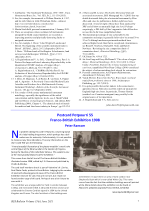
Discusses a specific postcard from the 1908 Franco-British Exhibition in London, featuring a floral sundial in the Garden of Progress. The dial includes a prominent statue of a lady holding the gnomon. The exhibition celebrated the Entente Cordiale.
Dials: Horizontal, Dials: Unusual, Historical Dials
September 2021
Page 31
Page 31
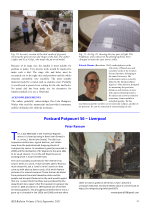
Focuses on a historical postcard depicting a vertical declining sundial (SRN 5665) located on the former Royal Insurance building in Liverpool. The card belongs to the "Lewis's Series," probably issued by the Lewis's department store during the late Edwardian period.
Dials: Vertical, Historical Dials
December 2021
Page 29
Page 29
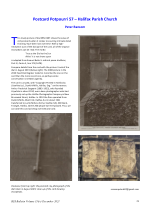
Examines an old postcard (circa 1910-1921) of the sundial at Halifax Parish Church (SRN 0287). The high-resolution image helps decipher inscriptions, notably the motto "True as the Dial to the Sun / Altho’ it is not shone upon." Compares the historical view with recent photographs, suggesting the dial requires urgent conservation work.
Historical Dials, Mottoes
March 2020
Page 9
Page 9
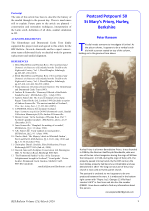
Describes a postcard of a vertical south dial at St Mary’s Priory, Hurley, Berkshire. The dial appears to feature a person seated on top of the column holding the gnomon. The author notes the need for further investigation into this dial and provides historical context about the priory.
Dials: Unusual, Dials: Vertical, Historical Dials
June 2020
Page 30
Page 30
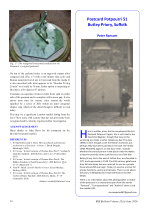
This segment describes a temporary-looking sundial dated 1905, painted on a wall at Butley Priory, Suffolk. The dial, which is not in the Fixed-Dial Register, has the motto 'TIME PASSETH' inscribed on the door lintel beneath it.
Dials: Vertical, Historical Dials, Mottoes
September 2020
Page 5
Page 5
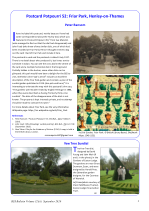
A postcard, postmarked 1917, is presented showing the Ye Dial Garden at Friar Park, which contains a cross dial and a multiple horizontal dial. The gardens were described in 1984 as having formerly contained thirty-nine sundials, though their disappearance date is unknown.
Dials: Horizontal, Dials: Multi Faced, Dials: Unusual, Historical Dials
December 2020
Page 15
Page 15
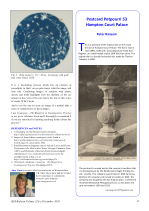
This instalment of Postcard Potpourri features a postcard of the original double horizontal dial at Hampton Court Palace, made by Thomas Tompion in 1690. The dial is now in storage, replaced by an undelineated replica. Based on the printer information, the unused postcard is dated between 1926 and 1932.
Historical Dials, Dials: Double Horizontal
March 2019
Page 38
Page 38
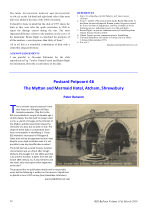
Features a rare postcard showing a Pilkington & Gibbs heliochronometer at the Mytton and Mermaid Hotel, Atcham. The distinctive dial no longer exists in situ, and its identification number is not visible on the high-resolution scan.
Dials: Heliochronometer, Historical Dials
June 2019
Page 16
Page 16
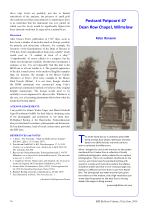
Features a pre-First World War postcard of a three-faced dial on a sandstone pillar (1899) at Dean Row Chapel, Wilmslow, Cheshire. A high-resolution scan confirms the gnomon is missing from the west face, though the supports are still present.
Dials: Multi Faced, Historical Dials
September 2019
Page 19
Page 19
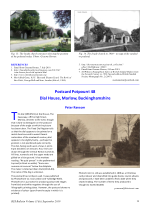
This entry describes a nineteenth-century vertical dial (SRN 0501) by Edwin Clark at Dial House, Marlow. The dial declines to the west, showing 1 pm to 8 pm, with gilded lines on a blue ground, and features the mottoes “Ne quid pereat” and “Horas non numero nisi serenas”.
Dials: Vertical, Historical Dials, Mottoes
December 2019
Page 9
Page 9
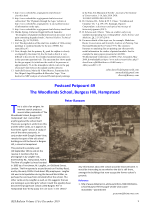
Discussion of a postcard featuring The Woodlands School, Burgess Hill, Hampstead, believed to be a pre-War girls' school. The author seeks information about the school's history and whether the sundial visible in the image still exists among the current buildings on the former grounds.
Historical Dials, The BSS and Members
March 2018
Page 25
Page 25
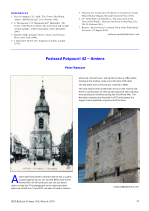
Features a postcard of the Belfry next to the market halls in Amiens, showing a sundial dating from 1753 that was restored in 1990. The postcard was produced by the French publisher Neurdein et Cie, typical of cards made in booklets during the First World War.
Dials: Vertical, Historical Dials
June 2018
Page 12
Page 12
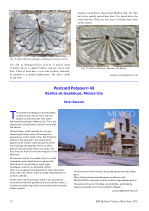
Features a postcard of the bell tower at the Basilica de Guadalupe, which integrates various time-telling devices. The tower includes a direct south-facing sundial (reclining), an analogue clock, an Aztec calendar representation, and an astronomical clock showing the sun, moon, and Zodiac symbols.
Dials: Unusual, Dials: Vertical, Historical Dials
September 2018
Page 36
Page 36
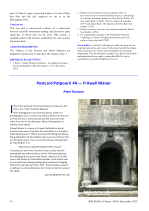
Features a postcard (circa 1930s) showing a sundial at Fritwell Manor, Oxfordshire, which is not currently in the Fixed Dial Register. Enlargement shows the dial declines to the east, as the 6 am line is not horizontal. The manor was once owned by Margaret Boleyn, Anne Boleyn’s grandmother.
Dials: Vertical, Historical Dials
December 2018
Page 6
Page 6
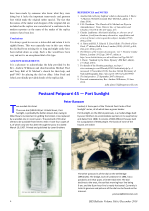
Features two sundials in the model village of Port Sunlight (SRN 2419 and SRN 2420) depicted on postcards, the first one published by Lever Brothers. The first is a cross dial at 11 Bath Street, and the second is a declining dial on the Dell Bridge which currently lacks its gnomon.
Dials: Polar, Dials: Vertical, Historical Dials, The BSS and Members
March 2017
Page 36
Page 36
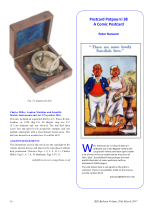
A humorous postcard, artist unknown (number 4513), is described, showing a couple whose sunburnt faces are referred to compared to as 'sun-dials'.
June 2017
Page 37
Page 37
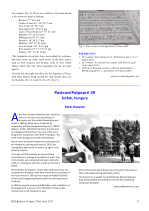
This entry features a postcard image of a sundial made in 1962 by abstract sculptor Barta Lajos in Siófok, Hungary, on the shore of Lake Balaton. Although the dial has since disappeared, it was considered one of the most progressive sculptures of its time in Hungary.
Dials: Unusual, Historical Dials
September 2017
Page 25
Page 25
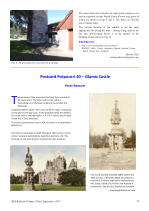
The article shows two postcards, one from 1904 and one from 1967, featuring the Glamis Castle sundial in Scotland. This multi-faceted sandstone dial dates from 1670, stands 6.5 metres high, and contains about 80 individual dials.
Dials: Multi Faced, Historical Dials
December 2017
Page 21
Page 21
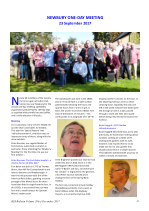
A detailed report on the BSS one-day meeting, summarising talks on topics including the Fort Belan sundial, DIY heliochronometers, multi-centre delineation, promotion via social media, the astronomical Culpeper dial, the Gnomonical Universal Nomograph (GUN), and the mechanical generation of the Equation of Time using equation clocks.
Dials: Heliochronometer, Equation of Time, Historical Dials, The BSS and Members
December 2017
Page 29
Page 29
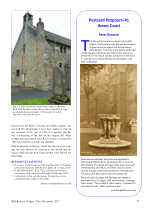
Features a postcard image of the horizontal 18th-century sundial (SRN 2196) located in Amen Court, London. The dial's gnomon bears the Deanery of St Paul’s motif (D and crossed swords) and is sometimes attributed to Christopher Wren.
Dials: Horizontal, Historical Dials
March 2016
Page 25
Page 25
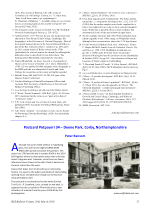
Analysis of a postcard featuring a vertical dial at Deene Park, dated 1769. The author argues that the dial declines to the east, based on the delineation of fewer afternoon hours, correcting a potential error in the BSS Register description.
Dials: Vertical, Historical Dials
June 2016
Page 6
Page 6
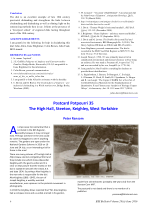
Examination of a postcard featuring an impressive horizontal dial, not listed in the BSS Register, at The High Hall. The dial likely dates to 1934 and carries the motto "summer time" and the initials A.K., suggesting it was the work of pioneer photographer Alex Keighley, using old millstones.
Dials: Horizontal, Historical Dials
September 2016
Page 11
Page 11
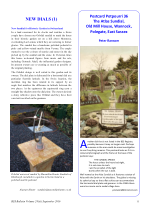
Examines a postcard image of the ‘Atlas Sundial’, unlisted in the BSS Register. It features a statue of Atlas supporting a horizontal dial plate on his shoulders. The pedestal carries the motto: “The hours unless the hours be bright, It is not mine to mark”.
Dials: Horizontal, Historical Dials, Mottoes
December 2016
Page 8
Page 8
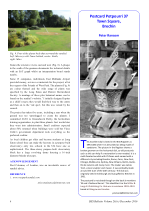
Details the multi-faceted sandstone sundial (SRN 1480) in Brechin, created by local sculptor James Tosh around 1900. It features 25 faces named after various cities. The postcard is useful as the BSS register notes a broken gnomon. The dial was gifted to Brechin from Edinburgh in 1961.
Dials: Multi Faced, Historical Dials
September 2015
Page 41
Page 41
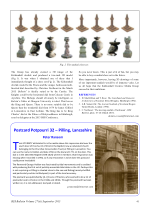
Describes a postcard of the vertical sundial (SRN 1625) above the south door of St John the Baptist Church, Pilling, Lancashire, dated 1766. Notes the motto, "Thus Eternity approacheth" and the historical note that the gnomon was missing when recorded in 1992.
Dials: Vertical, Mottoes
December 2015
Page 9
Page 9
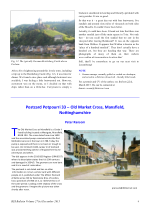
Describes a postcard showing the Old Market Cross at Mansfield, Nottinghamshire, a Grade II listed building dating from circa 1600. It notes the dial's 19th-century origin, damage (bent gnomons), and need for restoration according to the BSS Register.
Dials: Vertical, Dials: Multi Faced, Historical Dials
March 2014
Page 25
Page 25
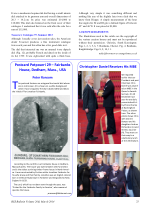
This entry features a postcard depicting an octagonal horizontal dial, dated 1650, bearing the initials IF for Jonathan Fairbanks. The dial is located at Fairbanks House in Dedham, Massachusetts.
Dials: Horizontal, Historical Dials
June 2014
Page 39
Page 39
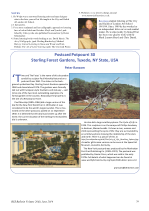
Features postcards illustrating Paul Manship’s decorative sundial, ‘Time and The Fates’, located at Sterling Forest Gardens in Tuxedo, NY. It also references a larger version exhibited at the 1939 New York World Fair, believed to be the world's largest sundial at the time.
Historical Dials, Sundial Design & Layout
September 2014
Page 17
Page 17
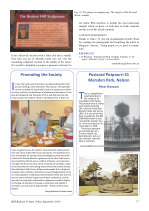
Details a magnificent polyhedral sundial in Marsden Park, Nelson, shaped as an icosahedron (20 faces). The dial is dated 1841 and is one of the first recorded in the BSS Fixed Dial Register (SRN 0003).
Dials: Multi Faced, Historical Dials
March 2013
Page 15
Page 15
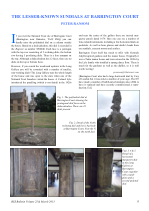
An illustrated survey of several overlooked sundials at Barrington Court. The article documents their styles, inscriptions, and historical setting, adding new information to the site’s known dial heritage.
Dials: Horizontal, Dials: Vertical, Historical Dials, Restoration projects
March 2013
Page 18
Page 18
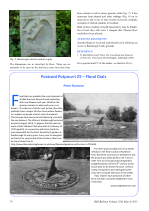
A light-hearted illustrated collection of sundials decorated with floral motifs. The article shares examples and stories from various gardens and public places where plants and flowers form part of the dial design.
Dials: Horizontal, Dials: Unusual, Mottoes
June 2013
Page 10
Page 10
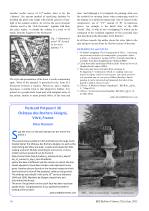
A short illustrated feature on a postcard depicting a multifaceted sundial at a French château, discussing its design features, historical background, and a humorous note about an inverted gnomon.
Dials: Horizontal, Dials: Multi Faced, Dials: Vertical
September 2013
Page 27
Page 27
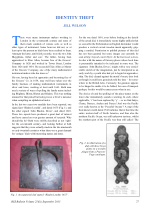
A description of the sundial at St Mary and All Saints Church, Conway, recorded from an early 1910 postcard. The dial, dated 1765 and signed by Mereidh Hughes, is still extant but heavily pitted. It is noted for its proximity to the gravestone that allegedly inspired Wordsworth's poem ‘We are seven’.
Dials: Vertical, Historical Dials
December 2013
Page 20
Page 20
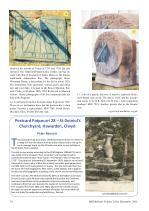
Discusses a postcard (postmarked 1903) showing a dial from St Deiniol’s Churchyard, Hawarden, Clwyd (SRN 6671), which is now missing. The dial was dated 1735 and signed "Geo: Jones del" and inscribed with the names of the church wardens.
Historical Dials, The BSS and Members
March 2012
Page 27
Page 27
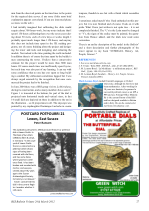
This entry features an undated postcard (c.1930) of a spherical dial at Lewes Castle. It references "The Book of Sun-Dials" (1900) which describes the broken and mended stone ball, noting its unknown history and questioning its current existence.
Dials: Hemispherical, Historical Dials
June 2012
Page 30
Page 30
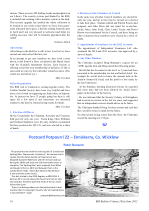
This entry discusses a postcard depicting a sundial at Powerscourt's Italian Garden in Enniskerry, Co. Wicklow. The sundial, declining 50° E, bears the motto 'Horas Non Numero Nisi Serenas' (I only mark the sunny hours) and is listed in the Register as SRN 3933, showing hours only from 5am to 1pm.
Dials: Vertical, Historical Dials, Mottoes
September 2012
Page 15
Page 15
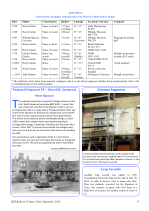
This entry describes a multi-dial sundial located at the Sidney Hill Cottage Homes in Churchill, Somerset, dating from 1907. It notes that the dial is situated within private grounds, making it inaccessible to the public, and speculates on the presence of east, north, and west dials based on an old postcard from 1929.
Dials: Multi Faced, Historical Dials
December 2012
Page 17
Page 17
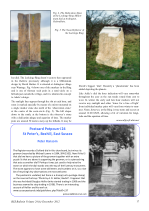
This entry discusses an undated postcard featuring a Dolland sundial in St Peter's churchyard, Bexhill, recorded as missing its gnomon. The image, by A. D. Hellier (1909-1938), shows the gnomon and an intriguing arc above it, raising questions about its purpose—whether support, another dial, or for raising the stone.
Dials: Vertical, Historical Dials
March 2011
Page 31
Page 31
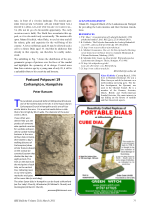
This entry describes a Saxon dial on Corhampton Church, Hampshire, one of four similar octaval dials in the area. The author wonders if they were products of a regional sundial-making business, noting their division of the day into eight periods based on tides.
Dials: Mass Dials, Dials: Vertical, Historical Dials
March 2011
Page 46
Page 46
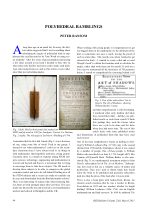
The author discusses the calculation of angles for polyhedral dials, drawing on historical texts like William Leybourn’s 'Dialling'. It covers Platonic and Archimedean solids, methods for finding dihedral angles, and illustrates how these concepts can be applied to sundial construction.
Dials: Multi Faced, Historical Dials, Mathematics of Dialling, Sundial Design & Layout
September 2011
Page 15
Page 15
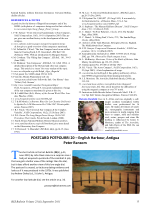
This short article shares a postcard of a low-angle sundial at English Harbour, Antigua, previously discussed by John Davis. The author notes that the postcard, likely from the 1970s, offers another view of this dial, and references a related article about another low-latitude dial.
Dials: Horizontal, Historical Dials
September 2011
Page 36
Page 36
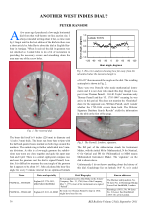
Peter Ransom discusses a 9-inch brass horizontal dial, signed 'Parnell, London,' which he acquired online. The dial, optimized for a latitude of approximately 16.05° N (suggesting a potential link to Guadeloupe), features hours from 6 am to 6 pm, half and quarter-hour marks, and a central compass rose. The gnomon was detached upon acquisition and later restored.
Dials: Horizontal, Restoration projects, Historical Dials
September 2011
Page 44
Page 44
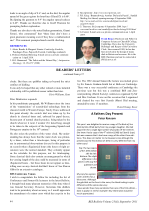
Peter Ransom describes receiving a copy of Mrs. Alfred Gatty's 'The Book of Sun Dials' (1872 first edition) from his daughter. He notes the physical differences between this copy and his other 1872 edition, particularly in cover colour and tooling, and speculates on further variations.
Book Reviews
March 2010
Page 13
Page 13
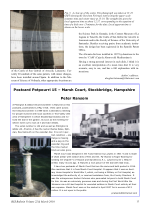
Features a Pilkington & Gibbs heliochronometer at Marsh Court, Stockbridge, Hampshire, as seen on a postcard postmarked 1916. The article provides details about the heliochronometer and the history of Marsh Court, which served as a hospital during World War I.
Historical Dials, Dials: Heliochronometer
March 2010
Page 32
Page 32
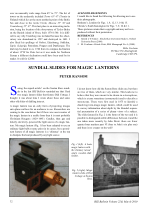
Discusses a collection of old magic lantern slides and glass negatives featuring sundials. The collection includes images of Dial Cottage at Seaton Ross, the multifaceted dial at Holyrood Palace from circa 1880, and a dial at Trinity College, Cambridge.
Dials: Multi Faced, Historical Dials
March 2010
Page 46
Page 46
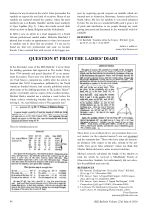
A follow-up to a previous article about dialling questions in 'The Ladies' Diary'. This piece presents the published solution to Question 87 from 1790, which asked for the area of the curve traced by a gnomon's tip on the winter solstice.
Mathematics of Dialling, Historical Dials
June 2010
Page 13
Page 13
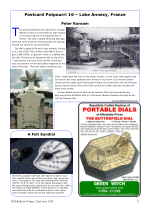
This article features a postcard from 1908 depicting the impressive multiple-dialled structure, L'Unique, on the banks of Lake Annecy, France. Dated 1874 and named in 1876, the dial is credited to Frère Arsène. It features an equatorial dial, multiple gnomons on a 7-pointed star, and various dial plates indicating noon for several European cities and zodiac signs.
Dials: Equatorial, Dials: Multi Faced, Historical Dials
September 2010
Page 31
Page 31
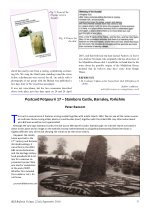
This article features a postcard from March 1932 depicting a living sundial with Roman numerals and lines laid out using plants or bushes, located at Wentworth Castle, Stainborough, and seeks information about the initials 'BW' visible on it.
Dials: Unusual, Historical Dials
December 2010
Page 25
Page 25
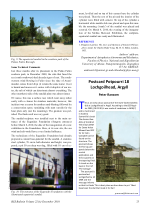
This article describes an early colour postcard of the multi-faceted obelisk dial at Lochgoilhead, Argyll, dating from 1696(?). The sandstone structure features initials DHM and SCC, five square panels, and six panels on the finial. The postcard, postmarked 1909, shows it on the lawn in front of ‘The Cottage.’
Dials: Multi Faced, Historical Dials
March 2009
Page 36
Page 36
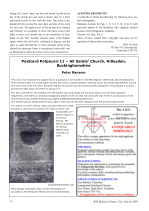
This entry describes a scaphe dial carved into a buttress at All Saints' Church, Hillesden, Buckinghamshire, recorded as SRN 5016. The dial is a quarter sphere with a motto and the date "1601 Georg De Fraisne" inscribed. It features full and half-hour divisions and has undergone some restoration since the postcard image.
Historical Dials, Dials: Scaphe
June 2009
Page 40
Page 40
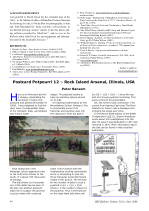
Features a 1909 postcard depicting a horizontal sundial at Rock Island Arsenal, Illinois, which was dedicated in 1877. The author comments on the dial's pedestal, the surrounding cannonball piles, and a personal connection to the location through a Johnny Cash song.
Dials: Horizontal, Historical Dials
September 2009
Page 15
Page 15
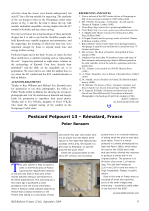
Features an early 20th-century postcard showing a sundial in Rémalard, Normandy, France. The postcard was used to guide a modern restoration of the dial. The article briefly describes the dial, its motto, and the author's visit to the Perche region, which is rich in sundials.
Dials: Vertical, Historical Dials, Mottoes, The BSS and Members
December 2009
Page 9
Page 9
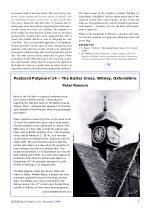
This piece analyses a vintage postcard of the Butter Cross in Witney. By comparing the time shown on the clock with the local solar time on the sundial, and accounting for British Summer Time and the equation of time, the author deduces the exact date the photograph was taken.
Equation of Time, Historical Dials, The BSS and Members
December 2009
Page 15
Page 15
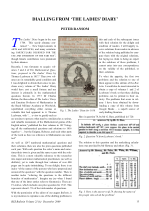
Introducing a series of articles on dialling problems from 'The Ladies’ Diary', a popular 18th-century almanac. The author presents the first question, from 1720, along with its original geometric construction and calculated solution, providing insight into the historical mathematics of dialling.
Mathematics of Dialling, Historical Dials
March 2008
Page 42
Page 42
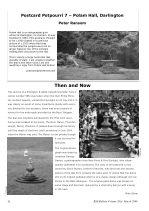
Features a c.1920 postcard depicting a large horizontal sundial at Polam Hall, an independent girls' school in Darlington. The author notes the presence of scholars in the image and expresses uncertainty about whether the dial is still in place.
Dials: Horizontal, Historical Dials
June 2008
Page 61
Page 61
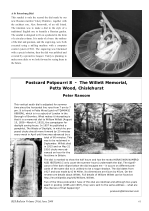
This entry features a vertical sundial in Petts Wood, Chislehurst, dedicated as a memorial to William Willett, the campaigner for daylight saving hours. The dial, dated 1927, is adjusted for summer time and carries the motto 'HORAS NON NUMERO NISI ÆSTIVAS'.
Dials: Vertical, Historical Dials, Mottoes
December 2008
Page 162
Page 162
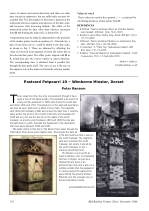
This note discusses the sundial at Wimborne Minster, Dorset, based on a 1908 postcard, a 1928 cigarette card, and an 1830 print. It observes the dial's historical repositioning from a gable to ground level between 1830 and 1908, clarifies Mrs. Gatty's potentially inaccurate references to its date and location, and encourages a visit to the Minster.
Dials: Multi Faced, Historical Dials
March 2007
Page 39
Page 39
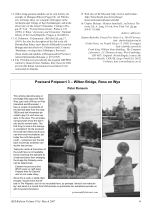
Peter Ransom describes a sundial on Wilton Bridge near Ross on Wye, using postcards from the early 1900s to note a change in its orientation, where the north face now points south. He also deciphers a motto from an old postcard that is no longer readable on the dial itself.
Dials: Multi Faced, Historical Dials, Mottoes
June 2007
Page 81
Page 81
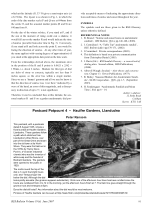
This entry presents a postcard from 1935 showing a floral sundial in Haulfre Gardens, Llandudno. It describes the dial's mottoes (I count the bright hours only and Tempus fugit) and notes a potential omission in the afternoon hour lines, inviting further information on the dial's current existence.
Historical Dials, Mottoes
September 2007
Page 144
Page 144
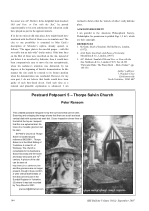
This entry describes an undated postcard featuring St Peter’s Church at Thorpe Salvin, Yorkshire. It highlights the church's south, east, and presumed west vertical dials, as well as a spherical dial on the ball at the top, noting that gnomons are no longer present. The church is also known for its Saxon doorway and 12th-century structures.
December 2007
Page 178
Page 178
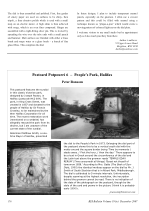
This article describes a sundial featured on a postcard from People’s Park, Halifax. The vertical south dial, presented in 1873, includes mottoes in English, Greek, and Latin. The author notes its similarities to another dial by J. Smith in Albert Park, Middlesbrough, and dates the postcard image to the early 1900s based on its style.
Dials: Vertical, Historical Dials, Mottoes
February 2006
Page 18
Page 18
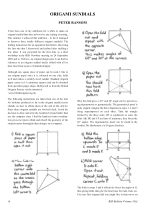
This article details the author's successful endeavour to create origami sundials without cutting or tearing, describing three unique designs. It provides step-by-step instructions for an equatorial dial, explaining the geometric principles behind folding hour lines and constructing a perpendicular gnomon.
Dials: Equatorial, Mathematics of Dialling, Construction Projects, DIY Sundial Projects
February 2006
Page 23
Page 23
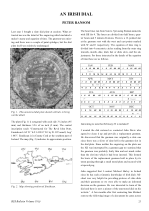
This article documents the restoration and analysis of an octagonal slate sundial plate from 1843, made by D. O’Connell for Revd John Pratt of Enniskean. It details the dial's engraved features, including an equation of time ring, gnomon restoration, and a geometric analysis confirming the remarkable accuracy of its construction for the specified latitude.
Dials: Horizontal, Sundial Design & Layout, Restoration projects, Historical Dials
June 2006
Page 50
Page 50
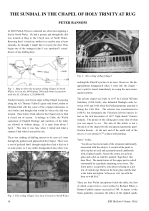
This article investigates an unusual 17th-century wall painting in Rug Chapel, North Wales, which features a dial. It details the analysis of the dial's geometry and hour lines using digital tools, comparing measured angles to calculated values for a 53° North latitude, and discusses the unexpected accuracy for a painting, suggesting sophisticated planning.
Dials: Vertical, Historical Dials, Mathematics of Dialling, Sundial Design & Layout
September 2006
Page 112
Page 112
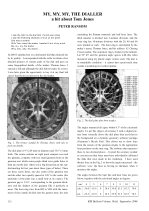
This article delves into a high-quality horizontal sundial by the renowned optical, mathematical, and philosophical instrument maker Thomas Jones (1775-1852). It details the dial's precise engraving, hour divisions, and accurate delineation, alongside biographical information about Jones's career, other notable instruments, and his significant contributions to science.
Dials: Horizontal, Sundial Design & Layout, Historical Dials
September 2006
Page 114
Page 114
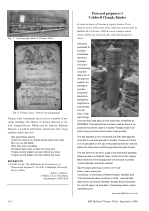
This entry features a postcard depicting a horizontal sundial at Coldwell Clough, Kinder, in Derbyshire, a dial currently unrecorded in the BSS register. The author provides a description of its apparent design and speculates on its date based on postal information, also researching the historical family connections of the postcard's publisher.
Dials: Horizontal, Historical Dials
December 2006
Page 171
Page 171
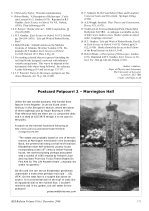
The featured dial can be found under Chirbury in the Shropshire section of the dial register. There are 11 component dials and it is sited at SJ272975 though it is not open to the public. On the west face is a scaphe dial above an anchor. Is it a horizontal dial on the top? It looks like an equatorial dial on the inclined face.
Dials: Multi Faced
December 2003
Page 149
Page 149
An account of the 2003 Newbury meeting, covering talks, exhibits, musical interlude, and member sundial projects, including declination finding, software modelling, and new dial types.
The BSS and Members
March 2002
Page 24
Page 24
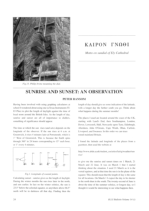
Describes observations and reflections on plotting day length (sunset - sunrise) vs time of noon for various locations in the UK and various dates.
December 2002
Page 157
Page 157
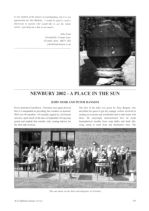
Report on the BSS Newbury meeting with exhibition and presentations, featuring inventive sundials including artistic and portable models.
The BSS and Members
March 2001
Page 22
Page 22
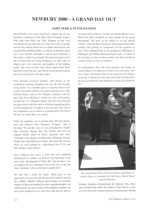
This report details the Newbury 2000 event, a British Sundial Society gathering showcasing various sundial exhibits. Highlights include John Moir's rainbow and bifilar dials, a cycloidal dial, and Piers Nicholson's prototype horizontal dial with accurate alignment features. Tony Wood presented "3 Cheap and Dials" and updated on the mass dial register. Peter Ransom displayed sundial-themed items, and David Young showed eclipse phenomena. The event concluded with an award for the Make a Sundial competition.
The BSS and Members
March 2001
Page 25
Page 25
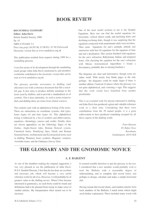
September 2001
Page 96
Page 96
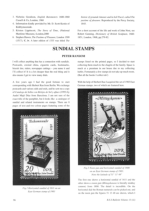
A collector shares his hobby of gathering sundial-related stamps, a more affordable alternative to actual dials. The article features examples from East Germany, Austria, and The Netherlands. A comprehensive list of sundial stamps from various countries and years is provided.
December 2001
Page 156
Page 156
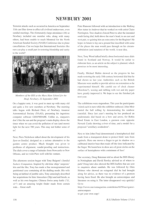
This report covers the well-attended BSS meeting at Newbury. Presentations included astronomy software, 'Spot-on-Sundial' development, and a 'Sundial Seekers Companion' kit. Updates were given on dial restoration. Exhibitions showcased diverse designs, including a rainbow dial, a hemispherical dial made from a bird feeder, and an electronic biscuit box sundial. Various other dials, a nocturnal, and calendars were also displayed.
Dials: Unusual, Restoration projects, Sundial Design & Layout, The BSS and Members
June 1999
Page 76
Page 76
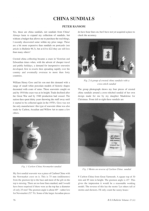
This article describes collecting crested china sundials, small porcelain souvenirs popular in Victorian and Edwardian times, which feature coats of arms. The author details his collection, including pieces from Carlton China and Willow Art, noting their dimensions, gnomon angles, and inaccuracies for specific locations. He also shares a motto found on one piece and resources for other collectors.
Historical Dials, Mottoes
October 1999
Page 108
Page 108
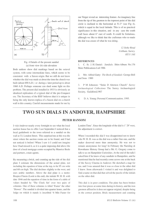
This article describes two sundials in Andover, Hampshire, both linked to William Hawkins Heath (1787-1861), a brewer and banker. One, dated 1846, is on London Street with the motto 'Respice Finem' and an equation of time table bears just the initials W.H.H. The second, dated 1833, is in poor condition on the Savoy Cinema (formerly Heath House) and bears his full name, solving the initials riddle. The article details Heath's family business and civic roles.
Dials: Vertical, Equation of Time, Historical Dials, Mottoes
October 1999
Page 133
Page 133
This report details the Newbury Meeting, featuring talks on French dials with carved figures, gnomonic markings on church walls, and an experiment recreating Eratosthenes' Earth diameter measurement. Michael Maltin demonstrated Earth's orbital eccentricity and movement. Peter Meecham described his 'Tempus Fugit' balloon. Exhibitions included a drinks sundial, NASS double horizontal dial, crested china sundials, and Andrew James' Pringles cylinder shepherd's dial. The meeting also involved laying out a meridian line and a birthday cake celebration for the BSS.
The BSS and Members
June 1998
Page 49
Page 49
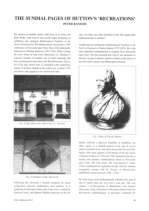
Reviews a section on sundials from Charles Hutton's 'Mathematical and Philosophical Dictionary'. It describes 41 separate problems related to dialling and mentions the author's recommended English works on gnomonics, including those by Emerson and Martin.
Mathematics of Dialling
October 1998
Page 10
Page 10
This report summarises the BSS Newbury meeting on the eve of the Summer Solstice. It covers talks on Hampshire sundials, raised horizontal dials, astro-compass conversions, and a sun compass. The event also featured an exhibition of various sundials and computer programs, highlighting members' ingenuity and the collaborative spirit of the society.
DIY Sundial Projects, Dialling Tools, Historical Dials, The BSS and Members
October 1996
Page 20
Page 20
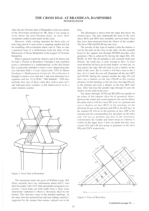
A technical description of a cross-shaped sundial in Bramdean, examining its geometry, alignment, and historical context, including comparisons with other known cross dials.
Historical Dials
October 1996
Page 44
Page 44
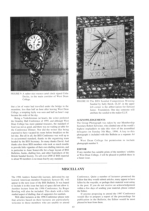
An exploration of sundials featured on vintage postcards, considering their role as both functional objects and decorative motifs in popular culture.
Historical Dials, Mottoes