- Home
- /
- Sundial Encyclopaedia
- /
- September 2008
September 2008
The articles link to the specific page in a PDF optimised for speed. If you want the whole issue, you can download it here, but the files from earlier years can be quite large.
September 2008
Page 101
Page 101
This editorial discusses three articles on double horizontal dials, highlighting the ongoing discovery and reassessment of significant dials by BSS members. It also addresses the issue of stolen sundials and the Society's role in their recovery, encouraging readers to report suspicious finds. Feedback on the Bulletin is also requested from members.
The BSS and Members
September 2008
Page 102
Page 102
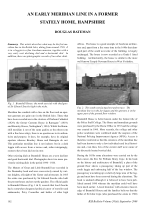
This article describes a meridian line at Bramshill House, Hampshire, believed to be the earliest in the British Isles, dating to around 1720. It also describes a west declining dial and a now-missing horizontal dial.
Dials: Horizontal, Dials: Vertical, Historical Dials, Dials: Noon Lines
September 2008
Page 106
Page 106
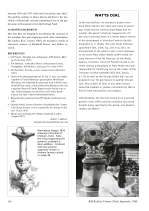
This piece follows up on the whereabouts of George Watts' sundial, confirming Mary Watts as its maker. It reports that the terracotta dial was stolen from a private garden in the 1990s and remains unrecovered, appealing to readers for information. The text also mentions the existence of a better photograph in Veronica Franklin Gould's biography of Mary.
Dials: Multi Faced, Dials: Unusual, Historical Dials
September 2008
Page 107
Page 107
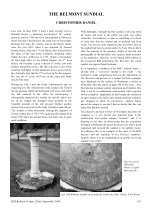
This article recounts the theft and subsequent recovery of a brass horizontal sundial by George Adams Jnr from Belmont House. A BSS member, Andrew James, identified the stolen dial on a dealer's website, leading to its return. The piece highlights the crucial value of the BSS Register and members' expertise in recovering stolen historical dials.
Dials: Horizontal, Historical Dials, The BSS and Members
September 2008
Page 108
Page 108
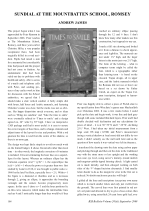
This article describes the creation of a slate vertical sundial as a memorial at The Mountbatten School. Designed for Greenwich time and features a superellipse for hour line termination. The piece details the carving, gilding, and stainless steel gnomon construction, culminating in its successful unveiling in 2007.
Dials: Vertical, Sundial Design & Layout, Construction Projects
September 2008
Page 110
Page 110
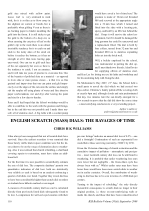
This article scientifically estimates the rate of loss for English scratch (mass) dials, revealing a significantly higher loss than previously understood. It quantifies 20th-century weathering loss at 0.5% annually and estimates an additional loss of 4250 dials due to church rebuilding. The author concludes that only a fraction of historical mass dials now survive.
Historical Dials, Dials: Mass Dials
September 2008
Page 112
Page 112
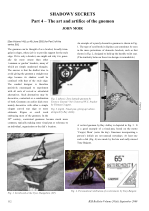
This article explores the artistic and innovative designs of gnomons, moving beyond simple functional brackets to decorative, contextual, or 'shadow-play' designs. It provides examples of gnomons incorporating visual puns, personal initials, and a novel method for designing a gnomon to cast a true profile shadow on a specific date and time.
DIY Sundial Projects, How Sundials Work, Sundial Design & Layout
September 2008
Page 115
Page 115
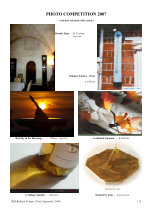
This section presents a selection of entries from the 2007 Photo Competition, including titles such as 'Double Time,' 'Summer Solstice—Noon,' 'Red Sky in the Morning...,' 'Accidental Gnomon,' 'A Vintage Sundial,' and 'Marked by Time.'
The BSS and Members
September 2008
Page 116
Page 116
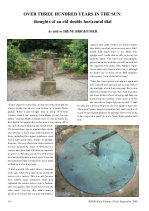
This article, narrated from the perspective of a 17th-century double horizontal dial by John Marke in a North Wales garden, recounts its history. It reflects on its past importance for timekeeping, its relocation, slight misalignment, and a recent renewed interest in its preservation, highlighting its rarity and unique survival.
Dials: Double Horizontal, Historical Dials, Restoration projects
September 2008
Page 117
Page 117
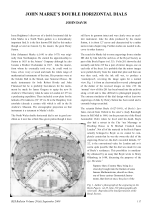
This article discusses John Marke's newly discovered double horizontal dial in North Wales, noting its significance as the first known by this maker. It provides background on Marke, his apprenticeship to Henry Sutton, and his work as a mathematical instrument maker, also linking him to Robert Boyle through an engraving and a Science Museum instrument.
Historical Dials, Dials: Double Horizontal
September 2008
Page 118
Page 118
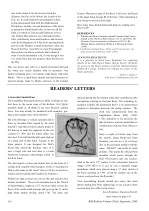
Irene Brightmer shares details of a vertical surrealist sundial by Salvador Dalí in Paris, featuring a blue-eyed female face. She also describes two historic meridians nearby: one in the Church of Saint-Sulpice, commissioned from Henry Sully, and the official Paris meridian marked by over a hundred Arago medallions.
Dials: Noon Lines, Dials: Unusual, Dials: Vertical, Historical Dials
September 2008
Page 119
Page 119
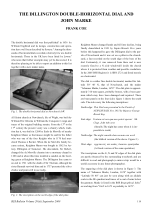
This article reports the addition of the Dillington double-horizontal dial to the BSS Register, identifying its maker as Johannes Marke, London, 1678. It details the dial's history, from its installation at Knighton Manor to its current protected location in Newchurch, Isle of Wight, and its unique inscriptions in English, Latin, and Greek.
Historical Dials, Dials: Double Horizontal
September 2008
Page 121
Page 121
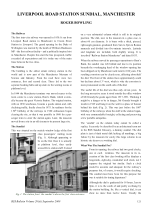
This paper describes the 1833 sundial at Liverpool Road Station, Manchester, the world's oldest extant railway station. It details the brass dial's features, its historical significance in railway timekeeping disputes, and its role as a public relations tool. The original dial is now in a museum, replaced by a 'dummy' dial on site.
Dials: Vertical, Historical Dials, The BSS and Members
September 2008
Page 123
Page 123
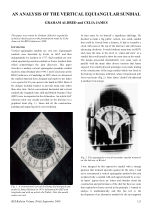
This paper provides a mathematical analysis of James Richard's rare vertical equiangular meantime sundial, designed to resemble a clock with equally spaced hours. It explains the gnomon's upward inclination and daily displacement, allowing for mean time and BST adjustments. The analysis, an alternative to Foster-Lambert theory, aims to stimulate interest in this unusual dial type.
Dials: Foster-Lambert, Dials: Vertical, Mathematics of Dialling, Sundial Design & Layout
September 2008
Page 129
Page 129
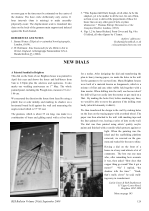
Jackie Jones and Rob Stephenson describe painting a new vertical sundial on their Brighton house in April 2008. The dial shows hours, half-hours, solstices, equinoxes, and their wedding anniversary. The article details the process from transferring the design to the wall, the painting and installation, along with amusing public reactions to the new dial.
Dials: Vertical, Sundial Design & Layout, Construction Projects, DIY Sundial Projects
September 2008
Page 130
Page 130
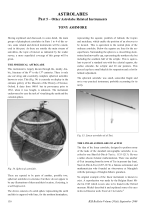
This part of the Astrolabes series covers instruments related to, but distinct from, planispheric astrolabes. It discusses the rare spherical and linear astrolabes, monumental and domestic astrolabe clocks, mariner's astrolabes (not true astrolabes), and various types of quadrants, including horary and astrolabe quadrants, detailing their history and use.
Dials: Astrolabe, Dialling Tools, Historical Dials, How Sundials Work
September 2008
Page 136
Page 136
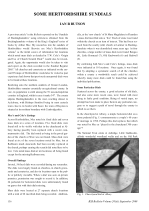
This article details a survey of sundials in Hertfordshire, reporting 56 fixed dials, 24 missing pedestals, and 68 mass dials across 27 church locations. The author highlights various interesting examples, including commemorative dials, vertical dials on cottages, historic horizontal dials, and unusual designs like a pestle and mortar scaphe dial.
Dials: Horizontal, Dials: Mass Dials, Dials: Vertical, Historical Dials
September 2008
Page 141
Page 141
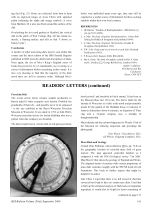
Tony Wood writes about a porcelain dial from 1766 at the Royal Worcester Porcelain Museum, describing its detailed delineation. Jill Wilson responds to Chris Williams' mass dial article, noting a correlation between dial distribution and geology, and suggesting further research into building materials and church histories for a complete picture of dial loss.
Dials: Mass Dials, Dials: Unusual, Historical Dials, The BSS and Members
September 2008
Page 142
Page 142
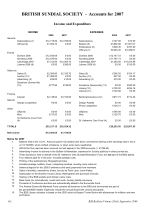
This section presents the British Sundial Society's income and expenditure statement for 2007. It details totals for subscriptions, events, sales, donations, and financial interest against expenses for the Bulletin, publications, officers, and events. The section also includes notes on specific items, fund balances, and general accounting practices.
The BSS and Members
September 2008
Page 143
Page 143
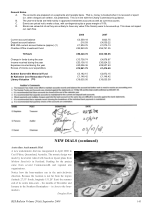
Douglas Hunt reports on a new analemmatic mosaic sundial inaugurated in April 2008 in Cecil Plains, Queensland, Australia. Designed by local artist Alain Colfs with layout plans from Modern Sunclocks, the dial features anti-clockwise hour markers and a date-scale, located near the tropics in the Southern Hemisphere.
Construction Projects, Dials: Analemmatic, Sundial Design & Layout
September 2008
Page 144
Page 144
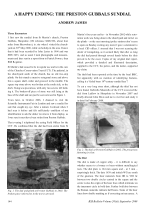
Andrew James recounts the recovery of a stolen 1638 copper alloy sundial from St Martin’s church, Preston Gubbals. He identified the dial for sale, leading to its return. The article details the dial's early 'centred' design and the unique significance of its gnomon supporter being cut from a 15th-16th century memorial brass.
Dials: Horizontal, Restoration projects, Historical Dials
September 2008
Page 148
Page 148
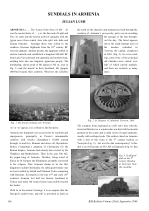
Julian Lush explores the prevalence of sundials in Armenia, linking their abundance to the nation's ancient veneration of the sun deity 'Ar.' He describes the common 'shell' or 'scallop' dial form found on 5th-13th century churches and monasteries, noting unique Armenian alphanumeric hour numbering and the enduring sun disc emblem on khachkars.
Dials: Vertical, Dials: Unusual, Historical Dials
September 2008
Page 151
Page 151
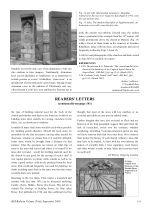
Jill Wilson provides further thoughts regarding Chris Williams' mass dial article, suggesting that areas with low numbers of recorded mass dials might be poor in suitable stone. She emphasizes the need for a full record of churches surveyed, including those without extant mass dials, highlighting the challenges for mass dial researchers.
Historical Dials, Dials: Mass Dials
September 2008
Page 152
Page 152
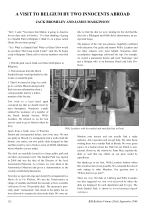
Jack Bromily and Jim Marginson recount their trip to Belgium to visit the Sundial Park in Genk. Guided by a Dutch Sundial Society member, they explored the park's tastefully located dials and visited the Astronomical Museum. They also visited La Musée de la Vie Wallone in Liège, which houses over 150 portable dials.
Dials: Portable, Historical Dials, Dials: Noon Lines