- Home
- /
- Sundial Encyclopaedia
- /
- February 1998
February 1998
The articles link to the specific page in a PDF optimised for speed. If you want the whole issue, you can download it here, but the files from earlier years can be quite large.
February 1998
Page 2
Page 2
The editor reflects on balancing forward-looking dial design with historical studies, noting readers’ diverse interests and reaffirming a policy that each issue should include something for everybody.
The BSS and Members
February 1998
Page 3
Page 3
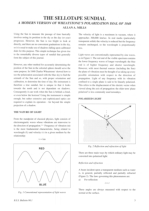
Explains a shadow-free sundial using sky polarization: a fan of Sellotape (cellophane) sectors is viewed with an analyser at the Brewster angle. The brightest sector (or equal adjacent sectors) indicates hours and half-hours, and the dial can work with the Sun behind cloud or after sunset.
DIY Sundial Projects, Dials: Unusual
February 1998
Page 10
Page 10
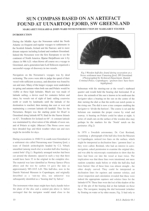
Introduces a reconstructed sun compass inspired by a Greenland find and sets it in Norse navigation: maintaining latitude by noon Sun and Polaris, with practical insights on use at high latitudes and during seasons when both Sun and star are visible.
Dials: Portable, Historical Dials
February 1998
Page 13
Page 13
Notes an article from 1896 describing a dial found in a tomb of the VII or VIIIth century, with equal hour lines, which would be the earliest known dial in Europe with 'astronomical' hours.
Dials: Unusual, Historical Dials
February 1998
Page 14
Page 14
A site note on a heliochronometer at Dunchurch Lodge, describing layout, reading, and mechanical features of this precision time-telling instrument and its context on the estate.
Dials: Heliochronometer, Historical Dials
February 1998
Page 16
Page 16
February 1998
Page 18
Page 18
Round-up of recent articles and notes on sundials and gnomonics from a range of journals and proceedings, with concise comments to guide readers to useful sources.
Book Reviews
February 1998
Page 19
Page 19
Describes the Poulton Hall dial on the Wirral peninsula: setting, design features and inscriptions, with observations on the equation of time using the pre-Gregorian calendar, an the lack of a noon gap.
Dials: Horizontal, Historical Dials
February 1998
Page 21
Page 21
A commemorative dial marking a golden wedding, covering layout, materials and the celebratory inscription, with remarks on siting and legibility.
Construction Projects, Dials: Vertical, Mottoes
February 1998
Page 22
Page 22
Survey of painted dials in a monastery cloister at Taggia (Imperia), noting multiple faces, canonical hours and decorative treatments, with historical context and observations on preservation.
Dials: Vertical, Historical Dials, Restoration projects
February 1998
Page 26
Page 26
Proposes an analemmatic dial that retains a fixed upright gnomon by drawing a series of ellipses, scaling and shifting them to avoid crossing lines and confusion when reading it.
Dials: Analemmatic, Mathematics of Dialling, Sundial Design & Layout
February 1998
Page 28
Page 28
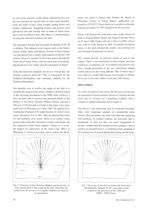
Field note on a simple home-made vernacular horizontal dial from outback Australia, describing fabric, gnomon form and scale, with comments on accuracy of delineation and local use.
DIY Sundial Projects, Dials: Horizontal, Historical Dials
February 1998
Page 30
Page 30
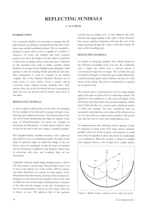
Describes novel non-shadow dials using reflectors. Parabolic and cylindrical forms generate bright caustic lines on a screen; hour indication follows motion of the cusp or inner edge. Includes formulae, constructional notes and an aperture version using a sundial curve.
DIY Sundial Projects, Dials: Reflected, How Sundials Work, Mathematics of Dialling
February 1998
Page 36
Page 36
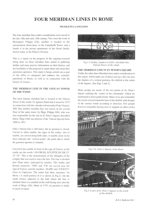
Account of four meridian lines in Rome: noon-mark function, layout and observational practice, with notes on accuracy and historical purpose.
Dials: Noon Lines, Historical Dials
February 1998
Page 39
Page 39
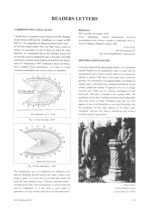
Correspondence from members on recent articles, dial sightings, methods and queries, adding corrections, experience and requests for opinions.
The BSS and Members
February 1998
Page 42
Page 42
Short editorial notices and clarifications, including corrections, follow-ups and production notes.
The BSS and Members
February 1998
Page 46
Page 46
Argues for re-evaluation of Roman portable dials: forms, readings and classification, urging fresh analysis of surviving pieces and their interpretation.
Dials: Portable, Historical Dials