- Home
- /
- Sundial Encyclopaedia
- /
- Dials: Noon Lines
Dials: Noon Lines
September 2023
Page 14
Page 14
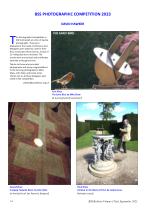
Reports the results of the 2023 BSS Photographic Competition, which attracted twelve entries and was voted on by delegates at the Exeter Conference. Winners included Mike Shaw (First Place, heliochronometer), John Allen (Second Place, Basilica of San Petronio), and Jackie Jones (Third Place, Polesden Lacey).
Dials: Heliochronometer, Dials: Noon Lines, The BSS and Members
December 2022
Page 28
Page 28
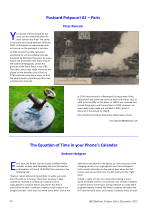
Discusses a postcard featuring the smoke from Le Petit Canon in the Palais Royal, Paris. This noon cannon, produced by M. Rousseau, was placed on the Meridian Line of Paris in 1796 to help people check their watches.
Historical Dials, Dials: Noon Lines
September 2021
Page 44
Page 44
Reviews "Le Gnomon du Méridien Cassini", a book detailing the history, theory, calculation, and construction of a meridian line in Perinaldo, Italy. The line, built as a gigantic camera obscura in the birthplace of G.D. Cassini, was completed in 2007.
Book Reviews, Dials: Noon Lines
December 2020
Page 22
Page 22
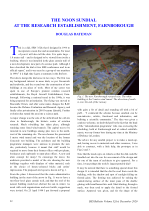
Description of a large aperture nodus noon dial designed by the author and installed in a glass curtain wall at the Farnborough research site in 1996. The 1.8-metre tall dial declines 13.5° west of south and incorporates a gilded analemma calculated for 1999, which allows it to show both the date and mean time noon.
Construction Projects, Dials: Noon Lines, Dials: Vertical, Equation of Time
December 2020
Page 31
Page 31
A brief note describing a visit to the Stock Exchange noon mark on 29 February 2020 (a leap year), managing to capture a photograph despite heavy rain. The spot of light aligned with the special thin strip for 29 February, marking GMT noon.
Dials: Vertical, Dials: Noon Lines
March 2019
Page 35
Page 35
Describes the magnificent dials on the tower of the Governor’s Palace in Parma, Italy, restored in 2006. The combination includes a vertical dial split into morning/afternoon hours and a noon dial, both featuring an analemma with constant-declination lines and zodiac symbols. The dials were damaged during WWII when partisans attempted to remove Fascist symbols.
Dials: Noon Lines, Dials: Vertical, Historical Dials
June 2019
Page 20
Page 20
Details the history and functioning of the 66.8-metre meridian line constructed by Giovanni Domenico Cassini in 1655 at San Petronio Basilica. Discusses the earlier Danti line, restorations, the use of Cassini units and Italian hours, and how the line helped confirm Kepler's elliptical orbit theory.
Dials: Noon Lines, Historical Dials
June 2019
Page 26
Page 26
A photograph of a vertical meridian dial on the chapel of the Pitié-Salpêtrière Hospital in Paris. The dial shows solar time of noon ±1 hour (with half-hours) and short sections of the declination lines.
Dials: Noon Lines, Dials: Vertical, Historical Dials
December 2018
Page 38
Page 38
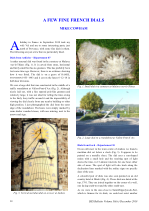
A travelogue describing various French sundials, including: a vertical meridian dial using an aperture nodus in Anduze; a huge dial near Tavel; a colourful, mottoed dial at Saint-Hippolyte-du-Fort; and a multi-faced tower dial at Valréas where the delineations appear inconsistent or mysterious.
Dials: Multi Faced, Dials: Noon Lines, Dials: Vertical, Historical Dials
September 2017
Page 2
Page 2
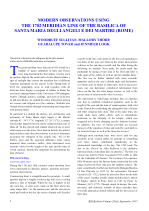
This article is based on a 2016 conference talk detailing modern observations of solar transits on Rome's 1702 meridian line. The purpose was to determine the obliquity of the ecliptic, length of the year, and time of vernal equinox. Analysis of 54 data points gathered between 1996 and 2015 confirmed that the obliquity has grown smaller since the line's construction.
Dials: Noon Lines, Historical Dials, How Sundials Work, Mathematics of Dialling
December 2017
Page 8
Page 8
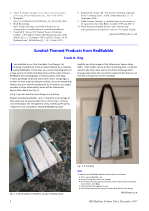
Notes that the company RedBubble prints photographs on various products (like throw pillows and tote bags), many of which feature images of sundials, such as the Paternoster Square Noon Mark.
Dials: Noon Lines
March 2016
Page 13
Page 13
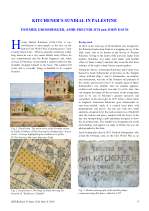
Details the sophisticated east–west sundial presented by Horatio Herbert Kitchener in Haifa in 1875 to his host, Jacob Schumacher. The dial uses a vertical brass plate with apertures to cast light spots onto a bottom plate marked with a split analemma to show local mean time.
Dials: Noon Lines, Equation of Time, Historical Dials, Sundial Design & Layout
March 2014
Page 12
Page 12
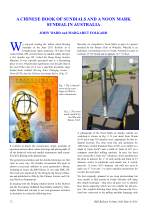
This contribution reviews the book "Moving Stars Changing Scenes – Gems Of The Ancient Chinese Astronomy Relics", a catalogue of historical Chinese solar instruments. Additionally, it details the design and construction of a stainless steel Noon Mark sundial for the Rotary Club of Whyalla, South Australia (33° 02′ S).
Book Reviews, Construction Projects, DIY Sundial Projects, Dials: Noon Lines
March 2014
Page 43
Page 43
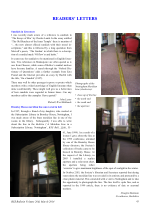
John Lester inquires about further references to sundials in English literature beyond those by Lamb, Marvell, and Chaucer. Douglas Bateman reports that the brass meridian line at Bromley House, Nottingham, mentioned in a 1999 article, has been fully revealed during recent renovations.
Dials: Noon Lines, Historical Dials
December 2014
Page 2
Page 2
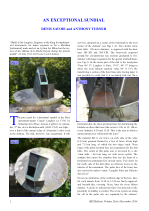
This article describes a unique horizontal sundial/meridian instrument constructed by Claude Langlois in 1741 for Alexandre de la Rochefoucauld at the château de la Roche-Guyon. The instrument features a large brass box gnomon with a slit and seven eyelets, allowing the spots of light to correspond to significant dates, such as the solstices and the entry of the sun into zodiac signs.
Dials: Horizontal, Dials: Noon Lines, Dials: Unusual, Historical Dials
September 2013
Page 16
Page 16
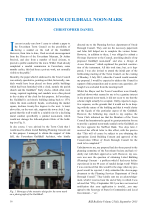
Account of securing Listed Building Consent for a painted noon-mark on the historic Faversham Guildhall, celebrating the Queen's Diamond Jubilee. The design features a gilded meridian line and a nodus on a gilded sun image, which projects a light spot to indicate the instant of Local Apparent Noon.
Construction Projects, Dials: Noon Lines, Dials: Vertical, Sundial Design & Layout
June 2012
Page 2
Page 2
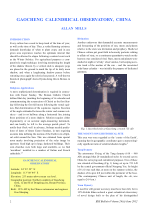
This article details the historical Gaocheng Calendrical Observatory in China, focusing on its construction in 1276 AD by Guo Shoujing, its role in calendrical observations for the Yuan Dynasty, and its design principles for measuring solstices and equinoxes using a monumental gnomon. It also describes the 'shadow-definer' device used for accuracy and the methods for orientation and timekeeping.
Dials: Noon Lines, Historical Dials, How Sundials Work, Mathematics of Dialling
September 2012
Page 7
Page 7
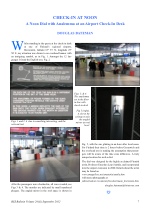
This article describes a unique noon dial with an analemma at Rovaniemi Airport, Finland, designed by Professor Emeritus Lauri Anttila in 2000. An angled mirror in the roof casts sunlight onto the floor to indicate months, with the design assuming passengers are aware of time zone differences.
Construction Projects, Dials: Analemmatic, Dials: Noon Lines, Sundial Design & Layout
December 2012
Page 16
Page 16
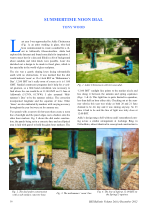
This article describes a fused glass noon dial by Adele Christensen for a Gloucestershire client, indicating 12:00 BST on Midsummer's Day via a narrow slit of sunlight. The author also notes a similar Millennium design, the Lockinge Ring by David Harber in Oxfordshire, which uses a mirror for true noon.
Construction Projects, Dials: Noon Lines, Dials: Reflected, Sundial Design & Layout
December 2012
Page 34
Page 34
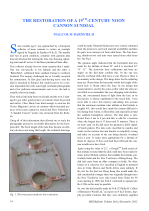
This article describes the restoration of a 19th-century Negretti & Zambra noon cannon sundial. The author recreated missing brass parts, noting design anomalies like incorrect latitude calibration and an inappropriate date scale. The true maker and date remain uncertain, highlighting the common practice of firms selling goods made by others.
Dials: Noon Lines, Historical Dials, Restoration projects, Sundial Design & Layout
December 2012
Page 47
Page 47
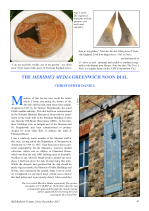
This article details the 2012 reconstruction of the Meridies Media noon mark mean time sundial at the Royal Observatory, Greenwich. Originally designed by Dr Tadeusz Przypkowski in 1967 with a design error, the new Kirkstone slate dial, carved by Ben Jones, was meticulously crafted and unveiled on 10 October 2012.
Restoration projects, The BSS and Members, Dials: Noon Lines
December 2011
Page 16
Page 16
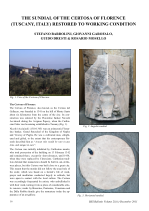
This article details the restoration of a pinhole sundial at the Certosa of Florence. The meridian line served as a calendar and true local noon marker. Investigations revealed inconsistencies, leading to the conclusion that the dial correctly determined the spring equinox, vital for calculating Easter, reflecting its religious institution setting. Historical interventions, possibly by astronomer G.B. Donati, are also discussed.
Dials: Noon Lines, Equation of Time, Historical Dials, Restoration projects
March 2010
Page 20
Page 20
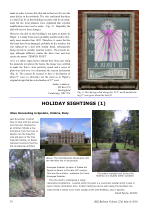
A brief travel report on two noon-mark sundials found in Spoleto, Umbria, Italy. One is located in the park of the Villa Pianciani Delizia and another, similar one at the Villa Redenta. Both are described as being in need of restoration.
Dials: Noon Lines, Historical Dials
March 2010
Page 23
Page 23
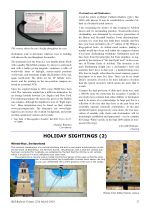
Features a vertical declining dial combined with a noon mark analemma on a church tower in Winterthur, Switzerland. The vertical dial is corrected for longitude, and the analemma is colour-coded for the two halves of the year.
Dials: Noon Lines, Dials: Vertical, Equation of Time
March 2010
Page 38
Page 38
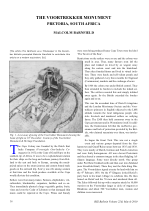
Describes how the Voortrekker Monument in Pretoria functions as a timekeeper. An aperture in the dome allows a ray of sunlight to illuminate a cenotaph at Local Solar Noon on 16th December each year, commemorating the 1838 Battle of Blood River.
Dials: Unusual, Sundial Design & Layout, Historical Dials, Dials: Noon Lines
December 2010
Page 26
Page 26
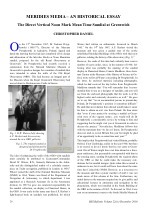
This historical essay details the Meridies Media sundial designed by Dr Tadeusz Przypkowski for the Old Royal Observatory at Greenwich in 1967. It describes the dial's function using an analemma to indicate standard mean time, true noon, and date. The article recounts the author's involvement in its installation, the initial design error, and the eventual reconstruction of the wooden dial in 1969, which remained until 1991.
Dials: Noon Lines, Equation of Time, Historical Dials, Restoration projects
September 2009
Page 8
Page 8
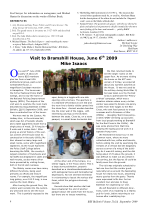
A report on a British Sundial Society visit to Bramshill House, a Jacobean mansion in Hampshire. The article describes the tour of the house, which was the former National Police Staff College, and the various timepieces examined, including a noon mark, a horizontal dial, a stone polyhedron, and a vertical dial.
Dials: Horizontal, Dials: Noon Lines, Dials: Vertical, The BSS and Members
March 2008
Page 3
Page 3
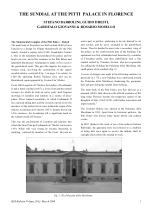
This article details the restoration and description of a 1696 pinhole sundial in Florence's Pitti Palace, designed by Vincenzo Viviani. It served for astronomical observations and calendar functions, notably for determining Easter. The piece also explores its historical context within the Medici court and its allegorical frescoes.
Restoration projects, Historical Dials, Dials: Noon Lines
September 2008
Page 102
Page 102
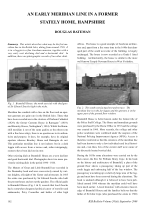
This article describes a meridian line at Bramshill House, Hampshire, believed to be the earliest in the British Isles, dating to around 1720. It also describes a west declining dial and a now-missing horizontal dial.
Dials: Horizontal, Dials: Vertical, Historical Dials, Dials: Noon Lines
September 2008
Page 118
Page 118
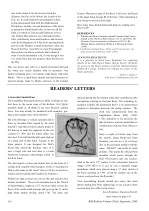
Irene Brightmer shares details of a vertical surrealist sundial by Salvador Dalí in Paris, featuring a blue-eyed female face. She also describes two historic meridians nearby: one in the Church of Saint-Sulpice, commissioned from Henry Sully, and the official Paris meridian marked by over a hundred Arago medallions.
Dials: Noon Lines, Dials: Unusual, Dials: Vertical, Historical Dials
September 2008
Page 152
Page 152
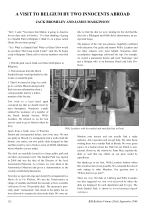
Jack Bromily and Jim Marginson recount their trip to Belgium to visit the Sundial Park in Genk. Guided by a Dutch Sundial Society member, they explored the park's tastefully located dials and visited the Astronomical Museum. They also visited La Musée de la Vie Wallone in Liège, which houses over 150 portable dials.
Dials: Portable, Historical Dials, Dials: Noon Lines
December 2008
Page 198
Page 198
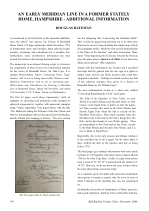
This article provides additional information about a meridian line at Bramshill House, Hampshire. It details a 1770 manuscript by S. Dunn containing notes on spherical trigonometry and meridian line calculations. It confirms the line's date before 1770 and discusses the context of 18th-century mathematical sophistication and notes from Mrs. Gatty that imply the existence of other dials at the location.
Dials: Noon Lines, Historical Dials, Mathematics of Dialling
March 2007
Page 33
Page 33
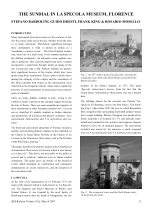
This paper describes the pinhole sundial in the Grand-Ducal Astronomical Observatory (La Specola) in Florence. It covers the observatory's history, the sundial's design as a string-gnomon meridian line, its restoration in 2005, and a comparison of measured zodiac point positions with calculated values. It highlights the instrument's historical importance for astronomical studies and calendar reform.
Dials: Noon Lines, Historical Dials, How Sundials Work, Restoration projects
September 2007
Page 105
Page 105
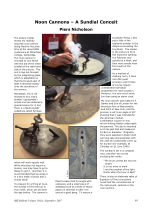
This article discusses noon cannons, devices that fire at solar noon using a magnifying glass to ignite powder. It describes preparing and firing a cannon, noting it's more for fun than accuracy. It also mentions historical examples from the mid-17th and 18th centuries, modern versions, and current licensing restrictions in England. A specific F. Barker and Son cannon is detailed.
Dials: Noon Lines, Dials: Unusual, Historical Dials
December 2006
Page 162
Page 162
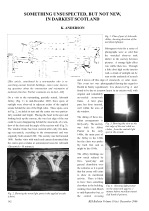
K. Anderson describes unexpected meridian light spots observed at Arbroath Abbey, Scotland, in December 2005. Sunlight streaks through narrow lancet windows create precise light pointers at astronomical noon in the applied arcade and sacristy, confirming early meridional arrangements within the Abbey buildings, dating back to the late 1100s, highlighting ancient astronomical awareness.
Historical Dials, Dials: Noon Lines
March 2005
Page 35
Page 35
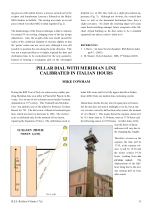
Analyses a rare Italian pillar dial in Ravenna with a horizontal gnomon, calibrated for reading the time in the Italian hours system at solar noon. Discusses calculating local noon offsets, latitude influences, and historical context of Venetian installation. Examines missing gnomon, hurricane damage and the cultural practice of hour counting from event-based day start.
Historical Dials, Dials: Noon Lines
December 2005
Page 175
Page 175
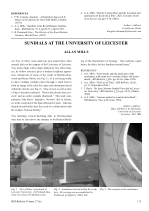
This piece highlights four unusual sundials at the University of Leicester campus. It features a two-meter-high "Eye of Time" noon mark, a modern sculptural piece indicating both time of year and day via an analemma. Also mentioned are John Davis's "Newton" dial and two matching vertical declining dials in Westmoreland slate, one showing equal hours and the other seasonal hours.
Dials: Noon Lines, Dials: Unusual, Dials: Vertical
March 2004
Page 4
Page 4
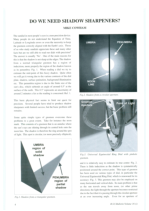
Explores methods to improve the precision of reading sundials, addressing the problem of the penumbra (fuzzy shadow) caused by the sun's finite disc. It discusses various gnomon designs, such as annular gnomons for noon marks, thin rod gnomons, and pinhole or taut wire gnomons, which create sharper shadows for more accurate time-telling.
Dials: Noon Lines, Dials: Portable, How Sundials Work, Sundial Design & Layout
March 2004
Page 33
Page 33
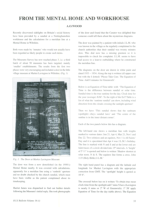
This article explores two historically significant sundial-related discoveries: a door from a demolished Mental Home in Wiltshire covered with calculations for a meridian line, and a scratch dial on the wall of a Nottinghamshire workhouse. It delves into the stories of the 'inmates' who created these and speculates on their accuracy and purpose.
DIY Sundial Projects, Dials: Noon Lines, Historical Dials
March 2002
Page 44
Page 44
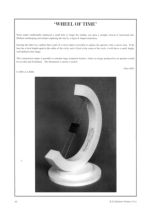
Describes a noon mark dial with a lens at the aperture, projecting a bright spot on an analemma inscribed on a semicircular scale.
Sundial Design & Layout, Construction Projects, Equation of Time, Dials: Noon Lines
September 2001
Page 113
Page 113
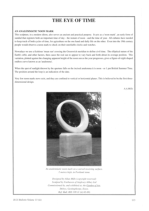
Describes a modern, three-dimensional noon mark sculpture in Portland stone, with analemma. It indicates both the instant of mean-time noon and the time of year by projecting a spot of sunlight onto an incised analemma. This design is believed to be the first of its kind that is 3-dimensional.
Dials: Noon Lines, Dials: Unusual, Equation of Time
February 2000
Page 42
Page 42
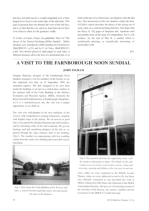
Describes a group visit to the noon-mark sundial at Farnborough. Designed by Douglas Bateman, the dial is set out on a central glass window in the entrance hall of the Cody Building and shows local apparent noon, mean time noon, and the date.
The BSS and Members, Dials: Noon Lines
June 1999
Page 55
Page 55
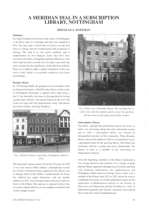
This article describes a rare 1834 meridian dial in Nottingham's Bromley House Subscription Library. It features a brass strip on the first floor, which was covered for 150 years. The dial was used to ascertain Local Apparent Noon and is complemented by two longcase clocks with inscribed time differences. Efforts are underway for its partial restoration, noting its excellent condition in fine surroundings.
Dials: Noon Lines, Historical Dials, Restoration projects
June 1999
Page 62
Page 62
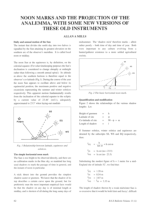
This article explores noon marks and the analemma, detailing how the sun's daily and annual motion is used to determine local noon and time of year. It discusses simple horizontal and vertical noon marks, the use of aperture gnomons, and the historical and modern application of the analemma for time correction. New designs for polar and vertical analemmatic noon marks, including sculptural forms, are also presented.
Dialling Tools, Dials: Noon Lines, Equation of Time, Sundial Design & Layout
February 1998
Page 36
Page 36
Account of four meridian lines in Rome: noon-mark function, layout and observational practice, with notes on accuracy and historical purpose.
Dials: Noon Lines, Historical Dials
July 1997
Page 24
Page 24
Lecture on meridian lines in Europe, their scientific and historical significance, and notable examples.
Dials: Noon Lines
June 1996
Page 26
Page 26
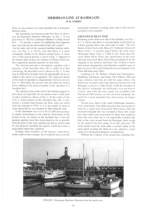
A description of a meridian line installed in Ramsgate, covering its construction, timekeeping function, and local educational significance.
Dials: Noon Lines, Sundial Design & Layout
June 1994
Page 32
Page 32
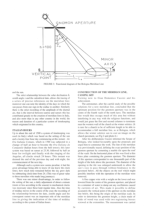
Part one of a detailed study of the meridian line in San Petronio, a 17th-century astronomical installation in Bologna. The article outlines its construction, alignment, and function in tracking solar time and determining dates such as solstices, serving both scientific and liturgical purposes.
Dials: Noon Lines, Equation of Time, Historical Dials
October 1994
Page 22
Page 22
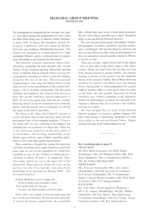
This article, the second part of a series, details the reconstruction and ongoing maintenance of the meridian line in the Basilica of San Petronio, Bologna. It describes Eustachio Zanotti's 1776 restoration, which aimed to retain Cassini's original dimensions while improving stability with new materials. The article highlights the meridian's function in accurately determining the vernal equinox and its use for astronomical observations and calendar correction. It also covers Federigo Guarducci's 1904 inspection confirming the instrument's excellent preservation and stability, and discusses an adjacent 1758 mechanical "equation clock" used to reconcile true solar time with mean time.
Dials: Noon Lines, Historical Dials
February 1993
Page 18
Page 18
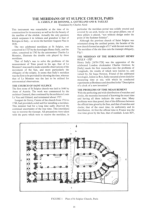
This article describes two meridians in St Sulpice Church, Paris, by Henry Sully (1727) and Charles Le Monnier (1743). It discusses their purpose for time measurement and astronomical observations, detailing the historical context of time standardization and their architectural integration within the church.
Dials: Noon Lines, Equation of Time, Historical Dials, Sundial Design & Layout
June 1993
Page 2
Page 2
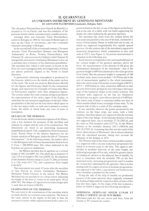
This article details the discovery and analysis of the 'Quarantale', a lost gnomonic instrument invented by Geminiano Montanari, found through manuscript inscriptions related to a meridian line in Bologna. It explains how the instrument was designed for stellar observations, covering a 140° meridian arc to cover two apertures, by using a unique optical sight and mathematical calculations based on similar triangles, restoring its historical context.
Dials: Noon Lines, Dials: Unusual, Historical Dials, Dials: Nocturnals
June 1993
Page 11
Page 11
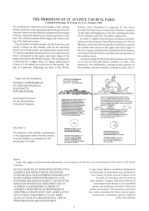
This is the second part of an article describing two meridians in St Sulpice Church, Paris, by Henry Sully and Charles Le Monnier. It details their purpose for time measurement and astronomical observations, discussing restoration efforts, challenges in conservation, and the historical context of time standardization. It also covers Le Monnier's observations and the meridian's condition through the French Revolution and later centuries.
Dials: Noon Lines, Equation of Time, Historical Dials
October 1991
Page 22
Page 22
This article describes the Salisbury Cathedral spire as a unique sundial, where its midday shadow crosses an engraved line marked "Meridies" on a low north wall. It notes the popularity of elaborate Scottish multangular dials in the 17th century and details a rare Ivychurch dial in the Salisbury Museum, a local stone multi-faced piece that indicates both time and seasons.
Dials: Multi Faced, Dials: Noon Lines, Historical Dials