- Home
- /
- Sundial Encyclopaedia
- /
- Graham Stapleton
Graham Stapleton
March 2023
Page 26
Page 26
Summary of the Society's 2022 activities, including holding the York conference and Newbury meeting, maintaining strong finances, and detailing public benefit submissions to the Charity Commissioners. Projects included restoration advice, pro bono design work, and the continued growth of the Fixed-Dial Register.
Construction Projects, Restoration projects, The BSS and Members
June 2023
Page 31
Page 31
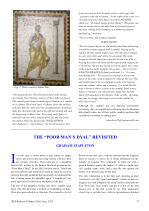
Revisits Sir Samuel Morland's 1689 pamphlet promoting his non-extant "Poor Man’s Dyal." Analysis suggests it was a modest, four-inch diameter horizontal dial, possibly pewter or brass, sold with an instrument for establishing the East-West line, reflecting Morland’s efforts to raise funds through inexpensive items.
Dialling Tools, Dials: Horizontal, Historical Dials
September 2023
Page 9
Page 9
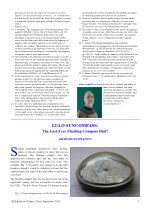
Examines the Li-Lo Suncompass, a floating compass dial made in Great Britain in the mid-1940s, possibly the last of iteration of its type. It discusses its plastic construction, dual time scales (Winter Time and Summer Time), the Li-Lo brand's history (owned by P.B. Cow & Co.), and its origin as the German 'Rüter Uhr' developed in 1945.
Dials: Portable, Dials: Unusual, Historical Dials
December 2022
Page 25
Page 25
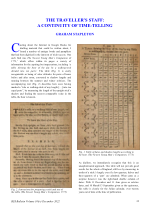
Explores 18th-century printed tables intended for travellers to estimate time using solar altitude and a divided walking stick. The calculations were based on Julian calendar dates and approximated the latitude of Coventry, prioritising simplicity over accuracy.
Dialling Tools, Dials: Portable, Historical Dials
December 2022
Page 40
Page 40
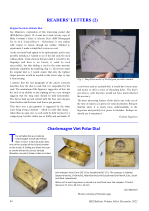
Commentary on the Belgian Portable Altitude Dial, suggesting that using the time of sunrise as a proxy for declination is an interesting, layperson-friendly feature.
Dials: Vertical, Dials: Portable, Dials: Unusual
September 2021
Page 36
Page 36
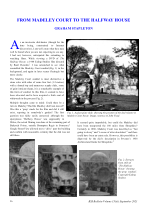
Investigates a distinct cube sundial seen in the film "The Halfway House". The prop was a copy of the famous Madeley Court sundial. Close analysis confirmed it was a non-functional copy, likely based on a Wills’s cigarette card from 1928, and it was broken up after filming.
Dials: Multi Faced, Historical Dials, Dials: Cube, Dials: Scaphe
September 2020
Page 2
Page 2
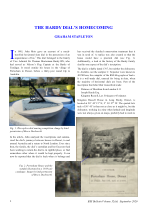
A horizontal slate dial, reliably dated 1767, belonging to Vice Admiral Sir Thomas Masterman Hardy, is tracked through its travels from Dorset to Australia and back to London. The article concludes with the dial's conservation and placement inside Portesham House, alongside a replica placed outside.
Dials: Horizontal, Historical Dials, Restoration projects, The BSS and Members
March 2019
Page 41
Page 41
Reports on the Society reaching its 30th anniversary and maintaining core activities. Highlights successful infrastructure maintenance (Bulletin, website, registers), the publication of the first national Mass Dial Register, and progress on the Biographical Index. Notes the retirement of David Brown and the passing of Jill Wilson, and thanks volunteers.
The BSS and Members
December 2019
Page 10
Page 10
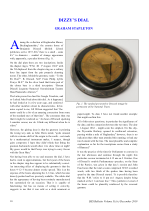
Analysis of a small, peculiar sundial presented to Benjamin Disraeli in 1862 by Philip Lybbe Powys. The article discusses its Latin motto and strange configuration (reversed gnomon). It concludes the dial was likely a customised desk ornament rather than a functional timepiece, relating its creation to Powys's attempts to curry favour during his troubled years.
Dials: Portable, Dials: Unusual, Historical Dials, Mottoes
March 2018
Page 36
Page 36
An overview of the Society's activities supporting the advancement of gnomonic education. Highlights include extensive outreach (lectures, school workshops), advice to professional bodies (e.g., Buckingham Palace, Royal Observatory Greenwich), maintenance of the national sundial database, and the healthy financial status of the BSS. Membership numbers and age distribution are discussed as a cause for concern.
The BSS and Members
June 2018
Page 2
Page 2
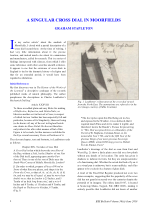
Investigates a rare 1706 cross dial in Moorfields, London, made by Robert Trevitt, a painter, as a parish boundary marker and memorial to the Battle of Ramillies. The article explores why cross dials were uncommon in England, suggesting their imagery was historically considered idolatrous due to religious connotations.
Dials: Polar, Dials: Unusual, Historical Dials, Mottoes
June 2018
Page 48
Page 48
Official documentation of the Annual General Meeting held in Norwich. Graham Stapleton and Chris Williams were re-elected as charity trustees. Independent Examiners Ltd was appointed to examine the 2018 annual statement of accounts.
The BSS and Members
December 2018
Page 7
Page 7
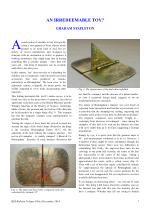
Investigates a small, folding brass horizontal dial stamped 'Birmingham Patent 1875' similar to examples found in many collections. Analysis confirms the gnomon angle is 45° but the hour lines are grossly incorrect for Birmingham’s latitude (52°), leading to the conclusion that this antique object is functionally useless and an irredeemable 'toy'.
Dials: Portable, Historical Dials, Sundial Design & Layout
March 2017
Page 20
Page 20
A historical survey of five sundial-related sites in the Moorfields district of London. Sites include Sun Dial Court (possibly an inn), Walter Hayes’ instrument-making shop, a vertical dial at Albion Chapel, an Astrological Physician’s house sign with a dial, and a unique 1706 Cross Dial.
Dials: Unusual, Dials: Vertical, Historical Dials
March 2017
Page 37
Page 37
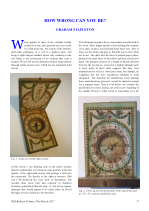
Analysis of wooden diptych sundials (late 18th/early 19th century, Southern Germany) that often only had hour lines delineated for a single latitude (typically 50°). The author calculates the errors (up to 20 minutes) when these dials are used at distant latitudes (e.g., 40° N or 54° N), even if the string gnomon is correctly reset.
Dials: Portable, How Sundials Work, Mathematics of Dialling
September 2017
Page 12
Page 12
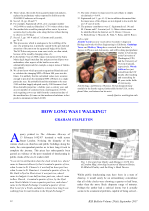
The article examines a 1692/93 query in *The Athenian Mercury* concerning disparate public clock times during a walk across London. Assuming the two sundials mentioned ('Mr. Knib’s Dyal' and the dial near Stocks Market) were accurate, the author uses the measured distance between them to estimate the total elapsed walking time as just over 38 minutes.
Historical Dials
September 2017
Page 26
Page 26
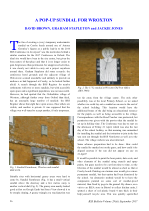
This describes the creation of a temporary analemmatic sundial on the grounds of Wroxton Primary School, intended as an educational resource. Components were made from red plastic board using stencils and spray paint. Alignment relied on Google Earth data, as the sun did not appear. The authors suggest this project, executed before the Oxford Conference, could become a BSS custom.
Construction Projects, DIY Sundial Projects, Dials: Analemmatic, The BSS and Members
December 2017
Page 6
Page 6
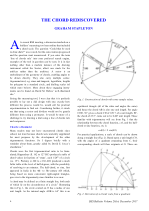
Examines how a chord scale (such as on a Sector instrument or line of chords rule) can be used for geometrically laying out a dial design. The article discusses the historical use and trigonometry of chords and compares the process to using a protractor.
Dialling Tools, Mathematics of Dialling, Sundial Design & Layout
December 2016
Page 34
Page 34
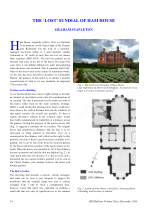
Proposes a reconstruction of the 'lost' great decliner mural sundial at Ham House, dated 162- (likely 1622) and rediscovered in 1965. The dial, positioned 16° north of east, was hidden when the house was extended in 1674. It carries the motto VIGILATE.
Dials: Vertical, Historical Dials, Mottoes
June 2015
Page 46
Page 46
A report outlining the Society’s activities, including celebrating the Silver Jubilee, improving the website interface (Bridol operational), holding educational workshops at Cheney School, implementing the CIO status change, and acknowledging member participation.
The BSS and Members
March 2008
Page 13
Page 13
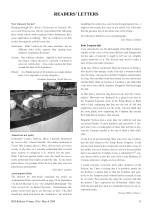
A collection of letters. Graham Stapleton suggests new glossary terms; John Moir corrects a previous 'Almost Sundial' entry; Ken Head clarifies how to use analemmatic dials; George White discusses the Bath Tompion dial and its uncertain link to the Pump Room clock.
Dials: Analemmatic, Dials: Portable, Historical Dials
June 2007
Page 62
Page 62
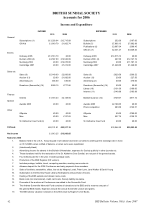
This section presents the British Sundial Society's financial accounts for 2006, detailing income and expenditure. It shows an increase in net income, explains the accounting basis, and includes auditor's comments on fund management and financial clarity.
The BSS and Members
September 2005
Page 104
Page 104
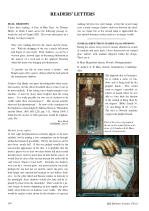
Contains a series of letters from readers. Topics include a discussion on whether two shadows from the sun and moon can be seen simultaneously, a stained glass sundial in a church, and the origins of an equation of time table.
December 2005
Page 154
Page 154
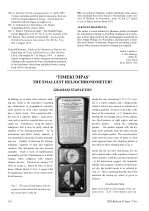
This article introduces the "Timekumpas," a small, cigarette-lighter-sized equatorial dial patented in 1926. While it lacks precision due to its size, it is notable for being a universal instrument designed to allow for latitude, longitude, equation of time, and magnetic variation, making a "noble effort" to create a sophisticated, portable standard time indicator.
Dials: Equatorial, Dials: Heliochronometer, Dials: Portable, Historical Dials
September 2003
Page 110
Page 110
A collection of letters from readers. Topics include a thank you for information on sundial makers for the 'Biographical Index of British Sundial Makers,' and some pub dial sightings.
The BSS and Members
February 1993
Page 2
Page 2
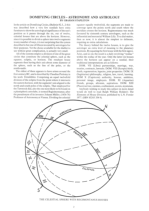
This article discusses the astrological significance of the sun's position in celestial houses as shown on sundials. It details various systems for dividing the celestial sphere into twelve segments, including Regiomontanus. The theory gives additional meaning to planetary positions, mentioning historical texts and further reading on house division.
Dials: Astrolabe, Historical Dials