- Home
- /
- Sundial Encyclopaedia
- /
- Jill Wilson
Jill Wilson
March 2021
Page 23
Page 23
An analysis of various Masonic symbols found decorating sundials, building upon material left by the late Jill Wilson. It describes the use of the square and compasses, the Eye of Providence, pillars, and other emblems on dials, ranging from ancient mason's marks to later 'antique' and custom-made pieces.
Dials: Unusual, Historical Dials, Mottoes, The BSS and Members
March 2014
Page 46
Page 46
This article describes the unexpected discovery of a substantial cube sundial at Snowshill Manor, Gloucestershire. The dial, constructed of Cotswold limestone and likely dating from 1722, was overlooked because it was built into a wall and had suffered severe erosion, losing its gnomons and delineation, making it resemble an ordinary gatepost.
Dials: Cube, Historical Dials, Restoration projects
September 2013
Page 27
Page 27
Investigates two pseudo-antique sundials recently reported, falsely signed with variations of the 17th-century maker name Bladon and dated 1610 and 1655. Examination of features, mottoes (one invented in 1860), and catalogue evidence strongly suggests they were manufactured much later, possibly by Pearson Page, as fake antique pieces.
Dials: Equatorial, Dials: Portable, Historical Dials, Mottoes
March 2010
Page 41
Page 41
Describes two 18th-century horizontal sundials, now in Gloucestershire, originally made for West Indies plantations. One by John Fowler was designed for St Kitts (17.5° latitude) and the other by his apprentice Henry Gregory for a latitude of around 13°.
Dials: Horizontal, Historical Dials
March 2009
Page 27
Page 27
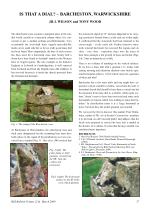
This article describes the discovery of a unique sundial carved into the base of a former churchyard cross at Barcheston, Warwickshire. The stonework was trimmed to a 52° slope on the south side, with recessed flat regions revealing traces of hour lines. It is classified as a large horizontal in stone with a notably wide gnomon.
Dials: Horizontal, Dials: Unusual, Historical Dials
September 2008
Page 141
Page 141
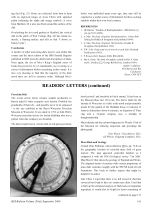
Tony Wood writes about a porcelain dial from 1766 at the Royal Worcester Porcelain Museum, describing its detailed delineation. Jill Wilson responds to Chris Williams' mass dial article, noting a correlation between dial distribution and geology, and suggesting further research into building materials and church histories for a complete picture of dial loss.
Dials: Mass Dials, Dials: Unusual, Historical Dials, The BSS and Members
September 2008
Page 151
Page 151
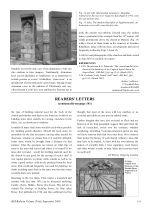
Jill Wilson provides further thoughts regarding Chris Williams' mass dial article, suggesting that areas with low numbers of recorded mass dials might be poor in suitable stone. She emphasizes the need for a full record of churches surveyed, including those without extant mass dials, highlighting the challenges for mass dial researchers.
Historical Dials, Dials: Mass Dials
December 2006
Page 164
Page 164
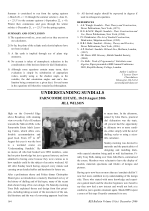
Jill Wilson reports on a successful weekend course on 'Understanding Sundials' at Farncombe Estate. The curriculum covered the history of dialling, fundamental theory, design principles, practical delineation using various tools, and the practicalities of installing dials, with a focus on wall declinations. Attendees, from beginners to experienced diallists, gained new insights and appreciation for sundials.
How Sundials Work, Mathematics of Dialling, Sundial Design & Layout, The BSS and Members
December 2005
Page 159
Page 159
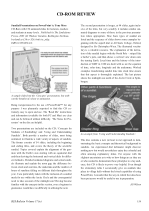
This review covers Tony Moss's PowerPoint CD-ROM "Sundial Presentations," which includes "Concepts for Students of Sundialling" and "Using and Understanding Sundials." It praises the CD for its clear, animated slides explaining basic sundial concepts, theory, alignment of gnomons, differences between clock and sun time, and the analemma, making it useful for beginners and lecturers.
Book Reviews, How Sundials Work, Mathematics of Dialling, Sundial Design & Layout
September 2003
Page 110
Page 110
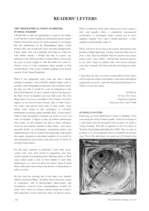
A collection of letters from readers. Topics include a thank you for information on sundial makers for the 'Biographical Index of British Sundial Makers,' and some pub dial sightings.
The BSS and Members