- Home
- /
- Sundial Encyclopaedia
- /
- June 1998
June 1998
The articles link to the specific page in a PDF optimised for speed. If you want the whole issue, you can download it here, but the files from earlier years can be quite large.
June 1998
Page 2
Page 2
This article discusses the different approaches to problems of conservation and restoration of sundials in Britain and continental Europe. It also touches on the upcoming tenth anniversary of the British Sundial Society and suggests celebrating with colour photographs in the Bulletin.
Restoration projects, The BSS and Members
June 1998
Page 3
Page 3
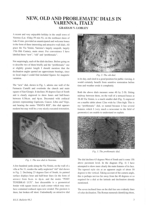
An account of a holiday in Varenna, Italy, which unexpectedly revealed three interesting wall dials. The author describes the new and old dials briefly and the 'problematic' dial in more detail, asking for help with its unexplained features.
Dials: Vertical
June 1998
Page 4
Page 4
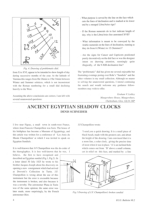
A history of ancient Egyptian methods of time measurement, from early shadow clocks to later step-sundials. It explains how these instruments worked, their limitations, and mentions the work of Jean-Francois Champollion in identifying one.
Dials: Unusual, Historical Dials
June 1998
Page 9
Page 9
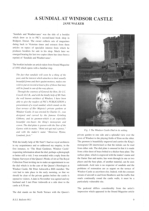
This article details a sundial located on the North Terrace of Windsor Castle, commissioned by Charles II and crafted by Grinling Gibbons. It describes the intricate engravings on the gnomon, featuring the King's monogram, and the dial-plate with the Garter Star and motto. It also touches upon the challenges of its conservation.
Dials: Horizontal, Historical Dials
June 1998
Page 11
Page 11
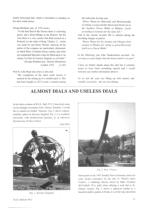
Showcases several examples of sundials deemed either 'almost' functional or 'useless.' It features a quasi-armillary sphere, a horizontal dial with a dysfunctional gnomon, a spherical sundial with perplexing projections, and a cathedral dial whose black face renders the shadow invisible, highlighting design flaws.
Dials: Unusual, Sundial Design & Layout
June 1998
Page 12
Page 12
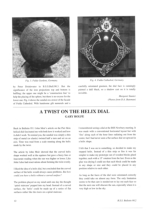
The article describes how to make a sundial by setting a series of faces on a solid object to indicate time. The faces are parallel to the earth's axis and turn to show specific times. The design, which can be cast from a mould, allows for time to be judged to within five minutes by observing the changing shadow on the face. The novel design has been patented
Dials: Unusual, Sundial Design & Layout
June 1998
Page 14
Page 14
This article discusses the division of the day as described in Dante's 'Divine Comedy' and the commentary by Da Buti, explaining how the church used seasonal hours and placed offices around the hour of midday. It also connects the hourly markers on a sundial to the end of time periods rather than the beginning.
Dials: Mass Dials, Historical Dials
June 1998
Page 16
Page 16
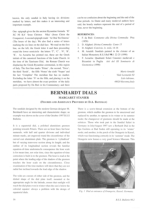
This article describes the distinctive equatorial sundials designed by modern German artist M. Bernhardt. These feature a polished aluminium gnomon pointing towards Polaris, and an hour scale calibrated for mean time, incorporating the equation-of-time correction within the gnomon's outline. Interchangeable gnomons allow for seasonal adjustments.
Dials: Equatorial, Dials: Heliochronometer, Dials: Unusual, Equation of Time, Sundial Design & Layout
June 1998
Page 18
Page 18
This article details the author's decades-long work in compiling extensive bibliographies on gnomonics, inspired by an earlier work on horology. It discusses the challenges of the project, including its scope and arrangement, and mentions collaboration with other researchers.
The BSS and Members
June 1998
Page 21
Page 21
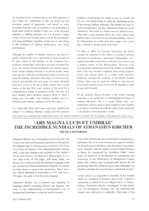
This article explores the extraordinary sundials documented in Athanasius Kircher's 17th-century masterpiece, Ars Magna Lucis et Umbrae. It highlights Kircher's unique integration of gnomonics with esoteric disciplines like astrology and alchemy, showcasing innovative dials that provided astronomical data, medical advice, and even produced sound and fire.
Dials: Unusual, Mathematics of Dialling, Sundial Design & Layout
June 1998
Page 26
Page 26
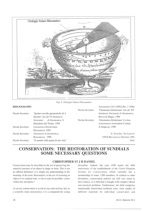
An article that defines conservation and restoration in the context of sundials and highlights the ethical and practical difficulties. It discusses the British Sundial Society's policy on the matter and the cautious approach of conservators.
Restoration projects
June 1998
Page 32
Page 32
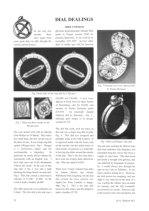
This article reports on the Scientific Instrument Fair, noting a number of dials that were for sale, including a slate dial with its original pedestal that sold for a high price, and various portable and snuff box dials.
June 1998
Page 33
Page 33
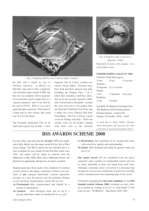
This announcement outlines the new categories for the BSS awards for sundials. It details the classes for professional, amateur, restoration, and junior dials, with an emphasis on the honour of the award itself.
Restoration projects, Sundial Design & Layout, The BSS and Members
June 1998
Page 34
Page 34
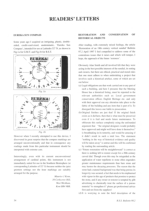
A collection of letters from members, including corrections to previous articles and descriptions of dials found or owned by members. Also two sides of the restoration argument are presented.
June 1998
Page 37
Page 37
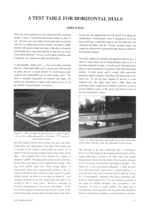
This article describes how to build a simple, portable test table for horizontal sundials using a photographic tripod. The table allows for fine adjustments to be made to test dials for different latitudes without needing to find a perfectly horizontal surface.
DIY Sundial Projects, Dialling Tools
June 1998
Page 38
Page 38
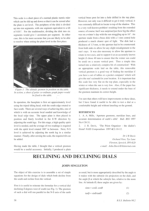
This article provides a straightforward set of equations for the design of sundials that simultaneously recline from the vertical and decline from the south. It revisits the formulas for vertical declining dials and demonstrates how these two types of tilts combine to derive effective values for both angle and declination.
Dials: Vertical, Mathematics of Dialling, Sundial Design & Layout
June 1998
Page 40
Page 40
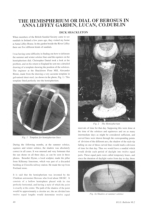
This article describes a hemispherical sundial, or 'hemispherium,' located in the author's garden, reputedly invented by Berosus around 300 BC. It details the successful process of delineating the solstice and equinox lines using a custom-made template and explains the dial's function in dividing daylight into 'temporary hours'.
Construction Projects, Dials: Hemispherical, Dials: Scaphe, Sundial Design & Layout
June 1998
Page 41
Page 41
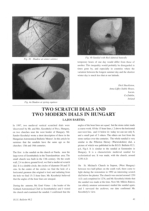
This article reports on the discovery of two medieval vertical scratched dials on churches in Narda and Sopron, Hungary, dating from the 13th and 14th centuries. It also features two recently constructed sundials on historical buildings in Szombathely and Pannonhalma, illustrating both ancient and contemporary gnomonic practices in Hungary.
Dials: Mass Dials, Dials: Vertical, Historical Dials
June 1998
Page 43
Page 43
This section announces the British Sundial Society's decision to modify the Bulletin's numbering system starting in 1999 to simplify references. It also provides an update on the availability and details of the 'International Bibliography of Gnomonics' compiled by C.K. Aked and N. Severino, which is offered on disk.
The BSS and Members
June 1998
Page 44
Page 44
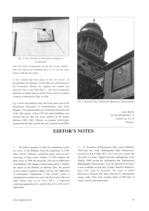
This article reviews an issue of the journal 'Compendium,' published by the North American Sundial Society (NASS). It discusses a large sundial at a Disney office in Florida and an archaeological find of a stone disc sundial in Israel.
Book Reviews
June 1998
Page 44
Page 44
This article reviews recent issues of Compendium, the journal of the North American Sundial Society (NASS). It covers diverse topics including a large architectural sundial for Disney, an archaeological stone disc from Qumram, a sundial exhibition by sculptor Robert Adzema, and an equatorial dial in Founders' Park, Illinois.
Book Reviews
June 1998
Page 44
Page 44
This review examines 'Making a clock-accurate Sundial customized to your location (for the Northern Hemisphere)' by Sam Muller. Aimed at educators and hobbyists, the booklet provides practical instructions for constructing simple sundials and explains basic concepts, although the reviewers note its lack of theoretical content and a bibliography.
Book Reviews
June 1998
Page 45
Page 45
This obituary commemorates Professor Philip Adams, a highly esteemed member of the British Sundial Society, who passed away on 1 November 1997. It highlights his significant intellectual and social contributions to the Society, including his engaging lectures and meticulously crafted models, and his role in organising a sundial tour.
The BSS and Members
June 1998
Page 46
Page 46
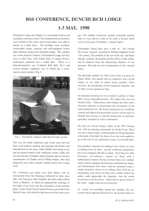
Summarises the BSS Conference held in Dunchurch Lodge. It mentions lectures on topics such as the origins of two manor house dials, Altitude Dials, and a tour of German dials.
The BSS and Members
June 1998
Page 49
Page 49
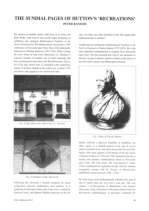
Reviews a section on sundials from Charles Hutton's 'Mathematical and Philosophical Dictionary'. It describes 41 separate problems related to dialling and mentions the author's recommended English works on gnomonics, including those by Emerson and Martin.
Mathematics of Dialling