- Home
- /
- Sundial Encyclopaedia
- /
- December 2001
December 2001
The articles link to the specific page in a PDF optimised for speed. If you want the whole issue, you can download it here, but the files from earlier years can be quite large.
December 2001
Page 135
Page 135
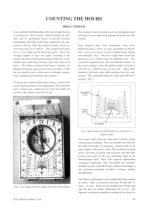
This article details ancient timekeeping systems, including Babylonian hours from sunrise, Italian hours from sunset, and the Arabs' midnight-start 24-hour day. It also explores Japanese unequal hours, divided into 12 'tokis', noting their abandonment in 1873 for international time. The evolution of numerals on sundials, from early European to Arabic and stylised forms, is also discussed.
Dials: Portable, Historical Dials, Sundial Design & Layout
December 2001
Page 138
Page 138
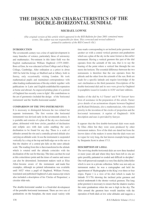
This article examines the double-horizontal sundial, a 17th-century invention by William Oughtred. It features two sets of graduations: one for an inclined polar gnomon and another for a central vertical gnomon, operating from altitude and azimuth. The article details its design, use for time, date, and solar altitude, and discusses its self-setting property and limitations due to orientation error.
Dials: Double Horizontal, Historical Dials, Mathematics of Dialling, Sundial Design & Layout
December 2001
Page 147
Page 147
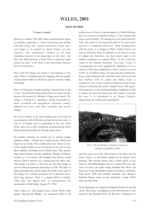
This article reports on the 2001 Wales Sundial Safari, detailing the examination of various sundials across the region. Highlights include a rare bridge sundial, historical church dials, a heliochronometer, and an ancient Celtic stele dial. The tour also featured a moon dial, various horizontal and vertical designs, and complex multi-component dials like the 1595 Marrington Hall example, showcasing Wales's diverse gnomonic heritage.
Dials: Unusual, Historical Dials, The BSS and Members
December 2001
Page 156
Page 156
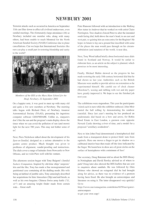
This report covers the well-attended BSS meeting at Newbury. Presentations included astronomy software, 'Spot-on-Sundial' development, and a 'Sundial Seekers Companion' kit. Updates were given on dial restoration. Exhibitions showcased diverse designs, including a rainbow dial, a hemispherical dial made from a bird feeder, and an electronic biscuit box sundial. Various other dials, a nocturnal, and calendars were also displayed.
Dials: Unusual, Restoration projects, Sundial Design & Layout, The BSS and Members
December 2001
Page 158
Page 158
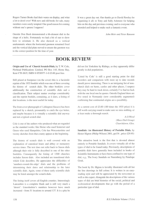
This section reviews two books. The first, a reprint of T.W. Cole's 'Origin and Use of Church Scratch-Dials,' covers mass dials and their history. The second reviews Hester Higton's 'Sundials: An Illustrated History of Portable Dials,' praised for its lavish illustrations and historical context of various portable dial types. While generally well-received, factual errors regarding dial functionality and minor layout issues are noted in Higton's work.
Book Reviews, Dials: Mass Dials, Dials: Portable, Historical Dials
December 2001
Page 160
Page 160
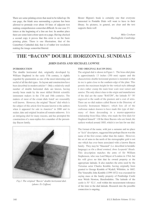
This article investigates the 'Bacon' double horizontal dial, an intriguing 17th or early 18th-century brass instrument of unknown origin. Its unique Equation of Time table and stereographic grid are detailed. Analysis suggests it predates 1752 and aligns with Tompion's calculations. A modern replica, crafted using CAD and photolithography, is also described, featuring updated EoT values and modern heraldry, signed by its maker.
Construction Projects, Dials: Double Horizontal, Equation of Time, Historical Dials
December 2001
Page 166
Page 166
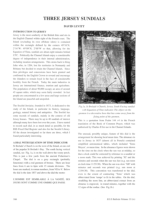
This article details three interesting sundials on Jersey. St Brelade's Church features an 1837 south-facing vertical dial with a unique Equation of Time indicator. A circa 1825 vertical declining dial by Elias le Gros in St Helier's Royal Square is notable for its history of obliteration and restoration. The third is a possible medieval Mass Dial, a carved stone found partially buried, suggesting its age and raising questions about its original function.
Dials: Mass Dials, Dials: Vertical, Equation of Time, Historical Dials
December 2001
Page 169
Page 169
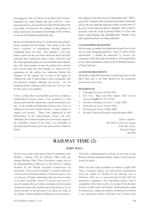
This article, the second part on railway-related sundials, describes two identical horizontal sundials commissioned in 1992. They commemorate the centenary of the Rochers de Naye mountain railway in Switzerland. These bronze dials feature a cogwheel design, an Equation of Time graph, and separate hour lines for summer and winter. The author notes that electric clocks are still preferred for official timekeeping, and clarifies the one-hour time zone difference between UK and Switzerland.
Dials: Horizontal, Equation of Time, Historical Dials
December 2001
Page 171
Page 171
This article presents a 17th-century recipe for a strong mortar, suitable for creating a flat surface for a vertical sundial. From Richard Neve's 'The City and Country Purchaser, and Builder's Dictionary,' it uses lime and sand with linseed oil or skimmed milk. A tougher version includes 'boring/gun dust.' The author notes fast-drying and cracking issues, suggesting alternative preparations, and contextualizes Neve's architectural dictionary.
Dials: Vertical, Historical Dials