- Home
- /
- Sundial Encyclopaedia
- /
- Fiona Vincent
Fiona Vincent
September 2019
Page 20
Page 20
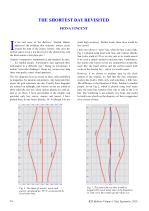
This follow-up article explains, using an astronomical perspective, why the earliest sunset and latest sunrise do not coincide exactly with the shortest day. The discrepancy arises because the Equation of Time causes the 'noon' line, measured by local mean time, to wander relative to the 12h line, shifting the symmetry of the sunrise and sunset curves.
Equation of Time, How Sundials Work, Mathematics of Dialling
September 2013
Page 15
Page 15
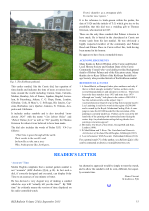
Response regarding the accuracy of garden sundials, stating that a correctly designed dial can display Solar Time to within one minute. The author argues that sundials should be trusted to tell their own accurate time, rather than attempting to match modern radio-controlled watches.
Equation of Time, How Sundials Work
March 2008
Page 26
Page 26
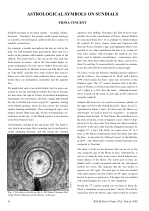
Discusses the historical use and modern relevance of astrological symbols on sundials to indicate dates like solstices and equinoxes, despite astronomical shifts like precession. It examines symbols for Zodiacal signs and those used on lunar volvelles, such as sextile, square, and trine, explaining their relation to moon phases and elongation.
Historical Dials, How Sundials Work, Sundial Design & Layout
March 2007
Page 14
Page 14
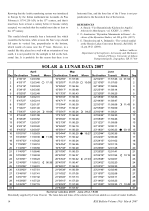
This entry provides tabular data for solar and lunar events for the year 2007. It includes details such as declination, and transit times for various months, and specifically mentions the Summer Solstice date and time. The data was kindly supplied by Fiona Vincent and includes lunar data and solstice times based on reader requests.
June 2007
Page 95
Page 95
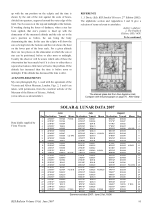
This entry provides a table of solar and lunar data for 2007, including daily declination and transit times, as well as moon phase information for June, July, and August.
How Sundials Work
September 2007
Page 134
Page 134
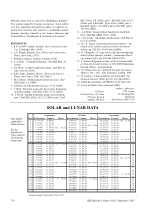
This entry provides a table of solar and lunar data for September, October, and November. It includes daily values for declination and transit times, as well as lunar quarter and new/full moon phases. This data is useful for sundial calibration and understanding celestial movements.
Equation of Time, How Sundials Work
September 2005
Page 106
Page 106
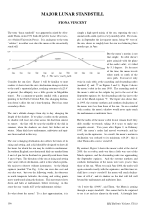
The author describes the term 'lunar standstill' coined by Alexander Thom, as analogous to a solstice. The article explains how the moon's declination affects its rising and setting points and how this affects the reading of 'moon time' from a sundial.
Dials: Nocturnals