- Home
- /
- Sundial Encyclopaedia
- /
- Equation of Time
Equation of Time
March 2023
Page 2
Page 2

Describes the process of designing and constructing a large 90 cm square vertical declining dial for a house conservatory in Somerset. The project involved measuring the wall's 74.3° westerly declination, incorporating an Equation of Time plaque, and designing a unique lateral sliding system to avoid shadows cast by the glass roof rafters.
Construction Projects, Dials: Vertical, Equation of Time, Sundial Design & Layout
March 2023
Page 22
Page 22
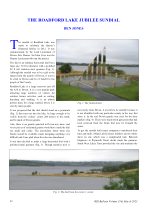
Details the construction of the large 30-foot diameter horizontal dial with a 20-foot stainless-steel gnomon, created for the Queen’s Diamond Jubilee. To ensure public utility, the hour lines were designed to allow for longitude, making the dial read close to clock time, despite the resulting asymmetry.
Construction Projects, Dials: Horizontal, Equation of Time, Sundial Design & Layout
March 2023
Page 25
Page 25
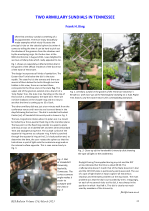
Compares two armillary dials seen during a NASS conference tour. The first, at the Governor’s Residence, is exquisite and highly symbolic. The second, at Vanderbilt University, uses a unique method where a spot of light shines through the equatorial ring onto an analemma plate to indicate the time.
Dials: Armillary Sphere, Dials: Equatorial, Dials: Unusual, Equation of Time
June 2023
Page 16
Page 16
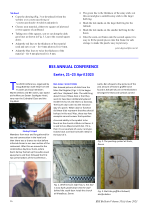
Comprehensive report on the BSS Exeter Conference talks, including subjects such as scratch dials, the Taormina Heliochronometer, the Queens’ Dial, the Equation of Time, Francis Line’s pyramid dial, and polyhedral dials (Somerville Memorial Lecture). The report also covers the social events, including a garden visit and the Gala Dinner.
Dials: Multi Faced, Equation of Time, Historical Dials, The BSS and Members
March 2022
Page 30
Page 30
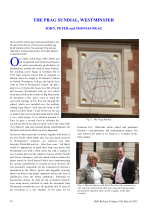
An article commemorating the creation and unveiling (2007) of the sundial at Westminster School, dedicated to former teacher Adolf Prag and his wife. Designed by Harriet James, the dial is based on Newton's ellipse, includes an Equation of Time graph, and features golden hemispherical hollows referencing scaphe dials.
Dials: Vertical, Sundial Design & Layout, Construction Projects, Equation of Time
March 2022
Page 34
Page 34
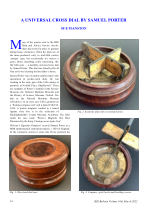
Description of a unique portable, universal cross dial made by Samuel Porter, a London mathematical instrument maker (c. 1824). The dial, found in a clearance, features a pivoted cross for latitude setting, a 16-point compass, spirit levels, and an Equation of Time table printed inside the lid.
Dialling Tools, Dials: Portable, Equation of Time, Historical Dials
June 2022
Page 33
Page 33
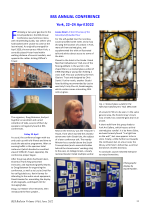
A report detailing the proceedings of the BSS Annual Conference held in York. It summarises various talks covering topics like displaying the Equation of Time, the historical San Petronio Meridiana, John Goodricke’s astronomy, sundial design using 3D point clouds, and the changing professional trades of sundial makers in the British Isles.
Equation of Time, Historical Dials, Sundial Design & Layout, The BSS and Members
September 2022
Page 2
Page 2
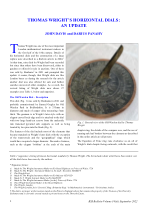
Updates the known catalogue of 18th-century mathematical instrument maker Thomas Wright’s horizontal dials, increasing the count to 27. Provides details, metallurgy, and provenance for recently examined examples, including the Old Warden dial, the Wrexham dial, and the Lisbon College dial (now at Ushaw College).
Dials: Horizontal, Equation of Time, Historical Dials, Restoration projects
December 2022
Page 1
Page 1
Discussion of the death of HM the Queen, the Newbury Meeting talks, commemorative sundials, and introduces Werner Riegler's lead article on adapting tide prediction machines to calculate the Equation of Time.
Equation of Time, The BSS and Members
December 2022
Page 2
Page 2
Discusses how mechanical tide prediction machines, used from the 1870s to the 1960s, can be adapted to mechanically generate the Equation of Time. This programmable mechanism can be applied to heliochronometers or mechanical clocks, allowing for adjustment based on slow changes in the EoT.
Mathematics of Dialling, Equation of Time, Dials: Heliochronometer
December 2022
Page 16
Page 16
Research into the 18th-century Welsh dial maker, Meredith Hughes, a land surveyor and scientist. Describes his five known dials, including two complex ones incorporating the Equation of Time and geographical features, possibly outsourced for engraving.
Dials: Horizontal, Dials: Unusual, Equation of Time, Historical Dials
December 2022
Page 28
Page 28
Describes a Python program used to calculate weekly or daily Equation of Time values and insert them into a digital calendar. This provides an accessible reference for checking sundial accuracy and noting when the EoT is zero.
DIY Sundial Projects, Equation of Time
March 2021
Page 8
Page 8
Description of a model sundial inspired by the Meridiana Tetracycla in Rome. It features four niches with analemmas, designed to read GMT throughout the year using corrections for the Equation of Time and longitudinal displacement. The model stands 62 cm high and is made of maple, birch veneer, and bronze.
Construction Projects, Dials: Unusual, Equation of Time, Sundial Design & Layout
March 2021
Page 17
Page 17
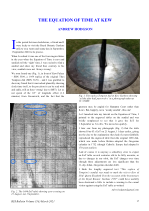
The author discusses finding a replica of a 1690 Thos Tompion dial at Kew Gardens. He notes that the engraved Equation of Time table is inaccurate for modern dates because it faithfully reproduces the original pre-Gregorian calendar data, leading to an 11-day shift in the zero crossing date.
Equation of Time, Historical Dials
September 2021
Page 43
Page 43
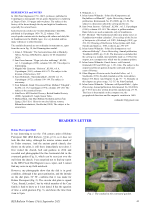
A letter describing a horizontal sundial found in the courtyard garden of Holme Pierrepont Hall. The dial plate is signed "Cary, Strand, London," shows the latitude 52° 58ʹ, and includes the equation of time. The author notes the challenge in dating the dial precisely due to the lack of a date and multiple Cary family makers.
Dials: Horizontal, Equation of Time, Historical Dials
December 2021
Page 20
Page 20
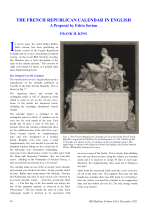
Outlines Fabio Savian’s proposal for an English edition of the French Republican Calendar, providing solar declination and EoT values. Explains the calendar’s structure (décades, 30-day months) and its philosophical anti-religious origins, evidenced by the calendar's iconography, including a discarded sundial and using names like 'Dog' for Christmas Day.
Equation of Time, Historical Dials
March 2020
Page 14
Page 14
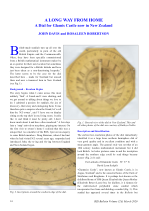
Investigates a brass northern hemisphere dial found in New Zealand, identified by its inscription as made for Glamis Castle, Scotland (Latitude 56° 37′ N) and signed 'David Lyon Sculpsit'. Detailed analysis of the Coat of Arms and Equation of Time scale dates the dial to between 1710 and 1752, likely commissioned around the 1725 marriage of the 6th Earl of Strathmore, Charles Lyon, to Susan Cochrane. The dial was never installed at Glamis.
Dials: Horizontal, Equation of Time, Historical Dials, Mottoes
March 2020
Page 33
Page 33
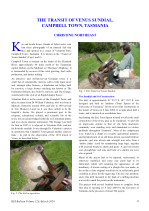
Describes an unusual agricultural-themed sundial designed and built by Anthony Sprent in 2004 to commemorate Campbell Town's role in observing the 1874 transit of Venus. The device, made mostly from old farm machinery parts, is a heliochronometer that uses a nodus (aperture) to project light onto an engraved analemma on a bronze plough disc.
Construction Projects, Dials: Heliochronometer, Dials: Unusual, Equation of Time
December 2020
Page 16
Page 16
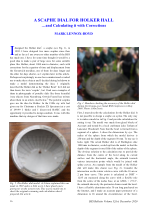
The author details the design and calculation of the Holker Hall scaphe dial (a spherical bowl dial). He explains the trigonometric formulae, derived using his 'y' formula, necessary for plotting points on the curved surface using distance and azimuth. He also proposes making a pair of large scaphe dials incorporating corrections for the Equation of Time (EoT) and longitude displacement.
Construction Projects, Dials: Scaphe, Equation of Time, Mathematics of Dialling
December 2020
Page 22
Page 22
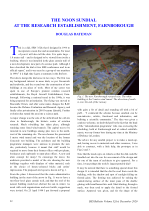
Description of a large aperture nodus noon dial designed by the author and installed in a glass curtain wall at the Farnborough research site in 1996. The 1.8-metre tall dial declines 13.5° west of south and incorporates a gilded analemma calculated for 1999, which allows it to show both the date and mean time noon.
Construction Projects, Dials: Noon Lines, Dials: Vertical, Equation of Time
December 2020
Page 32
Page 32
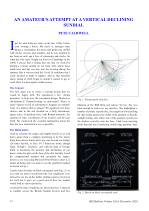
The author details his DIY project to design and install a polished slate vertical declining sundial on his house wall during the 2020 lockdown. The final design, featuring Roman numerals, the Equation of Time, and a musical 'treble clef' gnomon, was achieved through self-calculation (graphical method) and professional craftsmanship for cutting and fixing.
Construction Projects, DIY Sundial Projects, Dials: Vertical, Equation of Time
December 2020
Page 38
Page 38
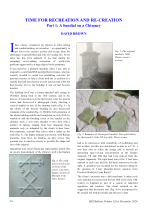
The author describes helping a client re-create a vertical sundial on a 16th-century Wiltshire mill cottage chimney stack, which had been lost around 1900. The design incorporated findings from original fragments, including a unique concatenation of Roman numerals. A separate slate plaque with an Equation of Time correction, featuring a millstone image, was also added.
Construction Projects, Dials: Vertical, Equation of Time, Restoration projects
March 2019
Page 26
Page 26
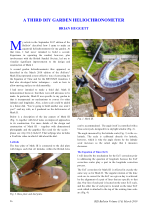
Details the creation of 'Mark III', an improved, portable equatorial heliochronometer. Key features include mechanisms for latitude adjustment (co-latitude scale), longitude correction (rotating the outer EoT scale), and a design for the date scale that minimises readability issues by allowing it to move in an arc. It uses Kevlar string for the gnomon and PTFE tape for smooth movement.
DIY Sundial Projects, Dials: Heliochronometer, Equation of Time, Sundial Design & Layout
June 2019
Page 17
Page 17
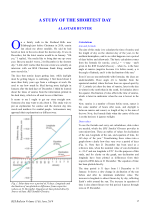
Explains why the latest sunrise (measured in mean time) occurs after the winter solstice (the shortest day). This phenomenon results from the fast-changing value of the Equation of Time near the solstice, causing a nominal delay in sunrise and making evenings appear lighter before the shortest day.
Equation of Time, Mathematics of Dialling
September 2019
Page 20
Page 20
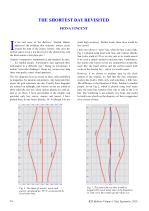
This follow-up article explains, using an astronomical perspective, why the earliest sunset and latest sunrise do not coincide exactly with the shortest day. The discrepancy arises because the Equation of Time causes the 'noon' line, measured by local mean time, to wander relative to the 12h line, shifting the symmetry of the sunrise and sunset curves.
Equation of Time, How Sundials Work, Mathematics of Dialling
September 2019
Page 21
Page 21
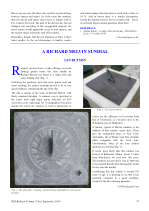
A description of a recently recovered slate sundial by Richard Melvin, typical of his finely engraved work. The dial includes an EoT correction scale, a compass rose, 70 geographical locations, and four smaller corner dials indicating times in New York, Alexandria, Isle of Borneo, and New Zealand.
Dials: Unusual, Equation of Time, Historical Dials
September 2019
Page 33
Page 33
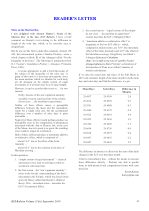
This letter comments on the study of the shortest day, noting that Claudius Ptolemy wrote about the 'Inequality in the Days' around 150 AD in "The Almagest". Ptolemy correctly identified the two causes—the Solar Anomaly (Eccentricity Effect) and the variation in Meridian crossing (Obliquity Effect)—demonstrating extraordinary precision in calculating the Equation of Time effects.
How Sundials Work, Mathematics of Dialling, Equation of Time
December 2019
Page 38
Page 38
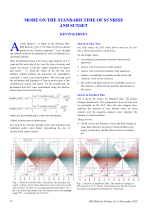
An expansion on the study of sunrise and sunset times, providing systematic calculations across all latitudes. Using a two-step iterative calculation, the author compares the symmetrical results found in Solar Time against the asymmetrical results in Standard Time, demonstrating how the Equation of Time (EoT) dramatically perturbs the earliest and latest sunrise/sunset days across various latitudes.
Equation of Time, How Sundials Work, Mathematics of Dialling
March 2018
Page 28
Page 28
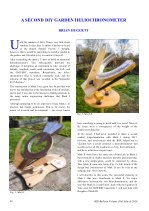
Details the creation of a second, improved equatorial heliochronometer, 'Mark II'. This design is smaller and more portable than the first model. It incorporates a precise rotation mechanism (belt and pulley system) and an Equation of Time correction method based on the Pilkington Sol Horometer, which also accommodates automatic adjustment for GMT/BST transitions.
DIY Sundial Projects, Dials: Equatorial, Dials: Heliochronometer, Equation of Time
March 2017
Page 24
Page 24
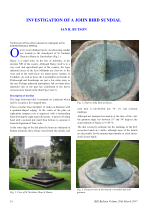
Investigation of a large, corroded horizontal dial by precision instrument maker John Bird (c. 1709–1776) at Haxey, Lincolnshire. By analyzing the division markers, the Equation of Time scale was determined to be applicable to the post-1752 Gregorian calendar era. The dial is likely associated with Dr William Cotton, vicar from 1754 to 1762.
Dials: Horizontal, Equation of Time, Historical Dials
June 2017
Page 8
Page 8
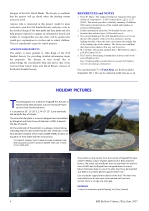
This entry features a photograph of a colourful mosaic sundial located on Flagstaff Hill, Russell, in New Zealand. Designed in 1990, it commemorates the centenary of the New Zealand Institute of Surveyors and bears an Equation of Time table.
Dials: Horizontal, Equation of Time, Historical Dials
September 2017
Page 41
Page 41
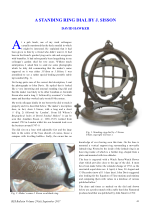
This reports on a rare portable standing ring dial by 'J. Sisson, London', likely Jonathan Sisson (c. 1690–1747). The high-quality brass dial includes latitude and hour rings, alidades, and a Watch Faster/Slower chart on the base. The chart's data matches John Flamsteed's 1702 tables, suggesting the dial was made before the 1730s.
Dials: Portable, Dials: Unusual, Equation of Time, Historical Dials
December 2017
Page 21
Page 21
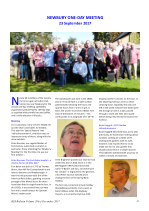
A detailed report on the BSS one-day meeting, summarising talks on topics including the Fort Belan sundial, DIY heliochronometers, multi-centre delineation, promotion via social media, the astronomical Culpeper dial, the Gnomonical Universal Nomograph (GUN), and the mechanical generation of the Equation of Time using equation clocks.
Dials: Heliochronometer, Equation of Time, Historical Dials, The BSS and Members
December 2017
Page 34
Page 34
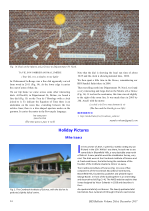
Presents two unusual sundials seen in Bloomfield Hills, USA: an equatorial dial of cast bronze at the Cranbrook Institute of Science with an analemma; and a horizontal dial at Cranbrook House designed in the shape of a swan, where the tail serves as the gnomon.
Dials: Equatorial, Dials: Horizontal, Dials: Unusual, Equation of Time
March 2016
Page 13
Page 13
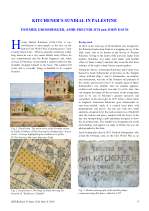
Details the sophisticated east–west sundial presented by Horatio Herbert Kitchener in Haifa in 1875 to his host, Jacob Schumacher. The dial uses a vertical brass plate with apertures to cast light spots onto a bottom plate marked with a split analemma to show local mean time.
Dials: Noon Lines, Equation of Time, Historical Dials, Sundial Design & Layout
March 2016
Page 20
Page 20
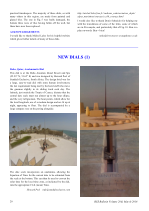
Description of a large, modern, analemmatic dial designed by Howard Peel for the Doha Anantara Island Resort and Spa. The dial's design requires the hotel staff to move the gnomon daily and incorporates an analemma scale for estimating the Equation of Time.
Dials: Analemmatic, Equation of Time, Sundial Design & Layout
March 2016
Page 26
Page 26
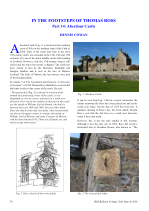
This article traces the historical sundials documented by Thomas Ross at Aberdour Castle. It describes a vertical dial (1635), a horizontal dial, and a multi-faceted dial moved from Castle Wigg, noting that the latter's Equation of Time table uses the Julian calendar appropriate for the early 18th century.
Dials: Horizontal, Dials: Multi Faced, Dials: Vertical, Equation of Time, Historical Dials
June 2016
Page 13
Page 13
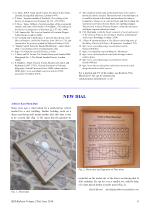
Description of a new direct east-facing moon dial commissioned for a client. The dial's gnomon is modelled on the nodus star of the Albi cathedral dial. It can function as a sundial using a chart located nearby, which also provides Equation of Time data.
Construction Projects, Dials: Nocturnals, Dials: Vertical, Equation of Time
March 2014
Page 10
Page 10
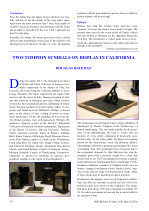
This report discusses two of Thomas Tompion’s rare horizontal sundials displayed at a symposium in California. Only ten Tompion dials are recorded; these included a square dial (c. 1705, latitude 50° 54') and the large circular former Wrest Park dial (c. 1700, adjustable for two latitudes).
Dials: Horizontal, Equation of Time, Historical Dials
June 2014
Page 48
Page 48
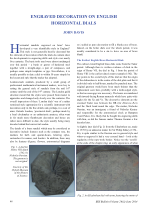
Traces the evolution of decorative styles on English horizontal brass dials from the Tudor era through to the 19th century, contrasting the restrained 'London pattern' with provincial styles. It details decorative elements such as pierced gnomons, the use of oakleaf borders, and the introduction of the Equation of Time scales.
Dials: Horizontal, Equation of Time, Historical Dials, Sundial Design & Layout
December 2014
Page 11
Page 11
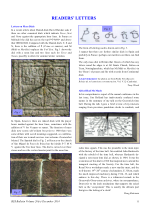
Tony Wood discusses canonical dials found in France and Spain that explicitly mark the prayer hours of Prime, Terce, Midi, Nones, and Vespers. Doug Bateman clarifies an error in a previous conference report, confirming that E. J. Dent made the improved machinery for the Greenwich time ball, while John Hardcastle designed a rare mean time dial.
Dials: Mass Dials, Equation of Time, Historical Dials
December 2014
Page 24
Page 24
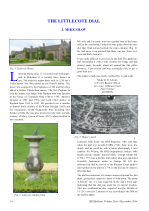
The discovery and dating of a horizontal sundial at Littlecote House, made by George Adams Snr, instrument maker to George III. Analysis of the maker’s mark and the 'Æquation of Natural Days' table (which uses pre-1752 Julian calendar dates) helped date the dial to the 14-year period between 1738 and 1752.
Dials: Horizontal, Equation of Time, Historical Dials
December 2014
Page 27
Page 27
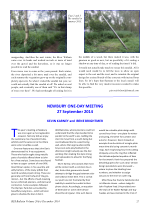
A summary of the Newbury BSS meeting, covering diverse topics including David Brown's talk on commission pitfalls and Kevin Karney's push for mean time dials incorporating the Equation of Time. Frank King reported on historical dials at the Bodleian Library. Attendees viewed the Druid helical mean-time dial at Bayford House Care Home.
Equation of Time, Historical Dials, Sundial Design & Layout, The BSS and Members
September 2013
Page 13
Page 13
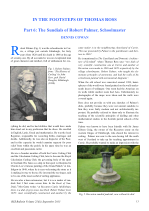
A biography of Robert Palmer (1828–1868), schoolmaster and astronomer, and a survey of his known sundials. Details are given of three scientifically constructed dials: one lost from Riccarton Castle, the detailed Currie dial (1836) with noon markings for global locations, and the Kirkbean dial (1826) containing equation of time details.
Dials: Horizontal, Dials: Unusual, Equation of Time, Historical Dials
September 2013
Page 15
Page 15
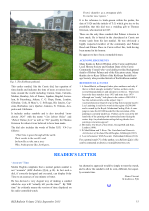
Response regarding the accuracy of garden sundials, stating that a correctly designed dial can display Solar Time to within one minute. The author argues that sundials should be trusted to tell their own accurate time, rather than attempting to match modern radio-controlled watches.
Equation of Time, How Sundials Work
September 2013
Page 29
Page 29
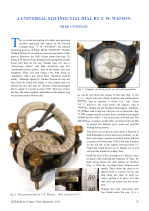
Description of a nice precision portable equatorial dial, circa 1880, by T.W. Watson. It is designed for use in both hemispheres and includes specialized chapter ring and compass card layouts, featuring both an Equation of Time chart and a separate map of Isogonic Lines for 1877 for precise time setting.
Dialling Tools, Dials: Equatorial, Dials: Portable, Equation of Time
December 2013
Page 8
Page 8
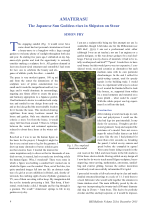
Describes the design and construction of a unique sculpture/sundial combining the figure of the Japanese Sun Goddess, Amaterasu, using her raised leg as the gnomon. The author details the materials used (cement/bronze effect, gold leaf), challenges faced in construction, and the astronomical details included on the plinth.
Construction Projects, DIY Sundial Projects, Dials: Unusual, Equation of Time
December 2013
Page 50
Page 50
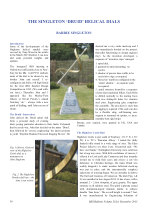
Provides personal insights and updates on the Singleton helical sundial, nicknamed ‘Druid’ (Daytime Readout Universal Imaging Device). It details the patented innovations, including the spiral dial structure and 'three bar' numerals, culminating in the fully funded installation at Highclere Castle in 2013.
Construction Projects, Dials: Unusual, Equation of Time, Sundial Design & Layout
June 2012
Page 17
Page 17
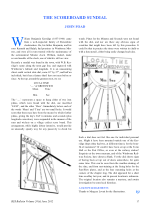
This article describes a unique direct south vertical slate sundial found in Wimborne Minster, made by clockmaker W.B. Kerridge. Its distinguishing feature is a system for displaying the Equation of Time and longitude correction using interchangeable 'FAST'/'SLOW' iron plates and possibly minute/second plates, resembling a cricket scoreboard, for public use.
Dials: Unusual, Dials: Vertical, Equation of Time, Historical Dials
June 2012
Page 20
Page 20
This article discusses the role of sundials in the GCSE Astronomy qualification as an introduction to 'sun time' versus 'clock time', the Equation of Time, and longitude effects. It highlights two popular Controlled Assessment tasks: using a shadow stick to determine local noon and longitude, and comparing sundial time with local mean time to assess accuracy.
How Sundials Work, Equation of Time
September 2012
Page 16
Page 16
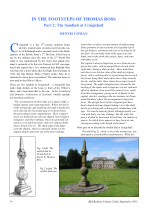
This article details two sundials at Craigiehall: a 4-metre high obelisk dial, restored in 1965 after being found in fragments, and a horizontal brass dial by John England, dating from 1702-1714. The obelisk is unique due to an 18th-century globe base, while the horizontal dial features an Equation of Time table and armorial devices.
Dials: Multi Faced, Equation of Time, Historical Dials, Restoration projects
September 2012
Page 33
Page 33
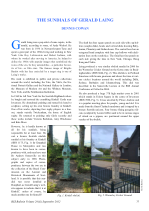
This article highlights the sundial works of pop artist Gerald Laing, known for at least four large sculptural pieces. These include two Scottish obelisk sundials, a 37ft market cross in Inverness, and "Axis Mundi" in Edinburgh, often featuring complex gnomonics and graphical representations of the Equation of Time.
Dials: Multi Faced, Sundial Design & Layout, Equation of Time, Dials: Scaphe
September 2012
Page 46
Page 46
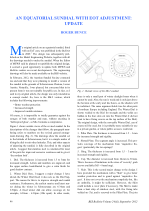
This article provides an update on an equatorial sundial design with Equation of Time adjustment, originally published in 2009. The Mk.2 version incorporates improvements for public use, focusing on weather protection, increased strength, and enhanced vandal resistance, developed in response to the Austrian Sundial Society's plans to install a version.
Dials: Equatorial, Construction Projects, Equation of Time
December 2012
Page 30
Page 30
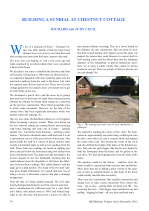
This article details the construction of a large garden sundial at Chestnut Cottage, Essex, by Richard and Judy Cecil. It covers civil engineering aspects, from site surveys and drainage to concrete work, and the precise setting out of hour lines and the stainless steel gnomon, incorporating a polar version of the equation of time.
Sundial Design & Layout, Construction Projects, Equation of Time, DIY Sundial Projects
March 2011
Page 16
Page 16
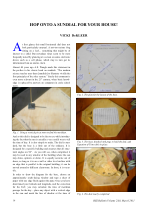
This article provides instructions for making a simple, fun, and versatile horizontal sundial for educational purposes, particularly for young people. It explains how to determine the meridian line, layout the base, and incorporate an Equation of Time table for accurate civil time.
DIY Sundial Projects, Dials: Horizontal, Equation of Time, Sundial Design & Layout
March 2011
Page 18
Page 18
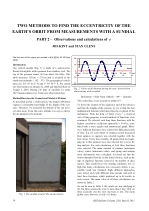
This second part details observations and calculations to determine Earth's orbit eccentricity using a sundial. It applies Ptolemy's geometrical model and an algebraic approach based on the Equation of Time, finding surprisingly accurate results despite the sensitivity of initial conditions.
Equation of Time, How Sundials Work, Mathematics of Dialling
March 2011
Page 32
Page 32
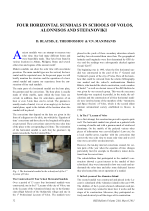
This article details the construction and placement of four horizontal sundials in Greek schoolyards between 1995 and 2008. It highlights student involvement, the evolution of precision in Equation of Time corrections, and the use of modern technology in their design and carving.
Dials: Horizontal, Construction Projects, Equation of Time, DIY Sundial Projects
June 2011
Page 26
Page 26
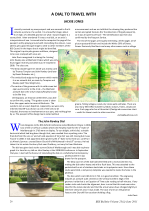
This article details the rediscovery and reinstallation of a lost John Rowley azimuth and equation of time dial from Blenheim Palace. It describes its unique features, including the deep double-ogee rim and specific gnomon design, and its historical significance.
Dials: Unusual, Equation of Time, Historical Dials, Restoration projects
September 2011
Page 23
Page 23
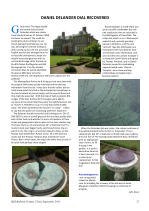
This report details the recovery of a stolen large double horizontal dial by Daniel Delander from Stanford Hall, thanks to Polish dialling enthusiast Maciej Lose. The dial, catalogued as DH-17, SRN 3607, is a high-quality instrument with Equation of Time scales and geographical place names. The article also mentions Delander's apprenticeship under Thomas Tompion, suggesting close working relationships between notable clockmakers.
Equation of Time, Historical Dials, Dials: Double Horizontal
December 2011
Page 16
Page 16
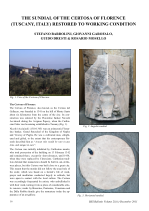
This article details the restoration of a pinhole sundial at the Certosa of Florence. The meridian line served as a calendar and true local noon marker. Investigations revealed inconsistencies, leading to the conclusion that the dial correctly determined the spring equinox, vital for calculating Easter, reflecting its religious institution setting. Historical interventions, possibly by astronomer G.B. Donati, are also discussed.
Dials: Noon Lines, Equation of Time, Historical Dials, Restoration projects
December 2011
Page 42
Page 42
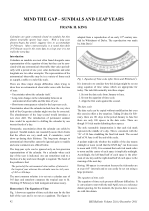
This article addresses the difficulties of accommodating leap years on sundial calendars, particularly when showing the equation of time or solar declination. It explains how to design scales for precise readings despite the difference between tropical and civil years, and discusses the historical debate around which day (24th or 29th February) is the "extra" leap day. Practical design solutions are proposed.
Equation of Time, How Sundials Work, Mathematics of Dialling, Sundial Design & Layout
March 2010
Page 12
Page 12
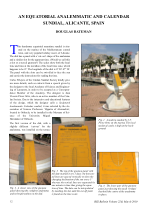
Describes a modern, equatorial meantime sundial on the marina in Alicante, Spain, designed by Juan Vicente Pérez Ortiz. The dial features a 'cut-out' analemma shape and a slot for apparent time, and has scales for both local and time zone time.
Dials: Analemmatic, Dials: Equatorial, Equation of Time
March 2010
Page 23
Page 23
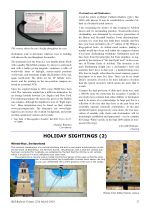
Features a vertical declining dial combined with a noon mark analemma on a church tower in Winterthur, Switzerland. The vertical dial is corrected for longitude, and the analemma is colour-coded for the two halves of the year.
Dials: Noon Lines, Dials: Vertical, Equation of Time
June 2010
Page 7
Page 7
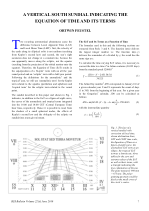
This paper describes a vertical sundial designed to indicate the Equation of Time (EoT) as a figure-of-eight curve, along with its anomalistic and tropical terms. It provides the mathematical formulae for calculating these values and their graphical representations as functions of time and the sun's declination.
Dials: Vertical, Mathematics of Dialling, Construction Projects, Equation of Time
September 2010
Page 18
Page 18
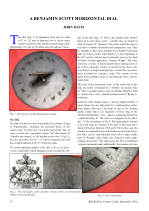
This article describes a small horizontal dial by Benjamin Scott, believed to have been made for Lochnaw Castle, Scotland. It features transversals for minute resolution, an Equation of Time ring, and specific gnomon supporters, linking Scott to John Rowley and discussing its provenance.
Dials: Horizontal, Equation of Time, Historical Dials
September 2010
Page 32
Page 32
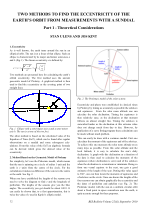
This article presents two theoretical methods to calculate the Earth's orbital eccentricity using sundial measurements. The first method uses the Ptolemaic geocentric model and season lengths; the second derives eccentricity from the Equation of Time by separating the part due to obliquity from the total.
Equation of Time, How Sundials Work, Mathematics of Dialling
December 2010
Page 26
Page 26
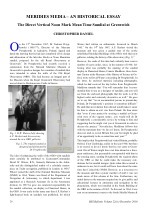
This historical essay details the Meridies Media sundial designed by Dr Tadeusz Przypkowski for the Old Royal Observatory at Greenwich in 1967. It describes the dial's function using an analemma to indicate standard mean time, true noon, and date. The article recounts the author's involvement in its installation, the initial design error, and the eventual reconstruction of the wooden dial in 1969, which remained until 1991.
Dials: Noon Lines, Equation of Time, Historical Dials, Restoration projects
December 2010
Page 44
Page 44
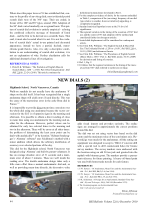
This article describes a walk-on analemmatic sundial designed for Highlands School in North Vancouver, Canada, using 'Alemma' software. It features a double analemma design to provide direct mean time with minimal error, accommodating the equation of time correction. Parent volunteers built the dial, using plywood jigs and bronze survey markers for permanent reference.
Construction Projects, Dials: Analemmatic, Equation of Time, Sundial Design & Layout
March 2009
Page 31
Page 31
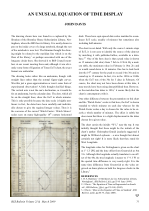
This article describes a unique Equation of Time (EoT) chart found in Nottingham, featuring straight lines for EoT values in whole minutes plotted against a non-linear calendar date axis. Dated possibly to the 1830s or 1840s, it differs from typical "Watch Faster / Watch Slower" scales.
Mathematics of Dialling, Equation of Time, Historical Dials
March 2009
Page 38
Page 38
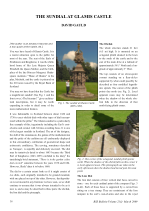
This article describes the magnificent 21-foot high Glamis Castle sundial in Scotland, tentatively dated around 1683. It is an elaborate obelisk dial featuring 84 time-recording faces, lion dials for cardinal points, and a complex \pineapple\ (stellar rhombicuboctahedron) with numerous declining and reclining faces. The article also discusses its Equation of Time inscription and possible mathematical contributions by James Gregory.
Dials: Multi Faced, Mathematics of Dialling, Sundial Design & Layout, Equation of Time, Historical Dials
June 2009
Page 24
Page 24
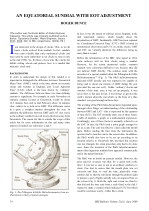
Details the design and construction of an equatorial sundial that directly indicates clock time (UTC). It incorporates a mechanical cam to automatically apply the Equation of Time correction, and includes adjustments for latitude and longitude. An appendix explains how to design the cam.
Construction Projects, Dials: Equatorial, Equation of Time, Sundial Design & Layout
September 2009
Page 26
Page 26
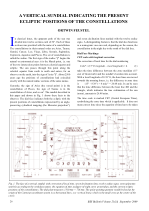
Describes the design and markings of a complex vertical sundial. In addition to time, the dial indicates the current ecliptic positions of the constellations using a Mercator projection. It also features longitude correction, an Equation of Time curve, declination lines, and functions as a nomogram for identifying constellations visible at night.
Dials: Vertical, Equation of Time, Mathematics of Dialling, Sundial Design & Layout
September 2009
Page 46
Page 46
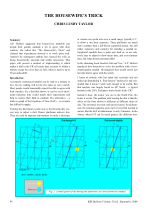
Re-evaluates A.P. Herbert's suggestion of turning a horizontal sundial to make it agree with mean time. While previously dismissed as inaccurate, this article presents a theoretical analysis and a practical implementation showing that, for UK latitudes, the 'trick' can keep the dial accurate to within a minute for most of the year.
Dials: Horizontal, Equation of Time, How Sundials Work, Mathematics of Dialling
December 2009
Page 9
Page 9
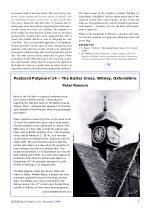
This piece analyses a vintage postcard of the Butter Cross in Witney. By comparing the time shown on the clock with the local solar time on the sundial, and accounting for British Summer Time and the equation of time, the author deduces the exact date the photograph was taken.
Equation of Time, Historical Dials, The BSS and Members
December 2009
Page 28
Page 28
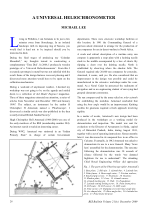
Details the design and construction of a modern, portable heliochronometer. The instrument, inspired by H.C. Armstead's 'Phoeboscope', uses a spot of light on an analemma to provide a numerical time readout. It can be adjusted for latitude, longitude, the equation of time, and summer time.
Construction Projects, Dials: Heliochronometer, Equation of Time
March 2008
Page 2
Page 2
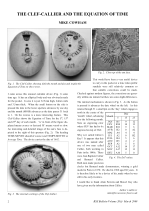
Describes an unusual 1842 pocket calendar device called the Clef-Callier, named after one of two Parisian clockmakers, which shows the Equation of Time for the 5th, 15th, and 25th day of each month. It also displays the month and date, with corrections generally within one minute of modern figures.
Dials: Portable, Equation of Time
March 2008
Page 43
Page 43
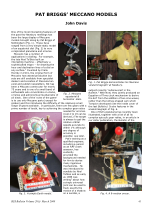
Showcases Pat Briggs' Meccano models, ranging from simple equatorial dials to complex planetaria and astronomical clocks. It highlights his ingenious mechanisms, including a universal joint for shadow tracking, an Equation of Time clock, and a 'Meccano Analemmagraph' for drawing the analemma, using cunningly-designed gear ratios.
Dials: Equatorial, Equation of Time, Dialling Tools, DIY Sundial Projects
March 2008
Page 46
Page 46
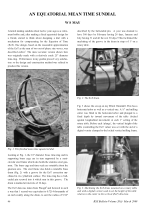
Describes the design and construction of an 18-inch brass equatorial mean time sundial, incorporating a mechanism to compensate for the Equation of Time. The article details the machining of a groove on a rotatable drum for EoT correction and the careful assembly and alignment of the time-ring and gnomon, calibrated to read GMT directly.
Construction Projects, DIY Sundial Projects, Dials: Equatorial, Equation of Time
June 2008
Page 54
Page 54
This article describes the design and astronomical calculations for the Solar Pyramid, a proposed large-scale art installation that will also function as the world's largest sundial. It details the design constraints, methods for reading time, and the accuracy of incorporating the Equation of Time over centuries.
Construction Projects, Equation of Time, Mathematics of Dialling, Sundial Design & Layout
September 2007
Page 98
Page 98
This article reviews Pilkington's Mechanical Equation Table a device for converting sundial time to mean time, detailing its two versions. It covers the design evolution, Pilkington's reluctant use of Gibbs' cam mechanism due to practical limitations, and their patent disputes.
Equation of Time, Dials: Heliochronometer
September 2007
Page 116
Page 116
This article details a rare 1890 brass sundial from the Sumburgh Hotel, Shetland. Commissioned by Laird John Bruce and made by C. Baker, it features a peripheral calendar combining longitude and equation of time corrections, plus unusual additional instructions. It is noted as the most northerly dial in the BSS Register.
Dials: Horizontal, Equation of Time, Historical Dials
September 2007
Page 134
Page 134
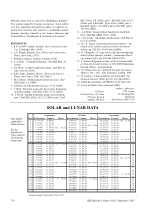
This entry provides a table of solar and lunar data for September, October, and November. It includes daily values for declination and transit times, as well as lunar quarter and new/full moon phases. This data is useful for sundial calibration and understanding celestial movements.
Equation of Time, How Sundials Work
February 2006
Page 20
Page 20
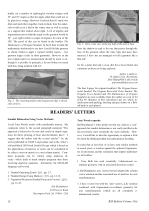
This section contains various reader contributions. Hal Brandmaier and Tony Wood discuss vector methods for sundial delineation. Patrick Powers and Douglas Bateman exchange views on a longitude error on the Kew Garden Cross Dial inscription. Norman Darwood briefly comments on the potential effects of changes in Earth's rotation on sundials.
Dials: Horizontal, Mathematics of Dialling, Equation of Time
February 2006
Page 32
Page 32
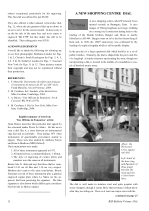
This article describes a new large stainless steel equatorial sundial, shaped like a Viking longship, installed at the Westwood Cross shopping centre in Ramsgate. The dial also serves as public seating and features large Roman numerals and an Equation of Time graph, although the author notes some elementary numbering and calibration errors.
Dials: Equatorial, Sundial Design & Layout, Equation of Time
February 2006
Page 48
Page 48
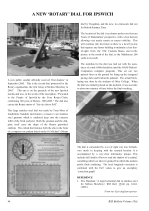
This article announces the installation of a new large stainless steel public sundial on Ipswich marina, sponsored by Rotary clubs to commemorate their centenary. Designed by Tony Moss, the horizontal dial features a massive gnomon, Rotary emblems, a British Summer Time scale, and an informative plaque with a combined longitude/Equation of Time correction graph.
Dials: Horizontal, Construction Projects, Equation of Time
June 2006
Page 91
Page 91
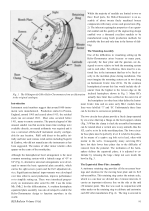
This first part of a review examines the design and accuracy of the Pilkington & Gibbs Helio-Chronometer, an equatorial sundial known for its mean time accuracy. It details the instrument's components, mounting assembly, sight screen system, and the mechanism for integrating the Equation of Time using a cam, and discusses factors affecting its long-term accuracy, such as wear and calibration.
Dials: Heliochronometer, Equation of Time, How Sundials Work, Sundial Design & Layout
September 2006
Page 128
Page 128
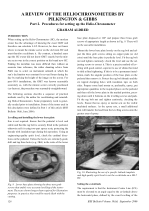
This article provides comprehensive, practical procedures for calibrating and reinstalling Pilkington & Gibbs Helio-Chronometers. It covers essential steps such as precise levelling, accurate co-latitude setting, meridian alignment, and adjustments for the equation of time and longitude, offering detailed guidance for both Northern and Southern Hemisphere models, aimed at owners and restorers.
Dials: Heliochronometer, Equation of Time, Restoration projects, Sundial Design & Layout
December 2006
Page 186
Page 186
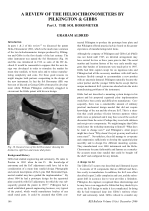
Graham Aldred reviews the Sol Horometer, William Pilkington's 1912 heliochronometer, developed to bypass George Gibbs's patent. It details Pilkington’s unique EoT adjustment mechanism, contrasting it with Gibbs's system, and discusses manufacturing, sighting, and pointer design. The article also compares its performance and rarity to the original Helio-Chronometer, noting the limited sales.
Sundial Design & Layout, Equation of Time, Historical Dials, Dials: Heliochronometer
March 2005
Page 13
Page 13
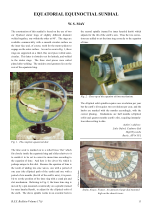
Details construction of a combined equatorial and equinoctial sundial using stacked car engine starter rings, cylindrical and brass components. Describes adjustable latitude setting and a novel gearing mechanism employing concentric eccentric spindles to apply the equation of time correction on two knobs, enabling mean time readings without manual calculation.
Dials: Equatorial, Construction Projects, Equation of Time
June 2005
Page 66
Page 66
Continues analysis of how the Equation of Time was represented on sundials, with historical examples and refinements in accuracy by 17th and 18th century astronomers.
Equation of Time, Historical Dials, Mathematics of Dialling
September 2005
Page 91
Page 91
This article traces the history and invention of the analemma, a 'figure-of-eight' shaped curve that corrects for the equation of time on a sundial. It discusses the contributions of Jean-Paul Grandjean de Fouchy and Johann Philipp von Wurzelbau, and notes that the analemma first appeared in English publications in 1889.
Equation of Time
December 2005
Page 142
Page 142
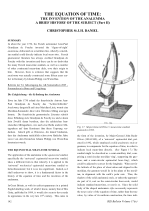
This part of the article discusses the history and application of the analemma in equinoctial sundials, particularly in Great Britain and the Netherlands. It details inventions by Major-General John Ryder Oliver, William Pilkington, and William Homan, and provides strong evidence suggesting Johann Philipp von Wurzelbau invented the analemma around 1716, predating Jean-Paul Grandjean de Fouchy.
How Sundials Work, Equation of Time, Historical Dials, Dials: Heliochronometer
March 2003
Page 14
Page 14
Review of 'Time Lord: Sir Sandford Fleming and the Creation of Standard Time', examining the historical development of global standard time.
Book Reviews, Equation of Time
December 2003
Page 135
Page 135
A comprehensive study of how the Equation of Time has been represented on sundials from 1672 to the 20th century, analysing data sources, engraving methods, and dating implications.
Equation of Time
March 2002
Page 17
Page 17
Accessible derivation of the EoT formula using orbital eccentricity and axial tilt, with historical and mathematical context.
Equation of Time, Mathematics of Dialling
March 2002
Page 44
Page 44
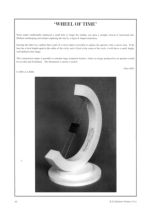
Describes a noon mark dial with a lens at the aperture, projecting a bright spot on an analemma inscribed on a semicircular scale.
Sundial Design & Layout, Construction Projects, Equation of Time, Dials: Noon Lines
June 2002
Page 50
Page 50
An investigation into the analemma and equation of time as it would appear on Mars, using NASA data and proposing calendar models for Martian colonists.
Equation of Time
June 2001
Page 60
Page 60
This article discusses the 17th-century work of Richard Towneley and John Flamsteed on the Equation of Time. It highlights their correspondence and experiments aimed at validating the Equation of Time and confirming the Earth's constant rotational speed, discussing earlier publications and the ongoing controversies surrounding this astronomical concept.
Equation of Time, Historical Dials, Mathematics of Dialling
June 2001
Page 79
Page 79
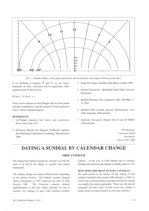
Mike Cowham explains how the historical change from the Julian to Gregorian calendars can serve as a dating aid for sundials. He outlines methods for identifying pre- and post-1752 dials based on calendar scales and Equation of Time tables, providing examples from historical quadrants and portable dials across Europe.
Equation of Time, Historical Dials
September 2001
Page 113
Page 113
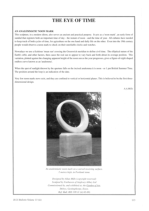
Describes a modern, three-dimensional noon mark sculpture in Portland stone, with analemma. It indicates both the instant of mean-time noon and the time of year by projecting a spot of sunlight onto an incised analemma. This design is believed to be the first of its kind that is 3-dimensional.
Dials: Noon Lines, Dials: Unusual, Equation of Time
September 2001
Page 127
Page 127
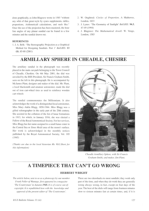
Originally published in "The Countryman" in 1948, this article describes a highly accurate horizontal sundial built by the author while interned in a Japanese camp in China. Constructed from scrap materials using improvised tools and limited references, this unique dial provided correct clock time with built-in Equation of Time correction, serving as the camp's only reliable timepiece.
DIY Sundial Projects, Dials: Horizontal, Dials: Unusual, Equation of Time
December 2001
Page 160
Page 160
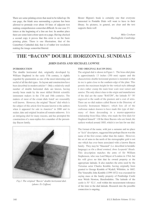
This article investigates the 'Bacon' double horizontal dial, an intriguing 17th or early 18th-century brass instrument of unknown origin. Its unique Equation of Time table and stereographic grid are detailed. Analysis suggests it predates 1752 and aligns with Tompion's calculations. A modern replica, crafted using CAD and photolithography, is also described, featuring updated EoT values and modern heraldry, signed by its maker.
Construction Projects, Dials: Double Horizontal, Equation of Time, Historical Dials
December 2001
Page 166
Page 166
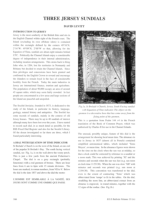
This article details three interesting sundials on Jersey. St Brelade's Church features an 1837 south-facing vertical dial with a unique Equation of Time indicator. A circa 1825 vertical declining dial by Elias le Gros in St Helier's Royal Square is notable for its history of obliteration and restoration. The third is a possible medieval Mass Dial, a carved stone found partially buried, suggesting its age and raising questions about its original function.
Dials: Mass Dials, Dials: Vertical, Equation of Time, Historical Dials
December 2001
Page 169
Page 169
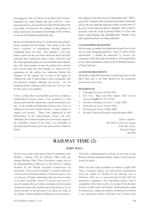
This article, the second part on railway-related sundials, describes two identical horizontal sundials commissioned in 1992. They commemorate the centenary of the Rochers de Naye mountain railway in Switzerland. These bronze dials feature a cogwheel design, an Equation of Time graph, and separate hour lines for summer and winter. The author notes that electric clocks are still preferred for official timekeeping, and clarifies the one-hour time zone difference between UK and Switzerland.
Dials: Horizontal, Equation of Time, Historical Dials
February 2000
Page 49
Page 49
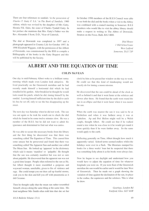
Humorous article on the variation between apparent time and mean time through the year
Equation of Time, Historical Dials
February 2000
Page 51
Page 51
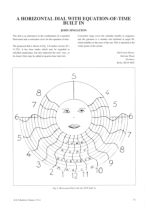
Describes the construction and principle of a horizontal dial that incorporates the equation of time.
DIY Sundial Projects, Dials: Horizontal, Equation of Time
June 2000
Page 101
Page 101
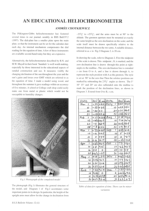
Describes a portable device that demonstrates the equation of time and solar motion for educational use.
DIY Sundial Projects, Dials: Heliochronometer, Equation of Time
February 1999
Page 8
Page 8
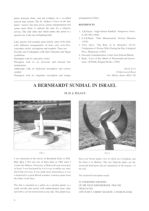
The author recounts discovering a Bernhardt dial at the Hebrew University in Rehovoth, Israel, in 1980. This memorial to Sir Hans Kronberger features special gnomon and dial shapes designed to provide directly read local mean time accurate to within a fraction of a minute.
Dials: Unusual, Equation of Time, Historical Dials
February 1999
Page 33
Page 33
This section contains diverse reader correspondence, including a tribute to Charles Aked, discussions on the Equation of Time and Bernhardt dials, explanations of the Lluc sundial in Mallorca, a comparison of Eureka compass cards, reflections on restoration, and a submission on 'Tipple Times'.
Dials: Unusual, Equation of Time, Dialling Tools, The BSS and Members
February 1999
Page 37
Page 37
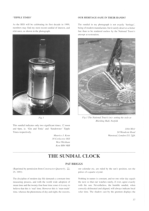
Describes a mechanical clock designed to display local solar time as well as Greenwich Mean Time. It uses two cranks to apply the Equation of Time correction, accurately accounting for the sun's uneven progress throughout the year, making it possible to read solar time even in overcast conditions.
Equation of Time, DIY Sundial Projects
February 1999
Page 40
Page 40
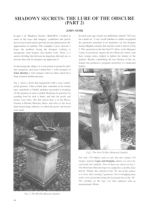
John Moir continues his exploration of hidden meanings and symbolism in sundials, presenting examples of 'false identity' dials like a bowl dial and a cat-shaped memorial. He delves into using logos, Morse code, and snooker ball colour codes, as well as analogies like railway lines and hair-lines, to enrich sundial design.
Dials: Unusual, Sundial Design & Layout, Equation of Time, Mottoes
February 1999
Page 47
Page 47
This review covers two issues of *Compendium*, the NASS journal. It highlights articles on a 'Witch's Sundial', various sundial designs (conical gnomon, Ptolemaic coordinates, cycloid gnomon, split analemma), and 'Sightings' features on notable dials, concluding with a report on the NASS Fourth Annual Conference.
Dials: Equatorial, Book Reviews, Sundial Design & Layout, Equation of Time
June 1999
Page 62
Page 62
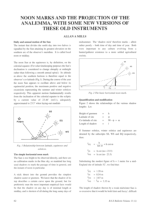
This article explores noon marks and the analemma, detailing how the sun's daily and annual motion is used to determine local noon and time of year. It discusses simple horizontal and vertical noon marks, the use of aperture gnomons, and the historical and modern application of the analemma for time correction. New designs for polar and vertical analemmatic noon marks, including sculptural forms, are also presented.
Dialling Tools, Dials: Noon Lines, Equation of Time, Sundial Design & Layout
June 1999
Page 104
Page 104
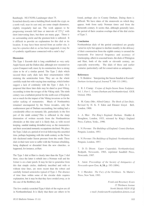
This technical article provides formulas for the Equation of Time and the Sun's declination throughout the year, using the day number as a variable. The derived values are shown graphically and noted to be close to published tables, aiming to provide a clear understanding of these fundamental gnomonic concepts.
Equation of Time, Mathematics of Dialling
October 1999
Page 108
Page 108
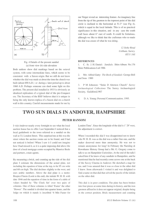
This article describes two sundials in Andover, Hampshire, both linked to William Hawkins Heath (1787-1861), a brewer and banker. One, dated 1846, is on London Street with the motto 'Respice Finem' and an equation of time table bears just the initials W.H.H. The second, dated 1833, is in poor condition on the Savoy Cinema (formerly Heath House) and bears his full name, solving the initials riddle. The article details Heath's family business and civic roles.
Dials: Vertical, Equation of Time, Historical Dials, Mottoes
October 1999
Page 115
Page 115
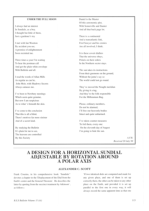
This article presents a design for a horizontal sundial adjustable for the Equation of Time and longitude by rotation around an axis parallel to the gnomon's style-edge. The design features a dial-face and gnomon-spine on a head, connected to a base with scales for longitude and a twelve-month Equation of Time adjustment. The offset bearing configuration and a Vernier-like scale simplify operations, allowing users to set the dial for different longitudes and regular Equation of Time corrections.
Dials: Horizontal, Equation of Time, Mathematics of Dialling, Sundial Design & Layout
October 1999
Page 120
Page 120
This review critiques 'The Inequalities of Sundial Time' by Dr. Eilon Saroka, describing it as peculiar and unique. It covers the book's extensive detail on astronomical deviations from perfect constancy, but notes that all the factors examined are irrelevant for sundial accuracy, except for atmospheric refraction. The reviewer criticizes the lack of index and modern references, suggesting the work be split into two monographs on Earth's motion inequalities and the Equation of Time/analemma.
Book Reviews, Equation of Time, Mathematics of Dialling
June 1998
Page 16
Page 16
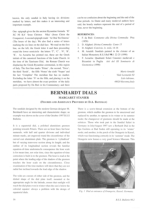
This article describes the distinctive equatorial sundials designed by modern German artist M. Bernhardt. These feature a polished aluminium gnomon pointing towards Polaris, and an hour scale calibrated for mean time, incorporating the equation-of-time correction within the gnomon's outline. Interchangeable gnomons allow for seasonal adjustments.
Dials: Equatorial, Dials: Heliochronometer, Dials: Unusual, Equation of Time, Sundial Design & Layout
October 1998
Page 16
Page 16
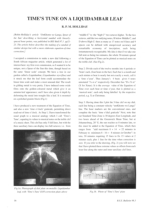
This article describes a unique sundial commission, featuring a gilded metal liquidambar leaf design. It incorporates an innovative equation-of-time correction system called 'Time's Tune,' which uses musical analogy to plot values on a treble clef. The dial provides a direct read-out of clock time with specific adjustments for longitude.
Construction Projects, Dials: Unusual, Equation of Time, Sundial Design & Layout
October 1998
Page 27
Page 27
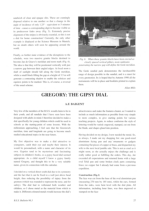
This article describes the creation of "Gregory," a vertical direct south sundial designed specifically for young children and school use. Made from recycled metals, the dial features a gypsy face, with hair and eyebrows shaped to represent the equation of time. Its design aims to attract youngsters and serve as a teaching aid for time and longitude.
DIY Sundial Projects, Dials: Vertical, Equation of Time, Sundial Design & Layout
February 1995
Page 39
Page 39
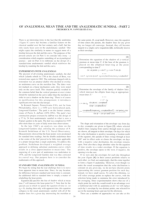
Continued discussion on the analemma and its use in sundials, particularly analemmatic types, including the relation to mean solar time and design techniques.
Dials: Analemmatic, Equation of Time, Mathematics of Dialling
February 1994
Page 24
Page 24
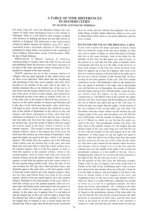
Historical document listing time differences across Spanish cities for calendrical correction and dial calibration, translated and annotated.
Equation of Time
February 1994
Page 30
Page 30
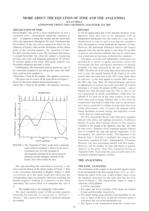
Further elaboration on the Equation of Time and the analemma's form, including seasonal impacts on sundial accuracy and diagrammatic explanation.
Equation of Time
February 1994
Page 32
Page 32
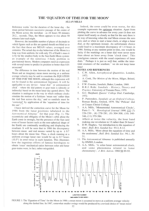
Discusses the lunar equivalent of the solar Equation of Time and its practical application for estimating time by moonlight.
Equation of Time
February 1994
Page 38
Page 38
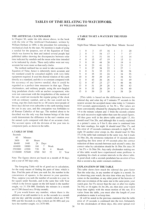
Historic timekeeping tables by Derham related to mechanical watches and their relationship to solar time.
Equation of Time
June 1994
Page 32
Page 32
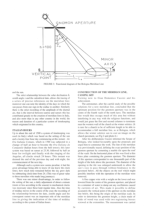
Part one of a detailed study of the meridian line in San Petronio, a 17th-century astronomical installation in Bologna. The article outlines its construction, alignment, and function in tracking solar time and determining dates such as solstices, serving both scientific and liturgical purposes.
Dials: Noon Lines, Equation of Time, Historical Dials
October 1994
Page 29
Page 29
This article explains the historical context and mechanisms of the Gregorian calendar reform, initiated by Pope Gregory XIII in 1582 to correct discrepancies in the Julian calendar, particularly concerning the accurate determination of Easter. It traces the problem back to the Council of Nicea in AD 325 and the slight error in the solar year's length as calculated by Sosigenes. The reform involved dropping ten days and introducing a new leap year rule. The article also discusses the varying adoption rates across European countries, initial doubts within the Vatican (leading to the construction of a meridian line to verify accuracy), and briefly touches upon modern discussions regarding calendar improvements.
Equation of Time
February 1993
Page 18
Page 18
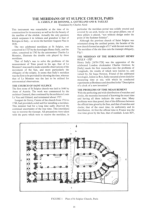
This article describes two meridians in St Sulpice Church, Paris, by Henry Sully (1727) and Charles Le Monnier (1743). It discusses their purpose for time measurement and astronomical observations, detailing the historical context of time standardization and their architectural integration within the church.
Dials: Noon Lines, Equation of Time, Historical Dials, Sundial Design & Layout
February 1993
Page 32
Page 32
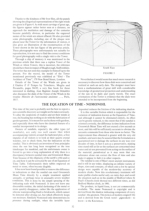
This tongue-in-cheek article introduces 'Nonomoil,' a new product designed to simplify sundial readings by reducing the friction of the shadow on the sundial surface, thus avoiding the discrepancies between sundial time and Greenwich Mean Time. It explains how this annual treatment enhances accuracy and avoids sarcastic comments from onlookers unfamiliar with the Equation of Time.
Dialling Tools, Equation of Time, How Sundials Work
June 1993
Page 11
Page 11
This is the second part of an article describing two meridians in St Sulpice Church, Paris, by Henry Sully and Charles Le Monnier. It details their purpose for time measurement and astronomical observations, discussing restoration efforts, challenges in conservation, and the historical context of time standardization. It also covers Le Monnier's observations and the meridian's condition through the French Revolution and later centuries.
Dials: Noon Lines, Equation of Time, Historical Dials
October 1993
Page 8
Page 8
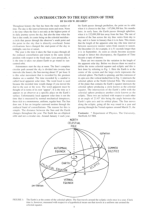
This article explains the Equation of Time, the difference between local apparent solar time (sundial time) and mean solar time (clock time). It details the two astronomical reasons for this variation: Earth's elliptical orbit causing the Sun's speed to change, and the Sun's apparent motion along the ecliptic rather than the celestial equator.
Equation of Time, Mathematics of Dialling
June 1992
Page 24
Page 24
The phoeboscope is presented as a self-sufficient instrument combining time-keeping, meridian-finding, and calendrical functions by detecting solar declination. Designed during WWII as an improvement of the existing sun-compass, its adoption was frustratingly held up in bureaucracy until too late to be useful. It uses a lens to focus sunlight onto a shadow-plate engraved with an analemma, allowing accurate determination of time, meridian, and date anywhere in the world without a watch or almanac.
DIY Sundial Projects, Dials: Heliochronometer, Dials: Unusual, Equation of Time
October 1992
Page 25
Page 25
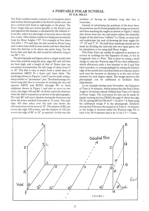
This article introduces a portable polar sundial design that overcomes the issue of an infinitely long dial face for extreme hour angles. It uses two end-styles, which cast shadows for forenoon and afternoon hours, respectively. The dial can be adjusted using a wedge to correct for the Equation of Time or longitude.
DIY Sundial Projects, Dials: Polar, Equation of Time, How Sundials Work
February 1991
Page 3
Page 3
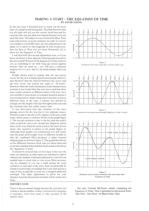
Explains the Equation of Time and how this variation became apparent with the development of accurate mechanical clocks.
Equation of Time
July 1991
Page 5
Page 5
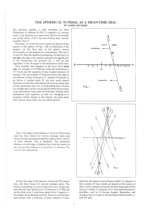
Building on Peter Drinkwater's work, this article explores adapting a spherical sundial to indicate mean time for six months of the year, by offsetting the hour marks away from the equator. This is possible because the slanting terminator at different solar declinations, adjusted for corresponding equation of time, happen to fall very close to one of two circles (within 1.5 minutes). The author also discusses using surface texture, like paint brush marks, to significantly improve the dial's readability and precision.
DIY Sundial Projects, Dials: Unusual, Equation of Time, Sundial Design & Layout
July 1991
Page 20
Page 20
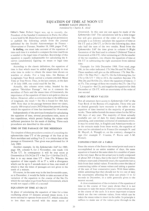
This article, translated by Charles K. Aked, explains the equation of time and its importance for comparing sundial readings to legal time and for drawing analemmas. It outlines three calculation procedures: consulting ephemerides for meridian passage, calculating at 0h UT for precision, and using or constructing tables of mean values. A method for building updated tables is provided, ensuring sufficient precision for dialling needs.
Equation of Time, Mathematics of Dialling
July 1991
Page 34
Page 34
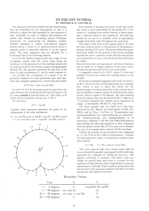
This article introduces the equant dial, a horizontal sundial design inspired by Ptolemaic astronomy, addressing uneven hour spacing in classical dials. It describes how a specific curve is drawn on the dial face, against which an equi-spaced hour-line circle is rotated. This mechanism enables manual adjustments for the equation of time and other corrections, simplifying time reading on such a dial.
Dials: Horizontal, Equation of Time, Mathematics of Dialling, Sundial Design & Layout
October 1991
Page 15
Page 15
This note provides succinct facts about hour angle sundials. It covers topics such as local time variations, the twelve-hour day at equinoxes, dial portability, effects of rotation, limitations of different dial types, gnomon orientation, and the daily and annual changes in sunrise/sunset times and the Equation of Time.
Equation of Time, How Sundials Work
October 1991
Page 29
Page 29
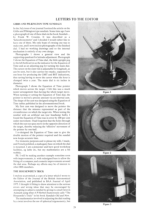
This section includes correspondence from H.R. Mills, who details his homemade "heliochronometer" sundial based on the Gibbs and Pilkington type. He also discusses A.P. Herbert's "Housewife's Trick," warning against adjusting sundials by twisting them in azimuth to correct for BST, as this introduces variable time errors.
DIY Sundial Projects, Dials: Heliochronometer, Equation of Time
October 1990
Page 26
Page 26
This article, presented in a question-and-answer format, describes a didactic hemispherical sundial that models the Earth's relationship to the sun. It explains how the shadow of a bead indicates date and time, distinguishes it from ancient Greek dials, and clarifies why it needs occasional adjustment about its axis to display clock time.
Dials: Hemispherical, Equation of Time, How Sundials Work
July 1989
Page 12
Page 12
Contrasts the "true" time indicated by sundials with the artificial time of clocks (GMT, BST) and advocates living in accordance with the sun's rhythm.
Equation of Time