- Home
- /
- Sundial Encyclopaedia
- /
- September 2021
September 2021
The articles link to the specific page in a PDF optimised for speed. If you want the whole issue, you can download it here, but the files from earlier years can be quite large.
September 2021
Page 1
Page 1
Discusses the value of knowing languages like Latin, Greek, Arabic, and Old Norse for sundial enthusiasts. Highlights various articles in the issue, including those covering Islamic sundials, Welsh inscriptions, Thomas Ross's series, the Winwick Hall project, a film-spotted dial, and an equatorial light spot sundial.
September 2021
Page 2
Page 2
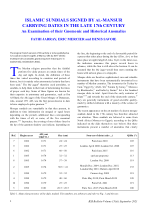
Examines ten mosque sundials signed by al-Mansur and dated 1671–1681 AD. These instruments feature epigraphic anomalies and non-functional gnomonic layouts, including inaccurate hour lines and prayer indications. The authors conclude these sophisticated yet flawed dials are likely modern ‘fakes’.
Dials: Horizontal, Mathematics of Dialling, Historical Dials
September 2021
Page 9
Page 9
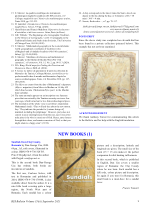
Reviews two sundial inventory books by Dan-George Uza. The books cover sundials in North West Romania and Cluj County, respectively. The reviews note that the books provide colour pictures, descriptions, and geographical coordinates, serving as useful companions for dial hunting.
Book Reviews
September 2021
Page 10
Page 10
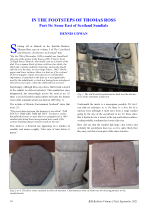
A continuation of the series following Thomas Ross, examining various sundials in the East of Scotland. Discusses the history, disappearance, and condition of dials in Hawick, Jedburgh, Ruchlaw House, Monkton House, Pitreavie (now Inveresk), Torryburn, and Cromarty.
Dials: Multi Faced, Dials: Vertical, Historical Dials, Mottoes
September 2021
Page 17
Page 17
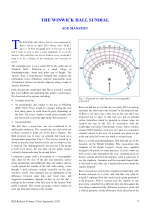
Details the project to convert a 30-foot telegraph pole at Winwick Hall into a large, highly visible outdoor sundial. The final design employs the vertical pole's shadow to cast time on 18-metre radius winter and summer arcs, prioritising fun and visibility over high accuracy for walkers.
Construction Projects, Dials: Unusual, Dials: Vertical
September 2021
Page 20
Page 20
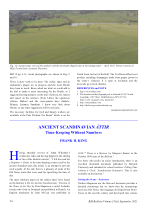
A guide to the ancient Scandinavian system of time-keeping using "áttir" (eighths of the horizon) and landmarks known as daymarks. It explains the Old Norse terminology (middag, miðnætti, undorn) and discusses why this non-numerical system was suitable for high latitudes where unequal hours were unviable.
How Sundials Work, Mathematics of Dialling, Historical Dials
September 2021
Page 26
Page 26
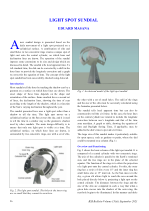
Introduces a novel equatorial sundial design that uses a moving light spot, rather than a shadow, to indicate time. The spot is projected onto a central cylinder via concentric rings with slits and holes. The design requires complex mathematical calculations for accurate sizing and component placement, ideal for large installations.
Dials: Equatorial, Mathematics of Dialling, Sundial Design & Layout
September 2021
Page 31
Page 31
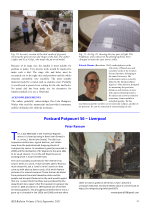
Focuses on a historical postcard depicting a vertical declining sundial (SRN 5665) located on the former Royal Insurance building in Liverpool. The card belongs to the "Lewis's Series," probably issued by the Lewis's department store during the late Edwardian period.
Dials: Vertical, Historical Dials
September 2021
Page 32
Page 32
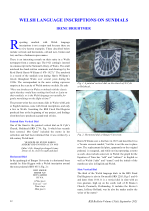
Examines the scarcity of Welsh language inscriptions on sundials, listing and describing nine known examples. Examples include historical vertical and horizontal dials, detailing their locations (Holyhead, Penmorfa, Whitford) and mottoes, such as "Man’s life, though prolonged it may / Draws to its close by night and day".
Historical Dials, Mottoes
September 2021
Page 36
Page 36
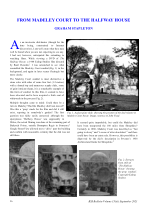
Investigates a distinct cube sundial seen in the film "The Halfway House". The prop was a copy of the famous Madeley Court sundial. Close analysis confirmed it was a non-functional copy, likely based on a Wills’s cigarette card from 1928, and it was broken up after filming.
Dials: Multi Faced, Historical Dials, Dials: Cube, Dials: Scaphe
September 2021
Page 38
Page 38
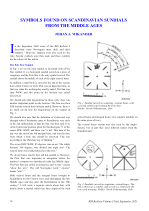
Examines secular symbols used on Scandinavian sundials from the Middle Ages. Discussed symbols include the Pole Star, the Sun, a cock, and those relating to the farmer's life (like the axe). The article also analyses runic letters, such as the K-rune, used as noon marks or numerals, reflecting the mixed octaval and unequal hour systems.
Dials: Mass Dials, Dials: Portable, Historical Dials
September 2021
Page 43
Page 43
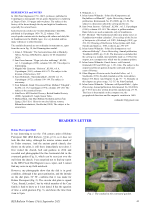
A letter describing a horizontal sundial found in the courtyard garden of Holme Pierrepont Hall. The dial plate is signed "Cary, Strand, London," shows the latitude 52° 58ʹ, and includes the equation of time. The author notes the challenge in dating the dial precisely due to the lack of a date and multiple Cary family makers.
Dials: Horizontal, Equation of Time, Historical Dials
September 2021
Page 44
Page 44
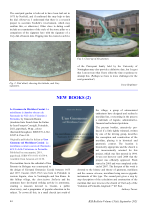
Reviews "Le Gnomon du Méridien Cassini", a book detailing the history, theory, calculation, and construction of a meridian line in Perinaldo, Italy. The line, built as a gigantic camera obscura in the birthplace of G.D. Cassini, was completed in 2007.
Book Reviews, Dials: Noon Lines