- Home
- /
- Sundial Encyclopaedia
- /
- Martin Jenkins
Martin Jenkins
September 2023
Page 28
Page 28
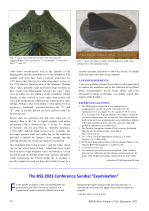
Reproduction of the sundial knowledge “examination” paper compiled by Martin Jenkins and distributed during the BSS 2023 Exeter Conference outing. The answers to this examination are provided later in the Bulletin on page 36.
The BSS and Members
September 2023
Page 36
Page 36
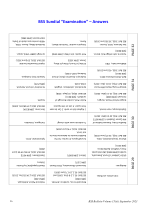
Provides the answers to the sundial knowledge “examination” questions that were compiled by Martin Jenkins for the BSS 2023 Exeter Conference. The full set of questions was reproduced on pages 29-32 of this Bulletin.
The BSS and Members
June 2022
Page 19
Page 19
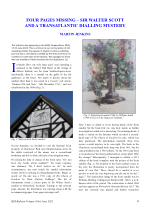
An investigation into the history of Sir Walter Scott’s sundial at Abbotsford and its American replica at Hillside, Menands, NY. The research establishes a probable link through publisher David Douglas and Dean Sage, concluding the replica is likely a copy of a refurbished replacement dial from the mid-19th century, not the original 1812 installation.
Historical Dials, Restoration projects
September 2022
Page 29
Page 29
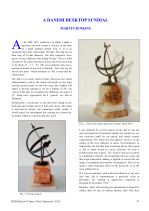
Examines a small, mass-produced equatorial desktop sundial made of brass and onyx alabaster, inscribed with a Danish motto. Concludes the dial was likely a commercial giftware product from the 1950s to 1970s, possibly manufactured in India.
Dials: Equatorial, Dials: Portable, Mottoes
March 2019
Page 2
Page 2
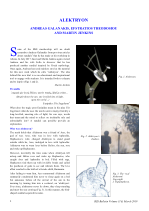
Describes a new universal stainless steel equatorial sundial called 'Alektryon', inspired by Greek mythology (the story of the sleepless cockerel). Designed by Andreas Galanakis, it serves as an educational tool with adjustments for latitude and practical uses like orientation and star gazing. Its proportions were determined using the golden ratio instrument, Eumetron.
Construction Projects, Dials: Equatorial, Sundial Design & Layout
March 2019
Page 22
Page 22
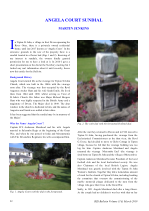
Investigation into the sundial at Angela Court (now Sundial House), East Devon. The assembly consists of an older cube dial topped by a brass Dollond horizontal dial plate engraved with an incorrect latitude (51° 15ʹ). The base has mysterious Latin inscriptions (SOLE, QUARE, SPLENDIDIUS, NECASTI) which are speculated to mean, "Why did you kill the sunshine?" suggesting the dial is a memorial.
Dials: Cube, Dials: Horizontal, Historical Dials, Mottoes
June 2019
Page 7
Page 7
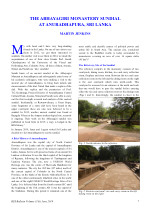
Investigates an ancient horizontal stone sundial (made of quartzofeldspathic gneiss) found at the Abhayagiri Monastery refectory (latitude 8° 24′ N). The dial, now in a museum, has 32 segments, but was likely primarily used to check time (around solar noon) for the monks' daily meal schedule according to Buddhist discipline.
Dials: Unusual, Historical Dials, Sundial Design & Layout
June 2019
Page 27
Page 27
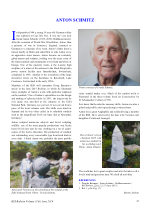
Obituary for BSS member Anton Schmitz (1925–2019), a master German stone mason and sculptor. He was renowned for crafting spherical dials, such as the one at Eifel National Park, and was regarded as one of the most prolific stone sundial makers ever.
The BSS and Members
June 2019
Page 35
Page 35
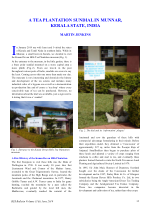
Describes a brass polar sundial found at the Kanan Devan Hills Tea Plantation museum in Munnar. The dial, stamped "ART INDUSTRIAL SCHOOL, NAZARETH, 1913," was made by a vocational school in Tamil Nadu. The capital's angle (10°) is appropriate for Munnar's latitude, though the current setting is inaccurate.
Dials: Polar, Historical Dials
June 2018
Page 22
Page 22
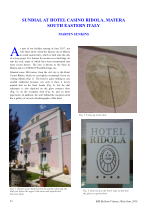
Describes the Hotel Casino Ridola, Matera, Italy, which features a painted sundial dating from 1900 on its front façade. The dial schematic is also etched onto the glass entrance door and used on hotel paperwork. The dial was lovingly restored when the residence was sold to the present owners in 2003.
Dials: Vertical, Historical Dials
December 2018
Page 48
Page 48
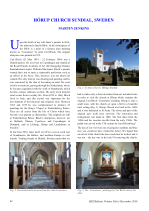
Describes the serendipitous discovery of a south-facing stone dial from 1739 on the tower of Hörup Church, Sweden, while searching for a Carl Bloch painting. The dial is unusual for Scandinavia as its furniture and embellishments are carved in relief rather than being incised.
Dials: Vertical, Historical Dials
March 2016
Page 11
Page 11
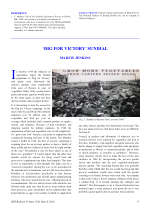
Examines a photograph from 1940 showing a classical horizontal sundial located amongst rows of vegetables at Carter’s Seed Company during the ‘Dig for Victory’ campaign. The article poses the question regarding the current location and fate of this particular dial.
Dials: Horizontal, Historical Dials
June 2016
Page 29
Page 29
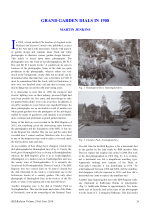
Review of photographs from a 1908 book, The Gardens of England, illustrating grand sundials in prominent gardens. Many featured pedestal dials, which appear to have since vanished or been moved, highlighting the disappearance of such features due to changing fashion, damage, or theft. Locations include Clumber Park (armillary sphere) and Guy’s Cliff.
Dials: Armillary Sphere, Dials: Horizontal, Historical Dials
September 2016
Page 27
Page 27
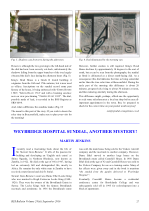
A search for a potentially high-quality sundial gifted to Weybridge Hospital in 1956 from Caenshill House, formerly owned by the wealthy Dame Ethel Locke King. The dial is currently unrecorded in the BSS Register, and its existence and whereabouts are requested from members.
Historical Dials
March 2015
Page 6
Page 6
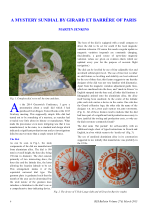
An investigation into a portable equatorial universal dial manufactured using anodized aluminium alloy, potentially dating from the late 1930s or early 1940s, or perhaps post-1960. Research reveals the involvement of the designer T.H. de Lange (W.G. ten Houte de Lange) and the publishing house Girard et Barrère. The dial's rarity and design anomalies suggest it may be a pre-production prototype run.
Dials: Equatorial, Dials: Portable
June 2015
Page 31
Page 31
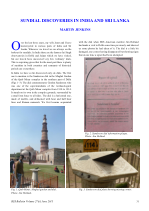
A report on sundials discovered during travels in India and Sri Lanka over three years. Finds include the Sanderson horizontal marble dial in Delhi, a Shimla bronze dial listing railway time, an analemmatic dial in Leh, and an unusual modern dial in Sri Lanka.
Dials: Analemmatic, Dials: Horizontal, Dials: Unusual, Historical Dials
September 2015
Page 2
Page 2
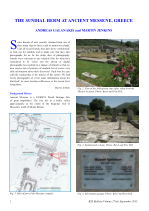
Describes the conceptualisation, design, and installation (2011) of a modern equatorial sundial named 'Sundial Herm' at the ancient UNESCO site of Messene, Greece. It details its unique numbering system, artistic philosophy, orientation challenges, and connection to ancient monumental orientations.
Dials: Equatorial, Sundial Design & Layout, Construction Projects
December 2015
Page 10
Page 10
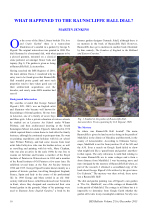
Investigates the horizontal dial shown in a 1908 watercolour by George S. Elgood, supposedly located at Raunscliffe Hall, Leicestershire. The mystery reveals that Elgood intentionally used misleading names for his own garden dial at 'The Cot, Markfield' to secure family privacy.
Dials: Horizontal, Historical Dials
September 2007
Page 122
Page 122
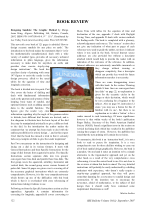
This review covers Designing Sundials: The Graphic Method by Margo Anne King, aimed at mathematically unsophisticated readers. It praises the comprehensive graphical instructions but criticises the lack of inspirational examples and tedious cross-referencing. A significant error in the vertical declining dials section required an errata sheet, impacting its utility for beginners.
Book Reviews, Sundial Design & Layout
December 2004
Page 152
Page 152
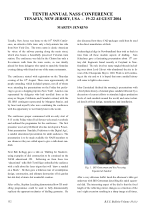
Report from the 10th NASS conference (Tenafly, NJ). Summarises presentations and demonstrations on sundial education, laser trigon techniques, CAD/3D modelling for dial manufacture, archaeological finds, spiral equatorial and portable dials, and highlights from delegates and exhibits.
The BSS and Members