- Home
- /
- Sundial Encyclopaedia
- /
- June 2007
June 2007
The articles link to the specific page in a PDF optimised for speed. If you want the whole issue, you can download it here, but the files from earlier years can be quite large.
June 2007
Page 49
Page 49
This editorial introduces the issue with a stained glass theme, highlights the Photographic Competition, mentions new series on astrolabes and professional dial makers, and thanks organisers of the successful Cambridge conference.
The BSS and Members
June 2007
Page 50
Page 50
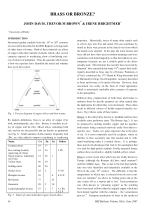
This article explores the material composition of historical horizontal garden sundials, specifically distinguishing between brass and bronze alloys. It discusses the challenges of visual identification due to patination and details an X-ray analysis method used to determine the actual metallic composition of dial samples.
Historical Dials
June 2007
Page 56
Page 56
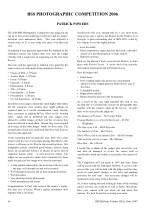
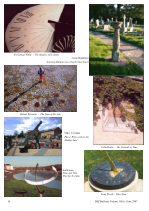
This report details the 2006 British Sundial Society Photographic Competition, noting a record entry, high standards, and the judging criteria. It announces Paul Shaw as the overall winner and Ian Butson and David Hawker as second and third prize recipients respectively, also commending seven other photographs.
The BSS and Members
June 2007
Page 58
Page 58
This entry provides the minutes from the British Sundial Society's 18th Annual General Meeting held on 15 April 2007 in Cambridge. It covers opening remarks, apologies, approval of previous minutes, and reports from various Council members on Society activities, membership, finances, and future plans.
The BSS and Members
June 2007
Page 62
Page 62
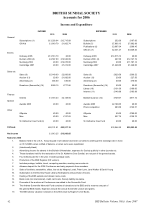
This section presents the British Sundial Society's financial accounts for 2006, detailing income and expenditure. It shows an increase in net income, explains the accounting basis, and includes auditor's comments on fund management and financial clarity.
The BSS and Members
June 2007
Page 63
Page 63
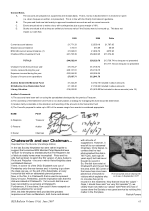
This article recounts the discovery of an unrecorded horizontal sundial at Chatsworth House, initially prompted by a film, and reveals that BSS Chairman Chris Daniel had photographed it 30 years prior but not recorded it. It highlights the importance of Peter Baxandall's observation.
Historical Dials, The BSS and Members
June 2007
Page 64
Page 64
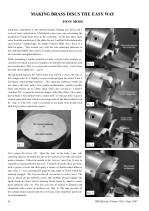
This article describes an improved, easier method for making brass and bronze disks for sundials, specifically using double-sided adhesive tape and a lathe chuck. It offers a simpler alternative to previous laborious methods, suitable for various disk sizes up to the lathe's maximum capacity.
Construction Projects, DIY Sundial Projects
June 2007
Page 66
Page 66
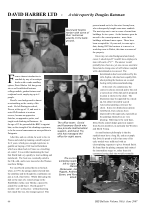
This report details a visit to David Harber Ltd., a successful business specialising in sundials, garden features, and sculpture. It traces David Harber's unconventional career path, his company's business philosophy, preference for polished stainless steel, and notable commissions including several for Oxbridge colleges.
Sundial Design & Layout
June 2007
Page 69
Page 69
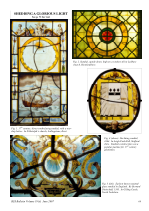
This article, a re-publication, discusses the history and art of painted or stained-glass window sundials in Britain. It covers their construction, fragility, the challenges of preservation, and highlights notable examples and makers like Bernard Dininckoff and Henry Gyles.
Dials: Vertical, Sundial Design & Layout, Restoration projects, Historical Dials, Dials: Stained Glass
June 2007
Page 73
Page 73
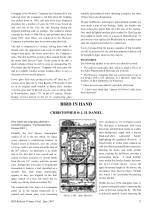
This article focuses on a famous 17th-century stained-glass sundial from Nailsea Court, featuring a bird and a fly, known for its multiple copies and eventual theft. It details the dial's artistic elements, motto Dum Spectas Fugio and discusses its provenance through later copies and historical records.
Historical Dials
June 2007
Page 75
Page 75
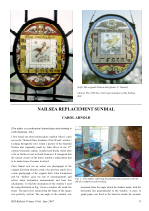
This article describes the process of creating a replica stained-glass sundial for Nailsea Court after the original was stolen. The author explains how window declination was measured and new hour lines calculated, detailing the multi-stage artistic and technical process to recreate the dial, with gnomon fixed to leadwork to prevent glass damage.
Sundial Design & Layout, Construction Projects, Restoration projects
June 2007
Page 78
Page 78
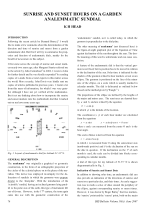
This article discusses the determination of sunrise and sunset directions and times using garden analemmatic sundials. It explains the dial's principles, the Bailey points for seasonal markers, and evaluates the accuracy of these markers, noting discrepancies and suggesting practical applications for garden dials despite minor errors.
Dials: Analemmatic, How Sundials Work, Mathematics of Dialling, Sundial Design & Layout
June 2007
Page 81
Page 81
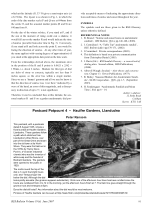
This entry presents a postcard from 1935 showing a floral sundial in Haulfre Gardens, Llandudno. It describes the dial's mottoes (I count the bright hours only and Tempus fugit) and notes a potential omission in the afternoon hour lines, inviting further information on the dial's current existence.
Historical Dials, Mottoes
June 2007
Page 82
Page 82
This section contains reader correspondence. Fred Sawyer corrects an article on dual sundials, attributing the self-setting property to Vaulezard (1640) rather than Tuttell (1698). Mike Faraday asks for a website to track the terminator for sunrise times. Tony Wood clarifies the location and movement of the Ross-on-Wye pillar dial.
Dials: Analemmatic, How Sundials Work, Historical Dials
June 2007
Page 83
Page 83
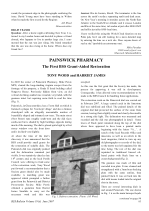
This article describes the restoration of a faded vertical declining sundial at Painswick Pharmacy, the first to receive a British Sundial Society grant. It details the cleaning, stabilisation of a crack, repainting, and strengthening of the iron gnomon. The article also touches on the dial's possible historical connection to local clockmakers and its asymmetrical placement.
Dials: Vertical, Restoration projects
June 2007
Page 84
Page 84
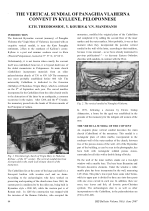
This article describes a unique vertical sundial at the Byzantine Panaghia Vlaherna Convent in Kyllene, Greece. Made of white marble, it features 13 fan-shaped petals representing hours without numerals, reflecting local tradition and contrasting with Western sundial practices. It discusses the monastery's history and the dial's architectural integration.
Dials: Unusual, Dials: Vertical, Historical Dials
June 2007
Page 86
Page 86
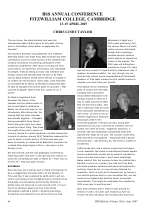
This report summarises the 2007 British Sundial Society Annual Conference in Cambridge. It highlights talks on calendar history, the Equation of Time, analemmatic sundials, astrolabes, and beehive sundialling. It also covers walking tours of Cambridge dials, including Pembroke and Queens' Colleges, and the Andrew Somerville Memorial Lecture on calendar accuracy.
Dials: Astrolabe, Historical Dials, How Sundials Work, The BSS and Members
June 2007
Page 91
Page 91
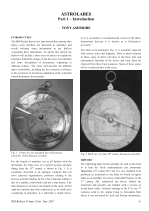
This is the first part of a series introducing astrolabes, describing them as two-dimensional analogue computers for solving spherical trigonometric problems and finding time. It covers their history from Greek origins through Arab development to European decline, and explains the principles of their design including the rete and engraved plates for different latitudes.
Dials: Astrolabe, Historical Dials, How Sundials Work, Mathematics of Dialling
June 2007
Page 95
Page 95
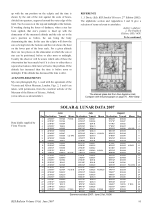
This entry provides a table of solar and lunar data for 2007, including daily declination and transit times, as well as moon phase information for June, July, and August.
How Sundials Work
June 2007
Page 96
Page 96
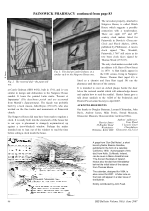
This entry presents a page from Nellie Stearns Goodloe's 1893 Sun-Dial Notes calendar, featuring a sundial from Kells, Co Meath, Ireland. It notes the calendar is correct for 2007 and mentions a fuller note on the book will appear later.
Book Reviews, Historical Dials