- Home
- /
- Sundial Encyclopaedia
- /
- John Davis
John Davis
June 2023
Page 30
Page 30
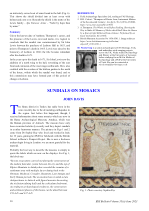
Examines 3rd and 4th-century Roman mosaics from the Hatay Archaeological Museum, Antakya, which humorously depict public sundials. The scenes show caricaturised guests rushing to dinner or attempting to vandalize the dial for being late, confirming both the Roman use of public dials and the existence of early vandalism.
Dials: Unusual, Historical Dials
September 2023
Page 26
Page 26
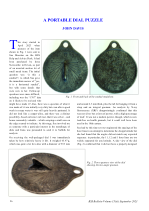
Investigates a heavy, pewter portable horizontal dial medallion, initially thought to be silver, dated “1707” with a gnomon angle of 38°. XRF analysis confirmed it as lead-heavy pewter. Detective work revealed the reverse side used a modified die from an 1855 Paris Exposition Universelle medal, making the 1707 date false.
Dials: Horizontal, Dials: Portable, Historical Dials
December 2023
Page 18
Page 18
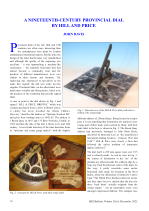
A study of a robust 10-inch square horizontal brass dial signed by Hill & Price of Bristol (working 1842–83). The dial exhibits idiosyncratic provincial features, such as delineation errors for 'back hours' and the use of brass produced by the cementation technique, despite signs of modern manufacturing.
Dials: Horizontal, Historical Dials, Sundial Design & Layout
March 2022
Page 24
Page 24
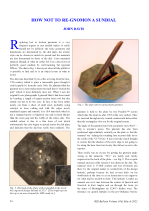
An examination of an old horizontal sundial (c. late 17th/early 18th century) highlighting mistakes made during a poor gnomon replacement. Errors included cutting the angle incorrectly (40.0° instead of the design latitude 52.5° marked on the back), using mild steel that rusted, and using modern Pozidriv screws for attachment.
Dials: Horizontal, Mathematics of Dialling, Restoration projects, Sundial Design & Layout
March 2022
Page 33
Page 33
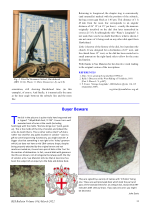
A cautionary article detailing how to spot fake antique sundials, using an octagonal dial signed 'I Myatt Bath fecit / 1745' as a case study. Despite good engraving, clues like the unusual 'holey' gnomon and XRF tests showing 20th-century brass reveal it to be a modern, well-produced deception.
Historical Dials, The BSS and Members
March 2022
Page 36
Page 36
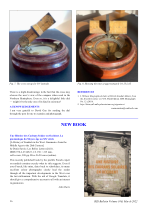
A review of Denis Savoie's comprehensive book, Une Histoire des Cadrans Solaire en Occident. La gnomonique du Moyen Âge au XXe siècle. The book covers the history and development of gnomonics in the West from the Middle Ages through to the 20th century, and is well-illustrated.
Book Reviews, Historical Dials
September 2022
Page 2
Page 2
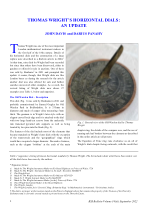
Updates the known catalogue of 18th-century mathematical instrument maker Thomas Wright’s horizontal dials, increasing the count to 27. Provides details, metallurgy, and provenance for recently examined examples, including the Old Warden dial, the Wrexham dial, and the Lisbon College dial (now at Ushaw College).
Dials: Horizontal, Equation of Time, Historical Dials, Restoration projects
September 2022
Page 11
Page 11
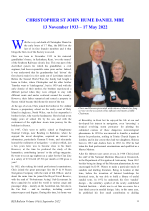
A tribute to Chris Daniel, a founder member, long-term BSS Chairman, and noted diallist. Covers his careers as a Master Mariner and at the National Maritime Museum, where he focused on sundials. Notes his contributions as a designer, author (e.g., Shire album Sundials), and his MBE award.
Sundial Design & Layout, The BSS and Members
September 2022
Page 14
Page 14
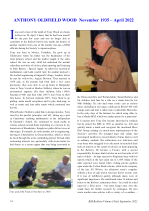
A tribute to Tony Wood, an early member remembered for reviving the Mass Dial Group. Highlights his dedication to recording dials, submitting 1,609 reports, and arranging for mass dial records to be stored at the York Centre for Medieval Studies archive.
Dials: Mass Dials, The BSS and Members
December 2022
Page 30
Page 30
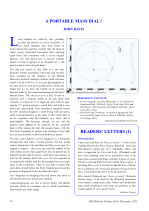
Examines a rare lead disc found by a metal detectorist, which is 78mm in diameter. The design, featuring equi-angular spots, suggests it may be a portable unequal-hour mass dial designed for a rod gnomon.
Dials: Mass Dials, Dials: Portable, Dials: Unusual, Historical Dials
December 2022
Page 39
Page 39
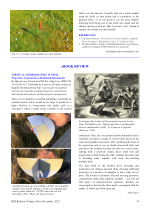
Review of Maciej Lose's free eBook, "Vertical Stereographic Sundial," which extends the concept of the double horizontal dial to various vertical and declining dials using geometric construction rather than algebraic methods.
Book Reviews, Dials: Vertical, Mathematics of Dialling, Sundial Design & Layout
March 2021
Page 22
Page 22
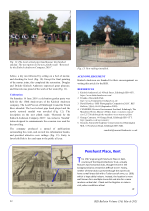
A short note highlighting a 1747 engraving of Penshurst Place in Kent which depicts two horizontal sundials. Neither of these dials is present today, though the location features a multiple stone dial and a modern vertical dial.
Dials: Horizontal, Historical Dials
June 2021
Page 2
Page 2
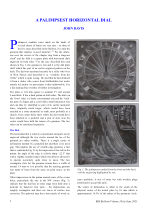
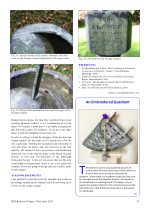
An investigation into a rare horizontal sundial made on a re-used brass plate (a palimpsest). The reverse side reveals an earlier engraving from a memorial brass, identified as a "waster" from the Southwark workshops (c.1600). Metallurgical analysis shows the plate is made of imported high-zinc brass, and the dial's delineation matches the latitude of Southwark.
Dials: Horizontal, Historical Dials, Sundial Design & Layout
June 2021
Page 19
Page 19
Describes a quadrant made by Iona Isaac as a lockdown project. It is an equal-hour quadrant, embroidered and delineated for Cambridge, based on historical instruments associated with Richard II in the British Museum.
Dials: Portable, DIY Sundial Projects
June 2021
Page 31
Page 31
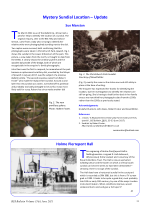
Discusses an engraving of Holme Pierrepont Hall showing a vertical south sundial on a demolished tower. Mentions a surviving horizontal sundial in the courtyard, likely dating from the late 18th or early 19th century, and requests further investigation.
Dials: Horizontal, Dials: Vertical, Historical Dials
December 2021
Page 2
Page 2
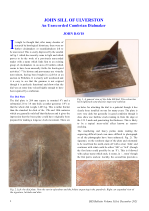
Analyses a newly discovered, unrecorded 17th-century horizontal Cumbrian dial by John Sill, dated 1737. It describes the dial plate specifications, unusual thickness, features (such as oak leaf borders), and XRF materials analysis, identifying copper sources and the controversial use of a selenium-based artificial patina during a past restoration.
Dials: Horizontal, Historical Dials, Restoration projects, Sundial Design & Layout
December 2021
Page 17
Page 17
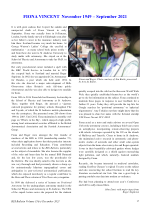
Commemorates Fiona Vincent (1949–2021), the Bulletin's regular proofreader, noting her career as Dundee City Astronomer where she designed two sundials. Highlights her foundational work in positional astronomy web notes, contributions to the BSS Datacard, and research into moondials and small solar-system objects.
Historical Dials, Sundial Design & Layout, The BSS and Members
March 2020
Page 11
Page 11
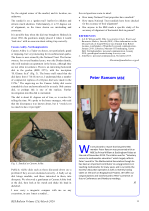
A congratulatory note reporting that long-time BSS member Peter Ransom was presented with an MBE by Prince William in November 2019 for voluntary service to mathematics education. He is noted for contributing to using gnomonics in teaching mathematics and currently serves as the Society’s Education specialist.
The BSS and Members
March 2020
Page 14
Page 14
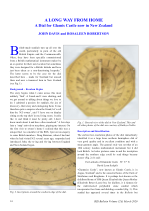
Investigates a brass northern hemisphere dial found in New Zealand, identified by its inscription as made for Glamis Castle, Scotland (Latitude 56° 37′ N) and signed 'David Lyon Sculpsit'. Detailed analysis of the Coat of Arms and Equation of Time scale dates the dial to between 1710 and 1752, likely commissioned around the 1725 marriage of the 6th Earl of Strathmore, Charles Lyon, to Susan Cochrane. The dial was never installed at Glamis.
Dials: Horizontal, Equation of Time, Historical Dials, Mottoes
March 2020
Page 38
Page 38
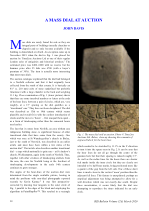
Examines a rare 8½-inch stone cube mass dial (13th or 14th century) sold at auction, originating from South Norfolk. Analysis shows it qualifies as a 'transitional dial' with roughly 15° spacing between lines, possibly reflecting the early use of unequal or equal hours related to clocks. Its existence, along with others in Norfolk, suggests the county was prominent in timekeeping developments in the early 14th century.
Dials: Cube, Dials: Mass Dials, Dials: Unusual, Historical Dials
June 2020
Page 2
Page 2
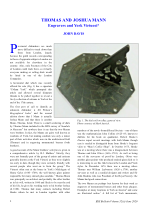
This article researches the work of late 17th-century York artisans Thomas and Joshua Mann, who, though primarily known for architecture and engraving, were also notable sundial makers. The article details several of their horizontal, vertical, and portable dials.
Dials: Horizontal, Dials: Vertical, Dials: Portable, Historical Dials
June 2020
Page 7
Page 7
This short article presents a picture of a west-facing sundial on a church in Ragusa, Sicily. The dial is painted in normal Mediterranean style, shows Italian hours, and is notable for its gnomon which acts as a horizontal support for the nodus.
Dials: Vertical, Dials: Unusual, How Sundials Work
June 2020
Page 24
Page 24
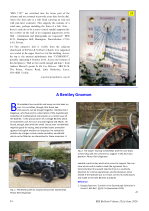
This short piece highlights a unique modification made to a vintage Bentley: a custom-made central stay for a secondary windshield, designed to function visually like a gnomon for a horizontal dial.
Dials: Horizontal, Dials: Unusual, Sundial Design & Layout
June 2020
Page 31
Page 31
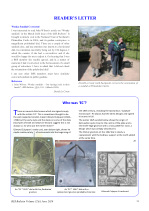
This piece investigates the identity of the sundial maker marked with the initials 'EC' on dials dated 1625 and 1642. It notes that the style and date pre-date the well-known London instrument maker Edmund Culpeper, suggesting an earlier, unidentified artisan.
Dials: Horizontal, Historical Dials
June 2020
Page 43
Page 43
Reviews two books: "Time of Our Lives: Sundials of the Adler Planetarium" by Sara J. Schechner, cataloguing nearly 500 dials; and "Mathematical Instruments in the Collections of the Bibliothèque Nationale de France" by Anthony Turner et al., featuring 138 instruments including five sundials and nocturnals.
Dials: Portable, Book Reviews, Dials: Nocturnals
June 2020
Page 44
Page 44
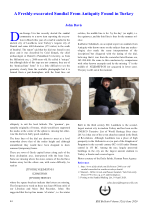
Reports on the March 2020 excavation of a marble "hemicyclium" sundial in the ancient city of Laodikeia, Turkey. The dial features Greek inscriptions for the winter solstice, equinox, and summer solstice, though its exact dating (Hellenistic vs. Roman era) is still debated.
Dials: Hemispherical, How Sundials Work, Historical Dials, Dials: Scaphe
September 2020
Page 4
Page 4
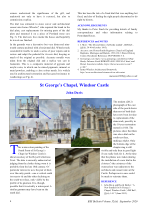
A watercolour painting likely from the late 18th century shows two dials (a vertical south and a declining south-west) on the chapel entry porch. Due to stonework replacement, most of both dials were lost, though evidence suggests there was once a third dial on the south-east face, forming a triplet.
Dials: Vertical, Historical Dials, Restoration projects
September 2020
Page 5
Page 5
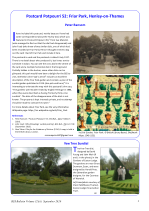
Features a photograph of the Yew Tree dial located in the Gardens of Easton Lodge, near Great Dunmow, Essex. The dial was designed by David Young and John Moir.
Sundial Design & Layout, The BSS and Members
September 2020
Page 9
Page 9
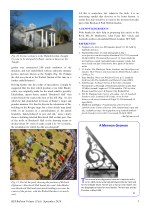
Describes an unusual 18th-century horizontal dial, signed Edward Hunter Fecit, which features a pierced gnomon depicting a merman. Hunter is identified as an Irish maker.
Dials: Horizontal, Dials: Unusual, Historical Dials
September 2020
Page 19
Page 19
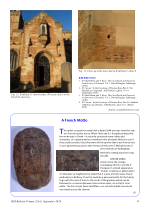
Concerns a horizontal dial dated 1644 seen at a French auction. The motto was deciphered as “CHEVER NOBLE,” possibly a personal motto associated with the family name Chever from Brittany.
Dials: Horizontal, Historical Dials, Mottoes
September 2020
Page 21
Page 21
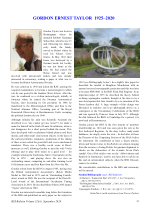
An obituary for Gordon Ernest Taylor (no. 146), the BSS's first Registrar, renowned for his work in astronomy and lunar occultations. Highlights his gnomonic contributions, including a paper on reclining equiangular sundials (Foster-Lambert dial).
Dials: Foster-Lambert, Mathematics of Dialling, The BSS and Members
September 2020
Page 22
Page 22
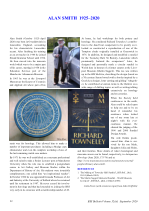
An obituary for Alan Smith (no. 49), noting his career in museum studies and horology. He designed the Towneley Hall Sundial and the Martin Suggett Memorial Sundial in Welsh slate, and contributed extensively to the Bulletin.
Sundial Design & Layout, The BSS and Members
September 2020
Page 29
Page 29
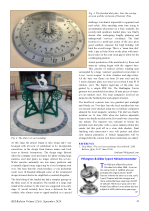
Notes that a rare, early Type 6 Tropical Pilkington & Gibbs Heliochronometer, featuring a strong base covering 90° of latitude, was offered for sale in 1996.
Dials: Heliochronometer, Dials: Portable, Historical Dials
December 2020
Page 36
Page 36
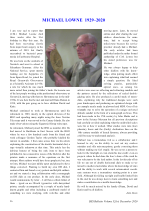
Obituary for Michael Lowne (BSS member 404), who worked at the Royal Greenwich Observatory from 1950 to 1989. Known for his patience and problem-solving, he contributed articles on double horizontal dials, reflecting and refracting sundials, moondials, and solving the operation of a unique 17th-century universal altitude sundial.
Dials: Reflected, Historical Dials, Dials: Double Horizontal
December 2020
Page 37
Page 37
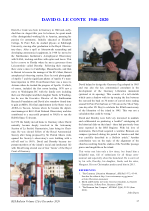
Obituary for David O. Le Conte, an astronomer who spent much of his distinguished career tracking satellites for NASA and working on the Hubble Space Telescope. He was a key figure in Guernsey's astronomical and social life, designing the Guernsey Liberation monument and collaborating on a booklet cataloguing the island’s historical sundials.
Dials: Unusual, Historical Dials
June 2019
Page 13
Page 13
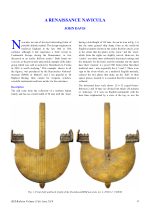
Studies a rare, previously unrecorded Renaissance portable altitude sundial (navicula), acquired by the Bayerisches Nationalmuseum. The brass instrument is ship-shaped and follows the medieval English tradition but uses later numerals. Metallurgical analysis reveals a standard brass alloy, and its engraved date table aligns with 15th-century manuscripts.
Dials: Portable, Historical Dials
June 2019
Page 28
Page 28
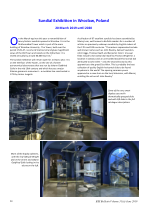
Reports on a new exhibition of 87 historic sundials, assembled by Maciej Lose, in the Mathematical Tower of Wrocław University. The collection includes a rare double horizontal dial by John Allen, and is considered the best collection of quality English horizontal dials globally.
Dials: Double Horizontal, Dials: Horizontal, Historical Dials
December 2019
Page 2
Page 2
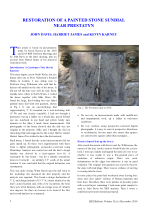
This article details the complex restoration of a large, venerable painted stone sundial near Prestatyn. After initial miscalculations, detailed analysis confirmed its 18th-century origin and correct design latitude. Scientific paint analysis suggested an original smalt blue and gilded finish. The sundial was subsequently restored, repainted, gilded, and reinstalled, canted correctly for its location.
Dials: Vertical, Historical Dials, Restoration projects, Sundial Design & Layout
March 2018
Page 2
Page 2
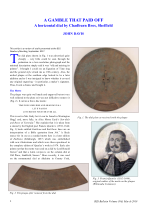
Describes the acquisition and scholarly investigation of a 19th-century horizontal dial plate. Removing a later plaque revealed the signature of previously unrecorded sundial makers, Chadburn Bros, Sheffield. The dial features an Equation of Time ring, and its composition (naval brass) and craftsmanship are analyzed, filling a gap in the history of regional makers.
Dials: Horizontal, Historical Dials, Mottoes
March 2018
Page 13
Page 13
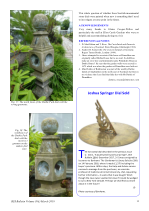
Reports on the auction sale of a Joshua Springer horizontal dial for £1,375. The purchaser, based in the USA, subsequently contacted the BSS Help-and-Advice service seeking information on adjusting the dial for a New York latitude.
Dials: Horizontal, Historical Dials, The BSS and Members
June 2018
Page 47
Page 47
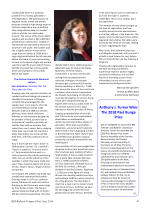
Reports that BSS member Anthony Turner was awarded the 2018 Paul Bunge Prize. The prize recognises outstanding contributions to the history of scientific instruments, honouring Anthony's lifetime achievements in astronomical and mathematical-physical instruments.
The BSS and Members
September 2018
Page 19
Page 19
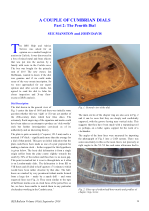
Describes a 1695 brass horizontal dial bought at auction in Carlisle, designed for latitude 54°. The florid motto ‘Ut Hora Sic Vita’ and signature Lawrance Swarbricke, an excise officer in Penrith, suggest he customized a dial commissioned from a clockmaker. Metallurgical analysis reveals a mid-zinc leaded brass composition typical of the period.
Dials: Horizontal, Historical Dials
September 2018
Page 28
Page 28
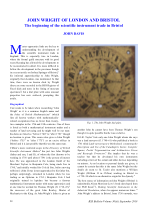
Investigates John Wright, a London-trained instrument maker who initiated Bristol’s scientific instrument trade in 1756. A rare, well-preserved horizontal dial plate signed 'Jo Wright London' is analysed, showing fine engraving and wax infill. The plate features unusual slots around the compass rose whose purpose, possibly related to magnetic variation or EoT, remains an open puzzle.
Dials: Horizontal, Historical Dials, Sundial Design & Layout
December 2018
Page 2
Page 2
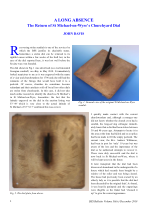
Details the successful recovery of a substantial 1796 brass horizontal churchyard dial from St Michael-on-Wyre, Lancashire, after it was stolen decades prior and listed on eBay in 2018. The dial is exceptional due to its engraved transversals, reflecting the influence of London instrument makers. Its metallurgy, gnomon angle, and mottoes are analysed.
Dials: Horizontal, Historical Dials
March 2017
Page 2
Page 2
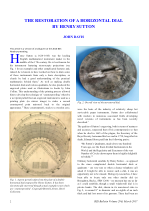
This article details the restoration of a rare, 1652 circular horizontal dial by Henry Sutton, a leading 17th-century instrument maker. Analysis revealed its accuracy but also a beginner’s delineation mistake (wrong centres used for back-hours). The brass plate showed remarkably uniform thickness and bore a unique motto: “As shade doth pass from line to line...”. A replacement gnomon was manufactured.
Dials: Horizontal, Historical Dials, Mathematics of Dialling, Mottoes, Restoration projects
March 2017
Page 15
Page 15
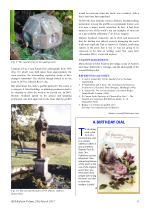
This short item features a 1926 birthday postcard, printed by Raphael Tuck & Sons, which includes a verse using the original word 'dial'. The use of 'dial' rather than the then more common form 'sun-dial' or 'sundial' is highlighted.
March 2017
Page 28
Page 28
Description of the Exmoor Sundial and Starclock, an armillary sphere unveiled in 2015. Unusually, this stainless steel dial incorporates a nocturnal mounted on its meridian ring, allowing time measurement at night by sighting the North Star and guide stars in Ursa Major (The Plough).
Construction Projects, Dials: Armillary Sphere, Dials: Nocturnals
March 2017
Page 40
Page 40
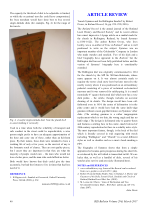
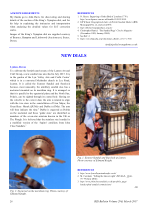
Review of Robert Ovens’ article in the 'Rutland Record' on the Isaack Symmes (c.1580–1622) Ridlington Sundial (1614). Notes the small horizontal dial's old-fashioned design and the detailed biography of Symmes. The dial's back is literally covered in trial engravings, including the words “Ridlington” and “Church”.
Book Reviews, Dials: Horizontal, Historical Dials
June 2017
Page 15
Page 15
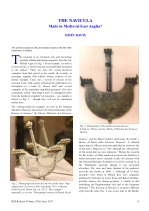
This article examines the navicula, a rare portable altitude dial from the late Middle Ages. It suggests the dial is uniquely English and likely originated in East Anglia, based on geographical links to known examples and associated English manuscripts.
Dials: Portable, Dials: Unusual, Historical Dials
June 2017
Page 32
Page 32
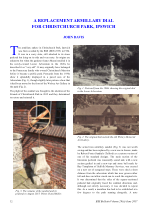
This article reports on the restoration project to replace a heavily rusted, old iron armillary sphere in Ipswich's Christchurch Park. A new bronze dial, custom-made by Robert Foster Sundials, was mounted on a restored pedestal and dedicated to the recently deceased Dr John Blatchly MBE.
Dials: Armillary Sphere, Restoration projects
June 2017
Page 38
Page 38
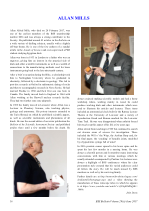
This is an obituary for Allan Alfred Mills (1933–2017), BSS membership number 008, who was a strong contributor to the Bulletin. A lecturer in Planetary Science, he was known for his work on scientific instruments, models (often in wood), and investigation into obscure phenomena.
The BSS and Members
December 2017
Page 2
Page 2
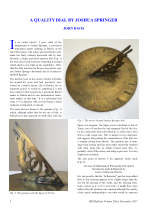
Describes a large, superior, 18th-century horizontal dial by provincial Bristol maker Joshua Springer, which features a pierced gnomon engraved with the figure of Triton and a ring listing 28 geographical locations. The craftsmanship of this dial elevates Springer's perceived standing.
Dials: Horizontal, Historical Dials
December 2017
Page 15
Page 15
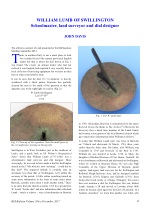
Discusses a weathered horizontal dial from 1765 found in Turin, signed by Yorkshire dial designer William Lumb (1737–1801). Analysis revealed the dial plate was good brass, but the gnomon was cast from an extraordinary alloy of copper, lead, and high tin content, likely recycled pewter.
Dials: Horizontal, Historical Dials
December 2017
Page 21
Page 21
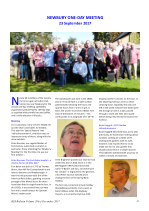
A detailed report on the BSS one-day meeting, summarising talks on topics including the Fort Belan sundial, DIY heliochronometers, multi-centre delineation, promotion via social media, the astronomical Culpeper dial, the Gnomonical Universal Nomograph (GUN), and the mechanical generation of the Equation of Time using equation clocks.
Dials: Heliochronometer, Equation of Time, Historical Dials, The BSS and Members
March 2016
Page 13
Page 13
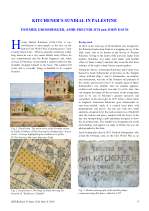
Details the sophisticated east–west sundial presented by Horatio Herbert Kitchener in Haifa in 1875 to his host, Jacob Schumacher. The dial uses a vertical brass plate with apertures to cast light spots onto a bottom plate marked with a split analemma to show local mean time.
Dials: Noon Lines, Equation of Time, Historical Dials, Sundial Design & Layout
March 2016
Page 21
Page 21
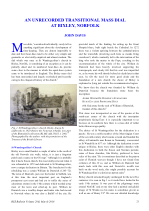
Historical investigation into a transitional mass dial at St Wandregesilius’s church, Bixley, dated after 1272. The numbered hour-lines (VI-XII-VI) suggest it pre-dates scientific dials and provides insight into the introduction of the equal-hour system in medieval England, possibly linked to Norwich's early clock usage.
Dials: Mass Dials
June 2016
Page 2
Page 2
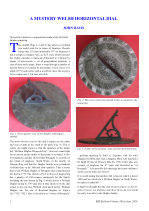
Investigation into a rare 1775 brass horizontal dial commissioned by William Hughes of Bryngola, Anglesey. The dial features complex furniture (EoT scale, transversals, geographical locations) and a questionable coat of arms. Metallurgical analysis suggests it was a custom cast piece, possibly engraved by a specialist working for the Owen clockmaking dynasty in Llanrwst.
Dials: Horizontal, Historical Dials
June 2016
Page 15
Page 15
Provides further details on the East–West sundial presented by Kitchener (previously covered in the March 2016 issue). The author notes a similar dial appeared in an auction catalogue, suggesting it wasn't a unique design by Kitchener himself. The dial works at any latitude by tilting and was likely made by a French instrument maker.
Dials: Unusual, Historical Dials
June 2016
Page 26
Page 26
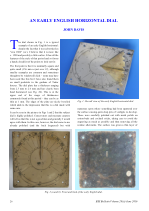
Examination of a small, nominally square horizontal dial believed to date from circa 1590, despite being advertised as circa 1800. Features typical of the period include hand-hammered brass, inward-facing, punched numerals, quarter-hour dots, and a latitude set for London (51.5°), though the delineation suggests 55.9°.
Dials: Horizontal, Historical Dials
September 2016
Page 2
Page 2
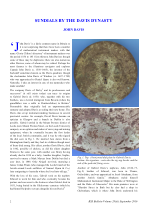
Investigates two horizontal sundials made by the instrument makers Gabriel Davis (c. 1820) and John Davis (c. 1850) of Derby. The article compares their engraving styles and uses X-ray fluorescence (XRF) and thickness profiling to analyse the metallurgy of the plates, revealing differences in casting and manufacturing technology between the two periods.
Dials: Horizontal, Historical Dials
December 2016
Page 12
Page 12
A study of Joshua Springer (1732–1812), a prosperous Bristol mathematical instrument maker. Detailed analysis, including XRF metallurgy, is provided for one of his c. 1800 brass horizontal dials, showing London-style influence and local brass origin. Springer was also involved in freemasonry and unsuccessful ballooning plans.
Dials: Horizontal, Historical Dials
June 2015
Page 2
Page 2
This article describes a small, rare horary quadrant found near Chetwode, Buckinghamshire, in 2014. It is identified as a *quadrans vetustissimus*, designed for unequal hours, likely dating from the mid-13th century or later, and includes a shadow square.
Dials: Portable, Historical Dials, Mathematics of Dialling
June 2015
Page 37
Page 37
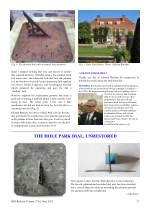
Short descriptive notes accompanying photographs showing the Hole Park dial prior to restoration, highlighting the heavily patinated and scratched dial plate which had been stretched into a convex shape by previous damage.
Historical Dials, Restoration projects
September 2015
Page 47
Page 47
Provides historical documentation (recovered notes) confirming written evidence of a dial being purchased and "set on my bruge" (drawbridge) at Little Saxham Hall, Suffolk, in 1505, during the reign of Henry VII, predating Nicolaus Kratzer's popularisation of dials.
Historical Dials
December 2015
Page 35
Page 35
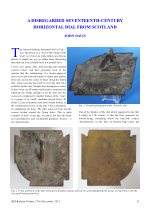
Describes a battered brass horizontal dial acquired via auction, dating to the 17th century based on inward-facing numerals and hammered plate thickness. Discusses its specialized cast gnomon and metallurgy, suggesting a Glasgow–Edinburgh origin.
Dialling Tools, Dials: Horizontal, Historical Dials
March 2014
Page 36
Page 36
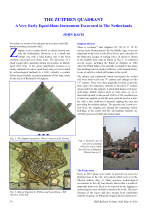
A copper-alloy quadrant excavated in Zutphen is securely dated to c.1300–1320, pushing back the date of known equal-hour quadrants in Europe by nearly a century. The instrument is engraved with an altitude scale, date/declination arcs, and hour lines for equal hours, implying a design latitude of approximately 52.0° N. This find reflects the increasing need for standardised time linked to the spread of tower clocks.
Dials: Astrolabe, Mathematics of Dialling, Dialling Tools, Historical Dials
June 2014
Page 7
Page 7
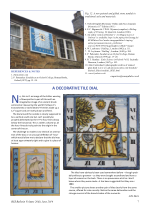
Describes a 12-inch square decorative tile dial featuring an imaginative image of an ancient Greek astronomer (possibly Eratosthenes or Archimedes). Although intended as a vertical south dial, the delineation appears incorrect due to hour lines drooping below the horizontal, leading to a challenge for readers to find a valid orientation.
Dials: Unusual, Dials: Vertical, Historical Dials, Sundial Design & Layout
June 2014
Page 21
Page 21
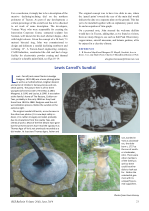
Describes the sundial located at The Rectory, Croft-on-Tees, the home of Lewis Carroll (Charles Lutwidge Dodgson). The extant dial, although corroded, is believed to be signed by Thomas Agar of York and features a substantial gnomon supported by unique pyramid supporters.
Historical Dials, Sundial Design & Layout
June 2014
Page 48
Page 48
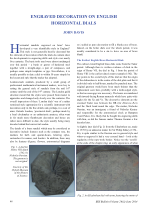
Traces the evolution of decorative styles on English horizontal brass dials from the Tudor era through to the 19th century, contrasting the restrained 'London pattern' with provincial styles. It details decorative elements such as pierced gnomons, the use of oakleaf borders, and the introduction of the Equation of Time scales.
Dials: Horizontal, Equation of Time, Historical Dials, Sundial Design & Layout
September 2014
Page 23
Page 23
A short note describing a horizontal sundial in Rethymnon, Crete, with a low gnomon angle and Greek lettering, where a local gentleman was seen checking his watch against the dial.
Dials: Horizontal
September 2014
Page 39
Page 39
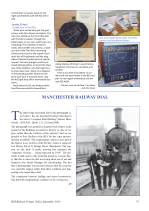
A brief note identifying a large horizontal dial shown in a 1936 photograph as the one previously described by Roger Bowling, located at Liverpool Road Railway Station, Manchester. The photograph shows the dial being inspected as it was taken out of use.
Dials: Horizontal, Historical Dials
March 2013
Page 28
Page 28
An account of a sundial whose gnomon and markings show evidence of multiple historical restorations. The author describes methods used to reveal earlier engravings and reconstruct its history.
Dials: Horizontal, Historical Dials, Restoration projects
March 2013
Page 29
Page 29
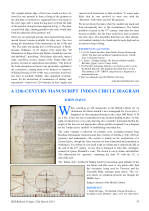
A study of a medieval manuscript containing a drawing of an Indian circle diagram. Davis analyses the geometrical principles behind its time-telling method and its significance in medieval astronomy.
Historical Dials, How Sundials Work, Mathematics of Dialling
March 2013
Page 45
Page 45
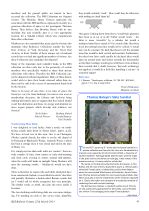
An illustrated study of a sixteenth-century slate sundial connected to the Boleyn family. Davis documents its restoration, symbolism, and stylistic features.
Dials: Horizontal, Historical Dials, Restoration projects
March 2013
Page 48
Page 48
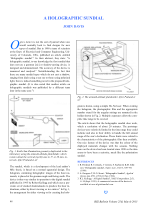
A discussion of an experimental holographic sundial design first described in 1990. The article explains how holography can replace the traditional gnomon and analyses its optical accuracy.
Dials: Unusual, How Sundials Work, Mathematics of Dialling, Sundial Design & Layout
June 2013
Page 8
Page 8
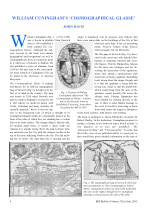
An analysis of William Cuningham’s 1559 book *The Cosmographical Glasse*, highlighting its astronomical diagrams, early depictions of sundials, and its significance for Renaissance scientific thought in England.
Historical Dials, How Sundials Work, Mathematics of Dialling
June 2013
Page 14
Page 14
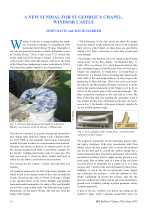
An illustrated account of designing and installing a new bronze vertical sundial at St George’s Chapel, Windsor Castle, featuring the Garter motto and a gnomon based on the Bray family’s heraldic ‘hemp press’.
Dials: Vertical, Historical Dials, Restoration projects, Sundial Design & Layout
June 2013
Page 41
Page 41
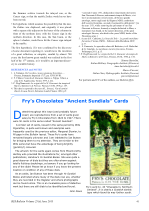
An exploration of collectible Fry’s Chocolate trading cards depicting historical sundials. The author traces their origins, artwork, and educational intent.
Historical Dials, Mottoes, The BSS and Members
September 2013
Page 12
Page 12
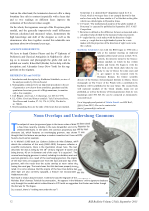
Examines the feature of noon overlaps in sundials, contrasting with the usual gnomon gap. A much earlier example than modern proprietary dials is described: an 18th-century bronze dial by engraver D Coster (dated 1715) with an unusual overhanging gnomon that results in overlapping hour scales at noon.
Dials: Horizontal, Historical Dials, How Sundials Work
September 2013
Page 40
Page 40
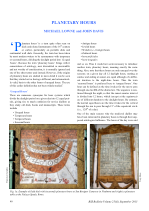
Detailed study differentiating ‘planetary hours’ from seasonal hours. Historically, planetary hours were defined by the time taken for 15-degree intervals of the ecliptic to rise (Sacrobosco’s definition), resulting in hours of unequal duration throughout the day, which are complex to delineate on sundials compared to the simpler seasonal definition.
Historical Dials, How Sundials Work, Mathematics of Dialling, Sundial Design & Layout
September 2013
Page 48
Page 48
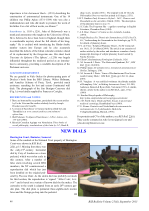
Report on the installation of a reproduction horizontal dial at Barrington Court, Somerset, commissioned by the National Trust. The new dial, created by Flowton Dials, replaces an early-19th-century horizontal dial by Cary of London that had been stolen. It is signed “After CARY, LONDON”.
Construction Projects, Dials: Horizontal, Restoration projects
December 2013
Page 7
Page 7
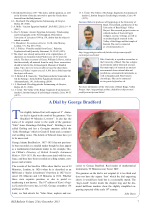
Analysis of a slightly battered 9" diameter horizontal dial signed by George Bradford of London (w. 1817–1851), who was a mathematical instrument maker. The article discusses his association with his son Isaac, his addresses, and notes that the gnomon is not original.
Dials: Horizontal, Historical Dials
December 2013
Page 14
Page 14
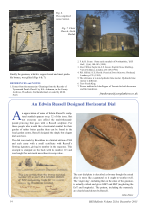
Describes a simple, elegant horizontal sundial designed by Edwin Russell, produced by Brookbrae in a limited edition of 500. The cast dial-plate is gunmetal, with etched 'engraving' for GMT and BST, neglecting the EoT and longitude.
Dials: Horizontal, Sundial Design & Layout
December 2013
Page 27
Page 27
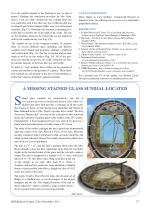
Reports the location of the "Roy Grosvenor Thomas" stained glass sundial, previously considered lost. Designed for latitude 51.5° and declination 16° W, it is tentatively dated to 1652 and carries the motto *Tempus Edax Rerum*.
Dials: Vertical, Historical Dials, Mottoes
December 2013
Page 31
Page 31
Describes a decorative, indoor ceramic sundial made by children of Tipton St John Church of England Primary School, given to Janet Jenkins. The headteacher designed the dial, and the children created the garden creatures around the edge.
DIY Sundial Projects, Dials: Unusual
March 2012
Page 1
Page 1
This article provides further research on Robert Stikford's manuscript 'De Umbris Versis et Extensis', pushing back its tentative dating from 1396-1401 to potentially the early last third of the fourteenth century based on newly uncovered records of his admission to holy orders.
Historical Dials
March 2012
Page 7
Page 7
This article describes a new 70 cm diameter stainless steel spherical dial by David Harber, unveiled at Balliol College, Oxford. It celebrates the thirtieth anniversary of women's admission to Balliol and includes features like calendar bands, tropic lines, and moon-dial scales.
Dials: Unusual, Construction Projects, Mottoes
March 2012
Page 17
Page 17
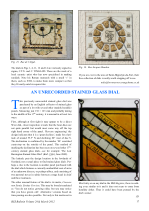
This article details a previously unrecorded 17th-century stained glass sundial. It's unusual for being a "great decliner" made for a latitude in the Scottish lowlands and for its unique motto, which suggests personal authorship rather than a known source.
Dials: Unusual, Historical Dials, Mottoes, Dials: Stained Glass
March 2012
Page 18
Page 18
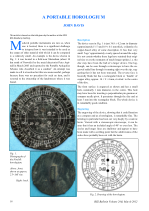
This article examines a medieval copper-based alloy device, found in Norfolk, which functioned as both a compass and a horologium. The fine engraving, including early Gothic lettering and 5° time subdivisions ("mileways"), suggests a 14th-century date and offers insights into medieval timekeeping and connections to local horology.
Dials: Portable, How Sundials Work, Historical Dials
June 2012
Page 12
Page 12
This article presents and translates a c.1440 manuscript from Aberdeen University Library, which contains what may be the earliest known description of how to make a horizontal sundial in English. It details a simple geometric construction method, discusses the design's unique features, and explores the type of gnomon described, providing insight into early scientific dials in England.
Dials: Horizontal, Historical Dials, Mathematics of Dialling, Sundial Design & Layout
June 2012
Page 47
Page 47
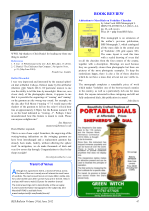
This is a review of Alan Cook’s 'Addendum to Mass Dials on Yorkshire Churches' (BSS Monograph 9), an extension of a previous publication cataloguing mass dials in Yorkshire. The monograph provides scaled drawings and descriptions of dials across the county, completing a comprehensive survey and serving as a must-read for those interested in these intriguing dials.
Book Reviews, Dials: Mass Dials
September 2012
Page 1
Page 1
The editor explains the shortage of material for this issue, so that several articles have been written by the editor. He encourages members to contribute various content, from short pieces to full-blown research studies. This issue features further articles about polyhedral dials.
The BSS and Members
September 2012
Page 8
Page 8
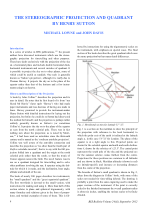
This article explores Henry Sutton's quadrant, which utilises a stereographic projection of the sky onto the equatorial plane, initially conceived by Thomas Harvey. It details the instrument's design, including scales for time-telling and other astronomical problems, and provides instructions for its use, such as finding the time at night using stars.
How Sundials Work, Mathematics of Dialling, Historical Dials
September 2012
Page 21
Page 21
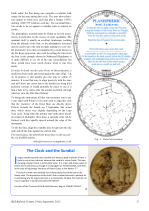
This brief piece features an early Netherlandish image, dating from the late 16th century, which combines a lantern clock and a sundial. It serves as a visual reminder that clocks merely indicate time, whereas sundials actively find time, subtly suggesting the clock's potential inaccuracy compared to the sundial.
Historical Dials, How Sundials Work
September 2012
Page 22
Page 22
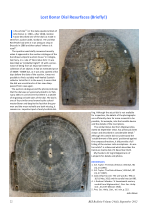
This article reports the brief reappearance of a 1634 slate equatorial dial by John Bonar, originally from Loudon Castle, Scotland, at a German auction. Unsold, it subsequently disappeared from public view. Despite missing its gnomon and moon volvelle, the dial is considered an important artefact of early Scottish dialling, featuring detailed engravings.
Dials: Equatorial, Historical Dials, Restoration projects
September 2012
Page 23
Page 23
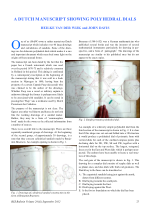
This article describes a mysterious Dutch manuscript from 1670-75 containing over 40 drawings and calculations for sundials, including elaborate polyhedral designs. It features designs attributed to Benjamin Braemers and a complex lectern polyhedral dial similar to Scottish examples, challenging readers to construct a 3D model.
Dials: Multi Faced, Historical Dials, Mathematics of Dialling, Sundial Design & Layout
September 2012
Page 28
Page 28
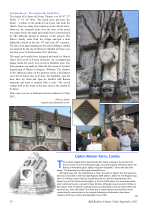
This entry describes a multiple scaphe dial at Upton Manor Farm, tentatively attributed to Edmund Gunter, featuring 29 or 30 individual dials crafted from Ketton stone. Located in an orchard, the property was once owned by Bishop Thomas Dove and is noted for its complex, original delineation.
Dials: Multi Faced, Dials: Scaphe, Historical Dials
September 2012
Page 32
Page 32
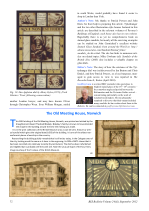
This entry features an 1842 etching of the Old Meeting House, Norwich, depicting a vertical sundial that dates the building to 1693. The sundial, which has undergone refurbishment and regilding, is noted for its unusual hour-line shape and the building's historical significance as one of the country's oldest non-conformist places of worship.
Dials: Vertical, Historical Dials
September 2012
Page 36
Page 36
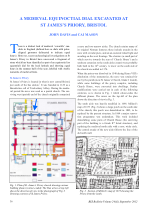
This article describes the excavation of a fragment of a medieval equinoctial (equatorial) dial at St James’s Priory, Bristol. Dated pre-1540 and likely late 14th/15th century due to the use of Arabic numerals, it is a significant find that reinforces awareness of early scientific dials in Europe, and is believed to be one of the oldest in Britain.
Dials: Equatorial, Historical Dials
September 2012
Page 40
Page 40
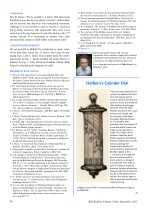
This entry describes a drawing of a cylinder (or shepherd's) dial by Hans Holbein the Younger, dating from 1532-1543. It is speculated that the image depicts a real dial either made by or planned by Nicholas Kratzer, Holbein's contemporary and Henry VIII's horologist. The drawing's cut-out nature and right-to-left month inscription are notable features.
Dials: Portable, Historical Dials, Sundial Design & Layout
September 2012
Page 43
Page 43
This article details two 19th-century drawings by Charles Robert Cockerell of Greek sundials, possibly newly excavated. One depicts an unknown classical conical dial with "lion legs" and the other illustrates a rare planar, vertical east-facing dial from Delos, which later came to reside in the Louvre, recording significant ancient finds.
Dials: Unusual, Historical Dials
December 2012
Page 18
Page 18
This article details a small, robust lead sundial, 51.5mm in diameter, found in the River Avon at Barford. Dated between the late 16th and late 17th centuries, its equi-angular, anticlockwise numbered hour-lines suggest a vertical dial, possibly an attempt at an equal-hour dial by a provincial artisan lacking scientific knowledge, with possible initials C W.
Dials: Vertical, Historical Dials, Sundial Design & Layout
December 2012
Page 41
Page 41
The article discusses helical sundials, particularly one made by Aylmer Astbury. These are a form of equatorial dial, with a brass strip helix marking hours via small holes or a terminator shadow. They can be adjusted for longitude and Equation of Time by rotating the helix on its axis, as explained in a 1992 Bulletin article.
Dials: Equatorial, Dials: Unusual, How Sundials Work, Sundial Design & Layout
December 2012
Page 41
Page 41
This entry describes a modern sundial from 1843 in the courtyard of the Mosque of Uqba (Great Mosque of Kairouan) in Tunisia. Engraved in Arabic script on a marble slab, it was designed by Almed Essoussi, inspired by Ibn al-Shatir's dial. It uses four separate point gnomons to indicate prayer times.
Dials: Unusual, Dials: Vertical, Historical Dials
March 2011
Page 17
Page 17
This article describes a polyhedral dial from Captain Samuel Sturmy's 1679 'The Mariners Magazine'. It's a rhombic cubo-octahedron dated 1667, said to have 27 individual dials, and features an unusual globe dial showing stars. The dial's current whereabouts are unknown.
Dials: Multi Faced, Historical Dials
March 2011
Page 20
Page 20
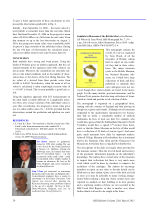
This section contains reviews of several books related to sundials and timekeeping, including 'Sundials in Museums of the British Isles' by Butson, Wilson & Wood, 'Tempus et Regula: orologi solari medievali Italiani' by Mario Arnaldi, and 'Cadrans Solaires de Bretagne' by J-P Cornec & P Labat-Segalen.
Book Reviews
June 2011
Page 8
Page 8
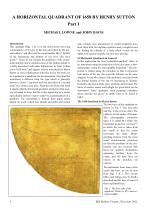
This article describes a unique 17th-century horizontal quadrant by Henry Sutton, detailing its stereographic projection, various scales for altitude, azimuth, time, and astronomical functions. It explains how the instrument, acting as a mechanical analogue computer, finds time from the sun's altitude.
Dialling Tools, Dials: Horizontal, Historical Dials, Mathematics of Dialling
June 2011
Page 26
Page 26
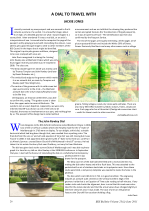
This article details the rediscovery and reinstallation of a lost John Rowley azimuth and equation of time dial from Blenheim Palace. It describes its unique features, including the deep double-ogee rim and specific gnomon design, and its historical significance.
Dials: Unusual, Equation of Time, Historical Dials, Restoration projects
June 2011
Page 51
Page 51
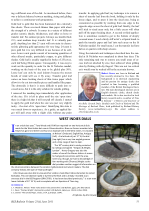
This piece reports on two horizontal sundials found in the West Indies. One at Nelson's Dockyard, Antigua, dated 18th-century and signed Gregory & Wright London, provides new information on makers' interconnections. Another by Henry Pyefinch in Barbados is also mentioned.
Dials: Horizontal, Historical Dials
September 2011
Page 2
Page 2
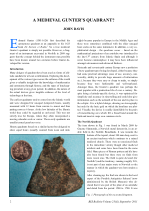
This article discusses the excavation of a quadrant fragment in Norfolk in 2009, initially misidentified as an astrolabe plate. Further investigation suggests it's a hybrid device combining features of a quadrans vetus and a Gunter's quadrant, leading to questions about its medieval origins despite Gunter's later development of his eponymous instrument.
Dials: Portable, Dials: Unusual, Historical Dials
September 2011
Page 23
Page 23
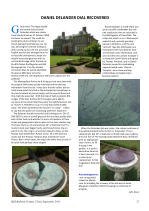
This report details the recovery of a stolen large double horizontal dial by Daniel Delander from Stanford Hall, thanks to Polish dialling enthusiast Maciej Lose. The dial, catalogued as DH-17, SRN 3607, is a high-quality instrument with Equation of Time scales and geographical place names. The article also mentions Delander's apprenticeship under Thomas Tompion, suggesting close working relationships between notable clockmakers.
Equation of Time, Historical Dials, Dials: Double Horizontal
September 2011
Page 45
Page 45
This second part examines the scales and uses of a 1658 horizontal quadrant by Henry Sutton, collaborating with John Collins. It details the matched sine and tangent scales for astronomical calculations, star positions for night-time finding, calendar tables for moon age and high water, and shadow/quadrat scales for measuring building heights. It also provides biographies of Collins, Dary, and Sutton, highlighting their roles in 17th-century London's mathematical community.
How Sundials Work, Mathematics of Dialling, Historical Dials
December 2011
Page 24
Page 24
This article discusses Robert Stikford, a 14th-century monk from St Albans, credited in Whethamstede’s Granarium (c.1430) with inventing the equal-hour sundial. His rediscovered extensive Latin treatise, 'De Umbris Versis et Extensis', describes geometric constructions for projecting shadow positions and includes tables for Oxford’s latitude. It showcases detailed designs for various vertical dials, revealing sophisticated early European scientific dialling.
Dials: Vertical, Historical Dials, Mathematics of Dialling, Sundial Design & Layout
December 2011
Page 49
Page 49
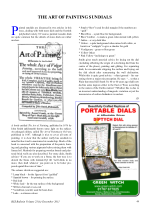
This article, drawing on John Smith's 1676 book 'The Art of Painting', discusses the techniques and colours used for painting sundials, particularly stone dials. It provides practical advice on preparing surfaces, mixing pigments, and laying out dials, including recommendations for repainting and a note on a misconception about earth's motion affecting dial orientation.
Construction Projects, Historical Dials, Restoration projects, Sundial Design & Layout
March 2010
Page 10
Page 10
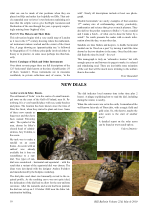
A collection of short articles describing new sundials. These include an equatorial 'solar acorn' dial in Solar, Russia; a vertical declining dial in Oxford inspired by Christopher Wren; and a mass-produced, flat-packed equatorial 'Sun Disc' from Australia designed for various latitudes.
Dials: Vertical, Dials: Equatorial, Dials: Unusual, Construction Projects
March 2010
Page 24
Page 24
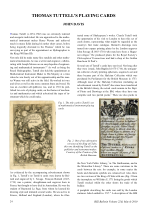
Discusses two sets of playing cards published in 1701 by instrument maker Thomas Tuttell, which functioned as a trade catalogue. The cards illustrate instruments like elliptical dials, dialling globes, and projections of the sphere used in dialling.
Dialling Tools, Historical Dials
June 2010
Page 10
Page 10
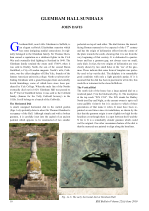
This article explores several sundials associated with Glemham Hall. It details a small, unsigned 17th-century horizontal dial, a large painted vertical dial from 1769, and discusses the 'Elihu Yale's sundial' mounted on a John Nost lead figure, whose current whereabouts are unknown but was possibly seen at Yale University. A modern 'Three Graces' horizontal dial is also mentioned.
Dials: Horizontal, Dials: Vertical, Historical Dials
June 2010
Page 18
Page 18
This paper introduces the horizontal quadrant, a less common but useful altitude sundial type, sharing its basic stereographic projection with the double horizontal dial. It discusses its history, including European precursors like Hartmann's compast and Apian's triens, and English developments by Delamain and Oughtred. The article describes the general form and known examples, detailing how it uses the sun's altitude to tell time.
How Sundials Work, Mathematics of Dialling, Historical Dials
June 2010
Page 51
Page 51
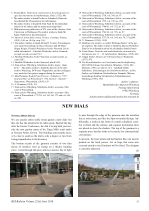
This short note describes a new sundial under construction at Trago Mills retail outlet in Newton Abbot, Devon. The dial, facing close to south, features a gnomon with a slot for a narrow line of light at solar noon and a cylindrical cross-bar nodus to show solstice and equinox declination lines. The hour points and lines are currently painted, with hopes for more durable stainless steel fittings.
Construction Projects, Dials: Vertical, Sundial Design & Layout
June 2010
Page 52
Page 52
This is a review of Catherine Eagleton's book, 'Monks, Manuscripts and Sundials: The Navicula in Medieval England,' which emerged from her doctoral research. The book focuses on the rare medieval navicula, or 'Little ship of Venice,' detailing known examples and newly uncovered 15th-century manuscripts that describe its making and use. It reveals that the navicula was likely more common than previously thought and predates other universal altitude dials.
Book Reviews, Dials: Portable, Historical Dials
September 2010
Page 8
Page 8
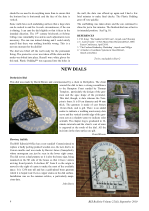
This section describes two new sundials: a 50 cm diameter slate horizontal dial by David Brown for a client in Derbyshire, resembling the Hampton Court sundial and featuring a nodus and coat of arms; and a Carrera marble house sign sundial by Harriet James for the BSS Editorial Office.
Construction Projects, Dials: Horizontal, Sundial Design & Layout
September 2010
Page 10
Page 10
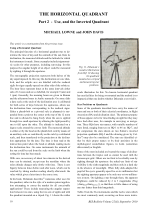
This article details the use of horizontal quadrants for time-finding and surveying, including a rare 'inverted' variant. It describes how to determine time from solar altitude and declination, and from stars at night, discussing the historical accuracy and limitations of these instruments.
How Sundials Work, Mathematics of Dialling, Historical Dials, Dials: Nocturnals
September 2010
Page 18
Page 18
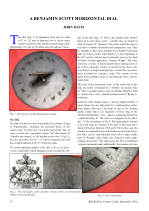
This article describes a small horizontal dial by Benjamin Scott, believed to have been made for Lochnaw Castle, Scotland. It features transversals for minute resolution, an Equation of Time ring, and specific gnomon supporters, linking Scott to John Rowley and discussing its provenance.
Dials: Horizontal, Equation of Time, Historical Dials
September 2010
Page 23
Page 23
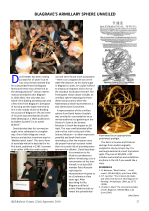
This article reports on the unveiling of a bronze armillary sphere by David Harber, created to celebrate his lineage to the distinguished 16th-century mathematician and diallist John Blagrave. The sphere represents Blagrave's 'Mathematical Jewel' and was unveiled at the Science Museum in South Kensington.
Construction Projects, Historical Dials, Dials: Armillary Sphere
December 2010
Page 11
Page 11
This entry describes a now-lost sundial designed by Nicholaus Kratzer in 1520 for St Mary's churchyard wall in Oxford. Based on a design in Kratzer's MS De Horologiis it showed Babylonian hours in green on the East side, Italian hours in blue on the West, and ordinary hours and declinations on the south face.
Dials: Multi Faced, Dials: Unusual, Historical Dials
December 2010
Page 37
Page 37
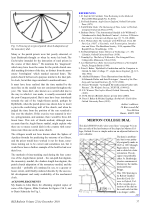
This entry describes the sundial on the east side of the chapel at Merton College, Oxford. Dating possibly from 1629 or 1659, and potentially redesigned by Jo. Bainbridge or Henry Briggs, it uses a simple nodus on an adjacent buttress to cast a shadow with criss-cross lines, although an extension on the south side shown in a 1922 drawing is no longer visible.
Dials: Unusual, Historical Dials
March 2009
Page 7
Page 7
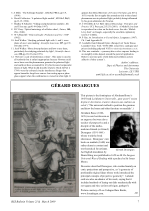
This piece discusses Gérard Desargues (1591-1661), a French mathematician and engraver known for his work on conic projections and perspective, which introduced key concepts of projective geometry. His book on sundials (1640) was theoretical, but his disciple Abraham Bosse published a more accessible version in 1643.
Book Reviews, Mathematics of Dialling, Historical Dials
March 2009
Page 20
Page 20
This is a report on the Scientific Instrument Society's 16th annual invitation lecture by Dr Jim Bennett, titled "Sundials and the Rise and Decline of Cosmography in the ‘Long’ Sixteenth Century". The lecture explored how sundials were integral to cosmography, a comprehensive study of the universe during the Renaissance, covering both celestial and terrestrial measures.
Historical Dials
March 2009
Page 31
Page 31
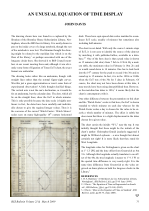
This article describes a unique Equation of Time (EoT) chart found in Nottingham, featuring straight lines for EoT values in whole minutes plotted against a non-linear calendar date axis. Dated possibly to the 1830s or 1840s, it differs from typical "Watch Faster / Watch Slower" scales.
Mathematics of Dialling, Equation of Time, Historical Dials
June 2009
Page 11
Page 11
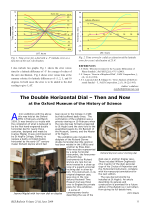
Reports on a mini-exhibition at the Oxford Museum of the History of Science featuring a new hand-engraved double horizontal dial by Joanna Migdal. The exhibition also included historical examples by Richard Glynne and Elias Allen, and related contemporary books.
Historical Dials, Dials: Double Horizontal
June 2009
Page 12
Page 12
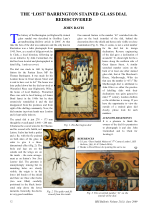
Announces the rediscovery of the Barrington (or Highworth) stained glass sundial, made in 1641 by Baptist Sutton. Previously thought lost, the dial was located with a private owner. The article details its features, including its coat of arms, a 3D-effect fly, and a scratched declination number.
Dials: Vertical, Historical Dials, Dials: Stained Glass
June 2009
Page 48
Page 48
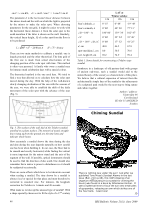
A short note featuring a 1645 drawing by Athanasius Kircher of an ‘Organum Heliocausticum’. This is a sundial designed to chime the hours by using a spherical lens to focus sunlight onto gunpowder, which in turn releases an arm to strike a bell.
Dials: Unusual, Historical Dials
September 2009
Page 2
Page 2
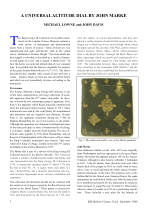
Describes a unique universal altitude dial made by John Marke, possibly for Robert Boyle, now in the London Science Museum. The article details the instrument's provenance, its physical characteristics, and its complex operation as a combined clinometer and sundial. It provides an in-depth analysis of the mathematical principles involved and its potential accuracy.
Dials: Portable, Dials: Unusual, Historical Dials, Mathematics of Dialling
September 2009
Page 20
Page 20
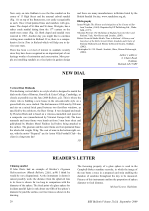
Describes a new declining vertical dial recently installed in the Midlands. The design is based on the dials at Gonville & Caius College, Cambridge. The article details its large size, construction materials including vitreous-enamelled steel and brass, and a unique feature: the coat of arms of Aston Villa Football Club.
Construction Projects, Dials: Vertical, Sundial Design & Layout
September 2009
Page 42
Page 42
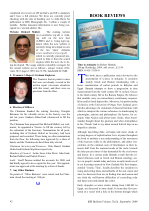
Features two reviews. The first covers "Time in Antiquity" by Robert Hannah, a book on Greek and Roman timekeeping. The second reviews Denis Savoie’s "Sundials: Design, Construction, and Use," a modern, practical text on constructing various types of sundials, translated from the French original.
Book Reviews
September 2009
Page 45
Page 45
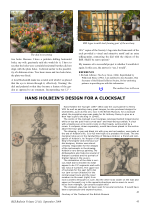
Presents and discusses a drawing by Hans Holbein the Younger for a 'clocksalt'—a combined hourglass, clock, and salt cellar—designed as a gift for Henry VIII. The piece incorporates two curved sundials, whose design is attributed to Nikolaus Kratzer, and the author notes their curious and unusual delineation.
Dials: Unusual, Historical Dials
December 2009
Page 6
Page 6
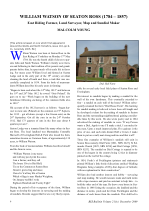
A biography of William Watson, a farmer, surveyor, and self-taught sundial maker from East Yorkshire. The article details his life, his unique 'canted-over gnomon' dial designs, his publication on dialling, and other interests. An addendum discusses the surviving examples of his work.
Dials: Vertical, Historical Dials
December 2009
Page 13
Page 13
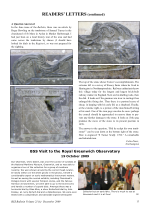
A short report on a British Sundial Society members' visit to the Royal Greenwich Observatory. The group received a guided tour, viewed famous horological exhibits like the Harrison chronometers, and were given special access to handle rare and notable sundials from the museum's storage rooms.
Historical Dials, The BSS and Members
December 2009
Page 20
Page 20
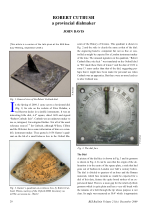
An investigation tracing the history of a 1699 horizontal dial signed by Robert Cutbush. The author identifies the maker as part of a family of Kent clockmakers and discovers that the dial was stolen from Ightham churchyard before 1978. The article concludes with the dial's successful return.
Dials: Horizontal, Historical Dials, Restoration projects
December 2009
Page 37
Page 37
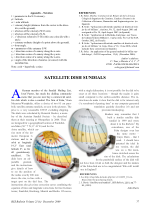
A report on a commercial satellite dish, produced by the German firm Fuba, that incorporates a functional sundial on its parabolic surface. The author notes that the dial is designed for a specific latitude and satellite position and remarks on its similarity to a dish dial he built himself in 1999.
Dials: Vertical, Dials: Unusual
March 2008
Page 43
Page 43
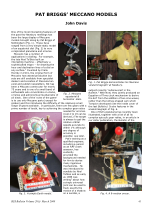
Showcases Pat Briggs' Meccano models, ranging from simple equatorial dials to complex planetaria and astronomical clocks. It highlights his ingenious mechanisms, including a universal joint for shadow tracking, an Equation of Time clock, and a 'Meccano Analemmagraph' for drawing the analemma, using cunningly-designed gear ratios.
Dials: Equatorial, Equation of Time, Dialling Tools, DIY Sundial Projects
June 2008
Page 64
Page 64
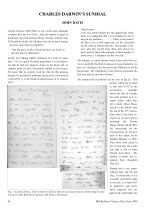
This article details Charles Darwin's horizontal sundial at Down House, used for regulating his clocks. It describes the dial's unpretentious design, its historical context, and recent restoration efforts after two accidents, including the discovery that the gnomon was a replacement.
Dials: Horizontal, Historical Dials, Restoration projects
September 2008
Page 117
Page 117
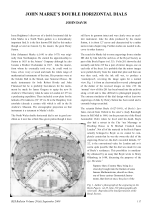
This article discusses John Marke's newly discovered double horizontal dial in North Wales, noting its significance as the first known by this maker. It provides background on Marke, his apprenticeship to Henry Sutton, and his work as a mathematical instrument maker, also linking him to Robert Boyle through an engraving and a Science Museum instrument.
Historical Dials, Dials: Double Horizontal
December 2008
Page 157
Page 157
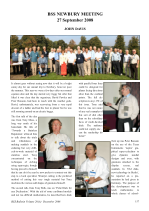
A report on the BSS Newbury meeting on 27 September 2008, detailing talks on stainless steel sundials, polar dials, dynamic sundial design using calculators, and 3-D modelling for overshadowing. It also covers a survey of early horizontal dials in Flintshire, exhibits, and presentations on paper sundials and dials in Mexico and the southern hemisphere.
Dials: Horizontal, Dials: Polar, Sundial Design & Layout, The BSS and Members
December 2008
Page 188
Page 188
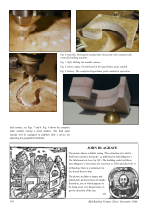
This short note features an illustration from John Blagrave's "The Mathematical Jewel" showing a diallist determining wall declination. It briefly mentions Blagrave's life in Reading and the various tools depicted in the drawing, such as a square, plumb-bob, and simple theodolites.
Dialling Tools
December 2008
Page 197
Page 197
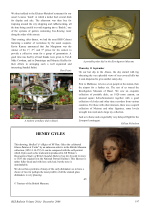
This note presents a drawing of Henry Gyles, a celebrated glass-painter from York and prolific stained glass dialmaker, from the British Museum collection. It compares this effigy with a self-portrait Gyles used as his tradecard, highlighting the rarity of having multiple portraits of early dialmakers.
Historical Dials, Dials: Stained Glass
December 2008
Page 203
Page 203

This article investigates a puzzling sundial in the Rose Garden of Villa Cimbrone at Ravello, Italy. Despite its fine design and the builder's knowledge of clocks, the dial's inclination and gnomon angle are incorrect for its latitude, suggesting it was originally a horizontal dial for England or is a non-dial. It also mentions another horizontal dial at the villa.
Dials: Unusual, Historical Dials
March 2007
Page 27
Page 27
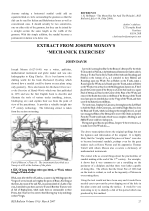
John Davis presents an extract from Joseph Moxon's 1678 book, 'Mechanick Exercises,' detailing a method for laying moldings on round brass pieces without a lathe, invented after the Fire of London. This technique is suggested to have been used for horizontal sundials, offering insight into 17th-century sundial making practices and Moxon's ingenuity.
Dialling Tools, Historical Dials
March 2007
Page 28
Page 28
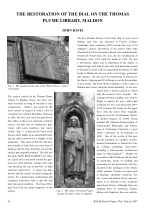
This article details the restoration of a vertical lead sundial on the Thomas Plume Library in Maldon, Essex. It describes the dial's historical context, its construction from lead sheet over oak boards, the damage caused by squirrels, and the repair process including repainting and gilding. The dial is a direct south design and dates from around the turn of the 18th century.
Dials: Vertical, Historical Dials, Restoration projects
June 2007
Page 50
Page 50
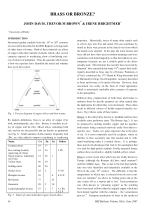
This article explores the material composition of historical horizontal garden sundials, specifically distinguishing between brass and bronze alloys. It discusses the challenges of visual identification due to patination and details an X-ray analysis method used to determine the actual metallic composition of dial samples.
Historical Dials
September 2007
Page 123
Page 123
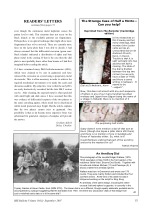
This short piece features a 1928 photograph of novelist Edgar Wallace with a rather fine armillary sphere in his garden. It questions whether this dial, or one of the same design with an unusual bell-and-sphere supporter, dating from 1730 at Hever Castle, are unique or part of a production series from such an early date.
Historical Dials, Dials: Armillary Sphere
September 2007
Page 128
Page 128
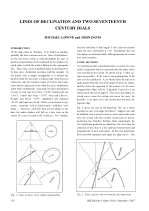
This article explores declination lines on sundials as conic sections and details methods for their delineation. It examines two 17th-century horizontal dials by Isaac Symmes (Science Museum, Oxford), noting errors in their declination lines and the presence of seasonal hours and lunar volvelles. A new graphical method for drawing declination lines is also presented.
Historical Dials, How Sundials Work, Mathematics of Dialling, Sundial Design & Layout
December 2007
Page 172
Page 172
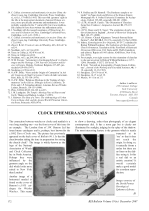
This article discusses the historical connection between clocks, watches, and sundials, referencing an example on the cover. It examines images from J.W. Benson Ltd catalogues featuring sundials, including a horizontal sundial with a truncated gnomon creating a nodus. The author speculates whether these depicted dials are real or artistic creations.
Dials: Horizontal, Historical Dials, How Sundials Work
December 2007
Page 179
Page 179
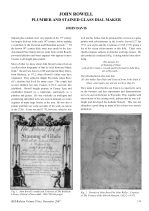
This biography details John Rowell (1689-1756), a provincial plumber and self-taught glass painter who became known for stained glass sundials in the 18th century. It covers his life, business, the influence of his clockmaker father-in-law, and two notable dials: the 'IR 1733' dial at Arbury Hall and the 1734 Purley Hall dial. The latter has undergone restoration, with analysis showing engraving errors and the design of a replacement gnomon.
Dials: Vertical, Sundial Design & Layout, Restoration projects, Historical Dials, Dials: Stained Glass
February 2006
Page 33
Page 33
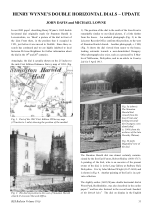
This update provides further information on Henry Wynne’s double horizontal dials, including new historical evidence for the Staunton Harold dial’s position from 19th-century maps and photographs. It also discusses the Wrest Park replica and criticises the National Trust’s decision to preserve a bent gnomon on the Powis Castle dial as part of its history.
Restoration projects, Historical Dials, Dials: Double Horizontal
June 2006
Page 49
Page 49
The new Editor of the Bulletin thanked his predecessors. He stated that any future changes to the Bulletin would depend on an analysis of the recent Readership Survey. He encouraged new authors to submit articles for the Bulletin.
June 2006
Page 61
Page 61
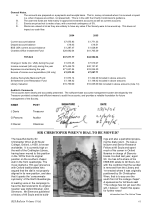
This article discusses the potential relocation of a sundial designed by Sir Christopher Wren at All Souls’ College, Oxford. It details the long-standing grievance of traditionalists about its current misaligned position and the condition in a will left by Oxford librarian John Simmons for its return to its original location.
Historical Dials, Restoration projects
September 2006
Page 99
Page 99
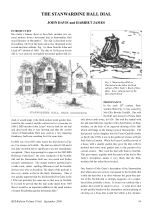
This article details the rediscovery of a rare 1560 English horizontal garden sundial, previously mentioned in Mrs Gatty's book and thought lost. It describes the dial's physical characteristics, unique mottoes, heraldic engravings, and the historical context of its ownership by the Corbet family, discussing its provenance, repairs, and original location.
Dials: Horizontal, Historical Dials, Mottoes
March 2005
Page 34
Page 34
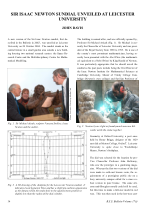
Describes unveiling of a bronze casting of Sir Isaac Newton for the new sundial at Leicester University. Covers lost-wax casting, assembly of multiple bronze sections, dimensional realignment, and recalculation of hour and date lines for new geometry. Discusses site installation, setting for local latitude and polar alignment.
Construction Projects, Dials: Equatorial
June 2005
Page 65
Page 65
Historical account of a 1743 theft trial at the Old Bailey where a man was sentenced to transportation for stealing a sundial. Includes details of the dial’s maker, Thomas Wright, and speculation on its fate.
Historical Dials
June 2005
Page 66
Page 66
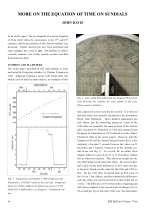
Continues analysis of how the Equation of Time was represented on sundials, with historical examples and refinements in accuracy by 17th and 18th century astronomers.
Equation of Time, Historical Dials, Mathematics of Dialling
September 2005
Page 101
Page 101
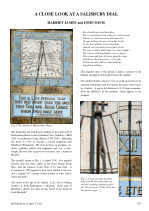
This article provides a detailed analysis of a horizontal sundial in Salisbury, noting its age and features. It describes the gnomon, which has a nodus that casts an ellipse of light on a black dot on the panel below the dial. It also examines the hour and declination lines, and discusses the decorations, such as the gilded letters and fleurs-de-lis.
Dials: Vertical, Historical Dials
March 2004
Page 7
Page 7
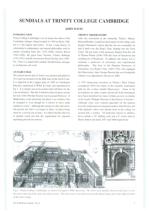
Provides a comprehensive overview of sundials and related astronomical instruments at Trinity College, Cambridge, highlighting the college's rich history in mathematics and natural philosophy. It describes early dials, the Trinity Observatory's instruments including those by Henry Sutton and John England, and more recent installations like the First World War Memorial dial.
Dials: Horizontal, Historical Dials
June 2004
Page 57
Page 57
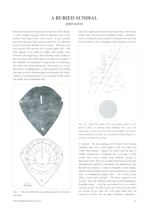
Description and analysis of a small 1652 copper horizontal sundial found buried in a Suffolk house, possibly commemorating a solar eclipse, with historical and design observations.
Dials: Horizontal, Historical Dials
September 2004
Page 96
Page 96
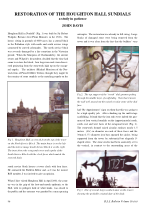
Account of discovering four large vertical dials on an octagonal cupola, surveying gnomon positions, choosing vitreous-enamel steel faces, manufacturing setbacks (overseas enamelling) and the final installation with alignment and conservation choices.
Dials: Multi Faced, Dials: Vertical, Restoration projects
September 2004
Page 110
Page 110
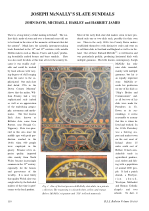
Survey of Joseph McNally’s early 19th-century slate dials (mainly Portaferry area): characteristics of multiple-gnomon plates, chapter rings with alternate longitudes, mottos, colouring evidence and the regional slate-working/dial-making context.
Dials: Vertical, Historical Dials
December 2004
Page 135
Page 135
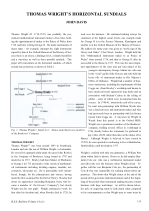
Study of Thomas Wright's horizontal dial work (c.1718–1747). Analyses design features such as transversals, equation-of-time rings, geographical place-name rings, gnomon forms, engraving patterns and lettering. Includes a table of known surviving dials, drawings, a modern replica and assessment of Wright's sources.
Dials: Horizontal, Historical Dials
March 2003
Page 6
Page 6
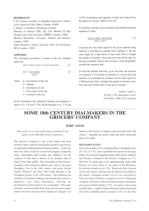
A historical study of mathematical instrument makers affiliated with the Grocers' Company, focusing on 18th-century horizontal and geographical dials and their design traditions.
Dials: Horizontal, Historical Dials, Sundial Design & Layout
June 2003
Page 47
Page 47
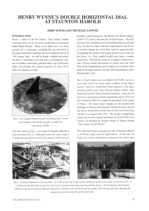
An analysis of one of the most sophisticated 17th-century dials made by Henry Wynne. The article describes the history, features (including its use as a moondial, star dial, and geographical dial), and modern restoration efforts of this large bronze dial.
Dials: Double Horizontal, Historical Dials, Restoration projects
June 2003
Page 68
Page 68
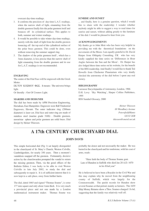
A historical study of a 17th-century churchyard dial in Weston Colville. The article provides details on the dial's physical characteristics, composition, and historical context.
Historical Dials
September 2003
Page 122
Page 122
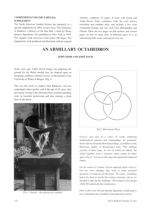
This article details the design and construction of an armillary octahedron, a complex sundial structure. It describes the process of making the intersecting V shapes and the challenges of assembly due to thermal expansion.
Construction Projects, Dials: Unusual
December 2003
Page 135
Page 135
A comprehensive study of how the Equation of Time has been represented on sundials from 1672 to the 20th century, analysing data sources, engraving methods, and dating implications.
Equation of Time
December 2003
Page 148
Page 148
Analysis of a 1721 dial with unusual semicircular scales used to estimate sunrise and sunset times; includes mathematical reconstruction of how the dial may have been intended to work.
Dials: Horizontal, Historical Dials, How Sundials Work
March 2002
Page 4
Page 4
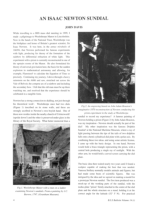
Describes the design and creation of a unique sundial featuring a statue of Newton holding a prism, inspired by his optical work and historic dials at Woolsthorpe.
Construction Projects, Dials: Polar, Dials: Unusual, Sundial Design & Layout
June 2001
Page 56
Page 56

John Davis introduces his design for a flexible, wallet-sized gnomon protractor, aimed at overcoming difficulties in measuring gnomon angles on buttressed sundials. The device expands the scale for better precision within typical UK angles and can be photocopied by readers to create their own. He details its construction from laminated paper and auxiliary scales.
DIY Sundial Projects, Dialling Tools
September 2001
Page 117
Page 117
This article details the discovery of an earlier pair of wooden Tudor sundials hidden beneath later ones during demolition at Smart's Wharf in Ipswich. The original dials, dating around 1600, featured a "Protestant work ethic" motto. Analysis revealed the replacement dials were more accurate and likely installed in the mid-1700s, showcasing the efforts made to maintain dial accuracy.
Dials: Vertical, Historical Dials, Restoration projects
December 2001
Page 160
Page 160
This article investigates the 'Bacon' double horizontal dial, an intriguing 17th or early 18th-century brass instrument of unknown origin. Its unique Equation of Time table and stereographic grid are detailed. Analysis suggests it predates 1752 and aligns with Tompion's calculations. A modern replica, crafted using CAD and photolithography, is also described, featuring updated EoT values and modern heraldry, signed by its maker.
Construction Projects, Dials: Double Horizontal, Equation of Time, Historical Dials
June 1999
Page 77
Page 77
This article explores the unexpected link between satellite dishes and sundials, including the use of knowledge of the sun's movement to align satellite dishes to satellites. It delves into the geometry of satellite dishes as a basis for sundial design and discusses practical details for using a satellite dish into a sundial, including gnomon options and microwave-transparent planar dial face materials.
DIY Sundial Projects, Mathematics of Dialling, Sundial Design & Layout
October 1999
Page 144
Page 144
This article describes the design and construction of a lightweight laser trigon for accurately laying out sundial lines. Inspired by difficulties with traditional string methods, the author developed a compact perspex instrument that uses a laser pointer to project declination and hour lines onto any dial surface. The design addresses issues of gnomon flexing and portability, and uniquely proposes linking the trigon's axes to trace analemmas mechanically, offering a universal tool for precise dial delineation.
DIY Sundial Projects, Dialling Tools
June 1998
Page 37
Page 37
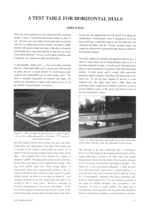
This article describes how to build a simple, portable test table for horizontal sundials using a photographic tripod. The table allows for fine adjustments to be made to test dials for different latitudes without needing to find a perfectly horizontal surface.
DIY Sundial Projects, Dialling Tools
April 1997
Page 40
Page 40
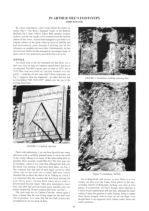
A narrative retracing the travels and dial discoveries of author Arthur Mee, connecting past observations with present-day visits.
Historical Dials
July 1997
Page 10
Page 10
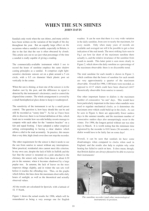
An article discussing the amount of actual sunshine received in a given year in Ipswich, England, compared to the theoretical maximum. It includes graphs of daily sunshine data from 1996 and notes how environmental factors like trees can affect a sundial's performance.
How Sundials Work