- Home
- /
- Sundial Encyclopaedia
- /
- Dials: Multi Faced
Dials: Multi Faced
March 2023
Page 9
Page 9
Focuses on a multiple cube/prism dial (SRN 3416) at Powis Castle, identified via a c.1955 Frith’s postcard. The structure is composed of a stone cube dial mated with a Henry Wynne double horizontal dial. It lists south, east, and west vertical dials alongside the double horizontal component.
Dials: Cube, Dials: Double Horizontal, Dials: Multi Faced, Historical Dials
June 2023
Page 16
Page 16
Comprehensive report on the BSS Exeter Conference talks, including subjects such as scratch dials, the Taormina Heliochronometer, the Queens’ Dial, the Equation of Time, Francis Line’s pyramid dial, and polyhedral dials (Somerville Memorial Lecture). The report also covers the social events, including a garden visit and the Gala Dinner.
Dials: Multi Faced, Equation of Time, Historical Dials, The BSS and Members
September 2023
Page 11
Page 11
Discusses a postcard, likely dating from the early 1960s, featuring a horizontal sundial (likely SRN 5883) at Oaklands House, Sedlescombe. The dial, made by Joseph McNally in 1840, is notable for having small dials showing times for Jerusalem, New York, Natchez and “Sidney”.
Dials: Horizontal, Dials: Multi Faced, Historical Dials
September 2023
Page 15
Page 15
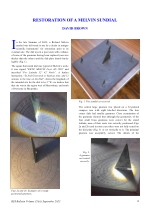
Describes the restoration of a square horizontal slate sundial made by Richard Melvin in 1856 (For Latitude 52° 42ʹ North). The work involved correcting the geometry and seating of the five gnomons, re-incising the details, and finishing the surface by painting the incisions light matt grey enamel and sealing the slate with oil.
Dials: Horizontal, Dials: Multi Faced, Restoration projects
December 2023
Page 12
Page 12
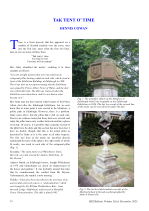
A survey of various Scottish sundials featuring the Scots proverb motto “Tak tent o’ time Ere time be tint For time will no remain,” translating to “Make the most of our time as we don’t know how long we have.” Examples include armillary spheres, multi-faced dials, and vertical dials.
Dials: Armillary Sphere, Dials: Horizontal, Dials: Multi Faced, Historical Dials, Mottoes
December 2023
Page 44
Page 44
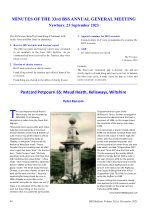
A discussion of a postcard, dated no later than 1906, showing Maud Heath’s Monument (SRN 0401), a stone square pillar from 1698 featuring a three-faced cube dial and multiple mottoes, which was repaired after being damaged in 1996.
Dials: Cube, Dials: Multi Faced, Historical Dials, Mottoes
March 2022
Page 14
Page 14
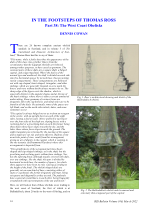
Examination of four ancient obelisk sundials located near the West Coast of Scotland, following descriptions by Thomas Ross. Sites include Ballindalloch, Lochgoilhead, Asknish House, and Mount Stuart. It also reports on the rediscovery of the mutilated Ardgowan lectern sundial and describes a cube dial at Ardgowan.
Dials: Cube, Dials: Multi Faced, Historical Dials, Restoration projects
June 2022
Page 10
Page 10
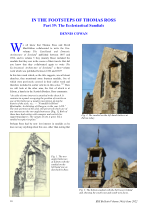
Continuing the series following Thomas Ross, this article examines nine sundials documented in his work on Scottish ecclesiastical architecture. It details the current condition, location, and history of dials found mostly on church walls or associated structures like lych-gates, including cubes and verticals, often noting signs of wear or required restoration.
Dials: Cube, Dials: Multi Faced, Historical Dials, Restoration projects
September 2022
Page 16
Page 16
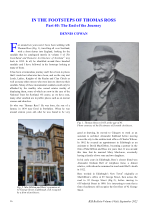
The final instalment tracing the sundials catalogued by Scottish architect Thomas Ross (1839–1930). Recounts the author's search for a rediscovery of the sundial at Magdalen Chapel, Edinburgh, and the examination of Ross's personal annotated copy of The Castellated and Domestic Architecture of Scotland.
Dials: Multi Faced, Historical Dials
September 2022
Page 36
Page 36
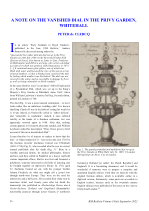
Provides a historical account of the magnificent pyramidal and multiform dial set up by Father Hall in Whitehall's Privy Garden in 1669. Cites a German traveller's journal, noting that the dial was seen in ruins in July 1710, which is the last known sighting of the contraption.
Dials: Multi Faced, Historical Dials
December 2022
Page 14
Page 14
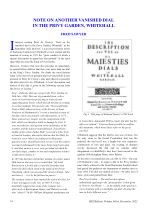
Follow-up to a previous article, suggesting the dial seen by Uffenbach in 1710 was likely the remains of Gunter’s great stone horizontal sundial (originally 1622) rather than the fragile, short-lived pyramidal dial by Francis Hall.
Dials: Horizontal, Dials: Multi Faced, Historical Dials
March 2021
Page 2
Page 2
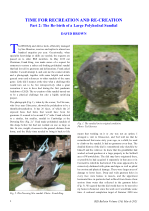
A detailed report on the restoration of a large polyhedral sundial (a rhombicuboctahedron) with 25 faces. The work involved cleaning soft sandstone, making 25 new gnomons, grafting new stone onto the damaged horizontal face, and installing the structure on a new plinth.
Construction Projects, Dials: Multi Faced, Restoration projects
March 2021
Page 18
Page 18
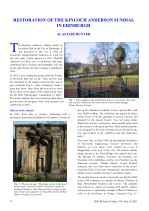
Details the 2018 restoration of the 1890 Kinloch Anderson sundial, a 2.5-metre pillar in Inverleith Park. The work included correcting the sundial's 180° wrong orientation, cleaning the marble dials, simulating lead lines with coloured epoxy, and installing new gilded brass gnomons.
Dials: Multi Faced, Historical Dials, Restoration projects
March 2021
Page 38
Page 38
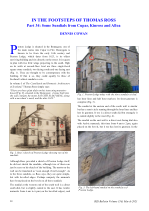
Continues the analysis of Scottish sundials described by Thomas Ross, focusing on several 17th-century examples. These include three square stone vertical dials on Preston Lodge (Cupar), two identical cube sundials at Kinross House, and a diptych sundial in Alloa made by mason Tobias Baak in 1695.
Dials: Cube, Dials: Multi Faced, Dials: Vertical, Historical Dials
June 2021
Page 13
Page 13
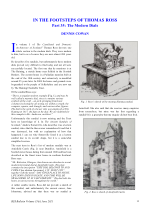
Part 35 of a series tracking dials documented by Thomas Ross, focusing on five "modern dials" (c. 19th century). The article investigates the current status of these Scottish sundials, including the missing dials at The Haining, Amisfield Castle, and Bredisholm, and detailing the surviving, unique designs at Newhall and Grange.
Dials: Multi Faced, Historical Dials, Sundial Design & Layout
June 2021
Page 24
Page 24
Summary of the British Sundial Society's sixth award scheme entries for 2016–2020, covering 19 submissions focused on accurate design, elegant execution, and restoration. Descriptions of notable projects include David Brown’s polyhedral sundial restoration, Tim Chalk’s sculptural dials, a stained glass replacement, and the highly complex Ta Ha Sundial from Malaysia.
Dials: Multi Faced, Construction Projects, Restoration projects
June 2021
Page 32
Page 32
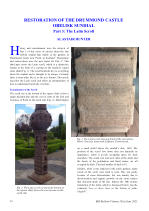
The third part of the restoration series on the 1630 Drummond Castle obelisk sundial, focusing on the unique Latin scroll carving on the shaft. The article provides the corrected transcription and interpretation of the scroll, explaining how it describes the various hour types (Babylonian, Italian, Seasonal, Common) and astronomical markings (Azimuth, Altitude, Declination) found on the dial, often linking them to astrolabe terminology.
Dials: Multi Faced, Historical Dials, Mathematics of Dialling, Restoration projects
September 2021
Page 10
Page 10
A continuation of the series following Thomas Ross, examining various sundials in the East of Scotland. Discusses the history, disappearance, and condition of dials in Hawick, Jedburgh, Ruchlaw House, Monkton House, Pitreavie (now Inveresk), Torryburn, and Cromarty.
Dials: Multi Faced, Dials: Vertical, Historical Dials, Mottoes
September 2021
Page 36
Page 36
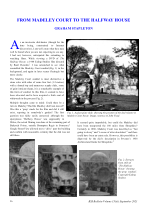
Investigates a distinct cube sundial seen in the film "The Halfway House". The prop was a copy of the famous Madeley Court sundial. Close analysis confirmed it was a non-functional copy, likely based on a Wills’s cigarette card from 1928, and it was broken up after filming.
Dials: Multi Faced, Historical Dials, Dials: Cube, Dials: Scaphe
March 2020
Page 2
Page 2
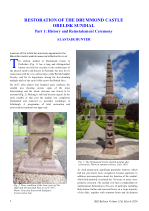
Details the history and recent restoration of the monumental obelisk sundial at Drummond Castle, Perthshire, originally dating from 1630. The article introduces the structure, the discovery of complex gnomonic features, and the reinstatement ceremony in June 2019. The restoration included replacing gnomons and correcting misconceptions about its function.
Dials: Multi Faced, Restoration projects, Historical Dials, The BSS and Members
March 2020
Page 26
Page 26
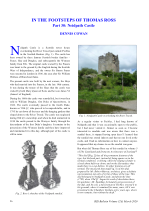
Focuses on the lectern-type sundial originally from Neidpath Castle. The article recounts the dial's history, noting it was saved by a gardener in 1795 and eventually returned to the castle in 1961. The dial is unusual as it is oblong and features a sloping hemi-cylinder ending halfway down with a cup-hollow underneath. It includes descriptions of the multiple faces, incorporating sunken, reclining, and proclining dials.
Dials: Multi Faced, Dials: Scaphe, Dials: Unusual, Historical Dials
June 2020
Page 10
Page 10
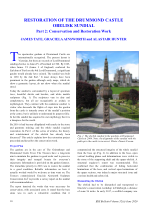
This is the second part detailing the conservation of the 1630 Drummond Castle obelisk sundial. The work involved dismantling the structurally unsound base and shaft, using laser scanning for documentation, and replacing all the gnomons with new, accurately calculated bronze parts, restoring the dial to full working order.
Dials: Multi Faced, How Sundials Work, Restoration projects, Historical Dials
June 2020
Page 25
Page 25
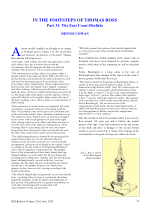
This article examines three Scottish obelisk sundials on the east coast, following the earlier historical descriptions by Thomas Ross. The dials discussed are located at Bonnington, Leven (where a conjectural restoration occurred), and a structure now at Brechin Castle, which may not have originally been an obelisk shaft.
Dials: Cube, Dials: Multi Faced, Historical Dials
September 2020
Page 5
Page 5
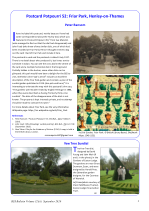
A postcard, postmarked 1917, is presented showing the Ye Dial Garden at Friar Park, which contains a cross dial and a multiple horizontal dial. The gardens were described in 1984 as having formerly contained thirty-nine sundials, though their disappearance date is unknown.
Dials: Horizontal, Dials: Multi Faced, Dials: Unusual, Historical Dials
December 2020
Page 10
Page 10
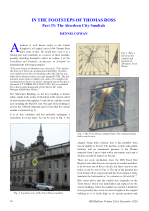
Part 33 explores three Aberdeen sundials mentioned by Thomas Ross in 1890. These include the vertical declining dial on the Municipal Building (Town House), two cubic dials on Andrew Begg's shop dated 1694, and the dial at King’s College Chapel, potentially Scotland’s oldest. The author doubts the 1494 dating of the latter.
Dials: Cube, Dials: Multi Faced, Dials: Vertical, Historical Dials
March 2019
Page 8
Page 8
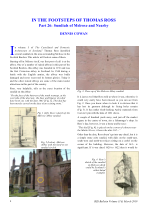
Examines historical sundials identified by Thomas Ross in the Scottish Borders near Melrose, including a carved dial (1661) at Melrose Abbey. Investigates a Melrose cube dial (c. 162-) and five of the six historical dials in Newstead. Discusses the provenance and arms on the Abbotsford dial (originally from Dryburgh Abbey).
Dials: Multi Faced, Historical Dials
June 2019
Page 2
Page 2
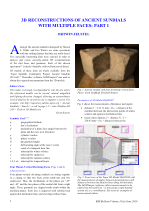
Analyses ancient multi-faced and scaphe marble sundials catalogued by Gibbs and Winter, using 3D models and software (GOM Inspect) to measure parameters for reconstruction. Focuses on dials with planar-vertical deviating faces, hollow spherical faces (scaphe), and hollow conical faces, detailing the geometrical reconstruction and function of hour lines.
Dials: Multi Faced, Dials: Scaphe, Historical Dials
June 2019
Page 10
Page 10
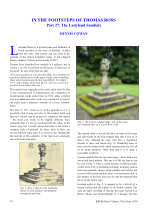
Examines two historical sundials at Ladyland House, Scotland, documented by Thomas Ross. The first is a 1673 lectern dial (star type) on an unusual pedestal. The second is an obelisk capital (dated 1821) on a graceful pedestal, noted as possibly not original to the location, and currently neglected.
Dials: Multi Faced, Historical Dials
June 2019
Page 16
Page 16
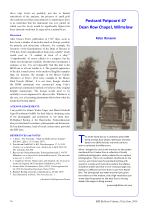
Features a pre-First World War postcard of a three-faced dial on a sandstone pillar (1899) at Dean Row Chapel, Wilmslow, Cheshire. A high-resolution scan confirms the gnomon is missing from the west face, though the supports are still present.
Dials: Multi Faced, Historical Dials
September 2019
Page 22
Page 22
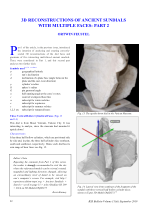
This article continues the analysis of ancient multi-faced sundials using 3D reconstructions. It examines a dial from the Musei Vaticani with three vertical hollow cylindrical faces and a combination dial from Herculaneum featuring vertical hollow cylindrical and spherical faces. Analysis includes calculation based on geographical latitude and declination lines.
Dials: Hemispherical, Dials: Multi Faced, Historical Dials, Mathematics of Dialling
September 2019
Page 34
Page 34
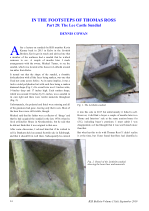
The author investigates a sunken rhombic dodecahedron sundial found in Leitholm. Initially theorised to be the missing multi-faced dial described by Thomas Ross at Lee Castle, this theory was later refuted by evidence showing that broken pieces of the original Lee Castle dial still existed elsewhere in 1984. The Leitholm and Lee Castle dials are likely by the same maker.
Dials: Cube, Dials: Multi Faced, Historical Dials
December 2019
Page 12
Page 12
This article details the design and installation of a 3-metre tall obelisk sundial in Cornwall. The obelisk has an equilateral triangular cross-section, featuring two declining/reclining dials engraved on granite and slate, plus a simplified EoT correction table on the north face. Precise GPS alignment and a custom stainless steel turntable were used during installation to achieve high accuracy.
Construction Projects, Dials: Multi Faced, Mathematics of Dialling, Sundial Design & Layout
December 2019
Page 26
Page 26
The 29th part of a series documenting sundials mentioned by Thomas Ross, focusing on five examples in Midlothian. The author traces the status and location of three dials at Oxenfoord Castle, a 1745 vertical dial in Dalkeith, and the relocation of a rare lectern sundial from Mid Calder House to Culzean Castle in Ayrshire.
Dials: Cube, Dials: Multi Faced, Dials: Vertical, Historical Dials
March 2018
Page 8
Page 8
Examines three historical sundials in the Aberdeen area: Ellon Castle (two dials), Pitmedden Garden, and Duthie Park. The author reports on the discovery of the shafts and capitals of the Ellon dials during garden conservation efforts, noting their similarity to the Pitmedden dial (c. 1675). Issues of restoration and the originality of paint on the 1707 Duthie Park dial are discussed.
Dials: Multi Faced, Historical Dials
March 2018
Page 22
Page 22
Discusses the newly restored Tower of the Winds (Horologion of Kyrrhestos) in Athens, which features eight exterior sundials and an internal water clock. The main riddle explored is whether the eroded sundials were original to the 1st century BC structure, noting the conflicting evidence of Vitruvius's silence versus the need for sundials to regulate the water clock.
Dials: Multi Faced, Historical Dials, Restoration projects
June 2018
Page 6
Page 6
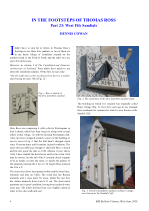
Examines four historical sundials in West Fife, Scotland, following the work of Thomas Ross. Locations include two dials in Limekilns (one possibly dated 1689), Culross Palace, and the restored Pitfirrane Castle pedestal. The replacement dial at Pitfirrane features the Halkett motto Fides Sufficit.
Dials: Multi Faced, Historical Dials
September 2018
Page 16
Page 16
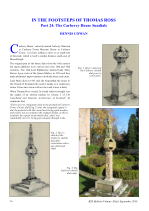
Examines two historical sundials at Carberry House, East Lothian. The first is a hollow obelisk dial capital, restored according to Thomas Ross's sketch. The second, missing for a time but now in the National Museum of Scotland, is a unique 13-dial structure featuring a female bust support, combining upright, reclining, and horizontal dials.
Dials: Horizontal, Dials: Multi Faced, Historical Dials
December 2018
Page 33
Page 33
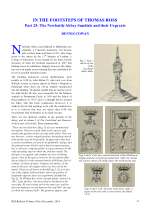
Examines the two monumental octagonal dials at Newbattle Abbey (1635), featuring unusual sunken dial-pairs with profile gnomons. Discusses two later copies: Lord Home’s (moved to King’s Park, Glasgow, 1885) and Lord Haddington’s at Tyninghame, which remains an undelineated non-sundial.
Dials: Multi Faced, Historical Dials
December 2018
Page 38
Page 38
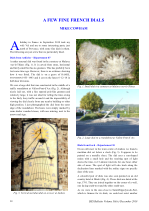
A travelogue describing various French sundials, including: a vertical meridian dial using an aperture nodus in Anduze; a huge dial near Tavel; a colourful, mottoed dial at Saint-Hippolyte-du-Fort; and a multi-faced tower dial at Valréas where the delineations appear inconsistent or mysterious.
Dials: Multi Faced, Dials: Noon Lines, Dials: Vertical, Historical Dials
December 2018
Page 52
Page 52
A tribute to the BSS Sundial Glossary for providing the necessary formulae to understand and reproduce the complex criss-cross patterns of Babylonian and Italian hours observed on a polyhedral Scottish dial. The writer provides a faithful reproduction of the hour lines.
Dials: Multi Faced, How Sundials Work, Mathematics of Dialling, The BSS and Members
March 2017
Page 12
Page 12
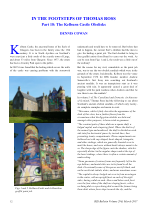
A study of two historical Scottish obelisk sundials at Kelburn Castle. The article describes the typical obelisk structure (shaft, bulged capital, tapering finial, multiple sinkings including scaphe dials). It notes the first dial's 1707 date and wrought-iron vane restoration, and the deteriorated state of the second dial, whose capital and finial have broken off.
Dials: Multi Faced, Dials: Scaphe, Historical Dials
June 2017
Page 10
Page 10
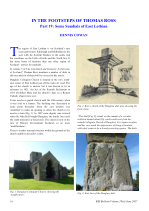
This article covers six sundials in East Lothian, Scotland, previously mentioned by Thomas Ross in volume 5 of his work. Sites detailed include Dunglass Collegiate Church and Nunraw Abbey Tower, noting their history, multi-faceted nature, and current condition or replacement status.
Dials: Cube, Dials: Multi Faced, Historical Dials
September 2017
Page 19
Page 19
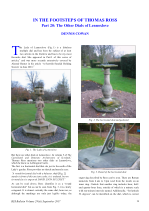
This article examines the other dials at Lennoxlove, Scotland, besides the famous multiple dial. It covers an octagonal horizontal dial engraved by David Lyon (possibly 18th century), a south and east vertical dial (1644), and a similar south and west vertical dial previously unknown to Ross.
Dials: Horizontal, Dials: Multi Faced, Dials: Vertical, Historical Dials
September 2017
Page 25
Page 25
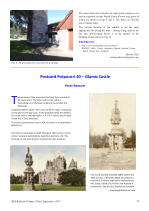
The article shows two postcards, one from 1904 and one from 1967, featuring the Glamis Castle sundial in Scotland. This multi-faceted sandstone dial dates from 1670, stands 6.5 metres high, and contains about 80 individual dials.
Dials: Multi Faced, Historical Dials
December 2017
Page 26
Page 26
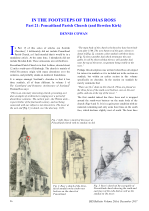
Examines two Scottish churches mentioned by Thomas Ross; Pencaitland Parish Church is unique for having three different sundials, including a multi-faced buttress dial and a cube dial. The dial at Bowden Kirk is a modern replacement that was installed with a major error in canting.
Dials: Cube, Dials: Multi Faced, Dials: Vertical, Historical Dials
March 2016
Page 26
Page 26
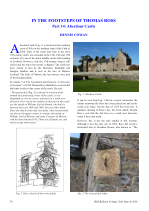
This article traces the historical sundials documented by Thomas Ross at Aberdour Castle. It describes a vertical dial (1635), a horizontal dial, and a multi-faceted dial moved from Castle Wigg, noting that the latter's Equation of Time table uses the Julian calendar appropriate for the early 18th century.
Dials: Horizontal, Dials: Multi Faced, Dials: Vertical, Equation of Time, Historical Dials
June 2016
Page 7
Page 7
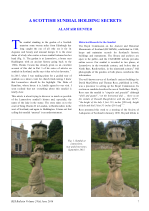
Research into the elegant, unusual sundial at Lennoxlove, featuring a statue of a lady carrying the multi-faced dial on her head. Although dated 1679 (DMG) and previously located at North Barr, the author suggests the statue was added later (19th century) by the Blantyre family, possibly modelled on the wax effigy of Frances Theresa Stewart, Duchess of Richmond and Lennox.
Dials: Multi Faced, Dials: Unusual, Historical Dials
June 2016
Page 34
Page 34
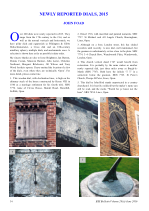
A list of over 200 sundials newly reported to the BSS Register in 2015, ranging from the 17th to 21st centuries. Examples include a 1540 wooden dial, a 1799 horizontal dial by Liverpool clockmaker Thomas Harrison, an exquisite square dial installed for Queen Victoria’s Diamond Jubilee, and a modern spiral analemmatic dial.
Dials: Heliochronometer, Dials: Horizontal, Dials: Multi Faced, Dials: Unusual, Dials: Vertical, Historical Dials, The BSS and Members
September 2016
Page 17
Page 17
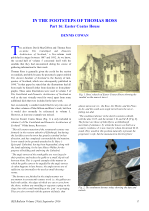
Examines a multi-faceted dial on the south-west angle turret of Easter Coates House (1615), Edinburgh, which Thomas Ross briefly mentioned. The author confirms a horizontal dial face on the upper surface, suggesting the dial is original to the building, despite it possibly containing repurposed stones.
Dials: Multi Faced, Dials: Vertical, Historical Dials, Restoration projects
December 2016
Page 8
Page 8
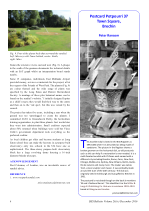
Details the multi-faceted sandstone sundial (SRN 1480) in Brechin, created by local sculptor James Tosh around 1900. It features 25 faces named after various cities. The postcard is useful as the BSS register notes a broken gnomon. The dial was gifted to Brechin from Edinburgh in 1961.
Dials: Multi Faced, Historical Dials
December 2016
Page 22
Page 22
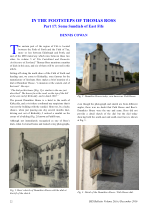
Covers six historical sundials in East Fife documented by Thomas Ross. Examples include the Path House dial (formerly Dunnikier House), the Muckle Yett dial with seven faces including scaphe dials, and cube dials at Kellie Castle (1722) and St Mary’s College (1664).
Dials: Cube, Dials: Multi Faced, Dials: Scaphe, Historical Dials
March 2015
Page 18
Page 18
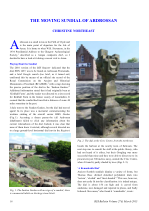
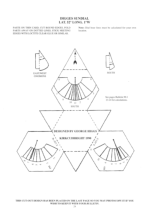
A detailed history and examination of a unique Scottish polyhedral sundial, made by Robert Weir for the Kirkhall estate in 1795. The massive sandstone dial, which originally featured complex adjustable metal apparatus, was moved multiple times by the local council, first to the Sunken Garden and subsequently to the Civic Centre.
Dials: Multi Faced, Dials: Unusual, Historical Dials
March 2015
Page 33
Page 33
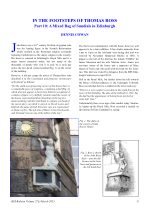
The tenth installment surveying Edinburgh's sundials mentioned by Thomas Ross. Highlights include the restored two-faced vertical dial on John Knox's House and the multi-faceted Huntly House dial (a copy of a 1732 Archibald Handasyde dial). Other dials reviewed are found at West Kirk, Corstorphine Church, Liberton House, Hudson Cottage, and Brighton Park in Portobello.
Dials: Multi Faced, Dials: Vertical, Historical Dials, Restoration projects
June 2015
Page 8
Page 8
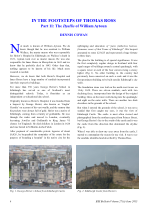
This explores the life and work of master mason William Aytoun (d. 1643), responsible for incorporating numerous sundials at Heriot’s Hospital in Edinburgh and Innes House in Morayshire. The article discusses similar dials potentially attributed to Aytoun, such as those at Peffermill House.
Dials: Multi Faced, Historical Dials
June 2015
Page 22
Page 22
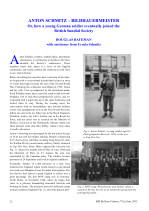
A biographical account of Anton Schmitz (b. 1926), a German sculptor and master stonemason (Bildhauermeister), who became a POW in England after D-Day. He studied under Heinz Schumacher and later became renowned for making over 100 sundials, specializing in globe dials.
Dials: Multi Faced, Dials: Unusual, Construction Projects
September 2015
Page 33
Page 33
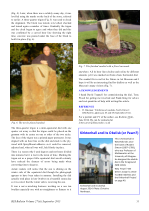
Identifies the obelisk sundial (SRN 1184) located in the foreground of Kirktonhall, West Kilbride. The dial was designed by Robert Simson, who served as Professor of Mathematics at the University of Glasgow in the 18th century.
Dials: Multi Faced, Historical Dials
September 2015
Page 40
Page 40
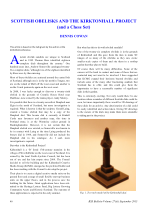
Discusses the Kirktonhall Creative Media Group project to create 3D images and small-scale copies of unique Scottish obelisk sundials for a rooftop garden archive. The author also playfully suggests a sundial-themed chess set using various famous Scottish dials.
Construction Projects, Dials: Multi Faced, Historical Dials, Sundial Design & Layout
September 2015
Page 48
Page 48
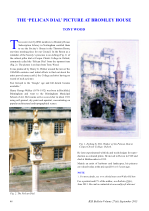
Identifies an etching on loan to the BSS Library at Bromley House as a depiction of the cubical pillar dial, commonly called the ‘Pelican Dial’, at Corpus Christi College, Oxford. The etching was produced by artist Henry G. Walker (1876–1932).
Dials: Multi Faced, Dials: Cube
December 2015
Page 2
Page 2
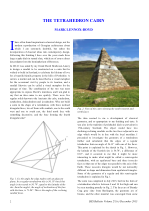
Describes the design and construction of a 9–10 foot high tetrahedron-shaped cairn in Perthshire, Scotland, commissioned by David Heathcoat-Amory. It incorporates two declining reclining sundials and aligns its north edge and gnomons with the Earth's axis.
Construction Projects, Dials: Multi Faced, Dials: Unusual, Sundial Design & Layout
December 2015
Page 5
Page 5
Recounts the life of Andrew Somerville, first Chairman of the BSS, known for cataloguing ancient Scottish polyhedral dials. It describes his talk on "symbolic" dials and the humorous anecdote surrounding the temporary snow obelisk dial he constructed.
Dials: Multi Faced, Dials: Unusual, Historical Dials, The BSS and Members
December 2015
Page 9
Page 9
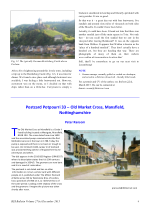
Describes a postcard showing the Old Market Cross at Mansfield, Nottinghamshire, a Grade II listed building dating from circa 1600. It notes the dial's 19th-century origin, damage (bent gnomons), and need for restoration according to the BSS Register.
Dials: Vertical, Dials: Multi Faced, Historical Dials
December 2015
Page 32
Page 32
Details the successful search for the missing Polton House dial, originally sketched by Thomas Ross, which had been incorporated into a rockery. Parts of the dial (dating 1685 and 1672) were discovered and re-erected at Arniston House, Midlothian.
Dials: Multi Faced, Historical Dials, Restoration projects
December 2015
Page 48
Page 48
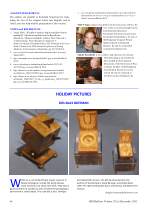
Features photographs of sundials encountered during a visit to the clock museum at La Chaux-de-Fonds in Neufchatel. Specific examples shown include an 18th-century cube dial by D. Beringer and 17th and 18th-century pocket dials.
Dials: Multi Faced, Dials: Portable
March 2014
Page 44
Page 44
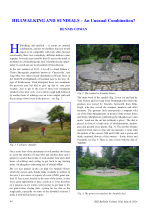
The author combines hillwalking trips in Scotland with sundial observation. Examples include the giant 35-foot gnomon-based dial at Attadale House (2009), a historic horizontal pedestal dial at Attadale made by Gilbert, Wright and Hooke (1794–1805), and a late 18th-century stumpy octagonal facetted dial at Glengarry Castle Hotel.
Dials: Horizontal, Dials: Multi Faced, Historical Dials
June 2014
Page 34
Page 34
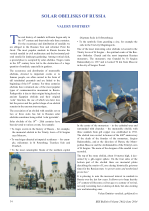
Reviews the history and distribution of sundials in Russia since Peter the Great's reforms. It focuses specifically on solar obelisks, which are tall tetrahedral pyramids used as commemorative monuments, such as the memorable example established in the Trinity Lavra of St Sergius in 1792.
Dials: Multi Faced, Dials: Unusual, Historical Dials
June 2014
Page 47
Page 47
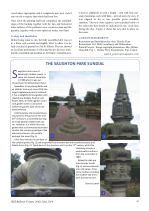
Describes the tall, ornately decorated multi-faced sundial located in the rose garden of Saughton Park, Edinburgh. The upper parts, including four vertical circular dials and a decorative finial, date from the 17th century, while the lower supporting structure resulted from an 1899 restoration.
Dials: Multi Faced, Historical Dials, Sundial Design & Layout
September 2014
Page 17
Page 17
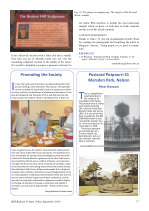
Details a magnificent polyhedral sundial in Marsden Park, Nelson, shaped as an icosahedron (20 faces). The dial is dated 1841 and is one of the first recorded in the BSS Fixed Dial Register (SRN 0003).
Dials: Multi Faced, Historical Dials
September 2014
Page 24
Page 24
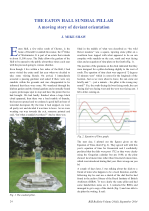
Research into a square, tapering stone pillar sundial at Eaton Hall, designed by Lutyens (1898) with dials by F. Barker & Son. The pillar has been moved multiple times on the estate and currently stands incorrectly orientated (rotated 180 degrees), despite expert advice.
Dials: Multi Faced, Historical Dials, Restoration projects, The BSS and Members
December 2014
Page 12
Page 12
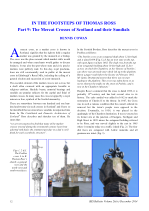
This article examines Scottish mercat (market) crosses that incorporate sundials, such as those described by Thomas Ross. These are symbolic structures, often featuring multi-faced cube dials. Examples discussed include the Peebles cross (1662 cube sundial) and the Airth cross (1697). The author notes the common issues of relocation and subsequent restoration/damage.
Dials: Cube, Dials: Multi Faced, Historical Dials
March 2013
Page 16
Page 16
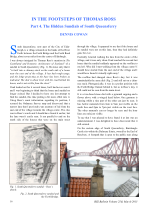
The author follows the traces of nineteenth-century architect Thomas Ross to rediscover forgotten Scottish sundials, including rare obelisk types near South Queensferry, with photographs and measurements.
Dials: Multi Faced, Dials: Vertical, Historical Dials
June 2013
Page 10
Page 10
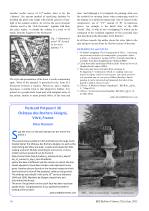
A short illustrated feature on a postcard depicting a multifaceted sundial at a French château, discussing its design features, historical background, and a humorous note about an inverted gnomon.
Dials: Horizontal, Dials: Multi Faced, Dials: Vertical
June 2013
Page 35
Page 35
A detailed report on multiple sundials found at Glassmount, including a rare palimpsest gnomon showing evidence of successive historical restorations.
Dials: Multi Faced, Historical Dials, Restoration projects
September 2013
Page 2
Page 2
Detailed account of designing and constructing a five-metre tall hexagonal obelisk for Buscot Park to celebrate Queen Elizabeth's Diamond Jubilee. It features seven dials on six slate faces, adjusted for the equation of time and longitudinal displacement, reading GMT, and incorporating Egyptian hieroglyphs.
Construction Projects, Dials: Multi Faced, Sundial Design & Layout
December 2013
Page 18
Page 18
A selection of recent additions to the Sundial Register, including a cuboctahedron (1823), a geographical dial (1720) by Robert Spurrell, the restored 'Smith Dial' (1858), a river bridge dial (1770), and various vertical, cube, and pillar dials across England and Scotland.
Dials: Cube, Dials: Multi Faced, Historical Dials, The BSS and Members
December 2013
Page 22
Page 22
Explores four magnificent 17th-century Scottish sundials documented by Thomas Ross: the complex multi-faced dials at Glamis Castle (stellar rhombicuboctahedron), Drummond Castle (obelisk, 1630), Holyroodhouse Palace (polyhedral, 1633), and the fountain/dial at Dundas Castle (lectern type, 1623).
Dials: Multi Faced, Dials: Scaphe, Historical Dials, Sundial Design & Layout
June 2012
Page 31
Page 31
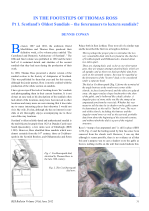
This article is the first part of a quest to track down and photograph sundials identified by Thomas Ross in his late 19th-century work. It focuses on Scotland's oldest dials, specifically three 16th-century examples at Cockburnspath, Oldhamstocks, and Seton Palace, and a fourth at Fogo, all similar in type and potentially forerunners to lectern dials.
Dials: Multi Faced, Dials: Vertical, Historical Dials, Restoration projects
September 2012
Page 15
Page 15
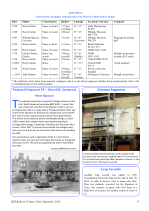
This entry describes a multi-dial sundial located at the Sidney Hill Cottage Homes in Churchill, Somerset, dating from 1907. It notes that the dial is situated within private grounds, making it inaccessible to the public, and speculates on the presence of east, north, and west dials based on an old postcard from 1929.
Dials: Multi Faced, Historical Dials
September 2012
Page 16
Page 16
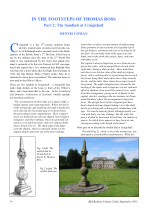
This article details two sundials at Craigiehall: a 4-metre high obelisk dial, restored in 1965 after being found in fragments, and a horizontal brass dial by John England, dating from 1702-1714. The obelisk is unique due to an 18th-century globe base, while the horizontal dial features an Equation of Time table and armorial devices.
Dials: Multi Faced, Equation of Time, Historical Dials, Restoration projects
September 2012
Page 23
Page 23
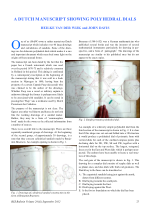
This article describes a mysterious Dutch manuscript from 1670-75 containing over 40 drawings and calculations for sundials, including elaborate polyhedral designs. It features designs attributed to Benjamin Braemers and a complex lectern polyhedral dial similar to Scottish examples, challenging readers to construct a 3D model.
Dials: Multi Faced, Historical Dials, Mathematics of Dialling, Sundial Design & Layout
September 2012
Page 28
Page 28
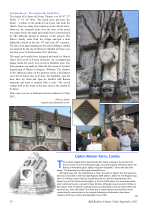
This entry describes a multiple scaphe dial at Upton Manor Farm, tentatively attributed to Edmund Gunter, featuring 29 or 30 individual dials crafted from Ketton stone. Located in an orchard, the property was once owned by Bishop Thomas Dove and is noted for its complex, original delineation.
Dials: Multi Faced, Dials: Scaphe, Historical Dials
September 2012
Page 33
Page 33
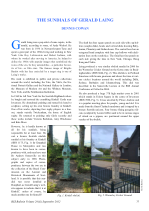
This article highlights the sundial works of pop artist Gerald Laing, known for at least four large sculptural pieces. These include two Scottish obelisk sundials, a 37ft market cross in Inverness, and "Axis Mundi" in Edinburgh, often featuring complex gnomonics and graphical representations of the Equation of Time.
Dials: Multi Faced, Sundial Design & Layout, Equation of Time, Dials: Scaphe
December 2012
Page 6
Page 6
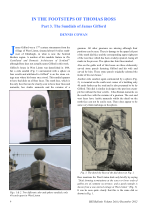
This third part traces sundials attributed to 17th-century Scottish stonemason James Gifford, following Thomas Ross's research. It examines various cube-and-sphere dials in West Linton and Newhall House, as well as the intricate multi-faceted dial at Lennoxlove, detailing their designs, numerals, and historical context within the Scottish Borders region.
Dials: Cube, Dials: Multi Faced, Historical Dials, Sundial Design & Layout
December 2012
Page 11
Page 11
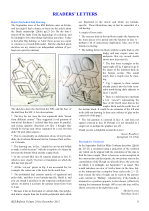
This section features two letters: Michael Lowne corrects a misconception regarding the alignment of the Plough's pointer stars with the pole star for planispheric nocturnals, impacting time readings. Steven Woodbury provides observations and a solution for the Dutch Polyhedral Dial drawing, noting its equatorial and polar dials and non-latitude specificity.
Dials: Multi Faced, Dials: Nocturnals
December 2012
Page 36
Page 36
This report details the British Sundial Society's 2012 safari to Catalonia, covering visits to numerous sundials across Girona, Cabrils, Figueres, Barcelona, and other towns. Members explored diverse dials, including modern pillar dials, Salvador Dali's carved stone dial, multi-faceted and unusual museum pieces, showcasing the region's rich gnomonic heritage.
Dials: Multi Faced, Dials: Unusual, Historical Dials, The BSS and Members
March 2011
Page 5
Page 5
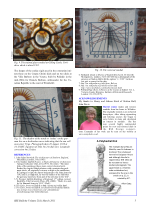
This entry briefly describes the multiple dial at Mount Melville, Scotland, identifying it as a rhombic cubo-octahedron rotated by 45 degrees, based on information from Gatty.
Dials: Multi Faced, Historical Dials, Sundial Design & Layout
March 2011
Page 12
Page 12
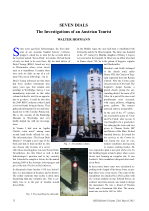
An Austrian tourist investigates the mystery of London's 'Seven Dials' monument. The article details the history of the area, the original Doric pillar with six sundials erected in 1693/94, its removal in 1773, its relocation to Weybridge, and the eventual erection of a new column with seven dials in 1989.
Dials: Multi Faced, Restoration projects, Historical Dials
March 2011
Page 14
Page 14
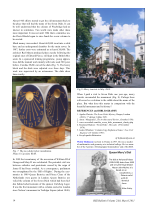
This entry briefly mentions the Holyrood Palace dial (SRN 1490), dating from 1633 and made by John Mylne, noting its basis on an icosahedron, a Platonic solid with 20 identical faces.
Dials: Multi Faced, Historical Dials
March 2011
Page 17
Page 17
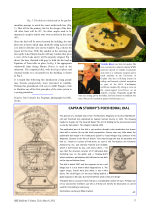
This article describes a polyhedral dial from Captain Samuel Sturmy's 1679 'The Mariners Magazine'. It's a rhombic cubo-octahedron dated 1667, said to have 27 individual dials, and features an unusual globe dial showing stars. The dial's current whereabouts are unknown.
Dials: Multi Faced, Historical Dials
March 2011
Page 22
Page 22
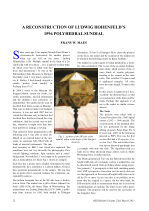
This article describes the reconstruction of Ludwig Hohenfeld’s 1596 polyhedral sundial, a 26-sided rhombic cubo-octahedron, using distorted photographs and image editing software. It details the process of rectifying the faces and analyzing the sundials inscribed on them to estimate the design latitude.
Dials: Multi Faced, Sundial Design & Layout, Construction Projects, DIY Sundial Projects, Historical Dials
March 2011
Page 27
Page 27
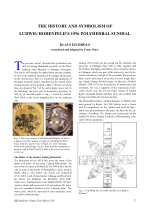
This article delves into the history of Ludwig Hohenfeld’s 1596 polyhedral sundial, identifying the maker and recipient (Prince Johann Friedrich of Württemberg). It also explores the rich symbolism of the images and maxims on the dial's faces, which convey themes of time and education.
Dials: Multi Faced, Historical Dials, Mottoes
March 2011
Page 45
Page 45
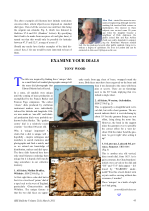
This article highlights three 'unique' sundials found in a collection of photographs, encouraging readers to identify similar features. It discusses a two-faced prism dial, a vertical dial with a bent gnomon, and a direct south dial with an unusual inscription, emphasizing the individuality of pre-mass production dials.
Dials: Multi Faced, Dials: Unusual, Dials: Vertical, Historical Dials
March 2011
Page 46
Page 46
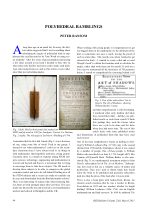
The author discusses the calculation of angles for polyhedral dials, drawing on historical texts like William Leybourn’s 'Dialling'. It covers Platonic and Archimedean solids, methods for finding dihedral angles, and illustrates how these concepts can be applied to sundial construction.
Dials: Multi Faced, Historical Dials, Mathematics of Dialling, Sundial Design & Layout
June 2011
Page 25
Page 25
This letter provides additional information on Scottish polyhedral dials, specifically clarifying the history of Queen Mary’s Dial at Holyrood Palace and providing an update on the Mount Melville Multiple Dial's restoration plans after its removal for safekeeping.
Dials: Multi Faced, Restoration projects, Historical Dials
June 2011
Page 54
Page 54
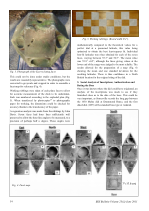
This article describes the discovery and analysis of a 17th-century Scottish polyhedral sundial boss found in Hertfordshire. It establishes the boss's authenticity, its Mylne family provenance, and uses geometric analysis and inscriptions (Acra, Tangier) to date it before 1684, suggesting it's a significant missing link.
Dials: Multi Faced, Historical Dials, Mathematics of Dialling
September 2011
Page 24
Page 24
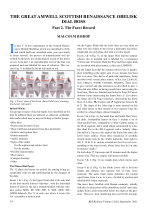
This article, the second part of an examination of the Great Amwell Scottish Renaissance Obelisk Dial Boss, details the archaeological record and incised marks found on its planar and scaphe dial facets. It identifies ten types of marks, including hour lines, solstice/equinox lines, numerals, and place names, discussing the sophisticated design and stonecutting, and determining an optimum latitude of around 55.5° N.
Dials: Multi Faced, Historical Dials
December 2011
Page 10
Page 10
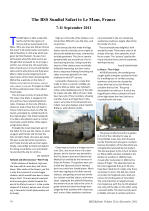
This report covers the British Sundial Society's 2011 safari to the Sarthe and Perche regions of France, based in Le Mans. The group visited various sundials, historical sites, and chateaux, including a specific mean-time dial in Le Mans and other vertical and mass dials in surrounding villages. The trip offered cultural experiences and opportunities to meet fellow enthusiasts.
Dials: Vertical, Dials: Multi Faced, Dials: Equatorial, Historical Dials, The BSS and Members
December 2011
Page 38
Page 38
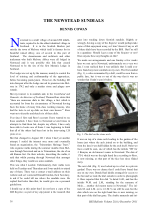
This article describes the author's quest to find and document sundials in Newstead, Scotland, following Thomas Ross's 19th-century account. It details several discoveries, including a cube dial, a semi-cylindrical dial, and other single-faced dials, some in private gardens, highlighting their historical significance and the challenges of locating them. The search continues for missing dials or fragments.
Dials: Horizontal, Dials: Multi Faced, Dials: Vertical, Historical Dials
December 2011
Page 41
Page 41
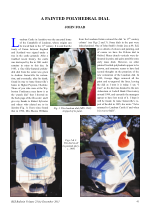
This article discusses a polyhedral dial from Loudoun Castle, Scotland, that was restored and controversially painted in the 1990s using 17th-century colours. The paint was later removed, and the lines re-engraved. The author expresses concern that the dial's current location at Jodrell Bank Observatory is unknown, raising questions about the preservation and tracking of historical sundials.
Dials: Multi Faced, Dials: Unusual, Historical Dials, Restoration projects
March 2010
Page 32
Page 32
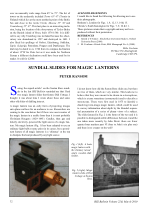
Discusses a collection of old magic lantern slides and glass negatives featuring sundials. The collection includes images of Dial Cottage at Seaton Ross, the multifaceted dial at Holyrood Palace from circa 1880, and a dial at Trinity College, Cambridge.
Dials: Multi Faced, Historical Dials
March 2010
Page 37
Page 37
A photo feature of three dials on an obelisk at the Monastery of the Holy Trinity of Saint Sergius Lavra, near Moscow. The east-facing dial has declination lines for zodiac signs, while the west-facing dial shows the hours of daylight.
Dials: Multi Faced, Dials: Vertical, Historical Dials
June 2010
Page 13
Page 13
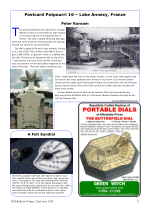
This article features a postcard from 1908 depicting the impressive multiple-dialled structure, L'Unique, on the banks of Lake Annecy, France. Dated 1874 and named in 1876, the dial is credited to Frère Arsène. It features an equatorial dial, multiple gnomons on a 7-pointed star, and various dial plates indicating noon for several European cities and zodiac signs.
Dials: Equatorial, Dials: Multi Faced, Historical Dials
June 2010
Page 38
Page 38
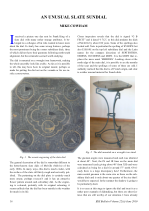
This article examines a unique slate dial from 1712, signed 'G B FECIT'. It notes several unusual features, including incorrect gnomon alignments on subsidiary dials, ornate rococo-like decoration, and French origin due to spellings and slate material. The article also highlights a large discrepancy between calculated latitude and gnomon angle, along with various other intriguing engravings like months, zodiac signs, lunar cycles, epacts, and a crest.
Dials: Multi Faced, Dials: Unusual, Historical Dials
June 2010
Page 46
Page 46
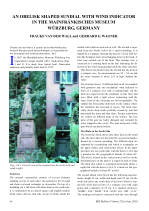
This article describes a unique obelisk-shaped sundial from 1742 in the Mainfränkisches Museum Würzburg. Made of Franconian sandstone, it features 10 sundials and a mechanical wind indicator with a rotating hand connected to a vane by internal gearing. The construction, with dials on inclined surfaces and a Turk's head sculpture, is highly unusual and suggests a learned, wealthy commissioner for an impressive park.
Dials: Multi Faced, Dials: Unusual, Historical Dials, Sundial Design & Layout
December 2010
Page 7
Page 7
This section includes letters from readers. Frans Maes describes a multi-faceted obelisk sundial in Schwäbisch Gmünd, Germany, similar to one previously discussed. Allan Mills and Michael Lowne provide detailed explanations and practical advice on how to observe the optical phenomenon known as 'Haidinger’s brush,' which appears due to polarized light in the blue sky.
Dials: Multi Faced, How Sundials Work
December 2010
Page 11
Page 11
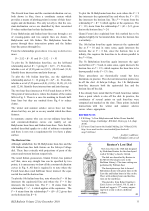
This entry describes a now-lost sundial designed by Nicholaus Kratzer in 1520 for St Mary's churchyard wall in Oxford. Based on a design in Kratzer's MS De Horologiis it showed Babylonian hours in green on the East side, Italian hours in blue on the West, and ordinary hours and declinations on the south face.
Dials: Multi Faced, Dials: Unusual, Historical Dials
December 2010
Page 25
Page 25
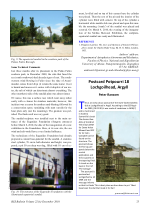
This article describes an early colour postcard of the multi-faceted obelisk dial at Lochgoilhead, Argyll, dating from 1696(?). The sandstone structure features initials DHM and SCC, five square panels, and six panels on the finial. The postcard, postmarked 1909, shows it on the lawn in front of ‘The Cottage.’
Dials: Multi Faced, Historical Dials
March 2009
Page 32
Page 32
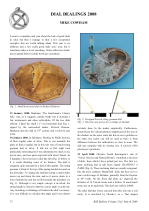
This article reviews notable sundials and scientific instruments seen in sales throughout 2008. Highlights include an 18th-century horizontal dial by Richard Hintonn, a French silver string gnomon dial, a gilt inclining dial by Chapotot, a rare 16th-century Nuremberg star-shaped polyhedral dial, an ivory diptych dial by Lienhart Miller, a Butterfield universal equinoctial ring dial, and a Gunter quadrant by Nathanaell Heighemore.
Dials: Horizontal, Dials: Multi Faced, Dials: Portable, Historical Dials
March 2009
Page 38
Page 38
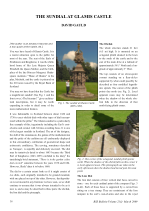
This article describes the magnificent 21-foot high Glamis Castle sundial in Scotland, tentatively dated around 1683. It is an elaborate obelisk dial featuring 84 time-recording faces, lion dials for cardinal points, and a complex \pineapple\ (stellar rhombicuboctahedron) with numerous declining and reclining faces. The article also discusses its Equation of Time inscription and possible mathematical contributions by James Gregory.
Dials: Multi Faced, Mathematics of Dialling, Sundial Design & Layout, Equation of Time, Historical Dials
June 2009
Page 2
Page 2
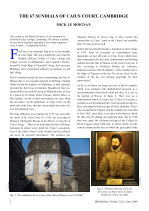
An exploration of the sundials at Gonville & Caius College, Cambridge. It details the six dials on the Gate of Honour, a lost fantastical column with 60 dials by the architect Theodore Haveus, and a rediscovered ‘great mural dial’ on the Chapel wall.
Dials: Multi Faced, Dials: Vertical, Historical Dials
December 2009
Page 38
Page 38
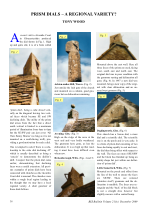
This article examines 'prism dials', a form of multi-faced dial created from a diagonally sliced cube, resulting in south-east and south-west declining faces. The author provides a gazetteer of several examples found within a specific area of Gloucestershire and Wiltshire, questioning if they represent a local style.
Dials: Multi Faced, Dials: Vertical, Historical Dials
September 2008
Page 106
Page 106
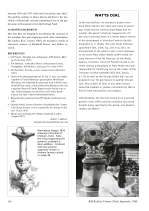
This piece follows up on the whereabouts of George Watts' sundial, confirming Mary Watts as its maker. It reports that the terracotta dial was stolen from a private garden in the 1990s and remains unrecovered, appealing to readers for information. The text also mentions the existence of a better photograph in Veronica Franklin Gould's biography of Mary.
Dials: Multi Faced, Dials: Unusual, Historical Dials
December 2008
Page 159
Page 159
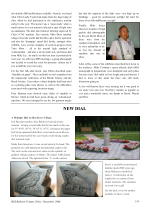
This piece describes a new multiple dial created by Alex Boldyrev for Shevelkovo Village. Carved from Crimean limestone, it features an equatorial dial's upper half and a south-facing scaphe dial in Greek style. It incorporates owls symbolizing Athena and a reconstructed historical mistake in its design, with gnomons made from cold-hammered copper rods.
Dials: Multi Faced, Dials: Equatorial, Sundial Design & Layout, Dials: Scaphe
December 2008
Page 162
Page 162
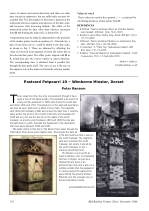
This note discusses the sundial at Wimborne Minster, Dorset, based on a 1908 postcard, a 1928 cigarette card, and an 1830 print. It observes the dial's historical repositioning from a gable to ground level between 1830 and 1908, clarifies Mrs. Gatty's potentially inaccurate references to its date and location, and encourages a visit to the Minster.
Dials: Multi Faced, Historical Dials
December 2008
Page 193
Page 193
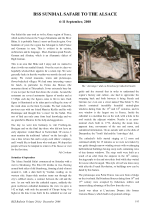
A report on the BSS Sundial Safari to the Alsace region of France, detailing visits to various towns and villages. It describes numerous sundials encountered, including those at Strasbourg Cathedral, Soultz, Guebwiller, St-Marc convent, Colmar, Eguisheim, Riquewihr, Bergheim, Mont Ste-Odile (featuring a polyhedral dial), and Freiburg (Germany), as well as the Kirschgarten Museum in Basel.
Dials: Vertical, Dials: Multi Faced, Historical Dials, The BSS and Members
March 2007
Page 39
Page 39
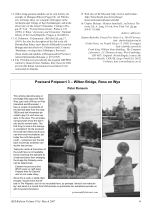
Peter Ransom describes a sundial on Wilton Bridge near Ross on Wye, using postcards from the early 1900s to note a change in its orientation, where the north face now points south. He also deciphers a motto from an old postcard that is no longer readable on the dial itself.
Dials: Multi Faced, Historical Dials, Mottoes
December 2007
Page 184
Page 184
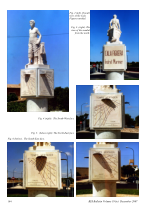
This article describes a monument in Cala Figuera, Majorca, featuring three vertical declining bifilar sundials on the pedestal of a fisherman statue. Two dials face south, one east and one west, and the third faces north, declining east. The article details their bifilar gnomon design (semi-ellipse and straight line), delineation for hours and half-hours, and declination lines, along with the mathematical methods used for their design and calculation.
Construction Projects, Dials: Bifilar, Dials: Multi Faced, Mathematics of Dialling, Sundial Design & Layout
December 2007
Page 189
Page 189
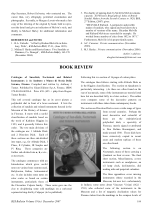
This is a review of 'Catalogue of Sun-dials, Nocturnals and Related Instruments in the Instituto e Museo di Storia Della Scienza, Firenze' by Anthony J Turner. The catalogue details Florence's collection of sundials, nocturnals, and other instruments, categorized using Higgins' classification. The reviewer praises the initiative but criticizes the illustration presentation, including identification, placement, size, and photographic angles.
Book Reviews, Dials: Multi Faced, Historical Dials, Dials: Nocturnals
December 2006
Page 171
Page 171
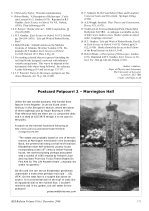
The featured dial can be found under Chirbury in the Shropshire section of the dial register. There are 11 component dials and it is sited at SJ272975 though it is not open to the public. On the west face is a scaphe dial above an anchor. Is it a horizontal dial on the top? It looks like an equatorial dial on the inclined face.
Dials: Multi Faced
December 2006
Page 180
Page 180
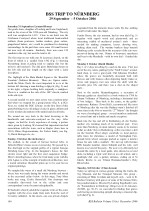
This multi-author report details the British Sundial Society's visit to Nürnberg, exploring historical sundials on sites like St Lawrence church (1502), the Fembo House, and various multi-faced dials in Rothenberg. The trip also included visits to St Rochus Cemetery, where gravestones of famous dial makers feature classical diptych dials.
Dials: Multi Faced, Dials: Portable, Historical Dials, The BSS and Members
December 2005
Page 134
Page 134
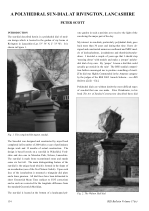
Describes the design and construction of a modern polyhedral sundial located in the author's garden in Rivington, Lancashire. The six-foot-tall dial is made from reconstituted stone and features a unique icosahedron-shaped head with twenty triangular dial plates, each with a brass gnomon. The design was inspired by dials in Wakefield and Marsden Park.
Construction Projects, DIY Sundial Projects, Dials: Multi Faced, Sundial Design & Layout
September 2004
Page 96
Page 96
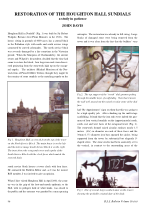
Account of discovering four large vertical dials on an octagonal cupola, surveying gnomon positions, choosing vitreous-enamel steel faces, manufacturing setbacks (overseas enamelling) and the final installation with alignment and conservation choices.
Dials: Multi Faced, Dials: Vertical, Restoration projects
December 2004
Page 163
Page 163
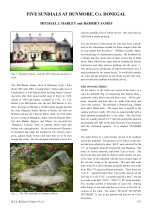
Survey of five McClintock sundials at Dunmore estate, including the 1843 Melville slate dial and its 2003 restoration, the 1936 vertical dial, the 1939 heliochronometer, construction details, inscriptions, and the estate's dial-making history.
Dials: Heliochronometer, Dials: Horizontal, Dials: Multi Faced, Historical Dials, Restoration projects
March 2003
Page 40
Page 40
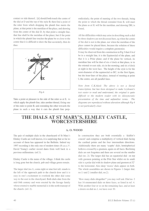
Descriptive study of multiple dials found at St Mary's Church, including layout, inscriptions, and historical context.
Dials: Multi Faced, Historical Dials
June 2002
Page 69
Page 69
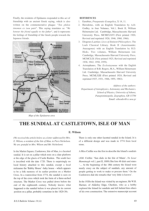
Description and analysis of a unique local sundial in Castletown with regional design features.
Dials: Multi Faced, Dials: Unusual, Dials: Vertical, Historical Dials
June 2000
Page 55
Page 55
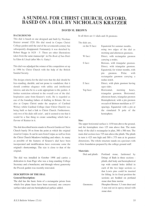
Describes the design and installation of a new multi-faced sundial at Christ Church, Oxford, inspired by a historical dial by Kratzer.
Dials: Multi Faced, Sundial Design & Layout
June 2000
Page 59
Page 59
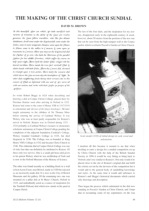
Narrates the author's journey through the design, construction, and installation of the Christ Church sundial.
Construction Projects, Dials: Multi Faced
July 1997
Page 53
Page 53
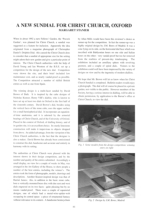
This article describes a new sundial being commissioned for the Fellow's Garden at Christ Church, Oxford. It discusses the design competition and the winning entry.
Dials: Cube, Dials: Multi Faced, Sundial Design & Layout
October 1997
Page 8
Page 8
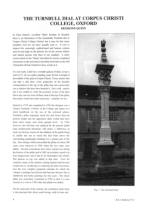
This article describes the Turnbull Dial at Corpus Christi College, Oxford, a 26-foot pillar featuring a total of 27 dials. Designed in 1579-1583 by Charles Turnbull, it includes a principal south-facing dial, a perpetual calendar, tables for planetary years and lunar months, and moon-time corrections. The dials use the old unequal hour system, and the pillar has undergone several restorations.
Dials: Multi Faced, Dials: Scaphe, Historical Dials, Restoration projects
June 1996
Page 3
Page 3
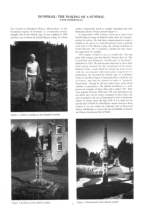
Describes the creation of a complex obelisk-style sundial at Dunphail House, including its design, multiple dial faces, symbolic engravings, and historical inspirations from Scottish traditions.
Construction Projects, Dials: Multi Faced
October 1994
Page 10
Page 10
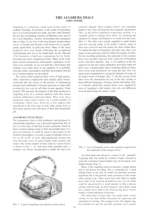
This article details the history and restoration of the Gate of Honour at Gonville and Caius College, Cambridge, which features six sundials. It covers the gate's construction, early repairs and repainting efforts, and its decay over centuries due to porous stone and vandalism. The focus shifts to the 1958-1959 quatercentenary restoration, during which the original painted dials were replaced with expensive bronze plates with enamel fillings. The article also mentions a separate pillar in Caius Court that once housed sixty dials, emphasizing the craftsmanship and decorative nature of these historical timepieces.
Dials: Multi Faced, Historical Dials, Restoration projects
February 1993
Page 31
Page 31
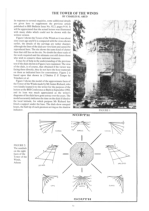
This addendum provides further details on the Tower of the Winds in Athens, supplementing a previous article. It discusses the condition of its carvings and dials, challenges in conservation, and references for understanding its sundials and their orientation, including allegorical figures of the eight winds.
Dials: Multi Faced, Historical Dials
June 1993
Page 8
Page 8
This article critically examines polyhedral sundials designed by Nicholaus Kratzer, Henry VIII's diallist, comparing his work with that of Oronce Fine (Francis I of France's diallist). It describes surviving and recorded dials, including those in Holbein's paintings, and questions the practical functionality of Kratzer's polyhedral design due to apparent geometric inconsistencies and the use of the Ecliptic's obliquity angle in extraneous constructions.
Dials: Multi Faced, Sundial Design & Layout, Historical Dials
October 1993
Page 20
Page 20
This article surveys various sundials across Cambridgeshire, including church wall dials, horizontal garden dials, and armillary spheres. It highlights specific examples, discussing their dates, inscriptions, restoration efforts, and the materials used. The text also notes the ongoing loss of old dials due to weathering but also the creation of new commemorative ones.
Dials: Armillary Sphere, Dials: Horizontal, Dials: Mass Dials, Dials: Multi Faced, Dials: Vertical, Historical Dials
June 1992
Page 10
Page 10
This article describes a unique monumental cubical-cylindrical sundial from 1628 in Rome's Quirinale Gardens, 2.70 meters high, constructed of white marble. It features four concave quadrants indicating both civil/astronomical time and 'Italian time,' reflecting different timekeeping systems. The dial also includes zodiacal curves for calendrical indications and intricate Latin inscriptions from its author Theodosius Rubeus and patron Urbano VIII Barberini.
Dials: Cube, Dials: Multi Faced, Dials: Unusual, Historical Dials
June 1992
Page 30
Page 30
This article details the large cubic sundial erected in Whitehall's Privy Garden in 1622 for King James I, replacing an earlier Caen stone dial. Based on Edmund Gunter's 1624 treatise, it describes the intricate design with multiple dials, including a great horizontal concave. The dial's use led to the discovery of magnetic variation, and its sculptor was Nicholas Stone.
Dials: Cube, Dials: Multi Faced, Historical Dials
October 1992
Page 9
Page 9
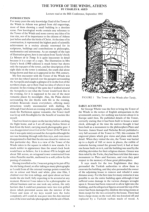
This lecture describes the octagonal Tower of the Winds in Athens, built around 37 BC by Andronicus Cyrrhestes, housing a water clock and eight planar sundials. The tower features allegorical wind figures and its sundials, though faint, provided seasonal hours. The article highlights the historical neglect of its dials compared to the water clock and the need for restoration.
Dials: Multi Faced, Historical Dials
October 1992
Page 31
Page 31
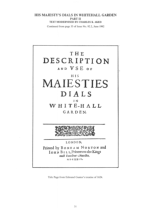
This article, based on Edmund Gunter's 1624 treatise, continues the original description of the intricate multi-faced cubic sundial in Whitehall Gardens. It details the use of various coloured lines (red, yellow, green, blue) on different dial faces to indicate azimuth, altitude, unequal "planetary" hours, sun's rising/setting times, length of day, and even the age of the moon and high water times. Geographical tables for longitude differences are also included.
Dials: Cube, Dials: Multi Faced, Historical Dials
July 1991
Page 22
Page 22
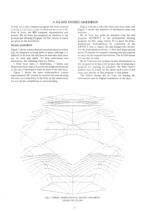
This note introduces F.J. de Vries' new computer program for designing a three-dimensional dodecahedron multi-faced sundial, imagined as made of glass to display various dial lines. The ZONWPLT program interfaces with ACAD to convert dial designs and generate complex geometric models. The article details the computational process, noting the time and files required for the example dodecahedron, and mentions de Vries' subsequent astrolabe program project.
Construction Projects, Dialling Tools, Dials: Multi Faced, Sundial Design & Layout
October 1991
Page 22
Page 22
This article describes the Salisbury Cathedral spire as a unique sundial, where its midday shadow crosses an engraved line marked "Meridies" on a low north wall. It notes the popularity of elaborate Scottish multangular dials in the 17th century and details a rare Ivychurch dial in the Salisbury Museum, a local stone multi-faced piece that indicates both time and seasons.
Dials: Multi Faced, Dials: Noon Lines, Historical Dials
June 1990
Page 19
Page 19
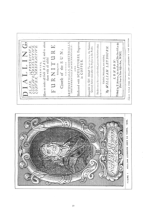
This detailed explication describes the elaborate pyramidical sundial, designed by Francis Hall and erected in Whitehall's Privy Garden in 1669. It outlines the dial's numerous components, including various dials, globes, and glass bowls, highlighting its complex and ultimately impractical design in the English climate.
Dials: Multi Faced, Historical Dials
October 1990
Page 24
Page 24
This article recounts G.R. Higgs' sundial exploration trips with Andrew Somerville across Scotland, focusing on discovering and restoring historical dials. Notable examples include a 57-face lectern dial at Hensol House, finding a cube dial in a rockery, and working on the Glamis Castle dial, including one designed by Andrew himself.
Dials: Multi Faced, Historical Dials, The BSS and Members
July 1989
Page 9
Page 9
An article by Andrew R. Somerville details a unique 16th-century stone cube sundial with multiple hollows for different gnomons, along with its possible uses and historical context. The dial may be associated with the work of Nicolaus Kratzer, who introduced multiple sundials to England in the 16th century. It may also be connected to the Jacobean garden at Madeley Court, and its geometric and symbolic elements.
Dials: Multi Faced, Historical Dials
November 1989
Page 15
Page 15
Describes a 1576 manuscript related to Lord Burghley detailing a complex sundial on a geometric body. This body is composed of triangular and hexagonal planes, with three of each type containing dials. The hexagonal dials include a "Meridionall Inclinatorye" face and two "declinatory Hexagonalls," which are noted as particularly difficult to construct. The piece lists the various indications marked on these dials, such as vulgar and unequal "Planet hours," Zodiac signs, Azimuths, and Almicanteras, as well as their general uses like determining sunrise/sunset, sun altitude, and celestial positions.
Dials: Multi Faced
November 1989
Page 24
Page 24