- Home
- /
- Sundial Encyclopaedia
- /
- Mathematics of Dialling
Mathematics of Dialling
June 2023
Page 2
Page 2
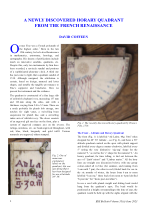
Details the discovery of an ivory horary quadrant by Oronce Fine, dated 1518, designed for 48° 30ʹ latitude. The quadrant features straight hour lines and an elaborate carved leather case bearing the coat of arms of Michel Boudet, Fine’s protector. It is noted as being remarkably similar to the quadrant seen in Holbein’s "Les Ambassadeurs".
Dials: Portable, Mathematics of Dialling, Dialling Tools, Historical Dials
September 2023
Page 2
Page 2

Analyzes the Erfurt rule, a medieval method for designing south-facing wall sundials, found in a 15th–16th-century codex owned by Fra Giocondo of Verona. It discusses the rule's origins (Paris/Germany, c. 1334), its non-empirical numerical angular values for temporal hours, and its later modification to suit equal equinoctial hours.
Dials: Vertical, Historical Dials, Mathematics of Dialling, Sundial Design & Layout
December 2023
Page 20
Page 20
Part 1 of an analysis tracing the evolution of Italian hours (counting from sunset, ab occasu solis) from the ancient unequal hours, noting the influence of mechanical tower clocks in the mid-fourteenth century. It discusses how Italian hours contrasted with Babylonian (ab ortu solis) and Nuremberg hours, addressing historical confusion surrounding ‘Bohemian hours’.
Historical Dials, Mathematics of Dialling, Sundial Design & Layout
December 2023
Page 37
Page 37
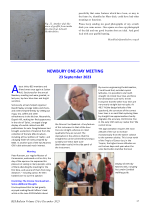
An extensive report detailing the annual BSS Newbury meeting. Topics covered included the Oronce Fine Quadrant, Isle of Wight dials, methods for finding True North, the Sundial Atlas, John Lester's obituary, unusual scratch dials, a London sundial walk, and updates on the Hythe 'Undial' and BSS governance challenges.
Dialling Tools, Historical Dials, Mathematics of Dialling, The BSS and Members
March 2022
Page 24
Page 24
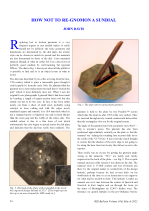
An examination of an old horizontal sundial (c. late 17th/early 18th century) highlighting mistakes made during a poor gnomon replacement. Errors included cutting the angle incorrectly (40.0° instead of the design latitude 52.5° marked on the back), using mild steel that rusted, and using modern Pozidriv screws for attachment.
Dials: Horizontal, Mathematics of Dialling, Restoration projects, Sundial Design & Layout
March 2022
Page 32
Page 32
An analysis of the unusual longitude inscription found on the St Mark’s, Longwood dial. By comparison with the Hawkshead dial, it is concluded that the inscription refers to the 'Plane’s Longitude,' which defines the longitude where the dial could be used horizontally, and is numerically equal to the hour angle between the substyle and noon lines.
Dials: Vertical, Historical Dials, Mathematics of Dialling, Sundial Design & Layout
December 2022
Page 2
Page 2
Discusses how mechanical tide prediction machines, used from the 1870s to the 1960s, can be adapted to mechanically generate the Equation of Time. This programmable mechanism can be applied to heliochronometers or mechanical clocks, allowing for adjustment based on slow changes in the EoT.
Mathematics of Dialling, Equation of Time, Dials: Heliochronometer
December 2022
Page 39
Page 39
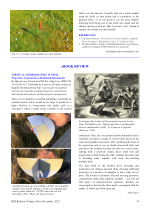
Review of Maciej Lose's free eBook, "Vertical Stereographic Sundial," which extends the concept of the double horizontal dial to various vertical and declining dials using geometric construction rather than algebraic methods.
Book Reviews, Dials: Vertical, Mathematics of Dialling, Sundial Design & Layout
June 2021
Page 32
Page 32
The third part of the restoration series on the 1630 Drummond Castle obelisk sundial, focusing on the unique Latin scroll carving on the shaft. The article provides the corrected transcription and interpretation of the scroll, explaining how it describes the various hour types (Babylonian, Italian, Seasonal, Common) and astronomical markings (Azimuth, Altitude, Declination) found on the dial, often linking them to astrolabe terminology.
Dials: Multi Faced, Historical Dials, Mathematics of Dialling, Restoration projects
June 2021
Page 37
Page 37
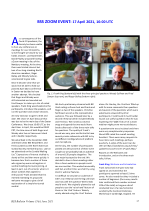
Report on the British Sundial Society's successful virtual conference held via Zoom in April 2021, featuring three noted North American speakers. Talks covered Zarbula and Potey dials in the French Alps, a highly customized ceiling reflection sundial by Woody Sullivan, and Fred Sawyer's theoretical work on Hybrid Peaucellier azimuthal dials designed to eliminate the noon gap.
Dials: Reflected, Mathematics of Dialling, Sundial Design & Layout, The BSS and Members
September 2021
Page 2
Page 2
Examines ten mosque sundials signed by al-Mansur and dated 1671–1681 AD. These instruments feature epigraphic anomalies and non-functional gnomonic layouts, including inaccurate hour lines and prayer indications. The authors conclude these sophisticated yet flawed dials are likely modern ‘fakes’.
Dials: Horizontal, Mathematics of Dialling, Historical Dials
September 2021
Page 20
Page 20
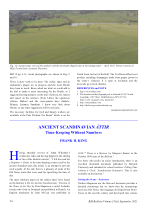
A guide to the ancient Scandinavian system of time-keeping using "áttir" (eighths of the horizon) and landmarks known as daymarks. It explains the Old Norse terminology (middag, miðnætti, undorn) and discusses why this non-numerical system was suitable for high latitudes where unequal hours were unviable.
How Sundials Work, Mathematics of Dialling, Historical Dials
September 2021
Page 26
Page 26
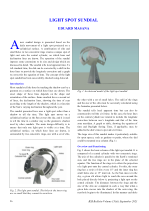
Introduces a novel equatorial sundial design that uses a moving light spot, rather than a shadow, to indicate time. The spot is projected onto a central cylinder via concentric rings with slits and holes. The design requires complex mathematical calculations for accurate sizing and component placement, ideal for large installations.
Dials: Equatorial, Mathematics of Dialling, Sundial Design & Layout
December 2021
Page 10
Page 10
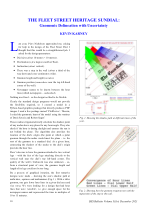
Details the gnomonic design of the large vertical declining Fleet Street dial using Python-based graphics and established trigonometric routines. The model enabled flexible design adjustments, accounting for physical realities like the wall's step and the final highly accurate laser survey data, ultimately producing the precise instruction graphics for the painter.
Construction Projects, Dials: Vertical, Mathematics of Dialling, Sundial Design & Layout
December 2021
Page 13
Page 13
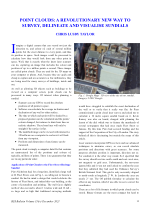
Explores the use of laser scanners and point clouds as a revolutionary method for surveying and designing sundials, accurate to a few millimetres. The technique was used on the Fleet Street dial to determine precise coordinates, declination, and inclination, allowing designers to calculate hour lines and model shadows regardless of surface irregularities.
Construction Projects, Dialling Tools, Mathematics of Dialling, Sundial Design & Layout
December 2021
Page 30
Page 30
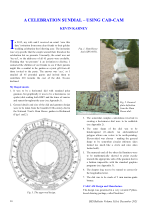
Details the design and CAD-CAM manufacture of a complex hendecagonal hectemoros horizontal sundial for a Golden Wedding anniversary gift. The process used Python graphics (Nodebox) and water-jet cutting to create a bronze plate indicating GMT, sunrise, and sunset, featuring custom algorithms for precise font skewing.
DIY Sundial Projects, Dials: Horizontal, Mathematics of Dialling, Sundial Design & Layout
March 2020
Page 12
Page 12
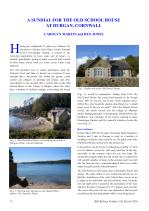
Describes the process of commissioning and constructing a diamond-shaped vertical dial on the Old School House at Durgan, Cornwall. The wall declination was measured at 17½ degrees east of south. The slate dial is adjusted for longitude to show 'Greenwich Apparent Time' and includes a small notch for local noon. It was a collaborative effort involving the National Trust and letter carver Ben Jones.
Construction Projects, Dials: Vertical, Mathematics of Dialling, Sundial Design & Layout
June 2020
Page 32
Page 32
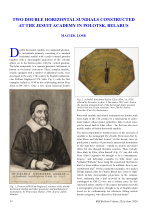
This article documents two sophisticated double horizontal sundials constructed in the early 19th century at the Jesuit Academy in Polotsk, Belarus, following the principles of William Oughtred and Jacques Ozanam. These instruments, built for Polotsk and St Petersburg, incorporated unique features like twilight circles and local noon times for global cities, but are no longer extant.
How Sundials Work, Mathematics of Dialling, Historical Dials, Dials: Double Horizontal
September 2020
Page 10
Page 10
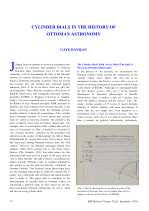
Explores the terminology and history of cylinder dials ("al-ustuwana", "‘Asâ-yı Mûsâ") in the Ottoman Empire, where they were less common than astrolabes. Introduces two Ottoman manuscripts and discusses two surviving cylinder dials from the 18th and 19th centuries, both calculated for the latitude of Istanbul (41°).
Dials: Portable, How Sundials Work, Mathematics of Dialling, Historical Dials
September 2020
Page 21
Page 21
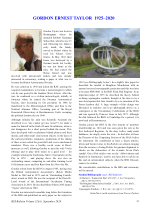
An obituary for Gordon Ernest Taylor (no. 146), the BSS's first Registrar, renowned for his work in astronomy and lunar occultations. Highlights his gnomonic contributions, including a paper on reclining equiangular sundials (Foster-Lambert dial).
Dials: Foster-Lambert, Mathematics of Dialling, The BSS and Members
September 2020
Page 23
Page 23
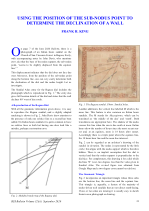
Presents a gnomonic method using the ratio of the horizontal distance between the sub-nodus point, the noon line, and the equinox line to determine a wall's declination. The technique, illustrated using the Ragusa dial, also allows calculation of the nodus height for a vertical dial.
Dialling Tools, Dials: Vertical, How Sundials Work, Mathematics of Dialling
September 2020
Page 40
Page 40
Explains the Italian terminology for 'Italian hours' (e.g., "ore italiche") and the two historical systems based on sunset. These are "ora italica comune" (geometric sunset) and "ore italiche da campanile" (half an hour after sunset, marked by the Angelus bell).
How Sundials Work, Mathematics of Dialling, Historical Dials
December 2020
Page 2
Page 2
This article describes and analyses an unusual Roman sundial in the British Museum (1884,0615.1), likely originating from Egypt. It examines the dial’s equinoctial planar design, estimating the design latitude (27.3° N) and nodus height using physical measurements and a graphical approach. It challenges the idea that the declination arcs correspond to zodiac cusps.
Dials: Equatorial, Historical Dials, How Sundials Work, Mathematics of Dialling
December 2020
Page 16
Page 16
The author details the design and calculation of the Holker Hall scaphe dial (a spherical bowl dial). He explains the trigonometric formulae, derived using his 'y' formula, necessary for plotting points on the curved surface using distance and azimuth. He also proposes making a pair of large scaphe dials incorporating corrections for the Equation of Time (EoT) and longitude displacement.
Construction Projects, Dials: Scaphe, Equation of Time, Mathematics of Dialling
December 2020
Page 19
Page 19
This article follows Ortwin Feustel’s analysis of the British Museum sundial (1884,0615.1) to determine the meaning of its declination arcs. By calculating the corresponding solar declinations, the author correlates them with agriculturally significant events recorded in the ancient Egyptian Geminos parapegma, such as the rising of Sirius and the setting/rising of the Pleiades.
Dials: Equatorial, Historical Dials, How Sundials Work, Mathematics of Dialling
December 2020
Page 28
Page 28
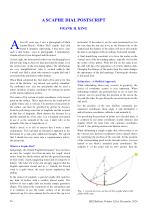
A commentary on Mark Lennox-Boyd's scaphe dial article, providing an alternative, simpler mathematical derivation for plotting points on the spherical surface using horizon coordinates (altitude and azimuth). It also explores the design geometry, showing how the appearance of the dial markings changes based on the ratio of the sphere radius to the rim radius.
Dials: Scaphe, How Sundials Work, Mathematics of Dialling, Sundial Design & Layout
December 2020
Page 42
Page 42
A Beginner’s Guide to Delineation: deriving the Lennox-Boyd ‘y’ formula using a gnomonic tetrahedron
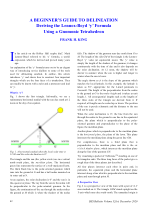
An explanation of Mark Lennox-Boyd's 'y' formula (the length of the shadow of the gnomon nodus from the gnomon root). The formula is derived using spherical trigonometry simplified into four interconnected right-angled triangles forming a 'gnomonic tetrahedron'. This methodology is presented as a helpful tool for novice diallists learning delineation.
Dialling Tools, How Sundials Work, Mathematics of Dialling, Sundial Design & Layout
June 2019
Page 17
Page 17
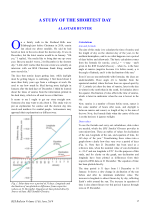
Explains why the latest sunrise (measured in mean time) occurs after the winter solstice (the shortest day). This phenomenon results from the fast-changing value of the Equation of Time near the solstice, causing a nominal delay in sunrise and making evenings appear lighter before the shortest day.
Equation of Time, Mathematics of Dialling
September 2019
Page 14
Page 14
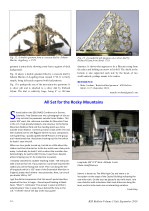
The author recounts finding a brass strip outside Union Station in Denver, Colorado, marking 105° west longitude, the reference meridian for Mountain Time. He explains to an assembled tour group that this longitude corresponds to Mountain Time being seven hours behind the time in the U.K.
Mathematics of Dialling, The BSS and Members
September 2019
Page 20
Page 20
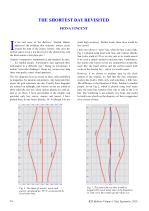
This follow-up article explains, using an astronomical perspective, why the earliest sunset and latest sunrise do not coincide exactly with the shortest day. The discrepancy arises because the Equation of Time causes the 'noon' line, measured by local mean time, to wander relative to the 12h line, shifting the symmetry of the sunrise and sunset curves.
Equation of Time, How Sundials Work, Mathematics of Dialling
September 2019
Page 22
Page 22
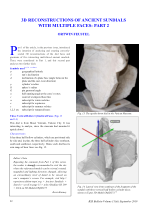
This article continues the analysis of ancient multi-faced sundials using 3D reconstructions. It examines a dial from the Musei Vaticani with three vertical hollow cylindrical faces and a combination dial from Herculaneum featuring vertical hollow cylindrical and spherical faces. Analysis includes calculation based on geographical latitude and declination lines.
Dials: Hemispherical, Dials: Multi Faced, Historical Dials, Mathematics of Dialling
September 2019
Page 33
Page 33
This letter comments on the study of the shortest day, noting that Claudius Ptolemy wrote about the 'Inequality in the Days' around 150 AD in "The Almagest". Ptolemy correctly identified the two causes—the Solar Anomaly (Eccentricity Effect) and the variation in Meridian crossing (Obliquity Effect)—demonstrating extraordinary precision in calculating the Equation of Time effects.
How Sundials Work, Mathematics of Dialling, Equation of Time
December 2019
Page 12
Page 12
This article details the design and installation of a 3-metre tall obelisk sundial in Cornwall. The obelisk has an equilateral triangular cross-section, featuring two declining/reclining dials engraved on granite and slate, plus a simplified EoT correction table on the north face. Precise GPS alignment and a custom stainless steel turntable were used during installation to achieve high accuracy.
Construction Projects, Dials: Multi Faced, Mathematics of Dialling, Sundial Design & Layout
December 2019
Page 32
Page 32
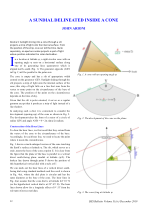
A technical article detailing the design and mathematics of a sundial delineated inside a right circular cone. Sunlight passing through a polar-oriented slit projects a time-telling strip of light onto the interior surface. An aperture nodus simultaneously projects a spot indicating the solar declination. The article includes formulae for deriving hour lines and the characteristic closed-curve calendar lines.
Dials: Unusual, How Sundials Work, Mathematics of Dialling, Sundial Design & Layout
December 2019
Page 38
Page 38
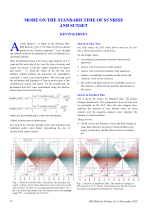
An expansion on the study of sunrise and sunset times, providing systematic calculations across all latitudes. Using a two-step iterative calculation, the author compares the symmetrical results found in Solar Time against the asymmetrical results in Standard Time, demonstrating how the Equation of Time (EoT) dramatically perturbs the earliest and latest sunrise/sunset days across various latitudes.
Equation of Time, How Sundials Work, Mathematics of Dialling
December 2018
Page 52
Page 52
A tribute to the BSS Sundial Glossary for providing the necessary formulae to understand and reproduce the complex criss-cross patterns of Babylonian and Italian hours observed on a polyhedral Scottish dial. The writer provides a faithful reproduction of the hour lines.
Dials: Multi Faced, How Sundials Work, Mathematics of Dialling, The BSS and Members
March 2017
Page 2
Page 2
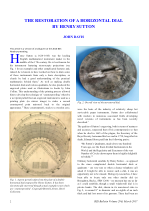
This article details the restoration of a rare, 1652 circular horizontal dial by Henry Sutton, a leading 17th-century instrument maker. Analysis revealed its accuracy but also a beginner’s delineation mistake (wrong centres used for back-hours). The brass plate showed remarkably uniform thickness and bore a unique motto: “As shade doth pass from line to line...”. A replacement gnomon was manufactured.
Dials: Horizontal, Historical Dials, Mathematics of Dialling, Mottoes, Restoration projects
March 2017
Page 37
Page 37
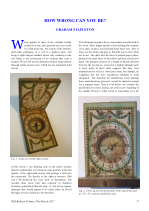
Analysis of wooden diptych sundials (late 18th/early 19th century, Southern Germany) that often only had hour lines delineated for a single latitude (typically 50°). The author calculates the errors (up to 20 minutes) when these dials are used at distant latitudes (e.g., 40° N or 54° N), even if the string gnomon is correctly reset.
Dials: Portable, How Sundials Work, Mathematics of Dialling
September 2017
Page 2
Page 2
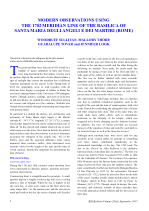
This article is based on a 2016 conference talk detailing modern observations of solar transits on Rome's 1702 meridian line. The purpose was to determine the obliquity of the ecliptic, length of the year, and time of vernal equinox. Analysis of 54 data points gathered between 1996 and 2015 confirmed that the obliquity has grown smaller since the line's construction.
Dials: Noon Lines, Historical Dials, How Sundials Work, Mathematics of Dialling
September 2017
Page 48
Page 48
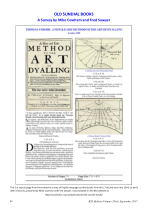
This entry references an extensive survey compiled by Mike Cowham and Fred Sawyer, covering English language sundial books published from the late 16th to the early 20th centuries. The survey is now available for members on the BSS website.
Book Reviews, Mathematics of Dialling, The BSS and Members
December 2017
Page 6
Page 6
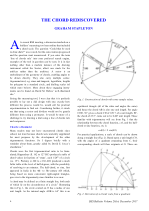
Examines how a chord scale (such as on a Sector instrument or line of chords rule) can be used for geometrically laying out a dial design. The article discusses the historical use and trigonometry of chords and compares the process to using a protractor.
Dialling Tools, Mathematics of Dialling, Sundial Design & Layout
March 2016
Page 17
Page 17
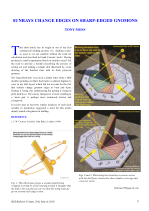
Discusses a common error made by beginners in sundial design concerning how sunrays change edges on sharp-edged gnomons at 6 am and 6 pm, in addition to the more widely known ‘noon gap’. Getting this aspect wrong results in incorrect dial layouts.
How Sundials Work, Mathematics of Dialling, Sundial Design & Layout
December 2016
Page 27
Page 27
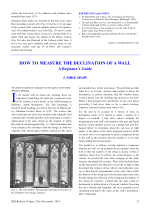
A guide detailing a method for accurately measuring wall declination, based on a talk at Newbury (2016). It involves using a plumb line, mirror, and white board to determine the exact moment the sun is perpendicular to the wall. The subsequent azimuth is derived easily using the 'Sun Seeker' mobile application.
Dialling Tools, Mathematics of Dialling
March 2015
Page 17
Page 17
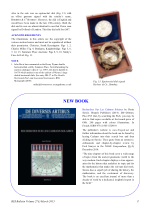
An announcement and review of Denis Savoie’s book, *Recherches Sur Les Cadrans Solaires* (2014). The work is praised for its extensive coverage of gnomonic topics, ranging from the ancient world to the modern, and for seamlessly integrating the history and underlying mathematics of dial work.
Book Reviews, Mathematics of Dialling, Historical Dials
June 2015
Page 2
Page 2
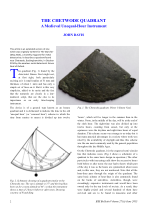
This article describes a small, rare horary quadrant found near Chetwode, Buckinghamshire, in 2014. It is identified as a *quadrans vetustissimus*, designed for unequal hours, likely dating from the mid-13th century or later, and includes a shadow square.
Dials: Portable, Historical Dials, Mathematics of Dialling
June 2015
Page 21
Page 21
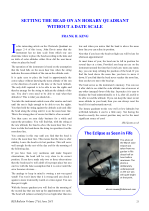
Addressing the lack of a date scale on the Chetwode Quadrant, this piece explains a practical method for setting the sliding bead on an horary quadrant string. The user relies on frequent observations around noon to refine the bead's position relative to the noon hour line.
Dialling Tools, How Sundials Work, Mathematics of Dialling
September 2015
Page 8
Page 8
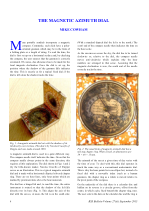
This article explores the design and function of magnetic azimuth dials, where the compass needle indicates the time. Using historical examples by Nicolas Crucefix and Charles Bloud, it details methods for calibration, dealing with magnetic declination, and construction techniques suitable for portable instruments.
Dialling Tools, Dials: Portable, How Sundials Work, Mathematics of Dialling
September 2015
Page 22
Page 22
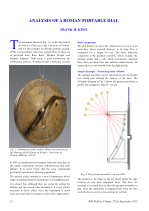
A novel analysis of a Roman portable altitude dial from Oxford’s Museum of the History of Science. It explores how the instrument determines unequal hours from solar altitude, discusses the underlying mathematical model, the use of latitude and declination scales, and provides an error analysis.
Dials: Portable, Historical Dials, How Sundials Work, Mathematics of Dialling
December 2015
Page 21
Page 21
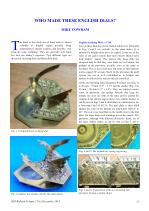
Investigates several unsigned English brass dials, suggesting they might originate from the same provincial workshop around 1740. Discusses similarities between inclining dials and oval Butterfield dials, noting manufacturing irregularities in an octagonal dial.
Dials: Portable, Mathematics of Dialling, Historical Dials
December 2015
Page 44
Page 44
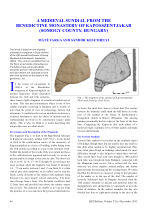
Analysis of a stone fragment found at a Benedictine monastery excavation, identified as a medieval vertical sundial. Its hour lines are nearly equiangular, suggesting monastic or temporal timing, and it is dated to the late 15th or early 16th century, before 1555.
Dials: Vertical, Historical Dials, Mathematics of Dialling
March 2014
Page 2
Page 2
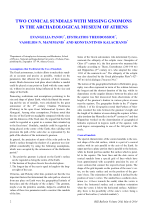
This paper analyses two ancient Greek conical sundials (3156 and 3157) recovered from the Dionysus Theatre. Since their gnomons are lost, geometric characteristics are used, alongside an assumed obliquity of the ecliptic, to calculate their geographical latitude and gnomon length. The calculated design latitudes (33° to 36°) suggest they may have been looted from other Mediterranean regions, rather than being built specifically for Athens (37° 58΄).
Dials: Scaphe, Dials: Unusual, Historical Dials, Mathematics of Dialling
March 2014
Page 36
Page 36
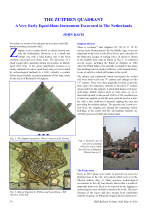
A copper-alloy quadrant excavated in Zutphen is securely dated to c.1300–1320, pushing back the date of known equal-hour quadrants in Europe by nearly a century. The instrument is engraved with an altitude scale, date/declination arcs, and hour lines for equal hours, implying a design latitude of approximately 52.0° N. This find reflects the increasing need for standardised time linked to the spread of tower clocks.
Dials: Astrolabe, Mathematics of Dialling, Dialling Tools, Historical Dials
June 2014
Page 2
Page 2
Discusses the evolution of terminology in dialling, particularly 'delineation' (functional hour lines) and 'furniture' (other elements like mottoes or mathematical additions). It traces the use of 'furniture' back to 17th-century dialling books by Brown and Leybourn, who viewed these additions as secondary to the basic hours.
Historical Dials, Mathematics of Dialling, Mottoes, Sundial Design & Layout
June 2014
Page 44
Page 44
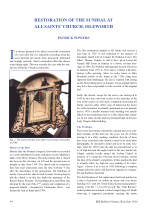
Documents the restoration of a vertical declining dial from All Saints’ Church, Isleworth (originally 1707), which was severely decayed and incorrectly delineated. The restoration included correcting mathematical errors and recreating unique features like solar altitude scales and time arcs for Jamaica, Jerusalem, and Moscow.
Dials: Vertical, Mathematics of Dialling, Restoration projects, Historical Dials
September 2014
Page 18
Page 18
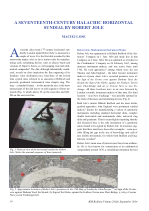
Analysis of a rare 17th-century horizontal brass sundial by London maker Robert Jole, notable for being his only recorded gnomonic instrument. It includes Jewish (Halachic/seasonal) hour-lines, astronomical hours, and declination arcs, designed for a London latitude, catering to the needs of the early Jewish community.
Dials: Horizontal, Dials: Unusual, Historical Dials, Mathematics of Dialling
September 2014
Page 29
Page 29
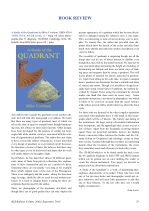
A review of 'A Study of the Quadrant' by Mike Cowham (2014). The monograph is highly recommended, covering the many types and functions of quadrants, including timekeeping, setting out hour-angle dials, and solving trigonometrical problems, all explained with clarity.
Book Reviews, Dialling Tools, Mathematics of Dialling
March 2013
Page 2
Page 2
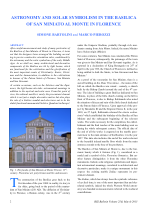
An in-depth study of how the Basilica of San Miniato al Monte was aligned to capture sunlight on key Christian feast days. The article explores the relationship between architecture, astronomy, and religious symbolism in medieval Florence.
Historical Dials, How Sundials Work, Mathematics of Dialling, Sundial Design & Layout
March 2013
Page 23
Page 23
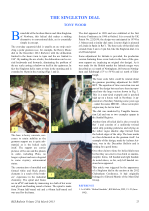
A technical and historical description of the patented ‘Singleton’ helical sundial. The article explains its geometry, manufacture, and later examples exhibited and sold in Britain.
Dials: Heliochronometer, Dials: Unusual, Mathematics of Dialling, Sundial Design & Layout
March 2013
Page 25
Page 25
A review of a conference on Roman timekeeping instruments, summarising research on ancient dials, calendars, and astronomical devices.
Dials: Astrolabe, Historical Dials, Mathematics of Dialling
March 2013
Page 29
Page 29
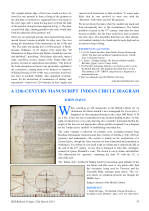
A study of a medieval manuscript containing a drawing of an Indian circle diagram. Davis analyses the geometrical principles behind its time-telling method and its significance in medieval astronomy.
Historical Dials, How Sundials Work, Mathematics of Dialling
March 2013
Page 40
Page 40
A review of a monograph examining medieval Latin texts on sundial construction. James summarises its content, scholarly value, and relevance to the history of gnomonics.
Book Reviews, Historical Dials, Mathematics of Dialling
March 2013
Page 48
Page 48
A discussion of an experimental holographic sundial design first described in 1990. The article explains how holography can replace the traditional gnomon and analyses its optical accuracy.
Dials: Unusual, How Sundials Work, Mathematics of Dialling, Sundial Design & Layout
June 2013
Page 2
Page 2
A philosophical and mathematical essay exploring the classical projections of the celestial sphere—orthographic, stereographic, and gnomic—and their relation to sundial design, astronomy, and the history of dialling geometry.
Dials: Analemmatic, Historical Dials, How Sundials Work, Mathematics of Dialling
June 2013
Page 7
Page 7
A study of references to sundials and gnomonics in Pliny the Elder’s *Natural History*, examining Roman understanding of solar geometry, planetary motion, and the evolution of timekeeping in the ancient world.
Historical Dials, How Sundials Work, Mathematics of Dialling
June 2013
Page 8
Page 8
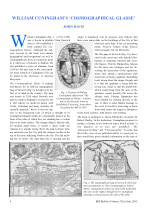
An analysis of William Cuningham’s 1559 book *The Cosmographical Glasse*, highlighting its astronomical diagrams, early depictions of sundials, and its significance for Renaissance scientific thought in England.
Historical Dials, How Sundials Work, Mathematics of Dialling
June 2013
Page 18
Page 18
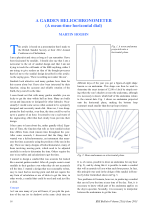
A personal account of designing and constructing a mean-time garden sundial capable of reading clock time directly. The author explains the concept, geometry, and testing of his heliochronometer.
DIY Sundial Projects, Dials: Heliochronometer, Dials: Horizontal, Mathematics of Dialling
June 2013
Page 37
Page 37
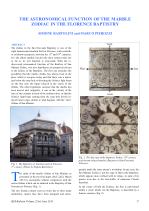
An analytical study of the marble zodiac design within the Florence Baptistry, explaining how it functions as an astronomical instrument marking the sun’s passage and key calendar dates.
Dials: Horizontal, Historical Dials, How Sundials Work, Mathematics of Dialling
September 2013
Page 6
Page 6
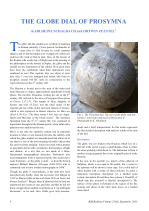
Detailed description and analysis of a solid white marble globe sundial from antiquity (c. 100 BC) found near Heraion. It uses the terminator (boundary of light and shadow) for time indication and features complex line systems representing hours, seasons, and zodiacal signs.
Dials: Hemispherical, Dials: Unusual, Historical Dials, Mathematics of Dialling
September 2013
Page 32
Page 32
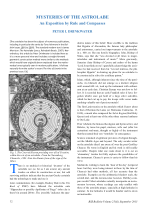
An exposition on the history and components of the astrolabe, including its two faces (sighting bar/calendar and matrix/rete/plates). The article details a geometric construction method using rule and compasses to lay out the template for the rete and the individual plates via stereographic projection.
Dialling Tools, Dials: Astrolabe, How Sundials Work, Mathematics of Dialling
September 2013
Page 40
Page 40
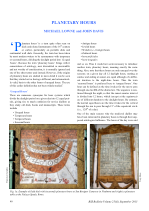
Detailed study differentiating ‘planetary hours’ from seasonal hours. Historically, planetary hours were defined by the time taken for 15-degree intervals of the ecliptic to rise (Sacrobosco’s definition), resulting in hours of unequal duration throughout the day, which are complex to delineate on sundials compared to the simpler seasonal definition.
Historical Dials, How Sundials Work, Mathematics of Dialling, Sundial Design & Layout
December 2013
Page 2
Page 2
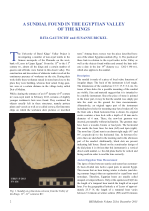
Describes a vertical direct south sundial made of ochre limestone found in workmen's huts in the Valley of the Kings, dated to the late 19th dynasty (ca. 1202–1190 BC). It discusses its dimensions, features, and the low precision inherent in ancient Egyptian temporal hours and canonical design.
Dials: Portable, Dials: Vertical, Historical Dials, Mathematics of Dialling
December 2013
Page 28
Page 28
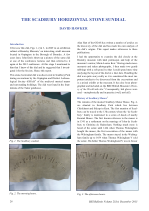
A report on a rare, unfinished, broken stone horizontal dial found in the foundations of the Tudor gatehouse at Scadbury Park, Kent. Dated circa 1550, its calculated hour lines suggest delineation for a significantly higher latitude (possibly 56°) than its find location (51.4° N).
Construction Projects, Dials: Horizontal, Historical Dials, Mathematics of Dialling
March 2012
Page 8
Page 8
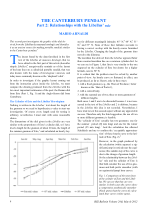
This second part of the article investigates the Canterbury pendant, a 10th-century portable sundial. It compares its graphic layout with the Libellus de mensura horologii and the Roman cylinder dial of Este, exploring the use of two gnomons for different seasons and their relationship to hour curves.
Dials: Portable, Historical Dials, How Sundials Work, Mathematics of Dialling
March 2012
Page 23
Page 23
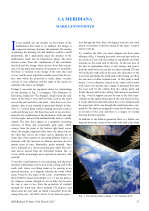
The author describes "La Meridiana," a house in Italy designed with a sundial as its stair tower. This indoor sundial uses projections and reflections onto north, west, and east walls, and the ceiling, to show time and date. The article highlights the mathematics, design, and extensive calibration process.
Construction Projects, How Sundials Work, Mathematics of Dialling, Sundial Design & Layout
June 2012
Page 2
Page 2
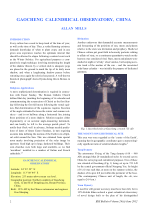
This article details the historical Gaocheng Calendrical Observatory in China, focusing on its construction in 1276 AD by Guo Shoujing, its role in calendrical observations for the Yuan Dynasty, and its design principles for measuring solstices and equinoxes using a monumental gnomon. It also describes the 'shadow-definer' device used for accuracy and the methods for orientation and timekeeping.
Dials: Noon Lines, Historical Dials, How Sundials Work, Mathematics of Dialling
June 2012
Page 12
Page 12
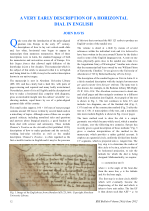
This article presents and translates a c.1440 manuscript from Aberdeen University Library, which contains what may be the earliest known description of how to make a horizontal sundial in English. It details a simple geometric construction method, discusses the design's unique features, and explores the type of gnomon described, providing insight into early scientific dials in England.
Dials: Horizontal, Historical Dials, Mathematics of Dialling, Sundial Design & Layout
June 2012
Page 36
Page 36
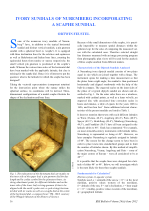
This article analyses the scaphe sundial component found in Nuremberg ivory diptych sundials. It uses vectorial representation and measured photographic distances to determine the intended latitude for three examples, concluding that Reinmann and Miller's scaphes were likely designed for 49° latitude, and Lesel's for 48°, primarily for Nuremberg.
Dials: Scaphe, Historical Dials, Mathematics of Dialling, Sundial Design & Layout
September 2012
Page 8
Page 8
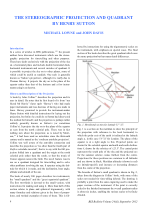
This article explores Henry Sutton's quadrant, which utilises a stereographic projection of the sky onto the equatorial plane, initially conceived by Thomas Harvey. It details the instrument's design, including scales for time-telling and other astronomical problems, and provides instructions for its use, such as finding the time at night using stars.
How Sundials Work, Mathematics of Dialling, Historical Dials
September 2012
Page 23
Page 23
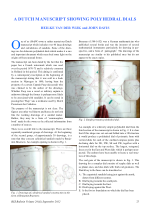
This article describes a mysterious Dutch manuscript from 1670-75 containing over 40 drawings and calculations for sundials, including elaborate polyhedral designs. It features designs attributed to Benjamin Braemers and a complex lectern polyhedral dial similar to Scottish examples, challenging readers to construct a 3D model.
Dials: Multi Faced, Historical Dials, Mathematics of Dialling, Sundial Design & Layout
December 2012
Page 28
Page 28
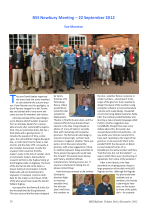
This report summarises the BSS Newbury Meeting, covering presentations on John Davis's "Mystery Welsh Sundial," Doug Bateman's "Romeo & Juliet Sundial," Kevin Karney's "Getting the Numbers Right" on dial layouts, and John Foad's project to put BSS Register dials online.
How Sundials Work, Mathematics of Dialling, Sundial Design & Layout, The BSS and Members
March 2011
Page 18
Page 18
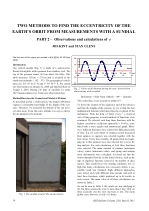
This second part details observations and calculations to determine Earth's orbit eccentricity using a sundial. It applies Ptolemy's geometrical model and an algebraic approach based on the Equation of Time, finding surprisingly accurate results despite the sensitivity of initial conditions.
Equation of Time, How Sundials Work, Mathematics of Dialling
March 2011
Page 46
Page 46
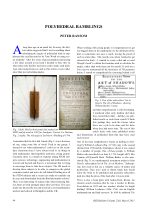
The author discusses the calculation of angles for polyhedral dials, drawing on historical texts like William Leybourn’s 'Dialling'. It covers Platonic and Archimedean solids, methods for finding dihedral angles, and illustrates how these concepts can be applied to sundial construction.
Dials: Multi Faced, Historical Dials, Mathematics of Dialling, Sundial Design & Layout
June 2011
Page 2
Page 2
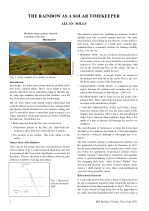
This article explores the rainbow as an alternative solar timekeeping phenomenon, discussing its complex optical properties, formation of primary and secondary bows, and the dispersion of light into colours. It also describes a rainbow dial instrument for time determination.
Dials: Unusual, How Sundials Work, Mathematics of Dialling, Sundial Design & Layout
June 2011
Page 8
Page 8
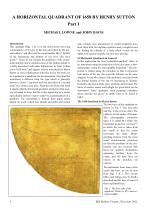
This article describes a unique 17th-century horizontal quadrant by Henry Sutton, detailing its stereographic projection, various scales for altitude, azimuth, time, and astronomical functions. It explains how the instrument, acting as a mechanical analogue computer, finds time from the sun's altitude.
Dialling Tools, Dials: Horizontal, Historical Dials, Mathematics of Dialling
June 2011
Page 36
Page 36
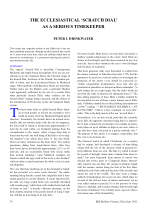
This article argues that medieval 'scratch dials' were serious timekeepers, not just symbolic. It describes their basic form, historical context of temporal hours, and connections to early Church observances and Islamic prayer times, asserting their utility at high latitudes.
Dials: Mass Dials, Historical Dials, How Sundials Work, Mathematics of Dialling
June 2011
Page 54
Page 54
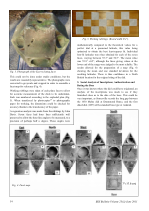
This article describes the discovery and analysis of a 17th-century Scottish polyhedral sundial boss found in Hertfordshire. It establishes the boss's authenticity, its Mylne family provenance, and uses geometric analysis and inscriptions (Acra, Tangier) to date it before 1684, suggesting it's a significant missing link.
Dials: Multi Faced, Historical Dials, Mathematics of Dialling
September 2011
Page 28
Page 28
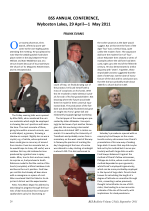
This report summarises the British Sundial Society's highly successful 2011 annual conference at Wyboston Lakes, attended by nearly 20% of its members. It covers various presentations, including Allan Mills on sun's position, Tony Moss on dial manufacture, Johan Wikander on a Norwegian soapstone dial, Fred Sawyer on Jean Picard's large dial layouts, and John Davis on the diffusion of scientific dials.
Historical Dials, Mathematics of Dialling, Sundial Design & Layout, The BSS and Members
September 2011
Page 34
Page 34
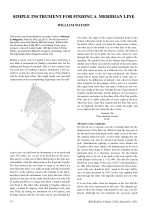
William Watson describes a new instrument for finding a meridian line to aid in sundial making, using two tubes aligned with Polaris and Capella. Michael Lowne comments on the necessity of accounting for Polaris's displacement from the true pole and the stars' right ascension difference for correct alignment, noting potential inaccuracies in Watson's original design and challenges in its use.
How Sundials Work, Mathematics of Dialling, Dialling Tools
September 2011
Page 37
Page 37
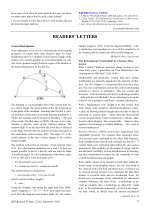
This section compiles several letters from readers. Michael Lowne provides a complex formula for calculating shadow length from gnomon angle. Chris Williams praises Peter Drinkwater's article on scratch dials, linking them to medieval manuscripts. Peter Drinkwater responds on the transmission of scratch dial technology and the function of water clocks. David Young corrects a historical detail about BSS conference venues.
Dials: Mass Dials, Historical Dials, Mathematics of Dialling, The BSS and Members
September 2011
Page 38
Page 38
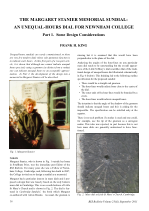
This article details the initial design considerations for a memorial sundial for Margaret Stanier at Newnham College, Cambridge. Frank King proposes an unequal-hours dial with a straight-rod gnomon, loosely based on a historic mass dial. He explores the challenges of accurately indicating unequal hours with a gnomon, discussing celestial sphere projections and a 'critical angle of dip' to improve precision.
Construction Projects, Dials: Mass Dials, Mathematics of Dialling, Sundial Design & Layout
September 2011
Page 45
Page 45
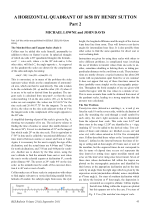
This second part examines the scales and uses of a 1658 horizontal quadrant by Henry Sutton, collaborating with John Collins. It details the matched sine and tangent scales for astronomical calculations, star positions for night-time finding, calendar tables for moon age and high water, and shadow/quadrat scales for measuring building heights. It also provides biographies of Collins, Dary, and Sutton, highlighting their roles in 17th-century London's mathematical community.
How Sundials Work, Mathematics of Dialling, Historical Dials
December 2011
Page 2
Page 2
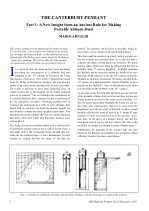
This article summarises the author's attempt to create a clear and correct edition of an ancient text, previously attributed to Bede, on constructing an altitude dial. The findings provide new insight into the famous ‘Canterbury pendant’ and suggest it was made more correctly than previously believed. The text describes a pendant altitude dial, possibly hexagonal, working like a cylinder dial, with specific dimensions and a calendar system.
Construction Projects, Dials: Portable, Historical Dials, Mathematics of Dialling
December 2011
Page 24
Page 24
This article discusses Robert Stikford, a 14th-century monk from St Albans, credited in Whethamstede’s Granarium (c.1430) with inventing the equal-hour sundial. His rediscovered extensive Latin treatise, 'De Umbris Versis et Extensis', describes geometric constructions for projecting shadow positions and includes tables for Oxford’s latitude. It showcases detailed designs for various vertical dials, revealing sophisticated early European scientific dialling.
Dials: Vertical, Historical Dials, Mathematics of Dialling, Sundial Design & Layout
December 2011
Page 32
Page 32
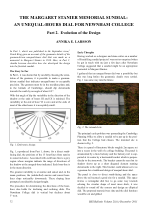
This is Part 2 of an article describing the design evolution of the Margaret Stanier Memorial Sundial, an unequal-hours dial for Newnham College, Cambridge. It details the aesthetic and gnomonic challenges, including discussions with planners, the development of hour-line alignments, and the artistic elements like sun rays and lettering. The article also covers the intricate cutting and gilding process.
Construction Projects, Dials: Vertical, Mathematics of Dialling, Sundial Design & Layout
December 2011
Page 42
Page 42
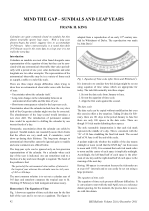
This article addresses the difficulties of accommodating leap years on sundial calendars, particularly when showing the equation of time or solar declination. It explains how to design scales for precise readings despite the difference between tropical and civil years, and discusses the historical debate around which day (24th or 29th February) is the "extra" leap day. Practical design solutions are proposed.
Equation of Time, How Sundials Work, Mathematics of Dialling, Sundial Design & Layout
December 2011
Page 47
Page 47
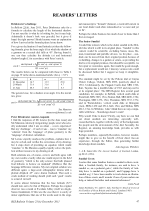
This section contains letters from readers discussing various sundial topics. These include formulae for horizontal shadow length, a query about the oldest scientific sundial in the British Isles, sundials in family crests, proposed organisational changes within the BSS, and the historical transmission of scratch dials and water-clock functionality. It highlights ongoing member engagement and research interests.
Mathematics of Dialling, Historical Dials, The BSS and Members, Mottoes
March 2010
Page 21
Page 21
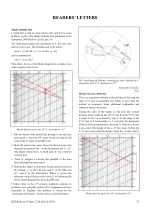
A collection of letters from readers. Topics include a simpler graphical method for using the John Marke altitude dial, a discussion on the nomenclature of mass dials, the 'Sun Position Compass', and the historical connection between clockmakers and dialmakers.
Dials: Mass Dials, Dials: Portable, Mathematics of Dialling, The BSS and Members
March 2010
Page 46
Page 46
A follow-up to a previous article about dialling questions in 'The Ladies' Diary'. This piece presents the published solution to Question 87 from 1790, which asked for the area of the curve traced by a gnomon's tip on the winter solstice.
Mathematics of Dialling, Historical Dials
June 2010
Page 7
Page 7
This paper describes a vertical sundial designed to indicate the Equation of Time (EoT) as a figure-of-eight curve, along with its anomalistic and tropical terms. It provides the mathematical formulae for calculating these values and their graphical representations as functions of time and the sun's declination.
Dials: Vertical, Mathematics of Dialling, Construction Projects, Equation of Time
June 2010
Page 18
Page 18
This paper introduces the horizontal quadrant, a less common but useful altitude sundial type, sharing its basic stereographic projection with the double horizontal dial. It discusses its history, including European precursors like Hartmann's compast and Apian's triens, and English developments by Delamain and Oughtred. The article describes the general form and known examples, detailing how it uses the sun's altitude to tell time.
How Sundials Work, Mathematics of Dialling, Historical Dials
September 2010
Page 2
Page 2
This article details the design and construction of a new elliptical slate sundial for Selwyn College, Cambridge, indicating both Babylonian and Italian hours. It discusses the selection of the site, the unique nodus design, precise surveying for wall parameters, and the process of setting out and cutting the dial with inscriptions.
Construction Projects, Dials: Vertical, Mathematics of Dialling, Sundial Design & Layout
September 2010
Page 10
Page 10
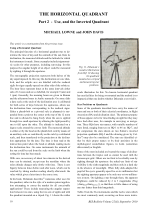
This article details the use of horizontal quadrants for time-finding and surveying, including a rare 'inverted' variant. It describes how to determine time from solar altitude and declination, and from stars at night, discussing the historical accuracy and limitations of these instruments.
How Sundials Work, Mathematics of Dialling, Historical Dials, Dials: Nocturnals
September 2010
Page 32
Page 32
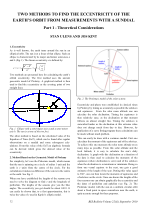
This article presents two theoretical methods to calculate the Earth's orbital eccentricity using sundial measurements. The first method uses the Ptolemaic geocentric model and season lengths; the second derives eccentricity from the Equation of Time by separating the part due to obliquity from the total.
Equation of Time, How Sundials Work, Mathematics of Dialling
December 2010
Page 2
Page 2
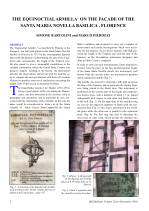
This article describes the Equinoctial Armilla, built by Egnazio Danti in 1573 on the Santa Maria Novella basilica in Florence. Its purpose was to determine the Equinox time and tropical year length, contributing to calendar reform. The article discusses its historical context, Danti's observations, chronological discrepancies, measurement errors due to the armilla's size, and the instrument's features.
Mathematics of Dialling, Historical Dials, Dials: Armillary Sphere
December 2010
Page 9
Page 9
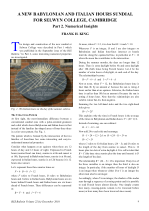
This article is the second part of a series detailing the Selwyn College sundial, focusing on its numerical properties. It explains the criss-cross pattern of Babylonian and Italian hour-lines, their relationship with French hours, and the concept of 'extra daylight.' It also provides methods for setting out these hour-lines.
Dials: Unusual, How Sundials Work, Mathematics of Dialling, Sundial Design & Layout
March 2009
Page 7
Page 7
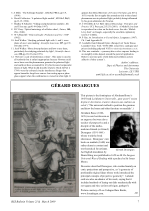
This piece discusses Gérard Desargues (1591-1661), a French mathematician and engraver known for his work on conic projections and perspective, which introduced key concepts of projective geometry. His book on sundials (1640) was theoretical, but his disciple Abraham Bosse published a more accessible version in 1643.
Book Reviews, Mathematics of Dialling, Historical Dials
March 2009
Page 31
Page 31
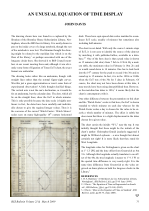
This article describes a unique Equation of Time (EoT) chart found in Nottingham, featuring straight lines for EoT values in whole minutes plotted against a non-linear calendar date axis. Dated possibly to the 1830s or 1840s, it differs from typical "Watch Faster / Watch Slower" scales.
Mathematics of Dialling, Equation of Time, Historical Dials
March 2009
Page 38
Page 38
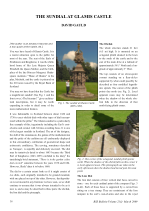
This article describes the magnificent 21-foot high Glamis Castle sundial in Scotland, tentatively dated around 1683. It is an elaborate obelisk dial featuring 84 time-recording faces, lion dials for cardinal points, and a complex \pineapple\ (stellar rhombicuboctahedron) with numerous declining and reclining faces. The article also discusses its Equation of Time inscription and possible mathematical contributions by James Gregory.
Dials: Multi Faced, Mathematics of Dialling, Sundial Design & Layout, Equation of Time, Historical Dials
June 2009
Page 10
Page 10
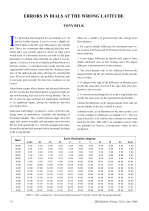
An analysis of the time-telling errors that occur when a horizontal or vertical non-declining sundial is used at a latitude different from its design latitude. The article provides tables and graphs illustrating the magnitude of these errors at different times of day and for different solar declinations.
Dials: Horizontal, Dials: Vertical, How Sundials Work, Mathematics of Dialling
June 2009
Page 14
Page 14
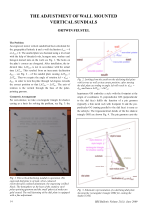
A technical article presenting a detailed mathematical method for correcting the alignment of a wall-mounted vertical sundial that has been installed with an inaccurate declination. It provides the necessary formulae and a worked example to calculate the required angle of rotation for adjustment.
Dials: Vertical, Mathematics of Dialling, Sundial Design & Layout
September 2009
Page 2
Page 2
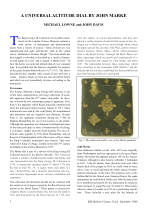
Describes a unique universal altitude dial made by John Marke, possibly for Robert Boyle, now in the London Science Museum. The article details the instrument's provenance, its physical characteristics, and its complex operation as a combined clinometer and sundial. It provides an in-depth analysis of the mathematical principles involved and its potential accuracy.
Dials: Portable, Dials: Unusual, Historical Dials, Mathematics of Dialling
September 2009
Page 26
Page 26
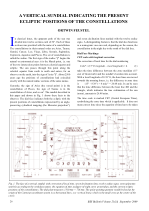
Describes the design and markings of a complex vertical sundial. In addition to time, the dial indicates the current ecliptic positions of the constellations using a Mercator projection. It also features longitude correction, an Equation of Time curve, declination lines, and functions as a nomogram for identifying constellations visible at night.
Dials: Vertical, Equation of Time, Mathematics of Dialling, Sundial Design & Layout
September 2009
Page 46
Page 46
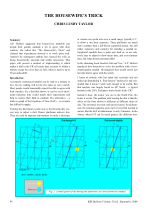
Re-evaluates A.P. Herbert's suggestion of turning a horizontal sundial to make it agree with mean time. While previously dismissed as inaccurate, this article presents a theoretical analysis and a practical implementation showing that, for UK latitudes, the 'trick' can keep the dial accurate to within a minute for most of the year.
Dials: Horizontal, Equation of Time, How Sundials Work, Mathematics of Dialling
December 2009
Page 15
Page 15
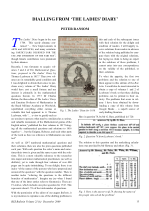
Introducing a series of articles on dialling problems from 'The Ladies’ Diary', a popular 18th-century almanac. The author presents the first question, from 1720, along with its original geometric construction and calculated solution, providing insight into the historical mathematics of dialling.
Mathematics of Dialling, Historical Dials
December 2009
Page 34
Page 34
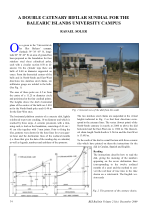
This article describes a large and innovative bifilar sundial. It uses the intersecting shadows cast by two suspended chains hanging in catenary curves to indicate both the time and the date on a large tiled pavement. The article provides a summary of the complex mathematical calculations involved in its design.
Dials: Bifilar, Dials: Unusual, Mathematics of Dialling, Sundial Design & Layout
March 2008
Page 14
Page 14
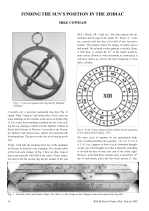
This article explains how to use Solar Course diagrams found on historical instruments, such as an Edmund Culpeper universal equinoctial ring dial and Italian quadrants, to determine the sun's position in the Zodiac. It details calculation methods, including adjustments for Old Style and New Style calendars, and notes rare instances of early Gregorian calendar pre-emption.
Dialling Tools, Historical Dials, How Sundials Work, Mathematics of Dialling
March 2008
Page 31
Page 31
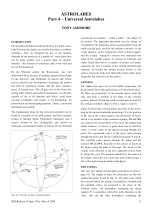
This fourth part of a series describes universal astrolabes, focusing on the Saphea, Rojas, and De la Hire projections. These instruments, developed from the 11th to 17th centuries, could be used at all latitudes, offering flexibility for astronomical and timekeeping purposes, despite the increasing complexity of their design.
Dials: Astrolabe, Historical Dials, How Sundials Work, Mathematics of Dialling
June 2008
Page 54
Page 54
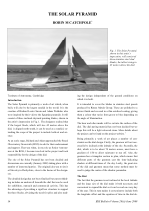
This article describes the design and astronomical calculations for the Solar Pyramid, a proposed large-scale art installation that will also function as the world's largest sundial. It details the design constraints, methods for reading time, and the accuracy of incorporating the Equation of Time over centuries.
Construction Projects, Equation of Time, Mathematics of Dialling, Sundial Design & Layout
June 2008
Page 92
Page 92
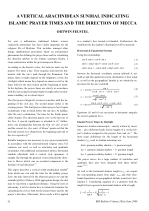
This paper describes the design of a vertical south arachnidean sundial to indicate Islamic prayer times (Zuhr, Asr) and the Qibla (direction to Mecca). It explains the astronomical principles and mathematical formulae used to calculate the specific prayer curves and Qibla curve, making it readable from a significant distance.
Dials: Vertical, Historical Dials, Mathematics of Dialling, Sundial Design & Layout
June 2008
Page 99
Page 99
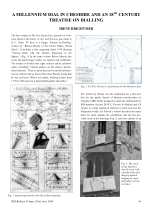
This article links a new millennium sundial at Marbury-cum-Quoisley church in Cheshire, designed by Dr W.E. Flewett and adjusted for longitude and British Summer Time, to an 18th-century treatise by Robert Moody. It also discusses William Emerson, a mathematician and diallist whose work influenced Moody and the millennium dial.
Construction Projects, Historical Dials, Mathematics of Dialling, Sundial Design & Layout
September 2008
Page 123
Page 123
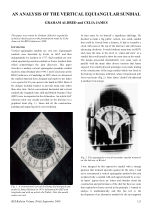
This paper provides a mathematical analysis of James Richard's rare vertical equiangular meantime sundial, designed to resemble a clock with equally spaced hours. It explains the gnomon's upward inclination and daily displacement, allowing for mean time and BST adjustments. The analysis, an alternative to Foster-Lambert theory, aims to stimulate interest in this unusual dial type.
Dials: Foster-Lambert, Dials: Vertical, Mathematics of Dialling, Sundial Design & Layout
December 2008
Page 160
Page 160
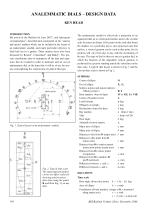
This article provides a summary of data and equations needed to delineate and set out analemmatic sundials. It discusses the projection of an equatorial dial onto a horizontal surface, using a vertical gnomon whose position varies with the sun's declination, and the calculation of sunrise and sunset markers using Lambert circles and Bailey Points.
Dials: Analemmatic, How Sundials Work, Mathematics of Dialling, Sundial Design & Layout
December 2008
Page 166
Page 166
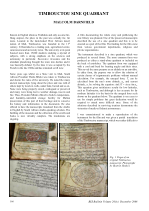
This article details the reproduction of a sine quadrant from a preserved Timbouctou manuscript for a documentary film. It describes the instrument's function in solving trigonometric problems without manual calculation, like determining unequal hours, and its historical context as a teaching tool in Islamic astronomy. The author discusses the challenges of interpretation and the modern construction using laser-cut perspex.
Construction Projects, Dialling Tools, Historical Dials, Mathematics of Dialling
December 2008
Page 170
Page 170
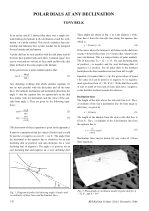
This article presents a method for designing polar sundials for any latitude and declination using four simple formulae. It explains that polar dials have a style parallel with the dial plane and parallel hour lines, and describes how to determine the angle of the equinox line and the sub-style hour angle.
Dials: Polar, How Sundials Work, Mathematics of Dialling, Sundial Design & Layout
December 2008
Page 184
Page 184
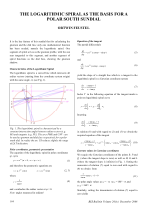
This article proposes the logarithmic spiral as the sole mathematical function needed for designing a polar south sundial, where one spiral segment forms the gnomon profile and another acts as the dial face. It details the spiral's characteristics, equations for tangents and arc lengths, and presents a calculation example for a model, illustrating its construction and operation.
Construction Projects, Dials: Polar, Mathematics of Dialling, Sundial Design & Layout
December 2008
Page 198
Page 198
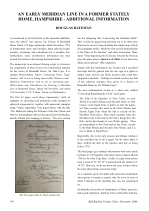
This article provides additional information about a meridian line at Bramshill House, Hampshire. It details a 1770 manuscript by S. Dunn containing notes on spherical trigonometry and meridian line calculations. It confirms the line's date before 1770 and discusses the context of 18th-century mathematical sophistication and notes from Mrs. Gatty that imply the existence of other dials at the location.
Dials: Noon Lines, Historical Dials, Mathematics of Dialling
March 2007
Page 9
Page 9
This section contains correspondence from readers. Chris Lusby Taylor discusses the use of Hooke’s joint for delineating declining and reclining dials, while Allan Mills replies regarding an error in a previous paper. Tony Ashmore suggests an interpretation for the 'Egyptian Face' design on a sundial pillar at Lord Tennyson's home, attributing it to Ptolemy.
Dials: Unusual, How Sundials Work, Mathematics of Dialling
June 2007
Page 78
Page 78
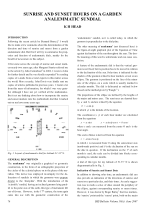
This article discusses the determination of sunrise and sunset directions and times using garden analemmatic sundials. It explains the dial's principles, the Bailey points for seasonal markers, and evaluates the accuracy of these markers, noting discrepancies and suggesting practical applications for garden dials despite minor errors.
Dials: Analemmatic, How Sundials Work, Mathematics of Dialling, Sundial Design & Layout
June 2007
Page 91
Page 91
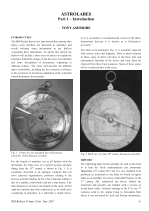
This is the first part of a series introducing astrolabes, describing them as two-dimensional analogue computers for solving spherical trigonometric problems and finding time. It covers their history from Greek origins through Arab development to European decline, and explains the principles of their design including the rete and engraved plates for different latitudes.
Dials: Astrolabe, Historical Dials, How Sundials Work, Mathematics of Dialling
September 2007
Page 102
Page 102
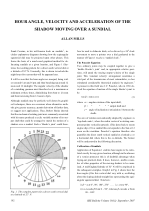
This paper applies Hooke's joint equation of motion to sundials to calculate the hour angle, angular velocity, and acceleration of the shadow. It provides formulas and graphs for a direct south vertical dial at 52° N latitude, showing how these parameters vary throughout the day, with angular velocity minima at noon/midnight and maxima at 6 am/pm.
How Sundials Work, Mathematics of Dialling
September 2007
Page 128
Page 128
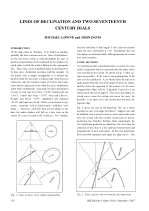
This article explores declination lines on sundials as conic sections and details methods for their delineation. It examines two 17th-century horizontal dials by Isaac Symmes (Science Museum, Oxford), noting errors in their declination lines and the presence of seasonal hours and lunar volvelles. A new graphical method for drawing declination lines is also presented.
Historical Dials, How Sundials Work, Mathematics of Dialling, Sundial Design & Layout
September 2007
Page 137
Page 137
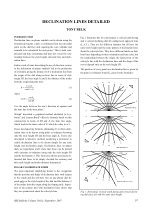
This article offers detailed methods for drawing declination lines on planar sundials using polar and Cartesian coordinates, or a graphical protractor, all based on the dial's style height and nodus distance. It also provides formulas for calculating hour line angles for various dial types and a simple method to check existing dials for accuracy.
Construction Projects, Dialling Tools, Mathematics of Dialling, Sundial Design & Layout
December 2007
Page 156
Page 156
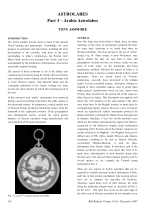
This article, part three of a series, delves into Arabic astrolabes, noting their historical significance in Islamic cultures from before the tenth to the nineteenth century. It describes their general characteristics, such as the use of Arabic scripts, the absence of equal hour scales, and the prominence of astrological scales. It also details specific features like thrones, retes, plates, and scales on the back, including shadow squares and sine/cosine grids.
Dials: Astrolabe, Mathematics of Dialling, Historical Dials
December 2007
Page 164
Page 164
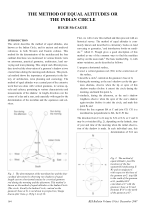
This article describes and historically surveys the method of equal altitudes, also known as the Indian Circle, used for determining the meridian and cardinal directions by observing a gnomon's shadow. It covers the practical steps, potential errors, mathematical analysis of shadow curves (conic sections), and its widespread use in ancient and medieval Eastern (India, China) and Western (Roman, early medieval Europe) cultures for architecture, town planning, and sacred rituals.
Historical Dials, How Sundials Work, Mathematics of Dialling, Sundial Design & Layout
December 2007
Page 184
Page 184
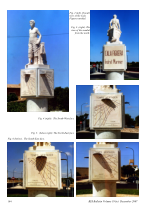
This article describes a monument in Cala Figuera, Majorca, featuring three vertical declining bifilar sundials on the pedestal of a fisherman statue. Two dials face south, one east and one west, and the third faces north, declining east. The article details their bifilar gnomon design (semi-ellipse and straight line), delineation for hours and half-hours, and declination lines, along with the mathematical methods used for their design and calculation.
Construction Projects, Dials: Bifilar, Dials: Multi Faced, Mathematics of Dialling, Sundial Design & Layout
December 2007
Page 192
Page 192
This article calls for a reassessment of scratch (mass) dials, noting the surprising lack of interest despite thousands surviving across Europe. The author, who stumbled upon them while researching local history, is now analyzing the BSS Mass Dial Group's extensive database using mathematical and statistical methods to gain new insights into their original prevalence, use, appearance, evolution, and eventual fate.
Mathematics of Dialling, Historical Dials, The BSS and Members, Dials: Mass Dials
February 2006
Page 18
Page 18
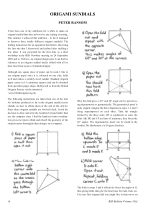
This article details the author's successful endeavour to create origami sundials without cutting or tearing, describing three unique designs. It provides step-by-step instructions for an equatorial dial, explaining the geometric principles behind folding hour lines and constructing a perpendicular gnomon.
Dials: Equatorial, Mathematics of Dialling, Construction Projects, DIY Sundial Projects
February 2006
Page 20
Page 20
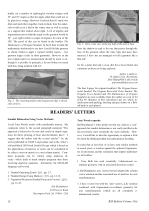
This section contains various reader contributions. Hal Brandmaier and Tony Wood discuss vector methods for sundial delineation. Patrick Powers and Douglas Bateman exchange views on a longitude error on the Kew Garden Cross Dial inscription. Norman Darwood briefly comments on the potential effects of changes in Earth's rotation on sundials.
Dials: Horizontal, Mathematics of Dialling, Equation of Time
February 2006
Page 26
Page 26
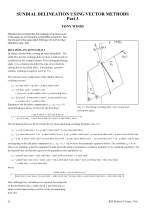
This instalment, the third in a series, presents the complex mathematical methods for delineating declining-inclining sundials using vector analysis. It provides detailed equations for calculating the shadow plane components, hour and declination lines, sub-style angles, and gnomon angles, building upon two previous articles.
Dials: Vertical, Mathematics of Dialling, Sundial Design & Layout
June 2006
Page 50
Page 50
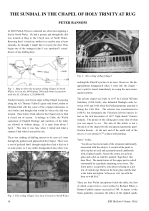
This article investigates an unusual 17th-century wall painting in Rug Chapel, North Wales, which features a dial. It details the analysis of the dial's geometry and hour lines using digital tools, comparing measured angles to calculated values for a 53° North latitude, and discusses the unexpected accuracy for a painting, suggesting sophisticated planning.
Dials: Vertical, Historical Dials, Mathematics of Dialling, Sundial Design & Layout
June 2006
Page 68
Page 68
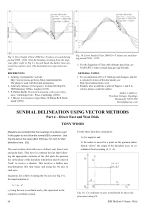
This fourth part of a series focuses on the delineation of direct east and west vertical dials using vector methods. It details the coordinate transformations, equations for hour lines, declination lines, sub-style angles, and gnomon characteristics for these specific dial types, also covering their illumination times.
Mathematics of Dialling, Sundial Design & Layout
September 2006
Page 138
Page 138
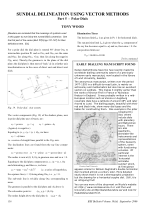
The fifth instalment in a series, this article applies vector methods to the specific challenge of delineating polar sundials. It presents the vector components for the shadow plane and declination lines, mathematically deriving the straight hour lines and hyperbolic declination lines.
Dials: Polar, Mathematics of Dialling, Sundial Design & Layout
September 2006
Page 142
Page 142
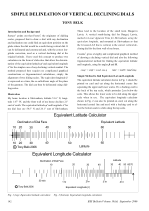
This article introduces a user-friendly method for delineating vertical declining sundials using bespoke slide rule-like calculators. These tools determine equivalent latitude and longitude, simplifying the process by eliminating complex trigonometry. The article explains how to use these calculators with standard dialling scales to accurately plot hour and sub-style lines.
Dialling Tools, Dials: Vertical, Mathematics of Dialling, Sundial Design & Layout
December 2006
Page 146
Page 146
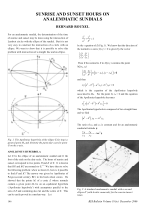
For an analemmatic sundial, the determination of the time of sunrise and sunset may be done using the intersection of Lambert circles with the ellipse of the sundial. However, this is practically difficult and the article explores a simpler solution using the intersection of a straight line and an ellipse.
Dials: Analemmatic, Mathematics of Dialling
December 2006
Page 163
Page 163
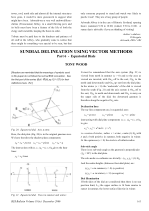
The article describes how the hour lines, declination lines and the sub-style angle are calculated using vectors. There is a summary which includes the assumptions made and the limitations of the method.
Dials: Equatorial, Mathematics of Dialling
December 2006
Page 164
Page 164
Jill Wilson reports on a successful weekend course on 'Understanding Sundials' at Farncombe Estate. The curriculum covered the history of dialling, fundamental theory, design principles, practical delineation using various tools, and the practicalities of installing dials, with a focus on wall declinations. Attendees, from beginners to experienced diallists, gained new insights and appreciation for sundials.
How Sundials Work, Mathematics of Dialling, Sundial Design & Layout, The BSS and Members
March 2005
Page 36
Page 36
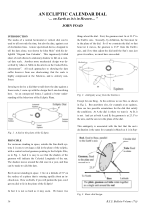
Introduces a novel ecliptic-aligned sundial for direct solar date indication on a linear scale. Describes aligning the dial plane with the ecliptic, date scale calibration, equation of date application, and improved prism-based design. Demonstrates lunar path visualization and usage for sun compass orientation.
Dials: Unusual, Mathematics of Dialling, Sundial Design & Layout
June 2005
Page 47
Page 47
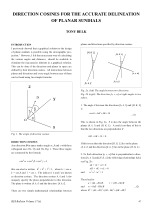
Explains how direction cosines can be used to precisely design planar sundials. The method eliminates inaccuracies of graphical construction by calculating hour lines, declination lines, and style parameters mathematically, with examples for horizontal, vertical, and declining dials, and comparison with conventional calculation methods.
Mathematics of Dialling, Sundial Design & Layout
June 2005
Page 66
Page 66
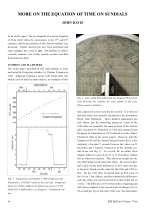
Continues analysis of how the Equation of Time was represented on sundials, with historical examples and refinements in accuracy by 17th and 18th century astronomers.
Equation of Time, Historical Dials, Mathematics of Dialling
September 2005
Page 121
Page 121
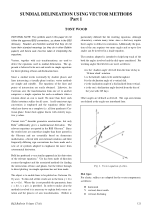
The author presents a new method for sundial delineation using vector methods and axis transformations to derive simple equations for plotting hour and declination lines. The article explains how shadow planes intersect a dial surface and provides examples of using this method for a horizontal sundial.
Mathematics of Dialling, Sundial Design & Layout
December 2005
Page 158
Page 158
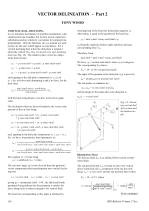
This technical article, "Part 2" of "Vector Delineation," presents mathematical equations for delineating vertical declining sundials. It focuses on deriving shadow plane vector components, hour lines, declination lines, sub-style angle, and gnomon angle using trigonometric functions. The article demonstrates how these calculations can be implemented for computer-aided design of sundials.
Mathematics of Dialling, Sundial Design & Layout
December 2005
Page 159
Page 159
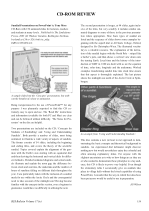
This review covers Tony Moss's PowerPoint CD-ROM "Sundial Presentations," which includes "Concepts for Students of Sundialling" and "Using and Understanding Sundials." It praises the CD for its clear, animated slides explaining basic sundial concepts, theory, alignment of gnomons, differences between clock and sun time, and the analemma, making it useful for beginners and lecturers.
Book Reviews, How Sundials Work, Mathematics of Dialling, Sundial Design & Layout
September 2004
Page 122
Page 122
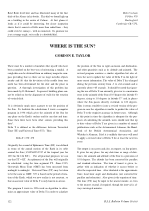
Technical article on computing the Sun’s position for dial work: includes input/output examples (SUNAZALT style), azimuth/altitude tables and worked examples relevant to gnomonic layout and correction calculations.
Mathematics of Dialling
March 2003
Page 33
Page 33
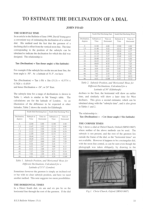
Method for determining the declination of a sundial using shadow observations and calculations, useful for dating or assessing alignment.
How Sundials Work, Mathematics of Dialling
March 2003
Page 37
Page 37
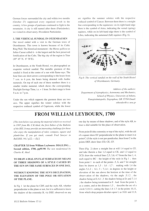
Excerpt of a historical text by William Leybourn describing an unusual method of laying out a dial from empirical marking of timed shadows.
Mathematics of Dialling
September 2003
Page 96
Page 96
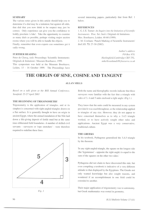
Based on a talk at the BSS Annual Conference, this article traces the origins of trigonometry back to ancient Egypt and the 'rope stretchers' who used a 3,4,5 triangle to define right angles. It then moves on to the Greeks, specifically Pythagoras, and the Arabs, who are credited with preserving and developing trigonometry for astronomy.
Mathematics of Dialling
September 2003
Page 104
Page 104
This article re-examines the Morvah church sundial in Cornwall. The author finds that the dial was incorrectly laid out, possibly because the latitude was used where the co-latitude was needed in the design. He expresses alarm that this might be a common issue with Cornish church sundials.
Dials: Vertical, Mathematics of Dialling, Sundial Design & Layout
March 2002
Page 7
Page 7
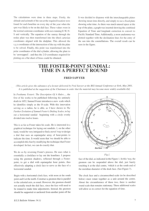
Explains the design of a novel sundial based on Samuel Foster's 17th-century concepts, with modern adaptations and detailed geometry, incorporating latitude, longitude, equation of time and daylight savings time adjustments.
Dials: Horizontal, How Sundials Work, Mathematics of Dialling
March 2002
Page 14
Page 14
Review of 'La Gnomonique' by Denis Savoie, a detailed and technical guide to sundial construction methods.
Mathematics of Dialling, Sundial Design & Layout
March 2002
Page 17
Page 17
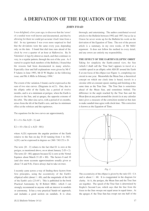
Accessible derivation of the EoT formula using orbital eccentricity and axial tilt, with historical and mathematical context.
Equation of Time, Mathematics of Dialling
March 2001
Page 15
Page 15
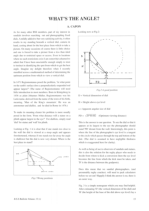
Derives a mathematical method of determining the optimum distance from which to view or photograph a vertical dial, and provides a nomogram to help calculate this distance based on the dial's dimensions and height.
Mathematics of Dialling, Sundial Design & Layout
June 2001
Page 47
Page 47
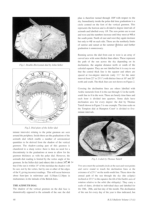
This comprehensive article details the double-horizontal sundial, distinguishing it from William Oughtred's earlier portable instrument. It explains its design, historical prevalence from 1630-1713, and methods for reading its complex graduations. The author also discusses modern examples and the use of stereographic projection in its delineation, providing a list of existing historical and contemporary dials.
Dials: Double Horizontal, Historical Dials, Mathematics of Dialling, Sundial Design & Layout
June 2001
Page 60
Page 60
This article discusses the 17th-century work of Richard Towneley and John Flamsteed on the Equation of Time. It highlights their correspondence and experiments aimed at validating the Equation of Time and confirming the Earth's constant rotational speed, discussing earlier publications and the ongoing controversies surrounding this astronomical concept.
Equation of Time, Historical Dials, Mathematics of Dialling
June 2001
Page 77
Page 77
Michael Hickman introduces a non-mathematical method for designing analemmatic sundials using Weir's Azimuth Diagram. He explains how this navigational tool can be adapted to plot hour points and declination scales for dial design without complex trigonometry, making the process accessible to a broader audience.
DIY Sundial Projects, Dials: Analemmatic, Mathematics of Dialling, Sundial Design & Layout
September 2001
Page 123
Page 123
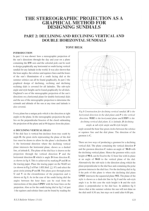
This second part details using stereographic projection for graphical design of declining and reclining vertical, and double horizontal sundials. It explains how to determine sub-style angles and style heights, and how the projection can cover full 24-hour periods. The article also covers William Oughtred"s "Horizontal Instrument" and Blagrave"s "Mathematical Jewel" as related applications.
Dials: Double Horizontal, Dials: Vertical, Mathematics of Dialling, Sundial Design & Layout
September 2001
Page 130
Page 130
This article presents the design for a horizontal sundial usable anywhere in the UK to show GMT, requiring only a slight tilt adjustment for specific latitudes. It employs a gnomon rod mounted at a 53-degree angle and concentric circles on the dial plate represent different longitudes. A formula for calculating hour lines is provided.
DIY Sundial Projects, Dials: Horizontal, Mathematics of Dialling, Sundial Design & Layout
December 2001
Page 138
Page 138
This article examines the double-horizontal sundial, a 17th-century invention by William Oughtred. It features two sets of graduations: one for an inclined polar gnomon and another for a central vertical gnomon, operating from altitude and azimuth. The article details its design, use for time, date, and solar altitude, and discusses its self-setting property and limitations due to orientation error.
Dials: Double Horizontal, Historical Dials, Mathematics of Dialling, Sundial Design & Layout
February 2000
Page 3
Page 3
Explores early Greek and Roman hemispherical and hemicyclium sundials, their geometry, historical usage, and accuracy.
Dials: Hemispherical, Historical Dials, How Sundials Work, Mathematics of Dialling
June 2000
Page 64
Page 64
Continues an exploration of ancient sundials, focusing on conical types and their mathematical construction and historical context.
Dials: Scaphe, Historical Dials, How Sundials Work, Mathematics of Dialling
October 2000
Page 109
Page 109
Explores the historical and liturgical rationale behind medieval six-sector sundials, their canonical hour divisions, and theological symbolism.
Dials: Mass Dials, Historical Dials, How Sundials Work, Mathematics of Dialling
October 2000
Page 142
Page 142
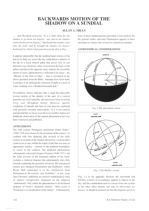
Explains the rare conditions under which a sundial shadow can appear to move backward, at specific dates and latitudes, including astronomical and observational factors.
How Sundials Work, Mathematics of Dialling
June 1999
Page 77
Page 77
This article explores the unexpected link between satellite dishes and sundials, including the use of knowledge of the sun's movement to align satellite dishes to satellites. It delves into the geometry of satellite dishes as a basis for sundial design and discusses practical details for using a satellite dish into a sundial, including gnomon options and microwave-transparent planar dial face materials.
DIY Sundial Projects, Mathematics of Dialling, Sundial Design & Layout
June 1999
Page 96
Page 96
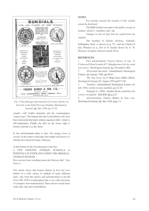
This technical article presents a method for estimating the declination of vertical sundials, particularly useful for dials high on buildings. Rather than measure the 'substyle distance' (angle between the gnomon and the noon line) one reads off the 'time' on the dial the gnomon is pointing to. This can be looked up in a precalculated table for a given latitude to give the degrees of declination of the dial.
Dialling Tools, Dials: Vertical, Mathematics of Dialling
June 1999
Page 104
Page 104
This technical article provides formulas for the Equation of Time and the Sun's declination throughout the year, using the day number as a variable. The derived values are shown graphically and noted to be close to published tables, aiming to provide a clear understanding of these fundamental gnomonic concepts.
Equation of Time, Mathematics of Dialling
October 1999
Page 115
Page 115
This article presents a design for a horizontal sundial adjustable for the Equation of Time and longitude by rotation around an axis parallel to the gnomon's style-edge. The design features a dial-face and gnomon-spine on a head, connected to a base with scales for longitude and a twelve-month Equation of Time adjustment. The offset bearing configuration and a Vernier-like scale simplify operations, allowing users to set the dial for different longitudes and regular Equation of Time corrections.
Dials: Horizontal, Equation of Time, Mathematics of Dialling, Sundial Design & Layout
October 1999
Page 120
Page 120
This review critiques 'The Inequalities of Sundial Time' by Dr. Eilon Saroka, describing it as peculiar and unique. It covers the book's extensive detail on astronomical deviations from perfect constancy, but notes that all the factors examined are irrelevant for sundial accuracy, except for atmospheric refraction. The reviewer criticizes the lack of index and modern references, suggesting the work be split into two monographs on Earth's motion inequalities and the Equation of Time/analemma.
Book Reviews, Equation of Time, Mathematics of Dialling
February 1998
Page 26
Page 26
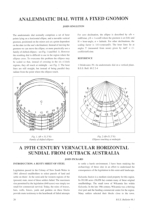
Proposes an analemmatic dial that retains a fixed upright gnomon by drawing a series of ellipses, scaling and shifting them to avoid crossing lines and confusion when reading it.
Dials: Analemmatic, Mathematics of Dialling, Sundial Design & Layout
February 1998
Page 30
Page 30
Describes novel non-shadow dials using reflectors. Parabolic and cylindrical forms generate bright caustic lines on a screen; hour indication follows motion of the cusp or inner edge. Includes formulae, constructional notes and an aperture version using a sundial curve.
DIY Sundial Projects, Dials: Reflected, How Sundials Work, Mathematics of Dialling
June 1998
Page 21
Page 21
This article explores the extraordinary sundials documented in Athanasius Kircher's 17th-century masterpiece, Ars Magna Lucis et Umbrae. It highlights Kircher's unique integration of gnomonics with esoteric disciplines like astrology and alchemy, showcasing innovative dials that provided astronomical data, medical advice, and even produced sound and fire.
Dials: Unusual, Mathematics of Dialling, Sundial Design & Layout
June 1998
Page 38
Page 38
This article provides a straightforward set of equations for the design of sundials that simultaneously recline from the vertical and decline from the south. It revisits the formulas for vertical declining dials and demonstrates how these two types of tilts combine to derive effective values for both angle and declination.
Dials: Vertical, Mathematics of Dialling, Sundial Design & Layout
June 1998
Page 49
Page 49
Reviews a section on sundials from Charles Hutton's 'Mathematical and Philosophical Dictionary'. It describes 41 separate problems related to dialling and mentions the author's recommended English works on gnomonics, including those by Emerson and Martin.
Mathematics of Dialling
October 1998
Page 12
Page 12
Analysis of the Sundials on the Tower of the Winds, Athens: Possible Parameters Used in Construction
This article presents a detailed analysis of the ancient sundials on the Tower of the Winds in Athens using high-precision geodetic data. The study aims to identify the cardinal design parameters, such as geographic latitude, ecliptic angle, and gnomon length, used in their construction. It explores historical measurements and proposes a plausible interpretation for the cylindrical dial.
Dials: Cylindrical, Historical Dials, Mathematics of Dialling, Sundial Design & Layout
January 1997
Page 2
Page 2
A detailed biographical and technical account of Samuel Foster, a 17th-century diallist, highlighting his innovations in dialling techniques, instruments, and his influence on later gnomonists. Explores historical context, plagiarism controversies, and posthumous publications.
How Sundials Work, Mathematics of Dialling
January 1997
Page 47
Page 47
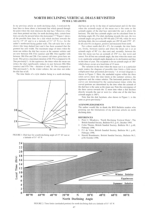
Re-examines the theory and practice behind north-declining vertical dials, correcting misconceptions and providing updated construction guidelines.
Dials: Vertical, Mathematics of Dialling
April 1997
Page 11
Page 11
A systematic study of seventy medieval mass dials, analysing their patterns, calibrations, and probable uses, with observations on design variations, dating, and functional purpose.
Historical Dials, Mathematics of Dialling
July 1997
Page 18
Page 18
Guide to producing printed dialling scales using spreadsheet calculations and desktop publishing, enabling accurate layout of sundials.
DIY Sundial Projects, Dialling Tools, Mathematics of Dialling
July 1997
Page 40
Page 40
The article describes the mathematics and construction of an altitude ring dial, including diagrams for delineation and discussion of its limitations.
Construction Projects, Dials: Portable, Mathematics of Dialling
October 1997
Page 3
Page 3
This article describes the "XY method", a practical process for marking time divisions on sundials. It details how to calculate shadow angles from first principles for various dial types and then plot them directly along rectangular borders using a graduated straightedge, acting as an "Add-on" to computer design programs. The method was adapted for complex declining/proclining dials and can also be applied to circular or octagonal dials.
Dialling Tools, Mathematics of Dialling, Sundial Design & Layout
October 1997
Page 36
Page 36
This article describes how to create an origami sun calendar from a single sheet of card, which indicates the date rather than the time. It reverses the roles of the dial plate and gnomon, and the shadow of a cone's rim indicates the date on a central gnomon-like scale. The article provides the mathematical solution for its design and construction.
DIY Sundial Projects, Mathematics of Dialling
October 1997
Page 41
Page 41
This article explains three sources of misreadings on sundials: annual recurring errors (adjustment and fabrication errors), annual accumulating misreadings (due to unequal year lengths and celestial body motion), and errors in defining shadow transit. It details the mathematical treatment of these errors, including geographic coordinates, refraction, and parallax, and provides numerical examples.
Mathematics of Dialling, Sundial Design & Layout
February 1996
Page 29
Page 29
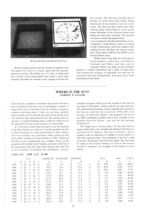
An article exploring solar position calculations and their practical applications in sundial construction.
Mathematics of Dialling
June 1996
Page 10
Page 10
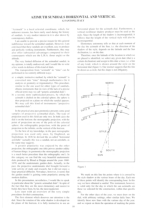
An in-depth exploration of azimuth sundials, comparing projection methods, construction techniques, and their advantages, with historical and modern examples.
Dials: Horizontal, Dials: Vertical, How Sundials Work, Mathematics of Dialling
June 1996
Page 39
Page 39
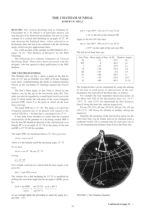
An overview of a large commemorative sundial in Chatham, highlighting its naval heritage, symbolic design, and community impact.
Dials: Vertical, Historical Dials, Mathematics of Dialling
February 1995
Page 15
Page 15
Proof of the Accuracy of the Capuchin and Regiomontanus Dials using the Polar Triangle of Navigation
A mathematical demonstration using spherical trigonometry to prove the timekeeping accuracy of the Capuchin and Regiomontanus portable sundials, complete with diagrams and derivations.
Dials: Portable, Mathematics of Dialling
February 1995
Page 18
Page 18
An explanation of the bifilar sundial's geometry and time-telling principles, including its unique two-thread gnomon and analytical methods for calculating its layout.
Dials: Bifilar, Mathematics of Dialling
February 1995
Page 36
Page 36
A theoretical exploration of sundials that produce equivalent time indications under varying conditions, with examples of geometric transformations.
Mathematics of Dialling
February 1995
Page 39
Page 39
Continued discussion on the analemma and its use in sundials, particularly analemmatic types, including the relation to mean solar time and design techniques.
Dials: Analemmatic, Equation of Time, Mathematics of Dialling
June 1995
Page 32
Page 32
A mathematical examination of lunar nomograms and their use in timekeeping, possibly as an analytical or design tool involving the moon's cycles.
Dialling Tools, Mathematics of Dialling
February 1994
Page 8
Page 8
Describes a method using stereographic projection to determine true north and latitude from solar shadow observations. Includes theoretical explanation and practical setup.
How Sundials Work, Mathematics of Dialling
February 1994
Page 17
Page 17
Explores the history, theory, and military use of sun compasses, including detailed designs used by British forces and analogies with sundial mechanics.
Dials: Portable, Mathematics of Dialling
February 1994
Page 22
Page 22
Provides a geometric technique to design a sundial based on three shadow measurements. Practical, educational, and includes construction guidance.
DIY Sundial Projects, Mathematics of Dialling
February 1994
Page 33
Page 33
Describes construction of eccentric sundials with non-standard hour lines and geometries. Focuses on design theory and practical outcomes.
Dials: Unusual, Mathematics of Dialling
June 1994
Page 2
Page 2
An in-depth historical and mathematical exploration of the analemma and its application in sundial construction. This first part traces its etymology and use from ancient times through Ptolemy, Vitruvius, and Renaissance scholars, connecting it with the development of the analemmatic sundial. Richly referenced and scholarly, it bridges history and design.
Dials: Analemmatic, Historical Dials, Mathematics of Dialling
June 1994
Page 18
Page 18
A speculative and creative proposal suggesting that the ancients may have used barleycorns—a traditional length unit—to construct circular sundials. The article blends folklore, geometry, and practical experimentation to explore how such a simple method could lead to effective sundial designs.
Historical Dials, Mathematics of Dialling
October 1994
Page 18
Page 18
This article introduces a new sundial design that combines the simplicity of a Capuchin dial with the universality of a Regiomontanus dial through the use of nomograms. It explains the principles of subtraction and multiplication nomograms, demonstrating how they are integrated into the dial's coordinate system to calculate solar declination and latitude. The article details how to read the time by aligning a thread and bead, and notes its ability to show sunrise/sunset times and day length. The design aims for an acceptably accurate, universal dial that is easier to construct than other universal types.
DIY Sundial Projects, Dialling Tools, Mathematics of Dialling
October 1994
Page 32
Page 32
This article explores the concept of using shadows cast by window sills, jambs, and parapets on floors and walls as simple sundials. It explains the gnomonic principles involved, detailing how the moving "shadow straight line" can indicate the hour. The author provides formulas and diagrams for calculating the shadow's position based on latitude, window sill height and orientation (declination), solar altitude, and azimuth. It outlines the process of drawing date and hour lines, noting practical considerations like difficult-to-read periods for certain sill orientations, and suggests applications for terraces and balconies, or even for single hour lines with time-zone and Equation of Time corrections.
DIY Sundial Projects, Dials: Unusual, Mathematics of Dialling, Sundial Design & Layout
October 1994
Page 41
Page 41
This article focuses on the additional informational elements, or "furniture," found on vertical sundials beyond just hour lines. It uses the Queens' College dial as an example of a dial rich in such information (altitude, azimuth, zodiac, sunrise time, day length). The author explains how to calculate and display various furniture types, including equinox and solstice declination lines, altitude and azimuth lines, and monthly declination lines, all based on the shadow cast by a "nodus" on the dial. The methodology involves transforming the vertical dial to an equivalent horizontal dial for simplified calculations and discusses the practical aspects of displaying such data.
Dials: Vertical, Mathematics of Dialling, Sundial Design & Layout
October 1994
Page 47
Page 47
This article, originally prepared for architecture students, explains the principles governing the sun's position in the sky and its application to architectural sunlighting studies. It details how factors like geographical latitude, time of year (solar declination), and time of day influence sunlight. The article provides key solar orbit equations, introduces practical tools like the matchbox sundial and heliodon for simulating sun movement, and describes methods for visualizing sunpaths. It also discusses architectural applications such as checking sunlight penetration around buildings and through windows, and designing fins and canopies for solar protection, emphasizing the importance of understanding sunlight geometry in building design.
Mathematics of Dialling, Sundial Design & Layout
February 1993
Page 36
Page 36
This paper elaborates on the theory and construction of bifilar sundials, a twentieth-century type invented by Hugo Michnik. It highlights their equiangular hour-lines, allowing direct reading of standard clock time by simple daily adjustment, and explains how time is indicated by the intersection of shadows from two horizontal threads.
Dials: Bifilar, Dials: Unusual, How Sundials Work, Mathematics of Dialling, Sundial Design & Layout
June 1993
Page 18
Page 18
This article explores Vitruvius's Analemma, a vital geometric construction from Roman architecture used for sundial design. It describes the step-by-step process of constructing the Analemma using only a ruler and compasses, explaining how it projects old Temporal Hours and can be adapted for modern hours. The text provides insights into ancient dialling techniques, their historical continuity, and potential links to medieval astrological traditions and later drawing methods.
Historical Dials, Mathematics of Dialling, Sundial Design & Layout
June 1993
Page 25
Page 25
This article provides a graphical technique for constructing a qibla line on horizontal Arabic sundials, which indicates the prescribed direction of Mecca for Islamic prayer. It details the mathematical formula for determining the inhiraf angle and outlines a step-by-step construction procedure using a specific template. The article also notes the adaptability of this construction method for finding the azimuth of any other location.
DIY Sundial Projects, Mathematics of Dialling, Sundial Design & Layout
June 1993
Page 28
Page 28
This article explains the geometric method for laying out a vertical declining sundial, drawing from F.W. Cousin's book Sundials. It details how to determine the style base, style height, equinoctial line, and noon line using a series of right angles and specific angles for latitude and wall declination. The process is illustrated with an example of a vertical dial declining West 30° at Latitude 50°N.
DIY Sundial Projects, Dials: Vertical, Mathematics of Dialling, Sundial Design & Layout
October 1993
Page 6
Page 6
This article explores how Stonehenge served as an ancient astronomical observatory for predicting eclipses and tracking the Sun and Moon. It explains the monument's design, including 56 Aubrey holes, which allowed tracking of the Sun's annual path, the Moon's 28-day cycle, and the 18.6-year Metonic cycle of the lunar nodes for eclipse prediction.
Historical Dials, Mathematics of Dialling
October 1993
Page 8
Page 8
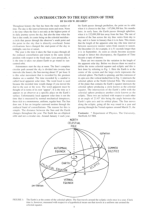
This article explains the Equation of Time, the difference between local apparent solar time (sundial time) and mean solar time (clock time). It details the two astronomical reasons for this variation: Earth's elliptical orbit causing the Sun's speed to change, and the Sun's apparent motion along the ecliptic rather than the celestial equator.
Equation of Time, Mathematics of Dialling
October 1993
Page 13
Page 13

This article explores using spreadsheet programs to design and create shepherds' dials, simplifying the complex calculations and plotting involved. It details the process of determining the sun's altitude using a mathematical formula and setting up a spreadsheet to generate the necessary data for plotting hour lines on a cylindrical dial, facilitating DIY dial construction.
DIY Sundial Projects, Dialling Tools, Dials: Cylindrical, Mathematics of Dialling
October 1993
Page 23
Page 23
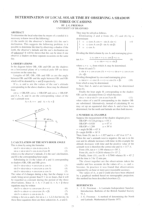
This article presents a geometric method for determining three unknowns (direction of North, latitude and today's solar declination) from three angular measurements of a vertical pole's shadow. It outlines the mathematical formulae and step-by-step calculations required to find the three unknowns.
How Sundials Work, Mathematics of Dialling
October 1993
Page 31
Page 31
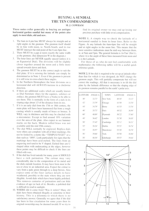
This article provides ten commandments for buying antique horizontal garden sundials, with points also applicable to other dials. It advises on checking gnomon alignment, hour line spacing, and the correct gnomon angle for latitude. The article also discusses material characteristics, identifying replica dials, and ethical considerations regarding origin, including reference tables for latitude and hour line angles.
Historical Dials, Mathematics of Dialling, Sundial Design & Layout
October 1993
Page 40
Page 40
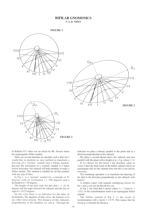
This article presents a general method to transform a 'normal' sundial layout into a bifilar sundial, suitable for all flat dials, not limited to equiangular hour lines. It explains how to calculate thread heights for the resulting sundial drawing.
Dials: Bifilar, Mathematics of Dialling, Sundial Design & Layout
February 1992
Page 5
Page 5
This article explores Islamic astronomy's role in determining prayer times, particularly the challenge of twilight in higher latitudes like Brussels where true night is absent around summer solstice. It discusses the use of astrolabes and the historical importance of observatories like Maragha and Samarkand, highlighting their monumental instruments and the Koran's influence on precise astronomical observations. It also mentions Maharaja Jai Sing II's five observatories in India, especially the Jaipur Great Samrat Yantra.
Dials: Astrolabe, Mathematics of Dialling
February 1992
Page 16
Page 16
This article describes Samuel Foster's diametral sundial, a horizontal dial with a movable stile where hour-points lie on a straight line. Its unique feature is that the shadow becomes retrograde daily at a selected hour, allowing for the recreation of the Biblical miracle of Ahaz's dial. The article provides construction details and mathematical justifications for this special form of elliptical dial, also attributing the original discovery of the circular hour-arc dial to Foster.
Dials: Unusual, Mathematics of Dialling, Sundial Design & Layout
February 1992
Page 18
Page 18
The article proposes an improved method for aligning a sundial gnomon using Polaris, building on previous discussions by Mills and Taylor. It suggests a sighting device made from sheet metal with an eye aperture and a circular target. The method relies on knowing Polaris's angular distance from the true pole and its position relative to the star Beta Ursa Minor (f3 UMi), aiming for an accuracy within 0.25 degrees by aligning Polaris on the target edge opposite f3 UMi.
Construction Projects, Dialling Tools, Mathematics of Dialling
February 1992
Page 19
Page 19
This article describes the azimuth dial, a type of horizontal dial with a vertical style, derived from the equatorial dial formula. It explains that while a vertical style at the center of a horizontal circle cannot show time correctly throughout the year due to declination changes, projecting an equatorial circle onto a horizontal plane forms an ellipse for the hour lines. The article provides the formula for the shadow angle and suggests this as a useful project for understanding geometry and for practical marking in playgrounds or gardens.
DIY Sundial Projects, Dials: Analemmatic, Dials: Equatorial, Dials: Horizontal, Mathematics of Dialling
February 1992
Page 33
Page 33
Fer de Vries presents a mathematical method for calculating sundial lines and for determining the inclination and declination of a dial plane. He defines various coordinate transformations needed to convert the sun's position into shadow-point coordinates on any surface, applicable globally. The procedure can also be reversed to find time and date from a shadow, or to determine the dial's orientation from observed shadow points, and is useful for designing mirror or submersible dials.
Mathematics of Dialling, Sundial Design & Layout
October 1992
Page 27
Page 27
This article explores hypothetical sundial behaviour on Uranus, where the planet's axis tilt is almost 90 degrees. At solstices, the sun would appear stationary overhead at the pole, and a rod gnomon would cast no shadow. As the sun moves, shadows would form circles, indicating a sidereal day, with significant changes in day length at solstices, leading to a "missing" solar day.
Dials: Unusual, How Sundials Work, Mathematics of Dialling
October 1992
Page 28
Page 28
This article describes a Meccano jig designed by Noel Ta'Bois for drawing hour and declination lines on sundial plates of any shape, including curved surfaces. The instrument features a telescopic arm, set by calibrated dials for latitude, declination, and hour angle, which is extended to mark the shadow position of the nodus. It eliminates the need for complex calculations, making it useful for irregular surfaces.
Dialling Tools, Mathematics of Dialling, Sundial Design & Layout
October 1992
Page 36
Page 36
This entry announces the availability of a computer program by Mr Fer de Vries for sundial calculations, sold to BSS members with proceeds benefiting the Society. Compatible with IBM systems and requiring a graphic adapter for drawing, it comes with explanatory text and is available on disc. An older, simpler program by Mr H.C. Parr is no longer available but its listing can be found in a previous Bulletin issue.
Dialling Tools, Mathematics of Dialling
October 1992
Page 37
Page 37
This article describes the Holker Dial, a large shallow bowl sundial made of Burlington slate, sited at Holker Hall. Designed by Mark Lennox-Boyd, it is a projection of Berossos' hemispherium onto a shallow bowl, marked with 15-minute divisions, zodiacal signs, and a combined table for correcting for longitude offset and Equation of Time. The article details the challenging production process by Burlington Slate, involving computer-calculated polar coordinates for engraving and the moving of massive stone objects.
Construction Projects, Dials: Hemispherical, Dials: Scaphe, Mathematics of Dialling, Sundial Design & Layout
February 1991
Page 11
Page 11
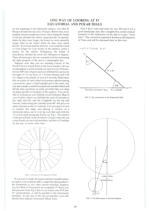
Equatorial and Polar Dials explores the principles behind these two types of sundials. The article also covers the Equation of Time and how to account for longitude to tell Greenwich Mean Time with a sundial.
Dials: Equatorial, Dials: Polar, Mathematics of Dialling
February 1991
Page 18
Page 18
Introduces the concept and a model of a sundial designed to tell time without needing to be constructed or adjusted for the specific latitude of the observer. The design utilizes a gnomon with a curved edge and relies on determining the sun's position based on its declination, altitude, and azimuth. The article details the construction of the scales, noting that the model has accuracy limitations, particularly at certain times of day
Dials: Unusual, Mathematics of Dialling, DIY Sundial Projects
July 1991
Page 3
Page 3
This article, written in 1631, details using John Marr’s Hampton Court Dial. It explains determining celestial metrics like ascensionall difference, azimuth, amplitude, sun's altitude and declination, and Judaical hours. It also covers comparing unequal to equal hours, finding the day of the month, and predicting London Bridge tides via the dial's shadows, showcasing its comprehensive historical applications.
Historical Dials, How Sundials Work, Mathematics of Dialling, Sundial Design & Layout
July 1991
Page 8
Page 8
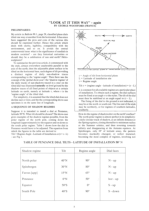
This article re-examines plane dials tilted from the horizontal, focusing on clarity, legibility, and environmental compatibility. It explains 'shadow regimes,' how tilt relates to equivalent latitude, and the impact on sun-shadow patterns. Key considerations include local horizons and the 'night factor'—periods where the dial cannot register time. It highlights the clarity of polar regime dials, despite seasonal limitations, for educational and aesthetic purposes.
Dials: Polar, How Sundials Work, Mathematics of Dialling, Sundial Design & Layout
July 1991
Page 15
Page 15
This essay details Egnazio Danti's large astronomical quadrant on Florence’s Santa Maria Novella facade (1572). It describes the instrument's design, inscriptions, and multiple hour systems including Italian, Bohemian, Astronomical, and French hours. It particularly focuses on a unique double tracing for Planetary and Canonical hours, clarifying their historical distinction and practical differences resulting from their construction methods.
Historical Dials, Mathematics of Dialling, Sundial Design & Layout
July 1991
Page 20
Page 20
This article, translated by Charles K. Aked, explains the equation of time and its importance for comparing sundial readings to legal time and for drawing analemmas. It outlines three calculation procedures: consulting ephemerides for meridian passage, calculating at 0h UT for precision, and using or constructing tables of mean values. A method for building updated tables is provided, ensuring sufficient precision for dialling needs.
Equation of Time, Mathematics of Dialling
July 1991
Page 24
Page 24
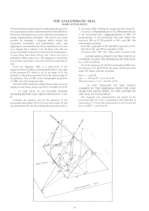
Mark Lennox-Boyd presents a trigonometric proof for the correctness of the equations for laying out an analemmatic dial, aiming to clarify Rene Rohr's complex explanations. Using a diagram relating equatorial, horizontal, and analemmatic dials, he derives three key formulae: one defining the elliptical shape of the dial, and two describing the vertical gnomon's displacement and the hour points angles. The diagram simultaneously provides a proof for the horizontal dial.
Dials: Analemmatic, Mathematics of Dialling
July 1991
Page 34
Page 34
This article introduces the equant dial, a horizontal sundial design inspired by Ptolemaic astronomy, addressing uneven hour spacing in classical dials. It describes how a specific curve is drawn on the dial face, against which an equi-spaced hour-line circle is rotated. This mechanism enables manual adjustments for the equation of time and other corrections, simplifying time reading on such a dial.
Dials: Horizontal, Equation of Time, Mathematics of Dialling, Sundial Design & Layout
July 1991
Page 35
Page 35
This article examines a horizontal sundial described in Manuscript Rivipullensi 225, a 10th-century compilation from Ripoll monastery. The manuscript provides didactic instructions for laying out the dial with concentric circles for months and temporary hour divisions. The author reconstructs two versions, discussing its function, orientation, and unique characteristics, suggesting Latin or Ripollan origins distinct from Arabic sundials of the period.
Historical Dials, Mathematics of Dialling, Sundial Design & Layout
July 1991
Page 38
Page 38
This article presents the theoretical basis for a computer program designed to calculate hour lines for various northern hemisphere sundials (direct, declining, vertical, reclining, inclining). It outlines using spherical trigonometry formulas to determine dial plane elements and hour line angles. The author emphasizes robust programming to handle issues like division by zero and inverse trigonometric ambiguities, providing simplified BBC Basic and design guidance.
Dialling Tools, Mathematics of Dialling, Sundial Design & Layout
October 1991
Page 2
Page 2
This article discusses William Gilbert of Colchester, Queen Elizabeth I's physician, and his monumental work "De Magnete" published in 1600. It highlights his contributions to the understanding of electricity and magnetism, including his commitment to the Earth rotating around the Sun. The article also touches upon the historical lack of quick dial orientation before the magnetic compass and Gilbert's fleeting reference to sundials in his work.
Historical Dials, Mathematics of Dialling
October 1991
Page 34
Page 34
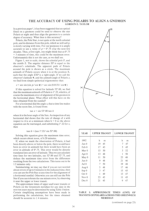
Gordon E. Taylor examines the accuracy of aligning a sundial gnomon using Polaris. He explains that while Polaris is close to the celestial pole, its slight deviation introduces errors. Calculations show a maximum time error of 6.2 minutes for a horizontal dial if Polaris is observed at any time of year, but this can be reduced to 1 minute by observing near upper or lower transit.
Mathematics of Dialling
October 1991
Page 36
Page 36
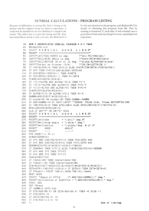
This section provides a listing of a BASIC computer program by H.C. Parr for calculating sundial hour lines, intended to accompany a previous article. The program is designed to save time and prevent errors in sundial computations. Details for obtaining the program on a 5 1/4 inch disk and information about inputting latitude, reclining angle, and declination are included.
Dialling Tools, Mathematics of Dialling
October 1991
Page 37
Page 37
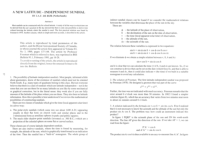
J.A.F. de Rijk describes a new, simple, and more accurate latitude-independent sundial, building upon Freeman's 1978 solution. This type of sundial can indicate local apparent solar time without requiring knowledge of the observer's latitude. The article explains the mathematical principles, focusing on how the product sin(Az)cos(h) and sin(T)cos(δ) are obtained and combined to determine the time (T).
Dials: Unusual, How Sundials Work, Mathematics of Dialling, Sundial Design & Layout
February 1990
Page 20
Page 20
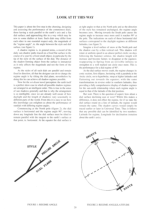
This paper explores the concept of "regime angle" in sundials, defined as the angle between the style and the dial surface. It introduces the idea that the Earth itself acts as a "show case" for various shadow regimes and illustrates how shadow curves change with latitude, showing examples for locations from the North Pole to the South Pole. The article also features Mr. Woodford's "Amundsen" dial
Dials: Unusual, How Sundials Work, Mathematics of Dialling
February 1990
Page 23
Page 23
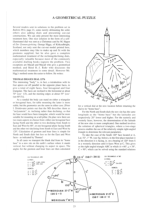
This article presents a geometrical puzzle related to dialling, referencing solutions previously published. It specifically details the "Thomas Digges Dial 1576," which is described as a tetrahedron with eight faces (four hexagonal and four triangular) inclined to the horizontal. The article outlines calculations for determining gnomon and hour lines for various faces and latitudes of this complex dial.
Mathematics of Dialling
June 1990
Page 5
Page 5
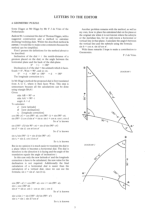
This section features a letter from F. J. de Vries, offering a simplified single shift method for calculating declining/reclining sundials, to which George Higgs provides a magnanimous reply. It also includes various comments from members regarding the Bulletin's quality and content.
Mathematics of Dialling
June 1990
Page 17
Page 17
This article explains the construction and practical application of Lambertian Circles in analemmatic dials. These circles, plotted from a specific centre through the foci of the hour point ellipse, determine the times of sunrise and sunset for any given day, applicable across different latitudes.
Dials: Analemmatic, How Sundials Work, Mathematics of Dialling
October 1990
Page 14
Page 14
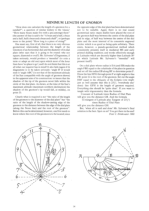
This article addresses the calculation of a gnomon's length for a sundial, clarifying that it's about the ratio of the shadow-casting edge to the distance from the root of the shadow casting edge to the dial plate's edge. It critiques Mr. Sylvester's diagram, presents a pseudo-geometrical medieval method, and provides trigonometric formulas for calculation.
Mathematics of Dialling, Sundial Design & Layout
July 1989
Page 5
Page 5
An article by Rene R-J. Rohr discusses Lambert's circles and their relationship to analemmatic sundials. The article discusses how to determine the times of sunrise and sunset using these circles, including their application to the universal dial of Antoine Parent, and how they can be used to create a sun compass.
Dials: Analemmatic, Mathematics of Dialling
November 1989
Page 2
Page 2
The author explores applying the analemmatic dial principle to vertical planes, contrasting it with the more common horizontal version. The article provides the trigonometric calculations necessary for constructing such a dial on a vertical declining plane, detailing how to find the sub-style to meridian, the dial's "latitude," and the difference of meridians. It describes the layout process involving primary and minor axis circles to generate hour points and arcs for zodiacal signs, explaining why a movable gnomon is impractical for vertical planes and instead a horizontal rod is used. The dial is presented as a philosophical exercise, a functional piece for those interested in the Zodiac, or an aesthetic wall ornament.
Dials: Vertical, Dials: Analemmatic, Mathematics of Dialling