- Home
- /
- Sundial Encyclopaedia
- /
- Dials: Heliochronometer
Dials: Heliochronometer
September 2023
Page 14
Page 14
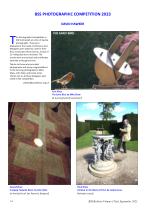
Reports the results of the 2023 BSS Photographic Competition, which attracted twelve entries and was voted on by delegates at the Exeter Conference. Winners included Mike Shaw (First Place, heliochronometer), John Allen (Second Place, Basilica of San Petronio), and Jackie Jones (Third Place, Polesden Lacey).
Dials: Heliochronometer, Dials: Noon Lines, The BSS and Members
March 2022
Page 21
Page 21
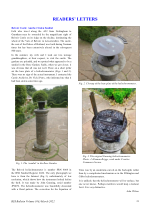
A collection of three letters: John Wilson reports on the theft of a Gunning heliochronometer from Belvoir Castle. Irene Brightmer investigates whether the maker of her 1812 slate dial, Griffith Dafydd, is the same person as Griffith Davies FRS, maker of a prize-winning 1820 dial. Kevin Karney provides a correction on the naming of his 'spider dial'.
Dials: Heliochronometer, Historical Dials, Sundial Design & Layout
December 2022
Page 2
Page 2
Discusses how mechanical tide prediction machines, used from the 1870s to the 1960s, can be adapted to mechanically generate the Equation of Time. This programmable mechanism can be applied to heliochronometers or mechanical clocks, allowing for adjustment based on slow changes in the EoT.
Mathematics of Dialling, Equation of Time, Dials: Heliochronometer
March 2020
Page 33
Page 33
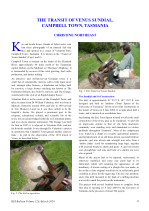
Describes an unusual agricultural-themed sundial designed and built by Anthony Sprent in 2004 to commemorate Campbell Town's role in observing the 1874 transit of Venus. The device, made mostly from old farm machinery parts, is a heliochronometer that uses a nodus (aperture) to project light onto an engraved analemma on a bronze plough disc.
Construction Projects, Dials: Heliochronometer, Dials: Unusual, Equation of Time
June 2020
Page 18
Page 18
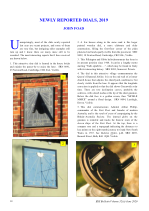
This report outlines 24 sundials newly reported to the BSS Fixed Dial Register in 2019. The entries feature a variety of types, including a Pilkington and Gibbs heliochronometer, several analemmatic dials, and various vertical and horizontal dials located across the UK.
Dials: Analemmatic, Dials: Heliochronometer, Historical Dials, The BSS and Members
September 2020
Page 29
Page 29
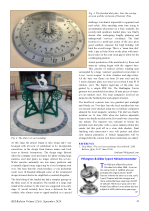
Notes that a rare, early Type 6 Tropical Pilkington & Gibbs Heliochronometer, featuring a strong base covering 90° of latitude, was offered for sale in 1996.
Dials: Heliochronometer, Dials: Portable, Historical Dials
March 2019
Page 26
Page 26
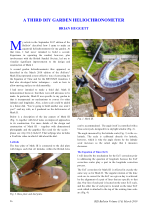
Details the creation of 'Mark III', an improved, portable equatorial heliochronometer. Key features include mechanisms for latitude adjustment (co-latitude scale), longitude correction (rotating the outer EoT scale), and a design for the date scale that minimises readability issues by allowing it to move in an arc. It uses Kevlar string for the gnomon and PTFE tape for smooth movement.
DIY Sundial Projects, Dials: Heliochronometer, Equation of Time, Sundial Design & Layout
March 2019
Page 38
Page 38
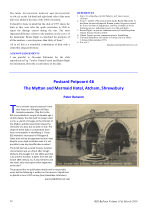
Features a rare postcard showing a Pilkington & Gibbs heliochronometer at the Mytton and Mermaid Hotel, Atcham. The distinctive dial no longer exists in situ, and its identification number is not visible on the high-resolution scan.
Dials: Heliochronometer, Historical Dials
September 2019
Page 7
Page 7
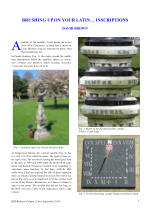
This piece examines Latin mottoes found on sundials visited during the 2019 BSS Conference in Bath. It provides translations for inscriptions on the Parade Gardens armillary sphere, Kingswood School’s vertical and analemmatic dials, and the Pilkington & Gibbs heliochronometer, ending with a challenge regarding the Royal Victoria Park cross dial inscription.
Dials: Analemmatic, Dials: Heliochronometer, Dials: Vertical, Mottoes
March 2018
Page 20
Page 20
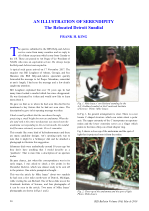
Details the remarkable coincidence where a BSS Help-and-Advice query regarding a missing sundial seen fifty years prior coincided with the typesetting of an article detailing that very instrument. The dial, an A.N. Goddard heliochronometer (designed by Victor E. Edwards) using an aperture nodus and analemma, was moved approximately 15 miles north from a Detroit factory to the Cranbrook Institute of Science.
Dials: Heliochronometer, Historical Dials
March 2018
Page 28
Page 28
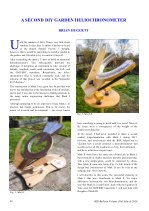
Details the creation of a second, improved equatorial heliochronometer, 'Mark II'. This design is smaller and more portable than the first model. It incorporates a precise rotation mechanism (belt and pulley system) and an Equation of Time correction method based on the Pilkington Sol Horometer, which also accommodates automatic adjustment for GMT/BST transitions.
DIY Sundial Projects, Dials: Equatorial, Dials: Heliochronometer, Equation of Time
September 2017
Page 36
Page 36
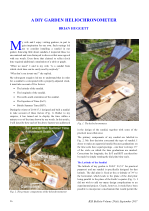
This details the design and construction of a DIY equatorial heliochronometer intended to show clock time easily. It compensates for latitude, longitude, BST, and EoT by allowing the time scale (mounted on a rotating dial plate annulus) to be physically rotated via an acrylic pointer aligned to an EoT graph. The gnomon is a thin, tensioned stainless steel wire.
DIY Sundial Projects, Dials: Equatorial, Dials: Heliochronometer, Sundial Design & Layout
December 2017
Page 21
Page 21
A detailed report on the BSS one-day meeting, summarising talks on topics including the Fort Belan sundial, DIY heliochronometers, multi-centre delineation, promotion via social media, the astronomical Culpeper dial, the Gnomonical Universal Nomograph (GUN), and the mechanical generation of the Equation of Time using equation clocks.
Dials: Heliochronometer, Equation of Time, Historical Dials, The BSS and Members
June 2016
Page 34
Page 34
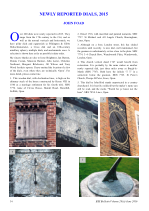
A list of over 200 sundials newly reported to the BSS Register in 2015, ranging from the 17th to 21st centuries. Examples include a 1540 wooden dial, a 1799 horizontal dial by Liverpool clockmaker Thomas Harrison, an exquisite square dial installed for Queen Victoria’s Diamond Jubilee, and a modern spiral analemmatic dial.
Dials: Heliochronometer, Dials: Horizontal, Dials: Multi Faced, Dials: Unusual, Dials: Vertical, Historical Dials, The BSS and Members
June 2015
Page 28
Page 28
The author details his invention proposal from 1978/79 for a unique heliochronometer, which uses a spherical lens (like a Campbell–Stokes recorder) to focus sunlight onto a grid of Fibre Optic Cables (FOCs) that relay the light to a display. The proposed dial was never built.
DIY Sundial Projects, Dials: Heliochronometer, Sundial Design & Layout
June 2014
Page 16
Page 16
Profiles John Carmichael, detailing his career shift from horticulture to becoming a leading sundial maker in Tucson. It describes his primary design using a stranded cable gnomon, his use of modern software for complex dials (like heliochronometers), and his artistic stained glass dials and durable vitreous enamel finishes.
Construction Projects, Dials: Heliochronometer, Dials: Vertical, Sundial Design & Layout
March 2013
Page 23
Page 23
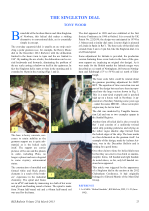
A technical and historical description of the patented ‘Singleton’ helical sundial. The article explains its geometry, manufacture, and later examples exhibited and sold in Britain.
Dials: Heliochronometer, Dials: Unusual, Mathematics of Dialling, Sundial Design & Layout
June 2013
Page 18
Page 18
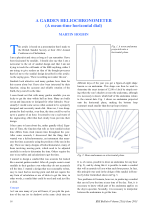
A personal account of designing and constructing a mean-time garden sundial capable of reading clock time directly. The author explains the concept, geometry, and testing of his heliochronometer.
DIY Sundial Projects, Dials: Heliochronometer, Dials: Horizontal, Mathematics of Dialling
December 2013
Page 42
Page 42
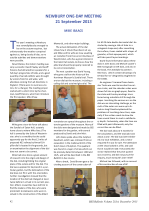
Report on the BSS Newbury meeting held on the autumn equinox. Talks included the Sundials of Eaton Hall, the Horniman Museum trail, the Zutphen Quadrant, and construction projects like David Brown's M-29 double horizontal dial and Mike Lee's Sun Clock.
Construction Projects, Dials: Double Horizontal, Dials: Heliochronometer, The BSS and Members
December 2011
Page 50
Page 50
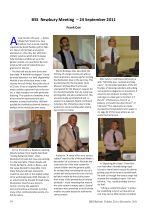
This report details the British Sundial Society's Newbury meeting, featuring talks on topics such as a metal-detected Norfolk horologium, ceiling reflection dials, leap years and calendars, repairing old books, lifting heavy sundials, war memorial dials, and heliochronometers. Exhibits included a cross dial and an equation of time analogue computer, showcasing a diverse range of gnomonic interests.
Dials: Heliochronometer, Dials: Reflected, Historical Dials, The BSS and Members
March 2010
Page 13
Page 13
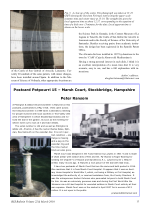
Features a Pilkington & Gibbs heliochronometer at Marsh Court, Stockbridge, Hampshire, as seen on a postcard postmarked 1916. The article provides details about the heliochronometer and the history of Marsh Court, which served as a hospital during World War I.
Historical Dials, Dials: Heliochronometer
March 2009
Page 13
Page 13
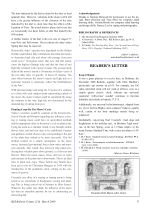
Maurice Kenn shares observations from Brisbane, Australia, contrasting the reliability of his universal equatorial 'coffee-time' sundial and heliochronometer with his UK radio-controlled clock. He notes the significant variation in local apparent noon relative to Eastern Standard Time in Brisbane.
Dials: Equatorial, Dials: Heliochronometer, How Sundials Work
December 2009
Page 28
Page 28
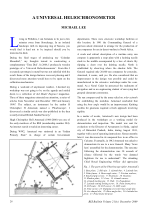
Details the design and construction of a modern, portable heliochronometer. The instrument, inspired by H.C. Armstead's 'Phoeboscope', uses a spot of light on an analemma to provide a numerical time readout. It can be adjusted for latitude, longitude, the equation of time, and summer time.
Construction Projects, Dials: Heliochronometer, Equation of Time
March 2008
Page 42
Page 42
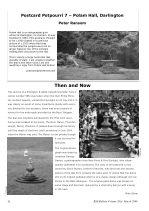
Compares an early 20th-century postcard of a Pilkington & Gibbs heliochronometer at Thornton Manor with a modern photograph. It notes the dial's original purchase by Lord Leverhulme, its continued presence on its pedestal, and the replacement of its glass dome with a chemistry bell jar.
Dials: Heliochronometer, Historical Dials
June 2008
Page 95
Page 95
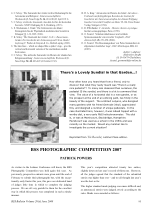
This short piece discusses the common misconception that the pedestal is the sundial, highlighting the importance of the support's beauty. It mentions architect Lutyens' appreciation for pedestals and features a P&G heliochronometer at Marshcourt, posing a question about its current status.
Dials: Heliochronometer, Historical Dials, Sundial Design & Layout
March 2007
Page 31
Page 31
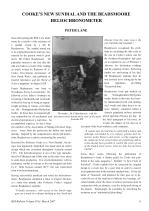
This article discusses Ernest Beadsmoore's construction of a heliochronometer, inspired by Professor W. E. Cooke's 'New Sundial' design published in 1924. It details Beadsmoore's background as an engineer, his process of building and testing the dial, and its impact on local timekeeping precision. Cooke's later 'Sunclock' patent, connecting the dial to a clock for standard time, is also mentioned.
DIY Sundial Projects, Dials: Heliochronometer, Historical Dials, Sundial Design & Layout
September 2007
Page 98
Page 98
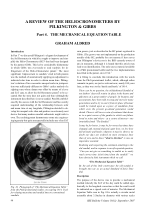
This article reviews Pilkington's Mechanical Equation Table a device for converting sundial time to mean time, detailing its two versions. It covers the design evolution, Pilkington's reluctant use of Gibbs' cam mechanism due to practical limitations, and their patent disputes.
Equation of Time, Dials: Heliochronometer
September 2007
Page 111
Page 111
This section features three letters: Robert Scott Simon identifies a dial he made. John Wall comments on a bizarre sundial plot in a TV series, where a pivoted gnomon reveals gold. Graham Aldred discusses corrosion on sundial plates and P&G heliochronometers, suggesting material substitutions and their implications.
Dials: Heliochronometer, Restoration projects, The BSS and Members
June 2006
Page 91
Page 91
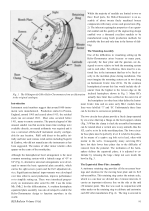
This first part of a review examines the design and accuracy of the Pilkington & Gibbs Helio-Chronometer, an equatorial sundial known for its mean time accuracy. It details the instrument's components, mounting assembly, sight screen system, and the mechanism for integrating the Equation of Time using a cam, and discusses factors affecting its long-term accuracy, such as wear and calibration.
Dials: Heliochronometer, Equation of Time, How Sundials Work, Sundial Design & Layout
September 2006
Page 128
Page 128
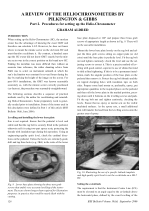
This article provides comprehensive, practical procedures for calibrating and reinstalling Pilkington & Gibbs Helio-Chronometers. It covers essential steps such as precise levelling, accurate co-latitude setting, meridian alignment, and adjustments for the equation of time and longitude, offering detailed guidance for both Northern and Southern Hemisphere models, aimed at owners and restorers.
Dials: Heliochronometer, Equation of Time, Restoration projects, Sundial Design & Layout
December 2006
Page 177
Page 177
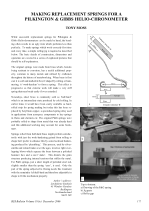
Tony Moss provides instructions for crafting replacement springs for Pilkington & Gibbs Helio-Chronometers. The article outlines using a rolling jig to shape half-hard brass, enhancing its properties through work-hardening and planishing. This ensures the springs function correctly, highlighting traditional metalworking techniques adapted for precise instrument repair.
Construction Projects, DIY Sundial Projects, Dials: Heliochronometer
December 2006
Page 186
Page 186
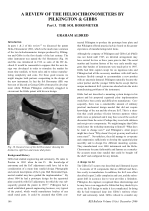
Graham Aldred reviews the Sol Horometer, William Pilkington's 1912 heliochronometer, developed to bypass George Gibbs's patent. It details Pilkington’s unique EoT adjustment mechanism, contrasting it with Gibbs's system, and discusses manufacturing, sighting, and pointer design. The article also compares its performance and rarity to the original Helio-Chronometer, noting the limited sales.
Sundial Design & Layout, Equation of Time, Historical Dials, Dials: Heliochronometer
December 2005
Page 142
Page 142
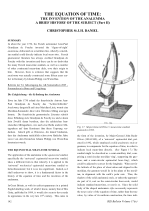
This part of the article discusses the history and application of the analemma in equinoctial sundials, particularly in Great Britain and the Netherlands. It details inventions by Major-General John Ryder Oliver, William Pilkington, and William Homan, and provides strong evidence suggesting Johann Philipp von Wurzelbau invented the analemma around 1716, predating Jean-Paul Grandjean de Fouchy.
How Sundials Work, Equation of Time, Historical Dials, Dials: Heliochronometer
December 2005
Page 154
Page 154
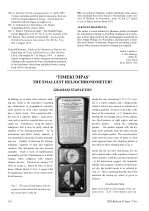
This article introduces the "Timekumpas," a small, cigarette-lighter-sized equatorial dial patented in 1926. While it lacks precision due to its size, it is notable for being a universal instrument designed to allow for latitude, longitude, equation of time, and magnetic variation, making a "noble effort" to create a sophisticated, portable standard time indicator.
Dials: Equatorial, Dials: Heliochronometer, Dials: Portable, Historical Dials
December 2004
Page 163
Page 163
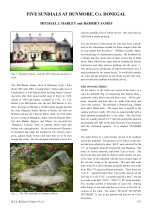
Survey of five McClintock sundials at Dunmore estate, including the 1843 Melville slate dial and its 2003 restoration, the 1936 vertical dial, the 1939 heliochronometer, construction details, inscriptions, and the estate's dial-making history.
Dials: Heliochronometer, Dials: Horizontal, Dials: Multi Faced, Historical Dials, Restoration projects
June 2002
Page 85
Page 85
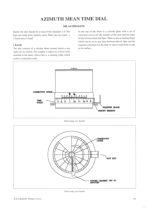
Technical description of a dial type that uses azimuth angle to determine mean time, with design suggestions.
Dials: Heliochronometer, Dials: Horizontal, Sundial Design & Layout
September 2002
Page 115
Page 115
An essay reflecting on the evolution of sundial making and the Society's activities during the 20th century, highlighting significant developments and personalities.
Dials: Bifilar, Dials: Equatorial, Dials: Heliochronometer, Dials: Unusual, Historical Dials, The BSS and Members
June 2000
Page 101
Page 101
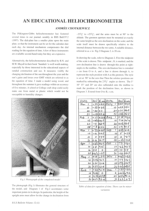
Describes a portable device that demonstrates the equation of time and solar motion for educational use.
DIY Sundial Projects, Dials: Heliochronometer, Equation of Time
February 1999
Page 9
Page 9
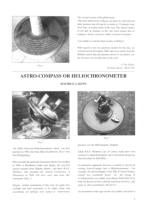
This article references the Gibbs Universal Heliochronometer, patented in 1906, and its presence at the 1998 BSS Conference. It suggests converting existing Astro-Compasses into heliochronometers by adding self-adhesive hour-labels, providing an affordable way to indicate local sun time with reasonable accuracy.
Dialling Tools, DIY Sundial Projects, Dials: Heliochronometer
February 1999
Page 10
Page 10
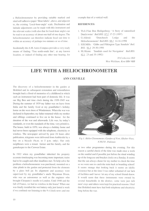
Ann Colville shares memories of growing up with a heliochronometer at Holehird during WWII, where it served as the family's primary timekeeper, for regulating the long case clock. The article highlights its accuracy, the care it received, and its eventual journey to America, now a preserved curiosity.
Historical Dials, Dials: Heliochronometer
February 1999
Page 23
Page 23
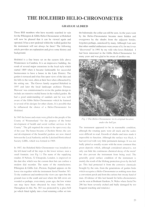
This article details the restoration and reinstallation of the Pilkington & Gibbs Helio-Chronometer at Holehird. It recounts its history, its protection by a glass bell jar, and the innovative security measures implemented for its current display, allowing it to accurately tell time for another century.
Restoration projects, Historical Dials, Dials: Heliochronometer
February 1998
Page 14
Page 14
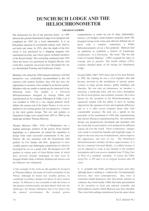
A site note on a heliochronometer at Dunchurch Lodge, describing layout, reading, and mechanical features of this precision time-telling instrument and its context on the estate.
Dials: Heliochronometer, Historical Dials
June 1998
Page 16
Page 16
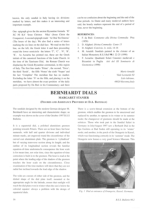
This article describes the distinctive equatorial sundials designed by modern German artist M. Bernhardt. These feature a polished aluminium gnomon pointing towards Polaris, and an hour scale calibrated for mean time, incorporating the equation-of-time correction within the gnomon's outline. Interchangeable gnomons allow for seasonal adjustments.
Dials: Equatorial, Dials: Heliochronometer, Dials: Unusual, Equation of Time, Sundial Design & Layout
October 1995
Page 18
Page 18
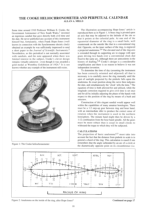
A description of the Cooke Heliochronometer, an accurate sundial capable of giving clock time, including its principle of operation, advantages over traditional dials, and its place in the development of precision timekeeping instruments.
Dials: Heliochronometer
June 1992
Page 24
Page 24
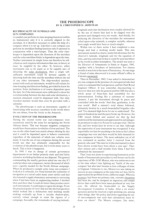
The phoeboscope is presented as a self-sufficient instrument combining time-keeping, meridian-finding, and calendrical functions by detecting solar declination. Designed during WWII as an improvement of the existing sun-compass, its adoption was frustratingly held up in bureaucracy until too late to be useful. It uses a lens to focus sunlight onto a shadow-plate engraved with an analemma, allowing accurate determination of time, meridian, and date anywhere in the world without a watch or almanac.
DIY Sundial Projects, Dials: Heliochronometer, Dials: Unusual, Equation of Time
July 1991
Page 1
Page 1
This section compiles news and updates from various sundial societies. It covers new bulletin issues from De Zonnewijzerkring (Dutch) and La Busca de Paper (Catalan), including mathematical dialling, celestial mechanics, and specific sundial descriptions. It also announces the founding of an Austrian Sundial Society and details a rare sun chronometer in Baden, Vienna, designed by Gibbs.
Book Reviews, Dialling Tools, Dials: Heliochronometer, The BSS and Members
October 1991
Page 29
Page 29
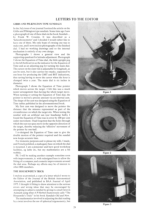
This section includes correspondence from H.R. Mills, who details his homemade "heliochronometer" sundial based on the Gibbs and Pilkington type. He also discusses A.P. Herbert's "Housewife's Trick," warning against adjusting sundials by twisting them in azimuth to correct for BST, as this introduces variable time errors.
DIY Sundial Projects, Dials: Heliochronometer, Equation of Time