- Home
- /
- Sundial Encyclopaedia
- /
- February 1991
February 1991
The articles link to the specific page in a PDF optimised for speed. If you want the whole issue, you can download it here, but the files from earlier years can be quite large.
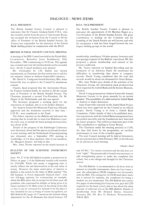
February 1991
Page 3
Page 3
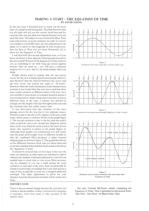
Explains the Equation of Time and how this variation became apparent with the development of accurate mechanical clocks.
Equation of Time
February 1991
Page 4
Page 4
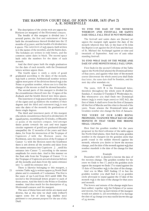
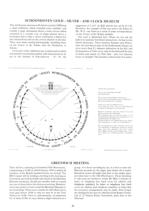
Details the various circles and scales on the dial's surface, including those for finding the dates of festivals and saints' days, the day of the week, the age of the moon, and the time of high water at London Bridge. The article also explains how to use the shadow of the stile to determine the hour and minute, sunrise/sunset times, and the sun's place and right ascension.
Historical Dials
February 1991
Page 6
Page 6
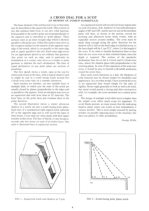
Describes the design of Cross or Star dials, focusing on the concept of the equatorial notch, which has surfaces parallel to the Earth's polar axis. The shadow cast by the outer edge of the notch onto the opposite surface is used to indicate time. The article provides details on the design and depth required for such dials, noting that each notch effectively functions as a separate dial.
Dials: Equatorial, Dials: Polar
February 1991
Page 8
Page 8
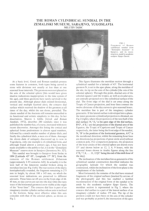
The Roman Cylindrical Sundial in the Zemaljski Museum, Sarajevo, Yugoslavia, by Milutin Tadic" discusses a rare cylindrical sundial discovered in Yugoslavia. It highlights the features of ancient sundials, such as being carved in stone and typically concave. The article presents a reconstruction of the Diluntum sundial, explaining its potential mechanism using a horizontal gnomon and projected diurnal arcs to show seasonal hours.
Dials: Hemispherical, Historical Dials
February 1991
Page 10
Page 10
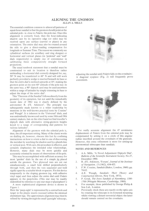
Addresses the critical step of setting up an equal-hour sundial and suggests that aligning by observing Polaris, the pole star, can be a quicker and more accurate method. Simple tools like a peep-sight or telescope can be used for this purpose.
How Sundials Work, Dialling Tools
February 1991
Page 11
Page 11
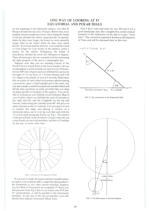
Equatorial and Polar Dials explores the principles behind these two types of sundials. The article also covers the Equation of Time and how to account for longitude to tell Greenwich Mean Time with a sundial.
Dials: Equatorial, Dials: Polar, Mathematics of Dialling
February 1991
Page 14
Page 14
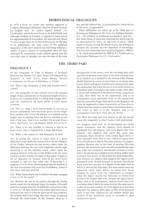
A dialogue from a 1675 book discussing the apparent inequality between clock time and sundial time. The discussion reflects the historical debate among clockmakers regarding the sun's seemingly irregular motion. Notes accompanying the excerpt explain that the author, John Smith, was working from an older understanding of the cosmos, and the true reasons for the variation were clarified later.
Book Reviews
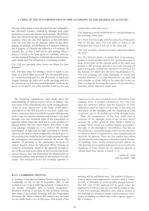
February 1991
Page 18
Page 18
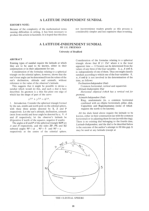
Introduces the concept and a model of a sundial designed to tell time without needing to be constructed or adjusted for the specific latitude of the observer. The design utilizes a gnomon with a curved edge and relies on determining the sun's position based on its declination, altitude, and azimuth. The article details the construction of the scales, noting that the model has accuracy limitations, particularly at certain times of day
Dials: Unusual, Mathematics of Dialling, DIY Sundial Projects
February 1991
Page 29
Page 29
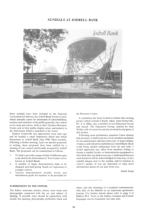
A planned initiative to install various types of sundials at the Jodrell Bank Science Centre. This project aims to support the National Curriculum for Schools by providing educational displays for visitors and resources for teachers. The collaboration involves a committee including BSS members and the Science Centre staff.
February 1991
Page 30
Page 30
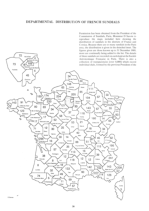
Presents maps illustrating the number of sundials found in different departments of France and Corsica. The data includes records up to the end of 1989, gathered by the Commission of Sundials in Paris.
February 1991
Page 32
Page 32
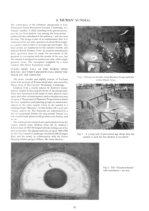
This analemmatic sundial in a Cambridge playground functions by having a child stand on a stone, with their shadow falling onto numbered tiles to indicate the time. The design is intended for summer use and features an inscription on the stone base.
Dials: Analemmatic
February 1991
Page 35
Page 35
The "Letters to the Editor" section contains various reader contributions. Topics include a discussion on the Spherical Sundial and its educational versus practical use, instructions for orienting a wall using a card, a query about a permanent filling for slate sundial engravings, a description of a sundial affected by a tree, and a poem about a 'Grey Dial Stone'.