- Home
- /
- Sundial Encyclopaedia
- /
- Milutin Tadic
Milutin Tadic
February 1999
Page 38
Page 38
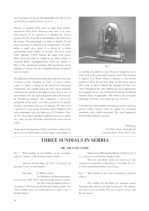
This article describes three wall sundials in Serbia: one in Strpce with historical day lines and a Cyrillic motto; one in Valjevo showing various international noons and birthdays of famous Serbians; and a rhyming motto dial in Lesak.
Dials: Vertical, Mottoes
October 1999
Page 139
Page 139
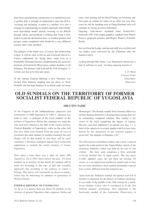
This article surveys 214 fixed sundials in the former SFR Yugoslavia, now divided into multiple new states. It highlights a Roman spherical dial from Sremska Mitrovica, the oldest Serbian sundial at Studenica Monastery (12th century), and the horizontal dial at Belgrade Observatory. It notes the scarcity of sundials in Macedonia and Bosnia and Herzegovina due to Turkish reign, and discusses Italian-influenced medieval stone dials on the Croatian Adriatic coast, including one in Dubrovnik with both contemporary and old Italian hour scales.
Dials: Horizontal, Dials: Portable, Dials: Scaphe, Dials: Vertical, Historical Dials
October 1998
Page 37
Page 37
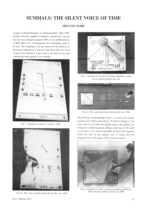
This article documents the impact of the civil war in former Yugoslavia on some sundials in Sarajevo, illustrating their destruction and disappearance. Through before-and-after photographs, it shows a marble sundial damaged by a shell fragment, a faculty building dial hit by artillery, and a west-facing wall dial that vanished, highlighting how even these silent timekeepers suffer during conflict.
Dials: Vertical, Historical Dials
October 1998
Page 38
Page 38
This section reviews three offprints: Dr. Wall's study of Anglo-Saxon sundials in Ryedale, detailing octaval day divisions; Finn Magnusen's monograph on ancient Scandinavian time divisions and 'daymarks'; and Dr. Milutin Tadic's paper on old sundials in Serbian lands, covering Roman, medieval, and 19th-century examples, noting their scarcity due to Turkish rule.
Book Reviews, Historical Dials
February 1992
Page 40
Page 40
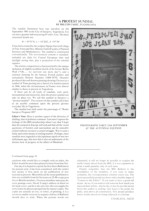
This article describes a "protest sundial" unveiled in Sarajevo, Yugoslavia, on September 6, 1991. Carved into a granite slab, it features standard astronomical content but incorporates a modified sketch of the former Berlin Wall and a satirical drawing by Honoré Daumier depicting Chronos with a cannon. The creators named it a "protest sundial" as an acerbic comment on the gloomy everyday life in Yugoslavia, reflecting political commentary through gnomonics.
Dials: Vertical, Mottoes
February 1991
Page 8
Page 8
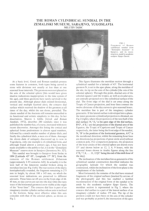
The Roman Cylindrical Sundial in the Zemaljski Museum, Sarajevo, Yugoslavia, by Milutin Tadic" discusses a rare cylindrical sundial discovered in Yugoslavia. It highlights the features of ancient sundials, such as being carved in stone and typically concave. The article presents a reconstruction of the Diluntum sundial, explaining its potential mechanism using a horizontal gnomon and projected diurnal arcs to show seasonal hours.
Dials: Hemispherical, Historical Dials