- Home
- /
- Sundial Encyclopaedia
- /
- October 1995
October 1995
The articles link to the specific page in a PDF optimised for speed. If you want the whole issue, you can download it here, but the files from earlier years can be quite large.
October 1995
Page 1
Page 1
News and correspondence from other sundial societies and journals, including De Zonnewijzerkring and La Busca de Paper. Topics include hybrid and double hybrid dials, Catalan literature, meridian models, and observations on historic illustrations and publications.
October 1995
Page 4
Page 4
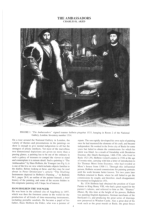
A deep exploration of Holbein’s painting 'The Ambassadors', interpreting its rich symbolism, especially the dialling instruments depicted. The article covers the painting’s history, the identities of the subjects, and technical discussion of the dials, torquetum, and polyhedral sundial shown.
Dials: Unusual, Historical Dials
October 1995
Page 12
Page 12
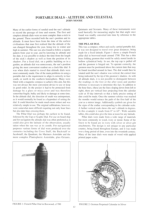
An illustrated survey of various historical portable sundials that use altitude and celestial methods for timekeeping. Examples include pillar dials, Regiomontanus dials, navicula, scaphe dials, and quadrants, with details on their materials, construction, and principles of operation.
Dials: Portable, Historical Dials
October 1995
Page 18
Page 18
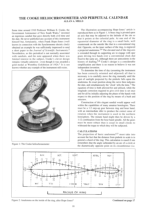
A description of the Cooke Heliochronometer, an accurate sundial capable of giving clock time, including its principle of operation, advantages over traditional dials, and its place in the development of precision timekeeping instruments.
Dials: Heliochronometer
October 1995
Page 19
Page 19
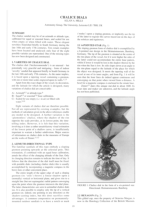
An overview of dials shaped like chalices, often used in ceremonial contexts or churches. The article discusses their optical characteristics, historical references, and functional design when filled with water for increased visibility.
Dials: Scaphe
October 1995
Page 26
Page 26
Explains why travellers who cross the "International Date line" in mid-Pacific will lose a day going West or have the same day over again going East.
October 1995
Page 27
Page 27
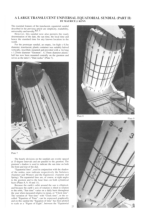
A technical and descriptive account of a large equatorial sundial made from translucent materials, designed for broad geographic usability and visual impact, including discussion of its structure and application.
Dials: Equatorial, Dials: Unusual
October 1995
Page 29
Page 29
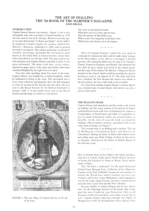
The seventh book in the 17th Century 'Mariner's Magazine' is on dialling and is entitled "The Art of Dialling by a Gnomonical Scale, and likewise by Calculation; Making all Sorts of Dials both without doors and within, upon any Wall, Ceiling, or Floor, be they never so Irregular, wheresoever the Direct of Reflect Beams of the Sun may come.
October 1995
Page 33
Page 33
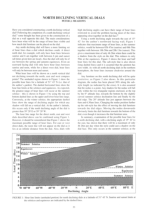
An analysis of the challenges and methods for designing sundials on north-declining vertical surfaces, with trigonometric solutions and practical tips for layout and correction.
Dials: Vertical
October 1995
Page 35
Page 35
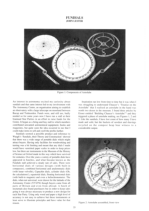
A creative examination of 'fundials', a whimsical category of dials built with humour, novelty, or playfulness in mind. The piece blends observation and storytelling with examples.
Dials: Unusual
October 1995
Page 37
Page 37
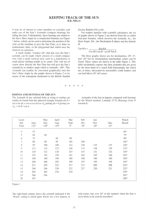
A general article reflecting on the methods and motivations behind tracking solar time.
October 1995
Page 39
Page 39
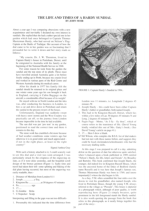
A biography of a sundial that has endured over time, detailing its installation, wear, weathering, restoration efforts, and its symbolic place in the landscape or community.
Historical Dials
October 1995
Page 41
Page 41
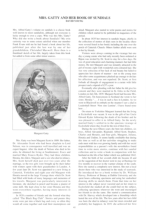
An account of the life and writings of Margaret Gatty, a 19th-century author and sundial enthusiast. It covers her influence on mottoes and moral reflections expressed in dial inscriptions.
Mottoes