- Home
- /
- Sundial Encyclopaedia
- /
- Lajos Bartha
Lajos Bartha
June 1998
Page 41
Page 41
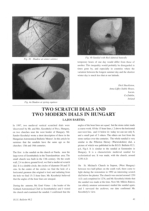
This article reports on the discovery of two medieval vertical scratched dials on churches in Narda and Sopron, Hungary, dating from the 13th and 14th centuries. It also features two recently constructed sundials on historical buildings in Szombathely and Pannonhalma, illustrating both ancient and contemporary gnomonic practices in Hungary.
Dials: Mass Dials, Dials: Vertical, Historical Dials
February 1995
Page 34
Page 34
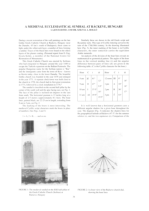
A report on the discovery and analysis of a rare medieval sundial found at a church in Ráckeve, including its historical context and architectural integration.
Dials: Mass Dials, Historical Dials
June 1992
Page 2
Page 2
This article outlines the few medieval sundials remaining in Hungary, many destroyed by wars and church rebuilding. It describes early canonical sundials with primitive divisions, including a twelve-division dial at Matraverabely and a Gothic dial at Szentendre. A unique medieval dial not on a church is found in Kaszeg, and St. Nicholas church in Rudabanya has a dial marking prayer times.
Dials: Mass Dials, Historical Dials
June 1990
Page 12
Page 12
This preliminary report details the discovery of small bone/ivory pocket sundials during archaeological excavations in Hungarian fortresses, castles, and cloisters. It describes specific finds from Buda, Diosgyor, Poganyszentpeter, and Tata, discussing their Nuremburg origins and magnetic variation markings.
Dials: Portable, Historical Dials
June 1990
Page 32
Page 32
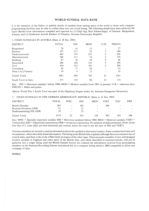
This section presents detailed data on fixed sundials compiled for Austria and the German Democratic Republic, categorized by historical period, type, and photographic availability. It serves as an invitation for international members to contribute information for a planned global sundial listing.
The BSS and Members