- Home
- /
- Sundial Encyclopaedia
- /
- Denis Schneider
Denis Schneider
September 2022
Page 34
Page 34
A summary of recent international research into medieval sundials. Highlights the Fachkreis Sonnenuhren database (696 German objects) and debates whether scratch dials are pilgrim symbols. Mentions new findings on medieval texts describing unequal-hour sundials and the construction of polar style dials.
How Sundials Work, Historical Dials, Dials: Mass Dials
June 1998
Page 4
Page 4
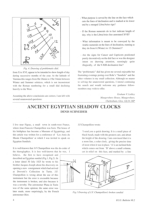
A history of ancient Egyptian methods of time measurement, from early shadow clocks to later step-sundials. It explains how these instruments worked, their limitations, and mentions the work of Jean-Francois Champollion in identifying one.
Dials: Unusual, Historical Dials
October 1997
Page 5
Page 5

This article analyses the sundials depicted in Dante Gabriel Rossetti's paintings, specifically "Beata Beatrix" and "Saint Cecile". It highlights inaccuracies in the hour lines and numbering, attributing them to artistic licence and the symbolic importance of the "ninth hour" in relation to Beatrice's death, rather than scientific precision.
October 1996
Page 16
Page 16
An in-depth examination of moondial designs and historical interpretations, correcting common errors in classical references, and proposing refinements to improve accuracy and aesthetic integration.
Dials: Unusual, Historical Dials
June 1992
Page 38
Page 38
This article explores the concept of a tidal dial for estimating tidal times, acknowledging the moon's primary influence on tides over the sun. It discusses the 'Port Establishment' and 'Lunar Situation,' and how a specially designed watch or optical sight, combined with knowledge of the moon's age, could provide approximate tidal information globally, even correcting for hydrographic board errors.
Dials: Unusual, Dials: Nocturnals
July 1991
Page 27
Page 27
This section compiles letters on diverse sundial topics. Gordon E. Taylor recounts issues with sundial projects undertaken by the uninformed, while Denis Schneider discusses possible errors in tidal dial information and moon dial prospects. J.G. Freeman provides a crucial formula for wall orientation calculations. Allan Mills proposes using N and S extensions to the polar axes of a spherical model earth as gnomons, bringing the noon mark to where it would be expected (rather than at the terminator).
The BSS and Members