- Home
- /
- Notable Sundials
- /
- Sunalemma Sundial
Sunalemma Sundial
Mike King
Entered into the 2025 Design Awards
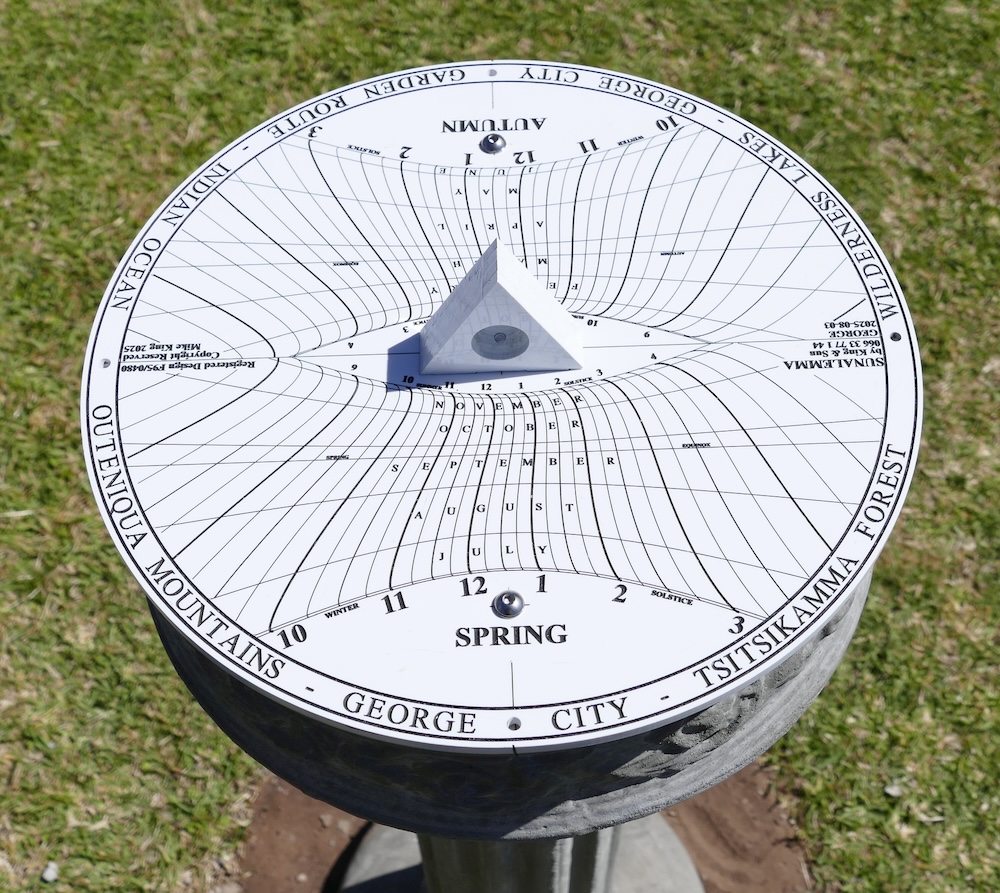
The Sunalemma is a new innovative sundial that directly shows the time and date.


1995 Background
In the early 90's I came across a book, Sundials by Albert E Waugh. This intrigued me. At the same time, we were pioneering the application of the then new CAD systems to civil engineering designs. This involved coordinate geometry and programming. This synergy resulted in a sundial program that could draw the hour and month lines for anywhere, with the curved lines taking into account the Equation of Time correction. The inventive step was to divide the year into halves, thereby splitting the analemmas into two parts.
In 1995, I produced a few brass sundials, registered it as a functional design in the patents office, but found my family and career did not allow me to exploit the opportunity.
2025 Development
I retired in 2018 and my wife and I rented our house out in Cape Town and we travel South Africa in our motorhome. The lingering thought of my unfinished sundial project, and my wife convinced me to take it up again. So, this year my target was to create the sundial again.
It was also made attractive by the opportunity to use the latest software and laser engraving technology.
Using Inkscape and learning Python I was able to use my astronomical geometry formulae and coordinate trigonometry to redevelop my program that creates the drawings. Then after a lot of research and searching local engravers, I sourced someone I could work with (Matthew Lambert of Lambie Lasers) who was able to produce what I wanted. My program creates a drawing from the location data, they laser engrave the drawing on acrylic plate, and I fill the lines in with paint. Recently I have successfully got to the point where I am satisfied with the results and met my primary goal of doing it again, albeit 30 years later.
Derived from the word analemma it is called a Sunalemma.
2025 Onwards
Having revealed my new Sunalemma sundial to local knowledgeable people, I found that there might be a potential market for it and the past couple of months my wife and I have been showing it at local craft markets. It became obvious that not many people know about sundials, so the effort was mostly into education, and it became good fun developing an interesting patter. To further exploit the potential of the Sunalemma I have recently started a sole proprietorship (King and Sun) and launched a website (www.kingandsun.com).
How it works
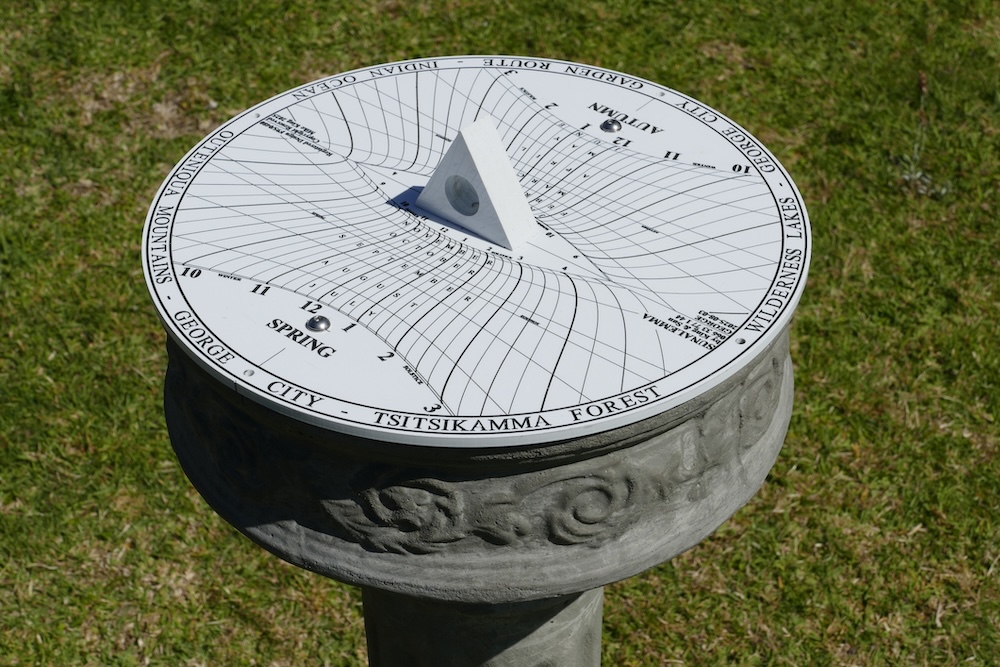
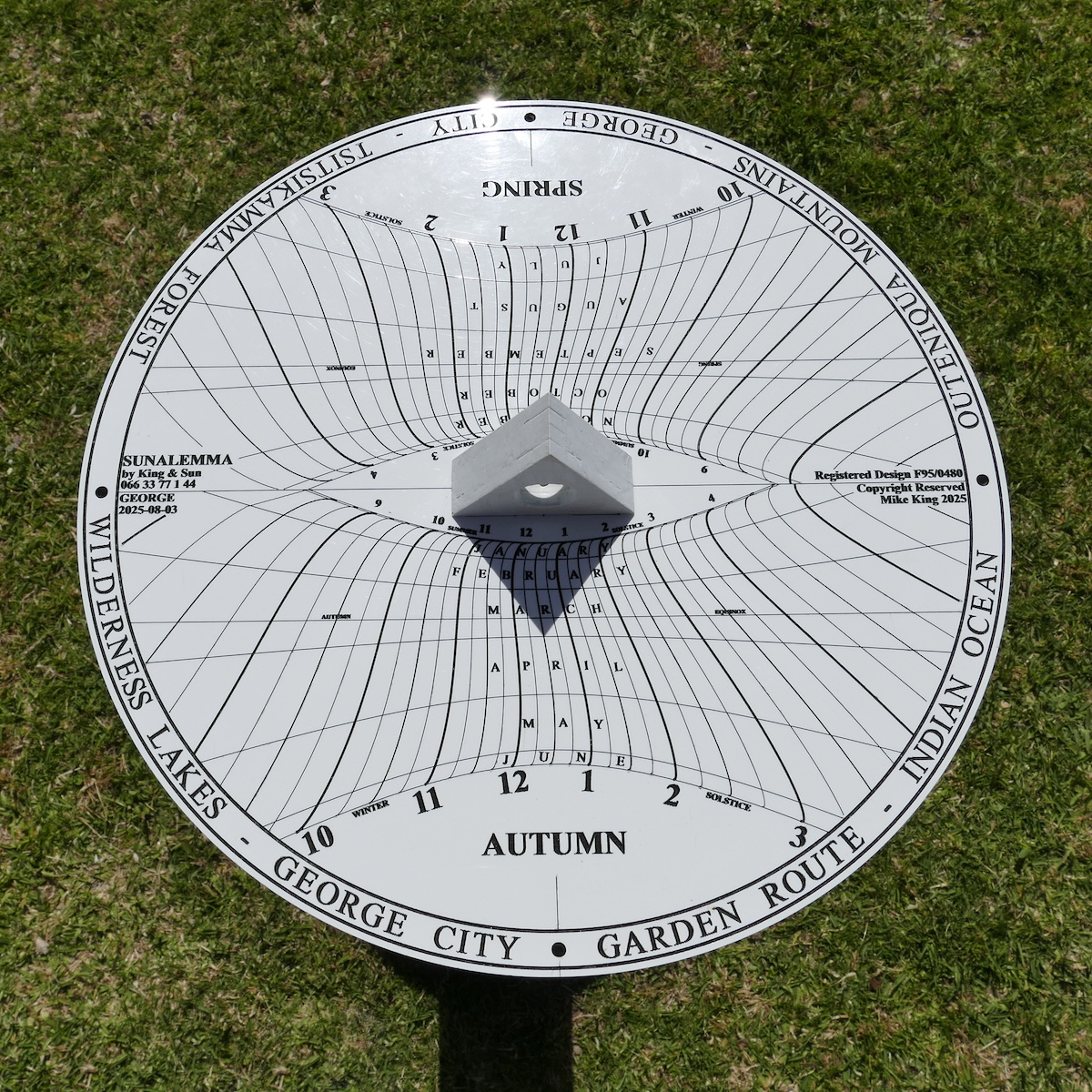
The hour lines (including half and quarter hour lines) include the correction for the Equation of Time. The triangular gnomon casts a shadow across the dial through the day telling the time to within about a minute. The equinal lines show the months as well as the Equinox and Solstices. The date can be estimated within days.
The program draws the linework for the site's latitude, longitude, gnomon height, dial diameter and the time zone correction. The Sunalemma is only suitable for areas outside the tropics. The dials can be drawn for the northern hemisphere and using coloured lines it can show the correct time during daylight saving periods.
The only installation requirements are that the dial plate is level and the dial turned to the correct time.
Every six months at the Solstices the sundial will need turning 180 degrees to continue for the next two seasons.
The linework on the dial has turned out to be elegantly simple.
This Entry
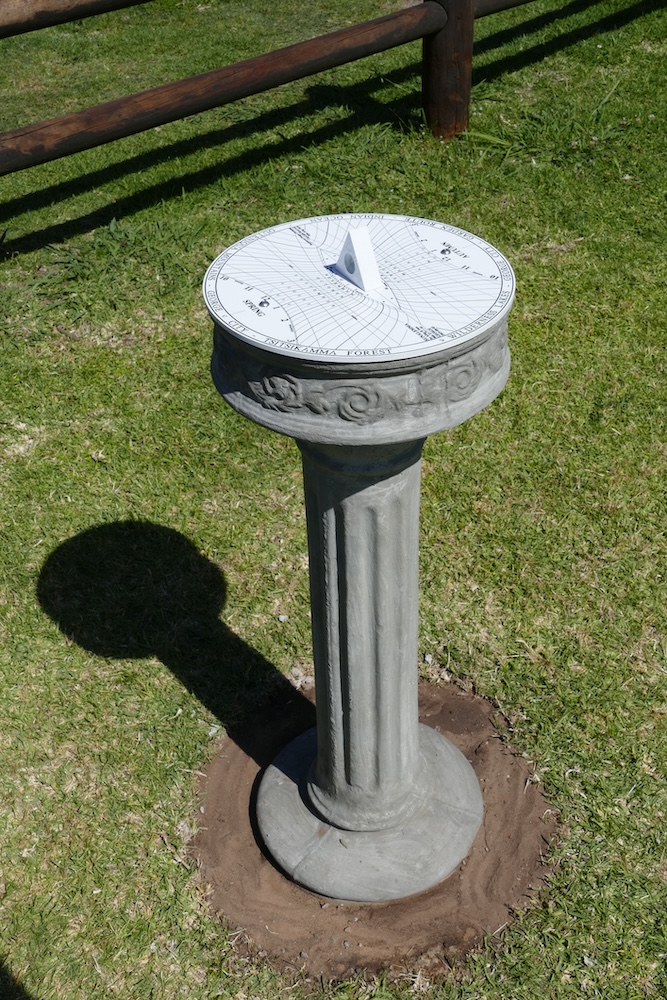
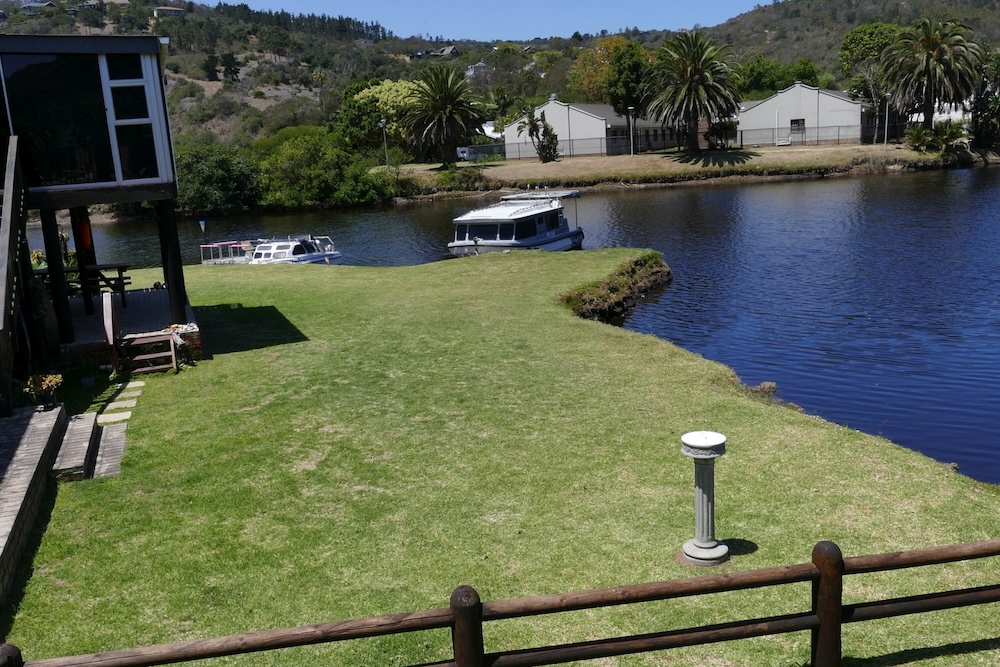
This entry is one of the first larger sundials to be established. It was created and installed for Captain Willy du Plessis in his picturesque garden on the Groot Brak River in the Garden Route on the east coast of South Africa. It is also adjacent to a walkway.
Sundial design and installation by Mike King of King and Sun.
Dial engraved by Lambie Lasers
Pedestal by GC Concrete Products